
Tiered Drying Racks for Vertical Capacity
Tiered drying racks are the quintessential solution for kitchens with limited horizontal square footage. By extending the drying area upward, these structures allow homeowners to process a full load of dishes without occupying the entire counter. Most modern tiered designs feature two or three levels, each specifically engineered to hold different types of kitchenware. For instance, the top tier is often slotted for plates, while the bottom tier remains flat for bowls or heavy mugs. This vertical architecture ensures that gravity assists in the drainage process, with water trickling down from the highest points into a centralized collection tray. High-quality tiered racks are constructed from rust-resistant materials like stainless steel or coated wire to withstand constant exposure to moisture. Additionally, many models include side attachments for cutting boards and utensil cups, further centralizing the cleaning station. Implementing a tiered system reduces visual clutter and prevents the common dish stacking that occurs on flat mats. By prioritizing height over width, cooks can reclaim valuable prep space, making the kitchen feel more organized and functional during meal preparation and cleanup cycles.
Benefits of Over-the-Sink Drying Solutions
Over-the-sink drying solutions represent a paradigm shift in kitchen organization by utilizing the air space directly above the basin. This placement is strategically advantageous because it eliminates the need for a separate drainboard, as excess water drips directly into the plumbing. These units are typically designed as adjustable bridges that span the width of the sink, featuring a modular setup that can be customized based on individual needs. Some primary benefits include:
- Direct Drainage: Eliminates countertop puddles and reduces the risk of mineral buildup on surfaces.
- Space Reclamation: Frees up the perimeter of the sink for food preparation or small appliance storage.
- Ergonomic Access: Keeps frequently used items at eye level, reducing the need to bend over lower cabinets.
- Customizable Modules: Allows users to swap locations for knife blocks, soap baskets, and cup hooks.
Beyond their practical utility, over-the-sink racks contribute to a more hygienic environment. By elevating dishes away from the countertop, air can circulate freely around the entire perimeter of each item, significantly reducing drying times compared to traditional flat mats.
Optimizing Plate Placement for Maximum Airflow
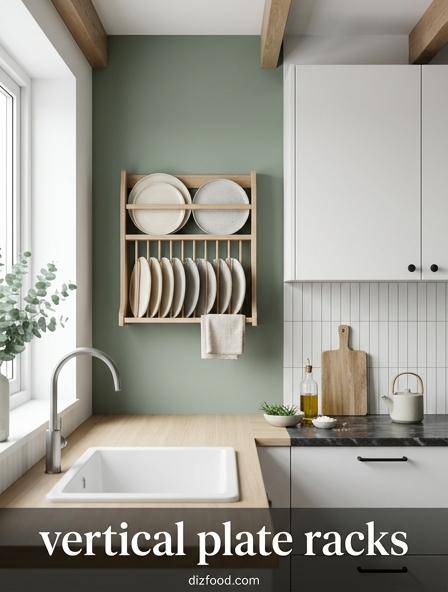
The efficiency of a vertical drying system is largely dependent on how items are arranged within the slots. Simply placing dishes in a rack is not enough; one must consider the physics of airflow to ensure rapid evaporation and prevent water spots. Vertical plate placement is superior to flat stacking because it exposes both sides of the dish to moving air. When plates are nested too closely, moisture becomes trapped in the narrow gaps, leading to a humid microclimate that slows the drying process. To optimize this, users should ensure a consistent gap of at least half an inch between each plate. This can be achieved by using racks with deep, well-defined grooves that keep plates upright and stable. Furthermore, orienting plates so they face the same direction allows air to channel through the rows like a wind tunnel. For larger platters, placing them at the ends of the rack prevents them from blocking the airflow to smaller items in the center. Proper spacing not only speeds up the process but also prevents the growth of mildew in damp, stagnant pockets.
Wall-Mounted Storage for Countertop Clearance
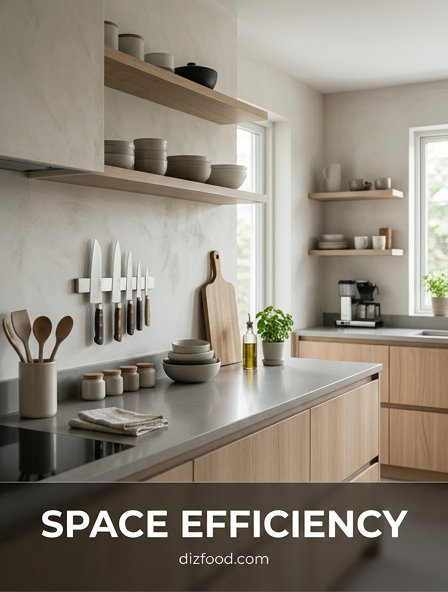
Wall-mounted storage systems are a transformative element for kitchens lacking expansive counter space. By shifting the storage of pots, pans, and lids to the vertical plane of the walls, the primary workspace remains clear for active cooking. This approach often involves the installation of heavy-duty rails, pegboards, or magnetic strips that can support significant weight. Wall-mounted racks are particularly effective for storing items that are awkwardly shaped or frequently used, such as colanders or cast-iron skillets. When items are hung vertically, they are less likely to experience the chipping or scratching that occurs when nested in deep drawers. Additionally, wall storage facilitates better organization; by seeing every tool at a glance, the cook spends less time rummaging through cluttered cabinets. This method also takes advantage of the backsplash area, which is often underutilized. By integrating drying racks directly into a wall-mounted rail system, users can move washed items straight from the sink to their designated storage spot, streamlining the entire workflow from cleaning to storage in one efficient motion.
Strategic Spacing to Prevent Moisture Buildup
In the context of vertical kitchen organization, strategic spacing is essential for maintaining a sanitary environment. When dishes, cutting boards, or utensils are packed too tightly together, the lack of air circulation creates "wet zones" where bacteria can thrive. To maintain high hygiene standards, the density of the vertical storage must be carefully managed. The following factors influence the rate of evaporation and moisture prevention:
| Factor | Optimal Configuration | Result |
|---|---|---|
| Distance | 1-2 inches between bulky items | Prevents capillary action trapping water |
| Orientation | Vertical or 45-degree angle | Maximizes gravity-fed drainage |
| Ambient Air | Placement near vents or windows | Accelerates moisture transport |
By adhering to these spacing principles, homeowners can prevent the musty odors associated with damp kitchenware. Strategic spacing also reduces the frequency of deep-cleaning the racks themselves, as they are less likely to accumulate the slime and scale that forms in perpetually wet environments.
Hooks and Hanging Organizers for Utensils
Utensils are often the most difficult items to dry efficiently because of their varied shapes and tendency to clump together in baskets. Utilizing hooks and hanging organizers addresses this by separating each tool. S-hooks and specialized utensil rails allow items like ladles, whisks, and spatulas to hang freely, ensuring that water runs off the tips rather than pooling in the base of a container. Hanging organizers also offer a vertical advantage for small items like measuring spoons or tea strainers that might otherwise get lost in a larger rack. When utensils are suspended, they benefit from 360-degree air exposure, which is far more effective than the stagnant air found inside a drawer or a crowded crock. Moreover, hanging storage keeps these tools within arm's reach of the stove or prep area, enhancing the ergonomic flow of the kitchen. For those with limited wall space, under-shelf hooks can be installed to use the underside of upper cabinets, turning previously dead space into a functional drying and storage zone for lightweight kitchen tools.
Utilizing Under-Cabinet Space for Drying Racks
The area directly beneath upper cabinets is a goldmine for vertical kitchen optimization. Often left empty, this space can house specialized drying racks that fold up when not in use or remain fixed as a permanent secondary storage tier. Under-cabinet racks are particularly useful for glassware and delicate items that might be knocked over in a high-traffic counter rack. By mounting a rack to the underside of the cabinet, the dishes are elevated away from the "splash zone" of the countertop, keeping them cleaner for longer. Some advanced systems include a pull-down mechanism, allowing the user to load the rack at chest height before tucking it away to dry. This not only hides the visual clutter of drying dishes but also keeps the counters completely clear for other tasks. It is important to ensure that these racks are positioned over a waterproof surface or include a slim-line drip tray to protect the cabinetry and countertops from moisture. This hidden storage solution is ideal for minimalist kitchens where maintaining a clean aesthetic is as important as functional efficiency.
The Role of Material in Speeding Up Evaporation
The material composition of a drying rack significantly impacts its performance and the speed at which evaporation occurs. Different materials interact with heat and moisture in unique ways, making the choice of rack more than just an aesthetic decision. For example:
- Stainless Steel: Highly durable and conducts ambient heat, which can slightly raise the temperature of the air near the dishes to aid drying.
- Bamboo: Naturally antimicrobial and porous, bamboo can absorb tiny amounts of residual moisture while providing a warm, breathable surface.
- Plastic-Coated Wire: Provides a soft cushion to prevent chipping of delicate china while remaining completely waterproof.
- Microfiber Inserts: Often used in the base of vertical racks to wick away water that drips from the upper tiers.
Selecting a material that resists rust is paramount for vertical solutions, as water often travels down multiple levels, keeping the lower structure wet for longer periods. High-quality finishes ensure that the rack remains a hygienic tool rather than a source of contamination, while the inherent properties of the material help facilitate a faster turnover of clean dishes.
Maintaining Air Circulation in Compact Kitchens
In compact kitchens, air circulation is often restricted by close walls and heavy cabinetry, which can hinder the drying process. Vertical drying solutions must be positioned strategically to catch what little airflow exists. Ideally, a vertical rack should be placed near a window or in a line of sight with a kitchen vent. If the kitchen is tucked into a corner, using an open-frame vertical rack is better than a solid-sided one, as it allows cross-breezes to pass through the dishes. To maintain airflow in tight quarters, it is also helpful to avoid "walling in" the drying area with large appliances like microwaves or air fryers. These appliances can generate heat that, when mixed with the moisture from a drying rack, creates a humid environment prone to mold. Instead, keep the vertical drying zone isolated. Even a small clearance of a few inches between the rack and the wall can significantly improve the convection currents that carry moisture away. Regular cleaning of the area to remove dust buildup also ensures that air can move freely through the rack's wires and slats.
Vertical Drying Solutions for Large Cookware
Large cookware, such as stockpots, cast-iron pans, and oversized cutting boards, often poses the greatest challenge in a small kitchen. These items are too heavy for standard racks and occupy too much space if laid flat. Vertical organizers designed specifically for heavy-duty items use reinforced steel dividers to hold pots on their sides. This orientation allows the interior of the pot to dry as quickly as the exterior, preventing the "swamp effect" found when pots are stacked on top of one another while wet. For cutting boards, vertical slots ensure that both large surfaces dry evenly, which is critical for preventing warping in wooden boards. Some vertical solutions for large items are designed to sit inside deep drawers, while others are freestanding units meant for the countertop. When using vertical storage for heavy items, it is vital to ensure the base is weighted or anchored to prevent tipping. By standing these large pieces on their edges, you not only speed up the drying time but also make it much easier to grab a specific pan without moving a heavy stack.

Comments