
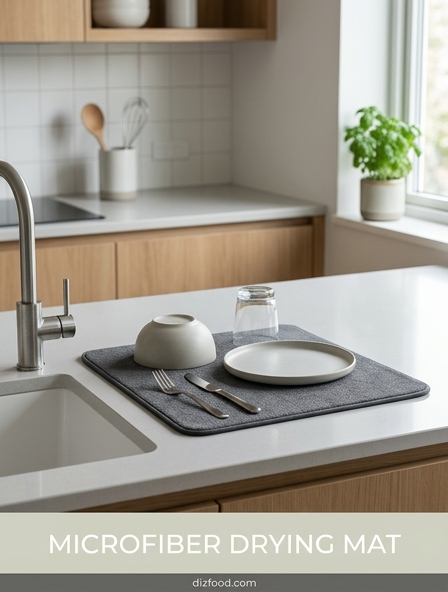
Maximized Counter Space
The modern kitchen often struggles with the limitation of square footage, making the microfiber drying mat an essential tool for efficient space management. Unlike traditional drainage boards that occupy a permanent footprint on your counters, these mats offer a flexible solution that can be deployed only when necessary. By providing a dedicated zone for drying that sits flush against the surface, they allow for a more fluid transition between food preparation and cleanup phases. This adaptability is particularly beneficial in urban apartments or compact homes where every inch of prep space is a premium commodity.
- Frees up permanent counter real estate for meal preparation.
- Creates temporary drying zones that are easily relocated.
- Supports a multi-functional kitchen environment.
- Prevents the visual clutter associated with sprawling plastic trays.
- Optimizes the workflow in small-scale galley kitchens.
Furthermore, the ability to utilize vertical space becomes less critical when the horizontal surfaces are managed with such precision. These mats allow users to stack delicate items safely without the risk of them sliding off a slanted plastic board, ensuring that the footprint used is maximized to its fullest potential during the post-wash period.
Ultra-Absorbent Material Tech
At the core of the microfiber drying mat's effectiveness lies an advanced textile engineering process. These mats are typically constructed from a blend of polyester and polyamide fibers that are split to be significantly finer than a human hair. This creates a massive surface area relative to the mat's actual size, allowing it to hold up to four times its weight in water through powerful capillary action. The inner core is often composed of a specialized laminate or thin foam layer that acts as a reservoir, pulling moisture away from the surface fibers to keep the top layer feeling relatively dry to the touch even when saturated.
This technological approach to moisture management ensures that water does not pool at the base of your glassware, which is a common issue with non-porous rubber mats. Instead, the liquid is dispersed throughout the internal matrix of the fabric, facilitating faster movement and preventing the "sopping wet" sensation. By trapping water within the fibers rather than letting it sit on the surface, the material prevents re-condensation inside flipped bowls and cups, ensuring a more thorough drying process for all kitchenware types, from heavy cast iron to fragile crystal.
Discreet Low-Profile Design
The aesthetic appeal of the microfiber drying mat is largely defined by its incredibly slim profile. Traditional dish racks are often eyesores, protruding upward and breaking the visual line of a clean kitchen. In contrast, the low-profile nature of the microfiber mat ensures that it remains unobtrusive, blending seamlessly into the countertop environment. This design choice is not merely about looks; it also enhances the safety of the kitchen by reducing the center of gravity for drying items, making it much harder for tall glasses to tip over and shatter.
| Feature | Standard Dish Rack | Microfiber Mat |
|---|---|---|
| Vertical Height | 6 to 10 inches | 0.25 to 0.5 inches |
| Visual Impact | High / Cluttered | Minimal / Discreet |
| Surface Integration | Sits on top | Lies flush |
| Safety for Stemware | Moderate risk | High stability |
By maintaining such a thin silhouette, these mats can also be used as a cushioned landing pad under appliances to catch stray drips without lifting the appliance to an awkward height. The discreet nature of the product makes it a favorite for those who value a streamlined, professional-looking kitchen space where utility does not come at the cost of design elegance.
Eliminating Bulkier Dish Racks
Moving away from traditional dish racks represents a significant shift toward a more streamlined kitchen philosophy. Bulkier racks made of plastic or metal are notorious for harboring lime scale, rust, and grime in hard-to-reach crevices. By replacing these cumbersome structures with a flat microfiber mat, you eliminate the need for deep-cleaning wire grids and draining trays. The transition is often a revelation for homeowners who realize that most of their drying needs can be met without a permanent, cage-like structure sitting next to the sink at all times.
- Identify high-frequency items that require hand washing.
- Replace the wire rack with a high-capacity microfiber mat.
- Utilize the mat for immediate drying and stow it away once clear.
- Reclaim the visual and physical space previously occupied by the rack.
- Enjoy a more open and inviting kitchen environment.
This elimination strategy works perfectly for households that use a dishwasher for the majority of loads but still require a soft spot for oversized pots, pans, and chef's knives. The microfiber mat serves as the perfect auxiliary tool, providing just enough utility without the permanent commitment to a bulky accessory that detracts from the kitchen's architecture.
Quick-Drying Surface Benefits
The rapid evaporation capability of a microfiber drying mat is one of its most functional advantages. Because the fibers are designed to spread moisture across a wide surface area, the natural airflow in the kitchen can interact with the water molecules more effectively. This accelerated evaporation prevents the stale, musty odors often associated with thick cotton towels or plastic mats where water remains trapped in stagnant pools. A quick-drying surface is essential for maintaining a high-turnover kitchen where multiple loads of dishes may be processed throughout the day.
In addition to speed, the quick-drying nature of the fabric minimizes the window of time that moisture is available to the environment. This is particularly important for preventing the warping of nearby wooden utensils or the buildup of humidity in enclosed kitchen spaces. When the mat dries quickly between uses, it remains ready for the next task, ensuring that the kitchen remains a dry, functional zone. Users often find that the mat is bone-dry within a short period after the dishes are put away, allowing it to be folded and stored without any fear of trapping dampness inside a cabinet or drawer, which maintains the integrity of the storage space.
Protecting Delicate Countertop Finishes
Kitchen surfaces such as marble, granite, and treated wood are significant investments that require protection from the abrasive nature of heavy cookware. Microfiber drying mats act as a soft, protective barrier that cushions the impact of pots and pans, preventing the scratches and chips that can occur with traditional hard-plastic drainers. The fabric is non-abrasive, ensuring that even the most sensitive sealants on natural stone are not compromised over time by repeated use or the movement of items across the surface.
- Prevents "ringing" and water spots on porous stone surfaces.
- Cushions heavy cast iron to prevent impact cracking on tiles.
- Absorbs condensation that could cause wood countertops to swell.
- Provides a non-slip grip that keeps items from sliding and scratching.
- Protects laminate edges from constant moisture exposure and peeling.
By serving as a buffer, the mat extends the lifespan of the countertop's finish. It effectively manages the interface between wet kitchenware and the dry counter, ensuring that no standing water penetrates the seams or grout lines. This protective layer is indispensable for maintaining the pristine condition of high-end kitchen installations while still allowing for the practical realities of daily dishwashing and cleanup routines.
Effortless Storage and Portability
One of the standout features of the microfiber drying mat is its extreme flexibility. Unlike rigid plastic or metal racks, these mats can be folded, rolled, or even hung up when they are not in use. This portability makes them an ideal solution for varied environments beyond the standard home kitchen. For individuals living in recreational vehicles, boats, or tiny homes, the ability to pack away the entire drying system into a small drawer is a game-changer for interior organization and mobility.
The lightweight nature of the material also means it can be easily moved around the kitchen to wherever the work is happening. If you are drying a large batch of produce on the island, the mat can be relocated in seconds. Its portability also extends to its maintenance; it is easy to transport to the laundry room without the awkwardness of carrying a large, dripping tray. Because it can be compressed without losing its shape or functionality, it serves as the ultimate "hideaway" kitchen tool, appearing only when there is work to be done and vanishing when the kitchen needs to look its best for guests or entertaining.
Hygienic and Machine Washable
Hygiene is paramount in any food preparation area, and the microfiber drying mat excels in this regard due to its ease of cleaning. Traditional dish racks often develop mold in the joints or a slimy film on the drainage tray that is difficult to scrub away. Microfiber mats, however, are designed to be laundered in a standard washing machine. This allows for a total reset of the mat's cleanliness, ensuring that any bacteria or food particles are thoroughly flushed out with high-temperature water and detergent.
| Action | Instruction |
|---|---|
| Washing | Machine wash cold with liquid detergent. |
| Drying | Tumble dry low or air dry for best results. |
| Frequency | Once a week or when visibly soiled. |
| Avoidance | Do not use fabric softeners or bleach. |
The durability of the fibers ensures that the mat can withstand frequent wash cycles without losing its absorbent properties or structural integrity. By maintaining a regular cleaning schedule, you ensure that the surface where your clean dishes rest is as sanitary as the dishes themselves. This machine-washable feature provides a level of deep cleaning that is simply not possible with bulky, hand-wash-only plastic alternatives.
Minimalist Aesthetic Integration
The minimalist movement in interior design emphasizes clean lines and the reduction of visual noise, a philosophy that the microfiber drying mat perfectly embodies. Available in a wide variety of neutral tones like charcoal, slate, and linen, these mats can be chosen to match the exact shade of a countertop, making them almost invisible. This allows the architectural features of the kitchen-such as high-end faucets or designer backsplashes-to take center stage rather than being obscured by a utilitarian dish rack.
Beyond color, the texture of the microfiber adds a soft, tactile element to the kitchen that contrasts beautifully with the hard surfaces of stone and metal. It provides a sense of warmth and order without the chaotic appearance of wires and pegs. For those who subscribe to the "clear counters, clear mind" philosophy, the mat is the perfect compromise between functionality and minimalism. It honors the need for a place to dry dishes while respecting the desire for a serene, uncluttered environment that feels curated and intentional rather than merely functional and messy.
Sustainable Kitchen Organization Solutions
In an era where sustainability is increasingly important, the microfiber drying mat offers a long-lasting alternative to disposable paper towels or cheaply made plastic racks that eventually end up in landfills. Because a single high-quality mat can last for years with proper care, it represents a significant reduction in household waste. The material is designed for longevity, resisting the fraying and thinning that plagues traditional cotton tea towels, which often lose their effectiveness after a few months of heavy use.
- Reduces reliance on single-use paper products for drying.
- Long lifespan decreases the frequency of kitchen gear replacement.
- Requires less water and chemicals to clean than large plastic trays.
- Compact size reduces the carbon footprint associated with shipping.
- Encourages air-drying, which saves energy compared to heat-dry cycles.
By choosing a durable, washable product, consumers are making a conscious decision to move away from the "buy and toss" culture. These mats are a testament to the fact that small changes in kitchen organization can contribute to a more sustainable lifestyle. They provide a high-performance solution that doesn't just work better, but also aligns with the broader goal of reducing environmental impact through the use of smarter, more resilient household goods.

Comments