
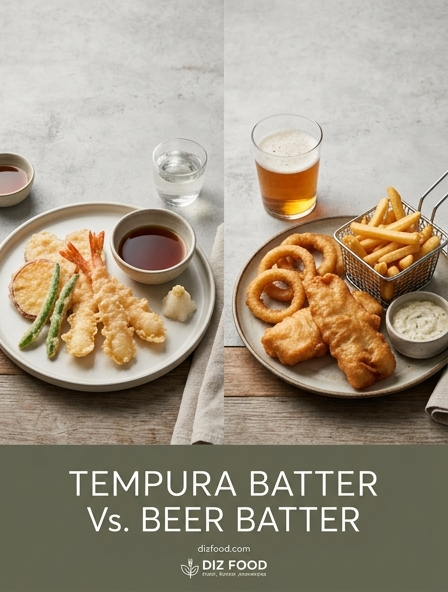
When it comes to achieving that quintessential crunch, the battle between tempura and beer batter often boils down to a choice between delicate refinement and hearty satisfaction. Tempura offers a lacey, feather-light coating that highlights the natural flavors of vegetables and seafood, relying on ice-cold water and minimal mixing to prevent gluten development. In contrast, beer batter leverages carbonation and malt acidity to create a robust, deeply golden crust that stands up perfectly to thicker cuts of fish or poultry. Whether you're craving a whisper-thin crisp or a bold, flavorful snap, understanding the science behind these two iconic coatings is the secret to elevating your home frying game to professional heights.
| Feature | Tempura Batter | Beer Batter |
|---|---|---|
| Primary Liquid | Ice-cold sparkling or plain water | Cold beer (Lager or Ale) |
| Texture Profile | Lacey, airy, and fragile-crisp | Thick, bubbly, and substantial crunch |
| Color Result | Pale, blonde, or translucent | Deep amber to golden brown |
| Leavening Agent | Cold temperature + optional egg | CO2 carbonation + yeast in beer |
| Best For | Shrimp, root veg, leafy greens | Cod, haddock, onion rings, chicken |
| Key Secret | Minimal mixing to avoid gluten | Alcohol evaporates faster than water |
Defining the Differences Between Tempura and Beer Batter
In the culinary world, the art of frying is often defined by the batter that coats the ingredient. Tempura and beer batter represent two distinct philosophies regarding texture, flavor, and cultural heritage. Tempura, a technique perfected in Japan, focuses on a minimalist approach where the batter acts as a translucent, lace-like veil. Its primary goal is to highlight the natural flavor and freshness of the underlying ingredient, whether it be a succulent prawn or a slice of kabocha squash. The resulting coating is pale, exceptionally light, and shatters upon impact, offering a clean finish that does not linger heavily on the palate.
Conversely, beer batter is the hallmark of Western pub-style cooking, most notably associated with British fish and chips or American bar appetizers. This batter is designed to be a robust, protective cocoon. It is thick, savory, and deep golden-brown, providing a satisfying, toothsome crunch that stands up to hearty seasonings and acidic dips. While tempura relies on simplicity and temperature control, beer batter utilizes the complex chemistry of hops, malt, and carbonation to create a flavorful crust. Understanding these differences is essential for any home cook looking to match the right frying technique with their specific ingredients and desired dining experience.
The Science of Ice Cold Water Versus Carbonation
The secret to a successful fry lies in how the batter reacts when it hits hot oil, and this is where the science of liquids comes into play. Tempura relies heavily on the use of ice-cold water. When chilled batter enters the 350-degree oil, the extreme temperature differential causes an immediate steam release. This rapid evaporation creates tiny air pockets, resulting in a puffed, airy texture. Furthermore, the cold water inhibits the development of gluten in the wheat flour. Because gluten thrives in warm environments, the ice-cold temperature keeps the proteins dormant, ensuring the coating remains crispy rather than doughy or bread-like.
Beer batter, on the other hand, utilizes carbonation and acidity to achieve its lift. The bubbles in the beer-carbon dioxide-act as a natural leavening agent. As the batter fries, these bubbles expand, creating a porous and thick structure. Additionally, beer contains proteins and sugars that are not present in plain water. These elements accelerate the Maillard reaction, the chemical process responsible for browning and the development of complex, nutty flavors. The alcohol in the beer also evaporates faster than water, which helps the batter set more quickly and reduces the risk of the food becoming greasy. The result is a substantial crust that manages to stay crisp despite its thickness.
Key Ingredients for Light and Airy Tempura
Achieving the perfect tempura requires a specific set of ingredients, each chosen for its ability to keep the final product light and delicate. Unlike standard frying batters that might use all-purpose flour, tempura enthusiasts often reach for low-protein options. The goal is to minimize the "chew" and maximize the "shatter." The following ingredients are essential for a traditional tempura preparation:
- Low-Protein Flour: Cake flour or pastry flour is preferred because it contains less gluten than all-purpose flour, leading to a much tenderer crust.
- Ice Water: This must be genuinely cold, often kept in a bowl surrounded by ice cubes, to prevent the batter from becoming gummy.
- Egg Yolks: A single egg yolk provides just enough fat to add richness and a hint of color without making the batter heavy or overly thick.
- Cornstarch or Rice Flour: Many modern recipes replace a portion of the wheat flour with these starches to increase the "crisp" factor and provide a barrier against moisture.
- Baking Powder: A small pinch can act as insurance, providing extra leavening to ensure the batter stays airy even if the mixing technique isn't perfect.
When combined, these ingredients create a slurry that should be thin and slightly lumpy. Over-mixing is the enemy of tempura; the presence of small dry flour pockets is actually encouraged, as they contribute to the irregular, "blossomed" texture that is the hallmark of high-quality Japanese frying.
Why Beer Batter Creates a Thicker Golden Crust
The robust nature of beer batter is a direct result of its ingredient composition and the chemical properties of the beer itself. Because beer batter is intended to be a substantial coating, it typically uses all-purpose flour which provides more structure than the cake flour used in tempura. This structural integrity allows the batter to cling to larger pieces of protein, such as thick fillets of cod or oversized onion rings, without sliding off during the frying process. The thickness of the batter acts as an insulator, steaming the food inside while the exterior hardens into a rigid shell.
The characteristic golden hue is not just a matter of fry time; it is a result of the sugars and malt found in the beer. As the batter hits the heat, these sugars caramelize rapidly. This is why beer-battered foods often look much darker and more appetizing than their pale tempura counterparts. Furthermore, the inclusion of the whole egg-both yolk and white-provides more protein to the mixture, which reinforces the walls of the air bubbles created by the carbonation. This creates a "bold crunch" that can support heavy sauces like tartar sauce or thick gravies. The final product is a savory, bready, and deeply satisfying layer that becomes an integral part of the meal's flavor profile rather than just a texture enhancement.
Comparing Texture Profiles Crispy Delicate Versus Bold Crunch
When deciding between these two batters, the sensory experience of the texture is often the deciding factor. Tempura is characterized by its "shattering" quality. It is glass-like and ephemeral, designed to disappear quickly on the tongue so that the focus remains on the ingredient inside. Beer batter, conversely, offers a "bold crunch." It is substantial, providing a rhythmic, audible snap that lingers. The following table highlights the primary textural differences between the two styles:
| Feature | Tempura Batter | Beer Batter |
|---|---|---|
| Consistency | Thin, watery, and translucent | Thick, viscous, and opaque |
| Surface | Lacy, irregular, and spiked | Smooth, uniform, and rounded |
| Mouthfeel | Light, airy, and melt-in-mouth | Hearty, bready, and crunchy |
| Oil Retention | Low (if fried correctly) | Moderate (absorbs more flavor) |
This contrast in texture also dictates how the food is seasoned. Tempura is often served with a light dipping sauce (tentsuyu) or a simple dusting of matcha salt, which does not overwhelm the delicate flakes. Beer batter is rugged enough to be tossed in spices or dipped into heavy, cream-based condiments, as its structure will not immediately collapse under the weight of the moisture.
Best Vegetables and Proteins for Tempura Applications
Because tempura is so light, it is best suited for ingredients that cook quickly and have a delicate natural flavor. Vegetables with high water content or those that can be sliced thinly are ideal candidates. The goal is to have the ingredient and the batter reach peak doneness at the exact same moment. If an ingredient takes too long to cook, the delicate tempura batter will burn; if it cooks too fast, the batter will remain raw and oily. Seafood is perhaps the most classic choice, with tiger prawns being the gold standard for tempura. The high heat of the oil snaps the shrimp to a perfect curl while the batter forms a crisp "skirt" around it.
Vegetables also shine in this format. Root vegetables like sweet potatoes and carrots should be sliced into thin rounds or matchsticks (kakiage style) to ensure they soften sufficiently. Leafy greens or aromatics, such as shiso leaves, parsley, or even edible flowers, are stunning when prepared as tempura, as the batter preserves their shape and color while adding a crystalline crunch. Mushrooms, particularly shiitake or oyster varieties, are also excellent because the batter traps their umami-rich juices inside. Generally, any ingredient that would be overwhelmed by a heavy, bready coating is a prime candidate for the tempura treatment.
Classic Pub Style Pairings for Beer Battered Foods
Beer batter is synonymous with comfort food and high-energy social settings. Its robustness makes it the perfect companion for hearty proteins and acidic, punchy side dishes that can cut through the richness of the fried crust. In a traditional pub setting, the goal is balance: the fat of the fry is countered by the sharpness of a vinegar or a fermented sauce. This style of batter is rarely eaten in isolation; it is almost always part of a larger, more filling plate. Here are the classic pairings for beer-battered items:
- White Fish with Malt Vinegar: The most iconic pairing, where the acidity of the vinegar penetrates the thick crust to season the fish within.
- Onion Rings with Horseradish Dip: The sweetness of the cooked onion is complemented by the spicy, nasal heat of horseradish or blooming onion sauce.
- Pickle Spears with Ranch: A popular appetizer where the salty, sour pickle is encased in a crunchy shell and cooled by a creamy herb dressing.
- Chicken Tenders with Honey Mustard: The savory, malty notes of the batter provide a base for the sweet and tangy contrast of the mustard sauce.
Beyond the sauces, beer-battered foods are traditionally served alongside "heavy" sides like thick-cut chips (fries), mushy peas, or coleslaw. These sides match the intensity of the batter, creating a meal that is satisfyingly dense. The presence of the beer in the batter also makes the food a natural companion to a cold pint of the same brew used in the kitchen.
Essential Mixing Secrets to Prevent Gluten Development
The greatest enemy of a crispy fried batter is gluten. When wheat flour is hydrated and agitated, proteins bond together to create elastic strands. While this is perfect for bread, it is disastrous for frying, resulting in a batter that is tough, chewy, and oily. To prevent this, professional chefs employ several "mixing secrets" that may seem counterintuitive to a novice baker. The most important rule is to minimize mixing. In the case of tempura, you should only stir the batter for a few seconds using chopsticks. It is perfectly acceptable-and even encouraged-to have visible clumps of dry flour remaining in the bowl.
Temperature control is the second secret. Using chilled flour and ice-cold liquids slows down the chemical reaction that forms gluten. Some chefs even go as far as to place their mixing bowl inside a larger bowl filled with ice. For beer batter, while you want the carbonation of the beer to be active, you should still avoid over-whisking. If you stir until the batter is perfectly smooth, you have likely developed too much gluten. Another tip is to mix the batter at the very last second. The longer a batter sits, the more the flour hydrates and the more gluten develops. For the ultimate crunch, the batter should be mixed, the food dipped, and the items dropped into the oil in one continuous, rapid motion.
Optimal Frying Temperatures for the Perfect Golden Finish
Regardless of the batter chosen, the temperature of the frying oil is the most critical variable in the kitchen. For most batter applications, the "sweet spot" lies between 340°F and 375°F (170°C to 190°C). If the oil is too cold, the batter will not seal instantly; instead, it will absorb the oil like a sponge, resulting in a greasy, heavy mess. If the oil is too hot, the exterior will brown or burn before the interior food is safely cooked through. Tempura generally requires a slightly higher, very consistent temperature (around 360°F) to ensure that the light batter "blossoms" and crisps immediately upon contact.
Beer batter, being thicker, is sometimes started at a slightly lower temperature (350°F) to allow the heat to penetrate the dense coating and cook the protein within without charring the sugars in the beer. It is vital to use an oil with a high smoke point, such as peanut, canola, or grapeseed oil, to avoid off-flavors. Furthermore, cooks must be mindful of "oil recovery time." Every time a cold piece of battered food is added to the pot, the oil temperature drops. To maintain the perfect finish, it is essential to fry in small batches and allow the oil to return to its target temperature between sets. Using a clip-on deep-fry thermometer is the only way to ensure precision and avoid the guesswork that leads to soggy crusts.
Which Batter Should You Choose for Your Next Meal
Choosing between tempura and beer batter ultimately depends on the specific ingredient you are preparing and the overall vibe of your meal. If you have sourced incredibly fresh, delicate produce or high-quality seafood and you want those ingredients to be the undisputed stars of the show, tempura is the clear winner. Its lightness and clean finish make it ideal for multi-course meals or appetizers where you want to avoid overwhelming the guests' appetites. It is a refined, technical choice that rewards patience and a light hand in the kitchen.
However, if you are looking for "soul food"-something hearty, filling, and capable of standing up to bold flavors-beer batter is the superior option. It is the better choice for thicker cuts of fish, robust vegetables like cauliflower or onions, and any situation where the food will be served with heavy sauces or enjoyed alongside a cold drink. Beer batter is also slightly more forgiving for beginners, as the carbonation provides a natural lift that compensates for minor mixing errors. Consider your ingredients: if they are subtle, go with the ice-cold tempura; if they are hearty, reach for the beer. By matching the batter to the ingredient, you ensure a professional-quality fry that highlights the best characteristics of your kitchen's bounty.

Comments