
Are you chasing that legendary crunch? Deciding between pressure frying and vacuum frying can feel like a culinary puzzle, but the choice depends entirely on your end goal. While pressure frying is the industry gold standard for locking in moisture to deliver succulent, "Kentucky-style" fried chicken at high speeds, vacuum frying is the high-tech disruptor designed for delicate snacks. By lowering atmospheric pressure, vacuum frying allows foods to cook at significantly lower temperatures, preserving vibrant natural colors and nutrients while drastically reducing oil absorption. Whether you are scaling a fast-food empire or perfecting gourmet vegetable crisps, understanding how these two techniques manipulate heat and pressure is the secret to achieving your signature texture and maximizing shelf life.
| Feature | Pressure Frying | Vacuum Frying |
|---|---|---|
| Operating Temp | High (150°C - 190°C) | Low (90°C - 120°C) |
| Pressure Level | High (approx. 12-15 psi) | Sub-atmospheric (Vacuum) |
| Best For | Meats, bone-in chicken, proteins | Fruit chips, starchy vegetables |
| Oil Content | Moderate; seals surface quickly | Low; up to 50% less oil uptake |
| Nutrient Retention | Standard; high heat degrades vitamins | Superior; preserves heat-sensitive nutrients |
| Final Texture | Juicy interior, crispy exterior | Highly porous, uniform, airy crunch |
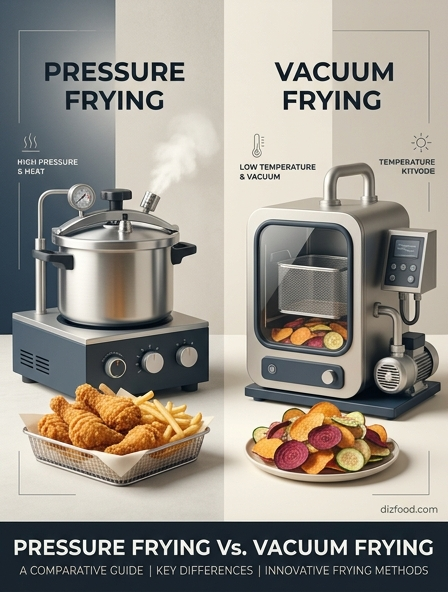
Understanding Pressure Frying vs Vacuum Frying
The culinary landscape utilizes specialized frying techniques to achieve specific textures and flavor profiles that conventional open frying cannot replicate. At the core of these advanced methods are pressure frying and vacuum frying, two technologies that manipulate atmospheric conditions to alter how heat interacts with food. While both processes involve submerging ingredients in hot oil, they operate on opposite ends of the pressure spectrum, leading to vastly different results in the final product.
Pressure frying is a method where food and oil are cooked in a sealed environment. As the moisture within the food heats up, it creates steam that cannot escape, thereby increasing the internal pressure of the vessel. This allows the internal temperature of the food to rise quickly without losing significant moisture. Conversely, vacuum frying takes place in a chamber where the atmospheric pressure is significantly reduced. By lowering the pressure, the boiling point of water is drastically decreased, allowing the food to "fry" at much lower temperatures than standard methods require.
- Atmospheric State: Pressure frying operates above 1 atm, while vacuum frying operates near a vacuum.
- Primary Goal: Pressure frying prioritizes speed and juiciness; vacuum frying prioritizes color and nutrient preservation.
- Equipment Design: Pressure fryers are heavy-duty sealed vats, whereas vacuum fryers are complex airtight chambers with vacuum pumps.
Choosing between these two depends heavily on the raw material being processed. Traditional proteins like chicken thrive under high pressure, whereas delicate fruits and vegetables are better suited for the gentle, low-temperature environment of a vacuum system. Understanding these fundamental differences is essential for any high-volume kitchen or food processor aiming for consistent quality.
The Fundamental Science Behind Pressure Frying
The science of pressure frying revolves around the relationship between pressure and the boiling point of liquids. In a standard open fryer, water turns to steam at 212°F (100°C). As steam escapes, it creates a turbulent barrier around the food, and the interior begins to dry out as moisture is lost to the atmosphere. In a pressure fryer, the sealed lid traps this steam, raising the internal pressure. This physical change elevates the boiling point of the water inside the food fibers, meaning the moisture stays in a liquid state even as the external oil temperature exceeds 300°F.
This phenomenon allows for an accelerated heat transfer. Because water is a better conductor of heat than steam, the pressurized environment cooks the food from the inside out much faster than conventional frying. The high-pressure environment also prevents the oil from penetrating deep into the food during the initial cooking phase. The result is a product that reaches a safe internal temperature rapidly while the exterior undergoes the Maillard reaction to develop a golden-brown crust.
The efficiency of this process is highly valued in high-volume commercial kitchens. By reducing the cooking time by nearly 30 to 50 percent compared to open frying, operators can increase throughput. Furthermore, because the moisture is "locked" inside by the pressure, the natural juices of the protein are retained, leading to a much more succulent and tender end product. This scientific approach ensures that even large pieces of bone-in poultry are cooked evenly without the risk of the exterior burning before the center is done.
How Vacuum Frying Enhances Food Quality
Vacuum frying represents a significant technological leap for the snack food industry, particularly for products that are sensitive to heat. By creating a vacuum inside the frying chamber, the boiling point of water is lowered to as low as 100°F to 140°F (38°C to 60°C). This allows the moisture in the food to evaporate at oil temperatures that are far below the smoke point of most fats and, more importantly, below the threshold where natural pigments and vitamins begin to degrade.
One of the primary quality enhancements of vacuum frying is the preservation of natural color. In traditional frying, the high heat causes rapid browning and caramelization, which can mask the vibrant colors of beets, carrots, or kiwis. Vacuum frying prevents this excessive browning, resulting in chips that look remarkably like the raw ingredient. Additionally, the flavor profile is significantly improved. Because the low temperatures do not scorch the natural sugars or volatile aromatic compounds, the "fresh" taste of the fruit or vegetable remains intact.
Furthermore, the vacuum environment influences the physical structure of the food. As water evaporates at low temperatures, it does so more gently, creating a unique pore structure. This results in a light, airy, and exceptionally crisp texture that is difficult to achieve with other drying or frying methods. For processors focusing on premium, "clean label" snacks, the ability to produce a shelf-stable product that retains its original nutritional and aesthetic integrity is the hallmark of vacuum technology.
Comparing Oil Absorption in Frying Methods
Oil absorption is a critical metric for both health-conscious consumers and food manufacturers concerned with production costs. The mechanism by which oil enters food differs significantly between pressure and vacuum frying. In pressure frying, the high internal pressure acts as a barrier, pushing against the oil and preventing it from soaking into the fibers. However, the most significant difference occurs during the cooling phase and the pressure release at the end of the cycle.
| Feature | Pressure Frying | Vacuum Frying |
|---|---|---|
| Average Oil Content | Medium (approx. 10-15%) | Low (approx. 5-8% with de-oiling) |
| Primary Barrier | Internal Steam Pressure | Low Temperature & Vacuum |
| De-oiling Process | Gravity/Draining | Centrifugal in Vacuum |
Vacuum frying is often touted as the "healthier" frying method because it typically results in much lower oil retention. The key to this is the integrated centrifuge system used in many vacuum fryers. Since the food is still under a vacuum when the frying is complete, the oil remains on the surface. While still in the vacuum, the basket is spun at high speeds to sling the oil off. Because the vacuum is not yet broken, the oil cannot be "sucked" into the pores as the steam condenses. This results in a product with significantly less grease than items fried at atmospheric pressure, where cooling causes an immediate vacuum effect within the food, pulling surface oil deep into the center.
Nutrient Retention in Vacuum vs Pressure Frying
The nutritional profile of fried foods is largely determined by the temperature and duration of heat exposure. High temperatures can cause the thermal degradation of essential vitamins, particularly water-soluble ones like Vitamin C and various B vitamins. Pressure frying, while faster than open frying, still utilizes relatively high temperatures (typically 325°F to 350°F). While the shortened duration helps preserve some nutrients compared to slow-frying, the heat is still intense enough to cause significant nutrient loss in delicate ingredients.
Vacuum frying is vastly superior for nutrient retention. Because the process occurs at temperatures often below 250°F (120°C), heat-sensitive bioactive compounds remain stable. Studies have shown that vacuum-fried snacks retain a much higher percentage of antioxidants, carotenoids, and vitamins compared to their deep-fried counterparts. This makes vacuum frying the preferred method for creating "functional" snacks from nutrient-dense produce like kale, sweet potatoes, and exotic fruits.
- Reduced Oxidation: The lack of oxygen in the vacuum chamber prevents the oxidation of fats and vitamins.
- Lower Thermal Stress: Lower temperatures ensure that the molecular structure of vitamins remains intact.
- Retention of Phytochemicals: Natural plant compounds that provide health benefits are preserved at lower heat.
In contrast, pressure frying is mostly used for meats where the primary concern is protein denaturation and safety rather than vitamin preservation. While pressure frying does keep the food from drying out, it cannot compete with the nutrient-saving capabilities of a low-temperature vacuum environment.
Texture and Crispness Results Compared
Texture is often the deciding factor in the success of a fried product. Pressure frying is designed to create a specific "juicy-crispy" duality. The high pressure ensures that the moisture remains trapped within the protein, resulting in meat that is exceptionally tender and moist. The exterior breading or skin, meanwhile, becomes crisp and firm but remains somewhat pliable compared to the brittle crunch of snack foods. This texture is the gold standard for southern-style fried chicken and other "meal-based" fried items.
Vacuum frying produces a completely different textural experience characterized by a "glassy" or "puffed" crunch. Because the water inside the food evaporates so rapidly and at such low temperatures, it creates a highly porous internal structure. This leads to a light, brittle texture that shatters when bitten. This is ideal for fruit and vegetable chips where a heavy, oily crunch would be unappealing. The absence of high-heat caramelization also means the texture doesn't become "tough" or "chewy" as can happen when sugars are overcooked.
The difference can be summarized by the density of the final product. Pressure-fried items are dense, heavy, and moist, intended to be consumed immediately while hot. Vacuum-fried items are light, airy, and shelf-stable, designed to maintain their crispness for weeks or months when packaged correctly. For a chef or manufacturer, the choice depends on whether the goal is a succulent centerpiece or a light, crispy snack.
Temperature Differences and Acrylamide Reduction
One of the most significant safety concerns in modern food processing is the formation of acrylamide, a chemical compound that can form in starchy foods when they are cooked at high temperatures (above 250°F or 120°C). Acrylamide is categorized as a potential carcinogen, and its reduction is a major goal for the food industry. Traditional frying and pressure frying both operate well above the threshold for acrylamide formation, especially in potato-based products.
Vacuum frying offers a definitive solution to the acrylamide problem. By lowering the atmospheric pressure, the frying process can be completed at temperatures below 120°C, which significantly inhibits the reaction between asparagine and reducing sugars that creates acrylamide. Research has indicated that vacuum frying can reduce acrylamide levels by up to 90% compared to traditional atmospheric frying. This makes it an essential technology for manufacturers of potato chips and other starch-heavy snacks who must comply with strict health regulations.
In addition to safety, the lower temperature of vacuum frying extends the life of the frying oil. High temperatures cause oil to break down, oxidize, and develop off-flavors through a process called polymerization. Because vacuum frying keeps the oil cool and minimizes its exposure to oxygen, the oil stays fresh for much longer. While pressure frying also helps extend oil life by reducing the entry of oxygen into the vat, the higher temperatures involved mean that the oil will still degrade faster than in a vacuum system.
Best Commercial Uses for Pressure Frying
Pressure frying is the workhorse of the Quick Service Restaurant (QSR) industry and large-scale catering. Its ability to produce high volumes of consistent, high-quality fried chicken is unmatched. Because the pressure fryer cooks significantly faster than an open fryer, it is ideal for operations that experience "rush" periods where speed is essential for customer satisfaction. It is the preferred method for any high-protein food that requires a juicy interior and a soft-crunch exterior.
- Bone-in Poultry: Ensures the meat near the bone is cooked thoroughly without drying out the breast meat.
- Thick-cut Potato Wedges: Creates a fluffy, mashed-potato-like interior with a thin, golden crust.
- Breaded Proteins: The pressure seals the breading to the meat, preventing it from falling off or becoming excessively greasy.
- Large Batch Operations: Ideal for grocery store delis and buffet lines where food must stay moist under heat lamps.
Beyond chicken, pressure frying is used for chops, ribs, and even certain types of seafood that can withstand the pressure. The equipment is designed for durability and ease of use in a fast-paced kitchen environment. While the initial investment in a high-quality pressure fryer is higher than an open fryer, the savings in oil, energy, and labor-combined with a superior product-usually justify the cost for any business where fried protein is a core menu item.
Optimal Ingredients for Vacuum Frying Technology
Vacuum frying is not typically used for raw meats or traditional breaded items; instead, it shines when applied to high-sugar, high-moisture, or delicate plant-based ingredients. Ingredients that would normally turn bitter, dark, or lose their shape in a traditional fryer are the perfect candidates for vacuum technology. The snack industry has utilized this to create a whole new category of premium vegetable and fruit chips.
Fruits with high sugar content, such as bananas, pineapples, jackfruit, and apples, are ideal. In a standard fryer, the sugars in these fruits would caramelize and burn almost instantly, leading to a bitter taste. In a vacuum fryer, the low temperature allows the water to escape while the sugars remain stable, resulting in a sweet, naturally flavored chip. Root vegetables like sweet potatoes, taro, and beets also benefit from this method, as their vibrant colors are preserved, and their high starch content produces a satisfyingly light crunch.
Furthermore, vacuum frying is used for unique applications like mushrooms, green beans, and even certain types of seafood like small shrimp or fish skin. These items have delicate structures that would be destroyed by the turbulent boiling of an open fryer or the intense heat of a pressure fryer. The gentle nature of vacuum frying allows these ingredients to maintain their shape and intricate details, providing a visually stunning and gourmet snacking experience.
Choosing Between Pressure and Vacuum Frying Systems
Selecting the right frying system requires a clear understanding of the end goal, the budget, and the operational environment. Pressure frying and vacuum frying are not interchangeable; they serve distinct market segments. For a retail restaurant or a commercial kitchen serving hot meals, a pressure fryer is almost always the correct choice. It is compact, relatively easy to maintain, and specifically engineered to produce hot, juicy proteins for immediate consumption.
On the other hand, if the goal is to manufacture shelf-stable snack products or to process delicate fruits and vegetables, a vacuum fryer is necessary. Vacuum frying systems are generally much larger, more expensive, and more complex, often requiring a dedicated production line with specialized packaging equipment (as vacuum-fried foods need nitrogen-flushed packaging to remain crisp). The investment is significantly higher, but it allows for the production of high-margin, "healthy" snack alternatives that cannot be made any other way.
When making the decision, consider the following factors:
- Target Product: Meat and hot meals (Pressure) vs. Snacks and produce (Vacuum).
- Volume: Pressure fryers are great for high-turnover hot service; vacuum fryers are for industrial-scale snack production.
- Health Claims: If "low oil" and "nutrient-dense" are key marketing points, vacuum frying is the only viable path.
- Technical Expertise: Vacuum systems require more specialized maintenance and operational knowledge than pressure fryers.

Comments