
Modern frying technologies are revolutionizing how we balance flavor with health by fundamentally changing the cooking environment. By utilizing vacuum and pressure systems, manufacturers can significantly lower oil absorption, creating snacks that are remarkably crisp yet surprisingly low in fat. Unlike traditional deep-frying, these advanced methods operate at lower temperatures or under controlled conditions, which facilitates superior nutrient retention and preserves the vibrant, natural colors of the ingredients. This results in a premium, wholesome product that satisfies cravings without compromising nutritional value. To determine which method best elevates your food quality, explore the specific benefits of Pressure Frying Vs. Vacuum Frying.
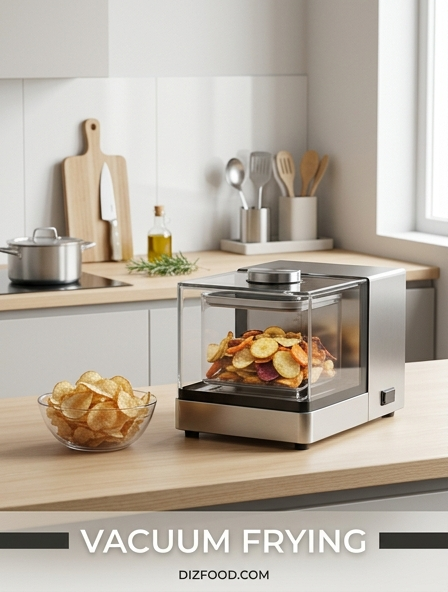
Mechanics of Vacuum and Pressure Frying
The mechanics of frying are fundamentally altered by manipulating atmospheric pressure. In vacuum frying, the process occurs in an enclosed chamber where air pressure is significantly reduced, often below 6.65 kPa. This reduction lowers the boiling point of water to approximately 40°C to 60°C, allowing moisture to evaporate from food at temperatures far below the standard 100°C. This rapid evaporation occurs without subjecting the food to the intense thermal degradation associated with traditional open-air frying.
Conversely, pressure frying increases the internal pressure of the cooking vessel. By raising the pressure, the boiling point of water is elevated, which prevents the moisture inside the food from flashing into steam too quickly. This creates a high-energy environment that accelerates heat transfer while keeping the internal juices trapped. The key mechanical differences include:
- Vacuum Frying: Lowers boiling point, operates at 90°C-120°C, ideal for heat-sensitive fruits and vegetables.
- Pressure Frying: Raises boiling point, operates at 160°C-190°C, ideal for proteins like poultry to maintain succulence.
- Heat Transfer: Both methods optimize thermal conductivity but through opposing thermodynamic principles.
Oil Absorption in Low Pressure Environments
One of the most critical aspects of vacuum frying is its impact on the final oil content of the product. In traditional atmospheric frying, oil fills the voids left by evaporated water as the food cools down. However, in a low-pressure environment, the oil absorption occurs primarily during the "de-oiling" phase. Because the food is cooked at lower temperatures, the cellular structure remains more intact, creating a different capillary profile than high-heat frying.
To achieve the lowest possible oil uptake, vacuum fryers must utilize a centrifuge or a high-speed spinning mechanism while still under vacuum. If the vacuum is broken before the excess oil is removed, the sudden increase in pressure forces the surface oil deep into the pores of the food. Research indicates that vacuum-fried snacks can contain up to 50% less oil than their atmospheric counterparts, provided the de-oiling stage is executed correctly. This makes the technology essential for producing "light" snacks that retain a satisfying crunch without the greasy mouthfeel associated with standard potato chips or vegetable crisps.
Preserving Vitamins Through Low Temperature Frying
Traditional frying often destroys heat-sensitive micronutrients, particularly vitamins C and A, as well as various B-complex vitamins. The high temperatures required for atmospheric frying (usually above 170°C) trigger thermal degradation and oxidation. Vacuum frying mitigates this by operating in a temperature range that protects these delicate compounds. By frying at 100°C or lower, the kinetic energy is insufficient to break many of the molecular bonds that define essential nutrients.
Furthermore, the vacuum chamber is an oxygen-depleted environment. Oxidation is a primary cause of nutrient loss and color fading in processed foods. Without oxygen, the lipids in the frying oil and the vitamins within the food are shielded from oxidative stress. Studies have shown that carotenoids in carrots and ascorbic acid in green beans are preserved at significantly higher rates under vacuum conditions. This results in a product that is not only more nutritionally dense but also aesthetically superior, as the natural pigments do not undergo the browning or "charring" typical of high-heat cooking methods.
Pressure Frying and Moisture Retention Benefits
Pressure frying is widely regarded as the gold standard for preparing proteins, specifically chicken. The primary benefit of this method is the exceptional retention of internal moisture. When food is placed in a pressurized fryer, the high-pressure environment prevents the water molecules inside the meat from turning into steam and escaping. This creates a "sealed" effect, where the exterior browns and crisps rapidly while the interior remains tender and juicy.
The efficiency of pressure frying also leads to shorter cooking times. Because the high pressure forces heat into the center of the food more effectively than atmospheric frying, the total exposure to heat is reduced. This provides several advantages:
- Enhanced Succulence: The internal temperature rises quickly without drying out the muscle fibers.
- Reduced Oil Penetration: The outward pressure of the internal moisture acts as a barrier against oil ingress.
- Flavor Preservation: Natural juices and seasonings are locked within the product rather than leaching into the frying oil.
Comparing Oil Uptake in Advanced Frying Methods
The following table summarizes the typical oil uptake and characteristics across different frying technologies. Understanding these differences is vital for food scientists and chefs aiming to balance health outcomes with sensory appeal. While atmospheric frying is the most accessible, it generally results in the highest oil saturation due to the lack of specialized pressure controls during the cooling phase.
| Frying Method | Avg. Oil Content | Moisture Loss | Primary Benefit |
|---|---|---|---|
| Atmospheric | 35% - 45% | Very High | Low equipment cost |
| Pressure | 25% - 30% | Low | Juiciness in meats |
| Vacuum | 15% - 25% | Controlled | Nutrient preservation |
As shown, vacuum frying offers the most significant reduction in oil uptake, especially when paired with centrifugal de-oiling. Pressure frying sits in the middle, offering a balance that favors meat quality over the total fat reduction seen in fruit and vegetable vacuum frying applications.
Impact of Atmospheric Pressure on Nutrient Density
Atmospheric pressure dictates the environmental constraints under which food is cooked. At standard sea-level pressure, the boiling point of water is fixed, forcing cooks to use high temperatures to achieve the Maillard reaction and dehydration necessary for crispiness. These high temperatures are often the enemy of nutrient density. The longer a food item is exposed to 180°C at atmospheric pressure, the greater the degradation of its phytochemical profile. Antioxidants, which are often volatile, are frequently lost within the first few minutes of traditional frying.
By altering the atmospheric pressure, we effectively decouple the relationship between "crispness" and "high heat." In a vacuum, we can achieve the same level of dehydration and texture at 110°C that would require 170°C at normal pressure. This lower thermal load ensures that the dense array of minerals and vitamins found in raw ingredients remains bioavailable in the final snack. For health-conscious consumers, shifting away from standard atmospheric frying is the most effective way to maintain the functional benefits of the original whole foods.
Reducing Acrylamide with Vacuum Technology
Acrylamide is a chemical compound that naturally forms in starchy foods during high-temperature cooking, such as frying or baking. It is a byproduct of the Maillard reaction, specifically occurring when the amino acid asparagine reacts with reducing sugars at temperatures above 120°C. Because traditional frying typically occurs at 160°C to 190°C, potato chips and French fries are often high in this potential carcinogen. Vacuum technology provides a robust solution to this safety concern by allowing the frying process to remain below the critical 120°C threshold.
By maintaining a low-temperature environment, vacuum frying prevents the chemical transition that leads to acrylamide formation. Experimental data suggests that vacuum-fried potato chips can contain up to 90% less acrylamide compared to those fried at atmospheric pressure. This makes vacuum frying an essential technology for the industrial production of snacks that must comply with strict food safety regulations. Manufacturers can produce golden, crispy chips that satisfy consumer cravings while significantly minimizing the presence of harmful heat-induced contaminants.
Texture and Color Preservation in Modern Frying
The visual and tactile appeal of fried food is largely determined by the preservation of natural pigments and the formation of a porous crust. In atmospheric frying, the high heat often leads to "over-browning," where the sugars caramelize too deeply, masking the natural color of the ingredient. For example, a kiwi or a purple sweet potato will lose its vibrant hue and turn a dull brown when fried traditionally. Vacuum frying, however, preserves the chlorophyll, anthocyanins, and carotenoids responsible for these bright colors.
Texture is also managed more precisely through pressure control. Vacuum frying creates a unique "expanded" texture. As water evaporates at low temperatures, it does so more gently, preventing the collapse of the cell walls. This results in a light, airy crunch rather than a hard, dense bite. For pressure frying, the texture benefit is found in the contrast between the exterior and interior. The pressure ensures the crust forms a tight matrix that prevents the interior from becoming mushy, resulting in a firm but tender product that holds its shape better on the plate.
The Science of Rapid Pressure Cooking and Oil
Rapid pressure frying operates on the principle of increasing the boiling point to facilitate a faster heat transfer coefficient. When the pressure inside the fryer increases, the steam remains in a liquid-vapor equilibrium at the food's surface, which transfers heat much more efficiently than air or dry steam. This allows the internal temperature of the food to reach safe levels in roughly half the time of conventional frying. This speed is not just a matter of convenience; it is a fundamental part of the science of oil management.
Because the cooking cycle is so short, the food spends less time in contact with the hot oil. Furthermore, the high internal pressure creates a continuous outward flow of steam during the cooking process. This outward flux prevents the oil from soaking into the fibers of the meat or vegetable. The result is a product that feels less greasy to the touch and contains fewer calories from absorbed fat. The science of rapid pressure frying thus combines thermodynamic speed with improved lipid profiles, making it a superior choice for high-volume kitchen environments.
Optimized Frying Techniques for Healthier Results
Achieving healthier results in the kitchen requires an optimization of several variables: pressure, temperature, and time. To produce the best outcome, chefs and manufacturers should focus on a multi-stage approach. Initially, the food should be pre-treated, often through blanching or light osmotic dehydration, to reduce the initial water load. This shortens the time required in the fryer, whether vacuum or pressure-based, further protecting the food from oil absorption.
Key optimization strategies include:
- Temperature Precision: Keeping vacuum fryers strictly between 100°C and 110°C to avoid acrylamide while ensuring crispness.
- Mechanical De-oiling: Using centrifugal force immediately after the frying cycle while the vacuum is still engaged.
- Oil Quality: Using oils with high smoke points and high oxidative stability, such as high-oleic sunflower oil, which perform better under pressure.
By integrating these advanced techniques, it is possible to transform frying from a high-fat cooking method into a sophisticated process that produces nutritious, low-acrylamide, and flavorful food. The future of the healthy kitchen lies in this precise control over the physical environment of the frying vessel.

Comments