
Achieving professional-level frying results at home is remarkably simple once you incorporate a spider skimmer into your culinary arsenal. Often favored by professional chefs, this essential tool features a wide, wire-mesh basket designed to safely lift delicate items like tempura, dumplings, or crispy wings from hot oil with ease. The open-weave design ensures rapid oil drainage, preventing your fried favorites from becoming soggy or overly greasy. By providing superior control and keeping your hands at a safe distance from the heat, it truly elevates your deep-frying game. To determine which utensil belongs in your kitchen, consider the key differences between a spider skimmer vs. slotted spoon.
Mastering the Kitchen Spider Skimmer
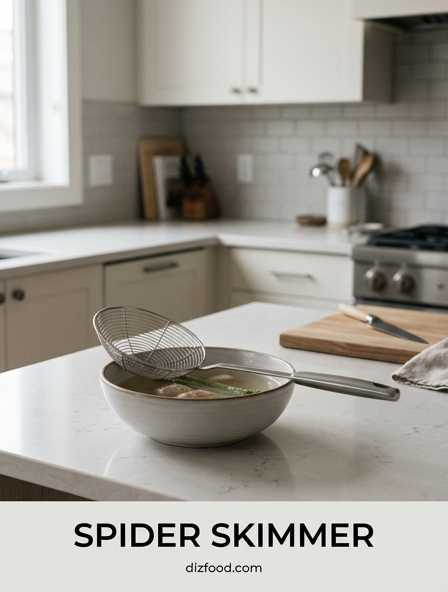
The spider skimmer, characterized by its wide, shallow wire-mesh basket and long handle, is an indispensable tool in both professional and home kitchens. Its name is derived from the web-like pattern of the wires, which are traditionally hand-woven from stainless steel or brass. Unlike solid ladles, the spider skimmer allows liquid to pass through almost instantly, leaving behind only the solid ingredients. This makes it the premier choice for retrieving items from boiling water or sizzling oil without bringing the cooking medium along with them.
To master this tool, one must understand its balance and reach. The long handle is designed to keep the cook's hands safely away from intense heat sources, such as deep fryers or large stockpots. Mastery involves a gentle lifting motion rather than a frantic scooping action; by positioning the basket underneath the food and lifting vertically, you ensure that the delicate items remain intact while excess liquid drains back into the vessel. Whether you are dealing with Japanese tempura or simple blanched vegetables, the spider skimmer provides a level of control that most other utensils simply cannot replicate.
Spider Skimmer Versus Slotted Spoons
While many home cooks reach for a slotted spoon by default, the spider skimmer offers distinct advantages in specific culinary scenarios. The primary difference lies in the surface area and the speed of drainage. Slotted spoons typically feature small holes or thin slits, which can create surface tension that traps oil or water against the food. In contrast, the wide-open wire construction of a spider minimizes this resistance, ensuring that drainage is near-instantaneous.
| Feature | Spider Skimmer | Slotted Spoon |
|---|---|---|
| Drainage Speed | Excellent (Open Mesh) | Moderate (Small Holes) |
| Surface Area | Large/Wide | Compact/Round |
| Food Integrity | Gentle Support | Higher Risk of Crushing |
| Best Use | Frying and Blanching | Stirring and Serving |
The choice between these two tools often boils down to the volume of food and the necessity of dryness. For high-heat frying, the spider is the clear winner as it prevents the food from steaming in its own trapped moisture, which is a common issue when using standard slotted spoons with denser profiles.
Maximizing Oil Drainage for Crispness
Achieving the perfect crunch in deep-fried foods requires more than just the right oil temperature; it requires efficient drainage. When food is lifted from a fryer, the remaining oil begins to cool immediately. If that oil is not shed quickly, it is absorbed back into the crust, leading to a greasy, soggy texture. The spider skimmer is engineered to combat this phenomenon. Its lattice-like structure provides the least amount of surface area for oil to cling to, allowing gravity to do its work effectively.
To maximize crispness, use the spider to lift the food and give it a gentle shake over the pot before transferring it to a wire cooling rack. This "shake-and-lift" technique ensures that the majority of the oil returns to the pot. Because the spider supports the food from a broad base, you can lift multiple items at once without them piling up and trapping oil between layers. This rapid separation of food and fat is the secret to professional-grade results in dishes like calamari, fritters, and schnitzel, ensuring the coating remains brittle and light.
Enhanced Safety During Deep Frying
Safety is a paramount concern when working with hot oil, which can reach temperatures exceeding 375 degrees Fahrenheit. The design of the spider skimmer is inherently safety-oriented. The long handle, often made of wood, bamboo, or heat-resistant stainless steel, acts as a significant buffer between the cook's skin and potential oil spatters. This distance is crucial when dropping items into the oil or retrieving them, as it minimizes the risk of accidental burns from "burping" oil bubbles.
- Extended Reach: Keeps hands at a safe distance from steam and hot oil splashes.
- Stable Support: The wide basket prevents food from rolling off and splashing back into the oil.
- Lightweight Maneuverability: Allows for quick movements to douse flare-ups or retrieve overcooked items.
- Heat Dissipation: Wire construction cools faster than solid metal, reducing the risk of contact burns.
By using a spider skimmer, you reduce the physical interaction with the dangerous cooking environment. It allows for a calm, controlled approach to frying, which is often the most intimidating task for a novice cook. Using the right tool transforms a high-risk activity into a manageable and safe culinary process.
Selecting the Best Skimmer Materials
When shopping for a spider skimmer, the material choice impacts both durability and performance. Traditional designs often use brass wire with bamboo handles, while modern versions favor all-stainless steel construction. Each material offers specific benefits depending on your cooking style and frequency. Stainless steel is highly prized for its hygiene; it is non-reactive, rust-resistant, and usually dishwasher-safe, making it the practical choice for most modern households. It can withstand high temperatures without warping or degrading over time.
Conversely, many chefs prefer bamboo handles for their natural grip and heat resistance. Bamboo does not conduct heat as quickly as metal, meaning the handle stays cool to the touch even during long frying sessions. However, bamboo requires hand-washing and occasional oiling to prevent cracking. Brass-wired skimmers are beautiful and traditional, often found in Asian markets, but they may tarnish and require more maintenance than their steel counterparts. Silicone-coated spiders are also available for use with non-stick cookware, though they lack the fine-wire precision of metal versions. Ultimately, a high-quality stainless steel spider with a reinforced weld is the most versatile investment for a busy kitchen.
Precision Handling of Delicate Foods
Delicate ingredients, such as poached eggs, handmade gnocchi, or thin-skinned wontons, require a soft touch to prevent them from tearing or bursting. The spider skimmer excels here because its wide, flat basket distributes the weight of the food across a larger surface area than a standard spoon. This prevents the concentrated pressure points that lead to breakage. When retrieving a poached egg, the spider allows the water to fall away completely while cradling the fragile white and yolk with minimal disturbance.
In the case of boiling dumplings or pasta, the spider allows the cook to "fish" for items that have floated to the surface-a sign of doneness-without disturbing those still cooking at the bottom. This precision is vital for maintaining the textural integrity of gourmet ingredients. The wire mesh acts almost like a safety net, catching the food gently. By using a spider, you can transfer delicate items directly from the cooking liquid to a finishing sauce or a serving plate with confidence, ensuring that the visual presentation remains as high-quality as the flavor and texture of the dish itself.
Extending Oil Life Through Skimming
One of the most overlooked functions of the spider skimmer is its ability to maintain the quality of cooking oil. During deep frying, small bits of batter, breading, or flour inevitably fall off the food. If left in the hot oil, these particles continue to cook, eventually burning and carbonizing. This debris not only imparts a bitter, burnt taste to subsequent batches of food but also accelerates the degradation of the oil by lowering its smoke point. Using a spider skimmer regularly during the cooking process allows you to remove these "floaties" efficiently.
- Continuous Cleanup: Sweep the surface of the oil between batches to collect loose crumbs.
- Prevent Smoke: Removing debris prevents it from burning and creating excess smoke in the kitchen.
- Flavor Preservation: Clean oil ensures that your fish doesn't taste like the burnt breading from the previous batch of chicken.
- Cost Efficiency: By keeping oil clean, you can reuse it more times, saving money and reducing waste.
This simple maintenance habit, facilitated by the fine mesh of the spider, significantly elevates the quality of your fried foods while being economically sensible.
Techniques for Uniform Golden Browning
Achieving a uniform golden-brown color on fried items requires constant motion and even heat exposure. When food sits at the bottom of a pot, it can develop "hot spots" where it touches the metal, leading to uneven browning or sticking. The spider skimmer is the perfect tool for agitating and rotating food during the frying process. By gently swirling the items in the oil, you ensure that hot currents reach every nook and cranny of the food's surface, resulting in a consistent professional finish.
Furthermore, many items like doughnuts or arancini need to be flipped halfway through cooking to ensure both sides are perfectly colored. The broad basket of the spider makes flipping large or round items much easier and safer than using tongs, which can pierce the surface and let oil inside. Using the skimmer to lift and roll the food gently within the oil allows for a controlled transition. This level of interaction with the cooking process ensures that the final product is not only cooked through but possesses that aesthetically pleasing, even coloration that is the hallmark of a skilled cook.
Multipurpose Kitchen Uses for Spiders
Although widely associated with deep frying, the spider skimmer is a versatile tool that performs exceptionally well in various other kitchen tasks. Its design makes it a superior alternative to a colander when dealing with smaller quantities of food or items that need to be moved from boiling water to an ice bath. Instead of carrying a heavy, steaming pot of water to the sink, you can simply use the spider to retrieve the ingredients directly, leaving the hot water safely on the stove.
- Blanching Vegetables: Quickly move greens from boiling water to ice water to stop the cooking process.
- Pasta Retrieval: Perfect for lifting short pasta shapes or ravioli directly into a sauté pan of sauce.
- Hard-Boiled Eggs: Safely lower and lift multiple eggs from boiling water without cracking the shells.
- Straining Stock: Use it to remove large aromatics and bones from a stockpot before fine-straining.
By thinking beyond the deep fryer, you can streamline your workflow and reduce the number of heavy pots you need to lift and pour. The spider skimmer effectively acts as a handheld, mobile strainer that brings convenience to almost any boiling or simmering task.
Long Term Care and Maintenance Tips
To ensure your spider skimmer lasts for years, proper maintenance is essential. Because of the intricate wire mesh, food particles can sometimes become trapped in the junctions where the wires cross. After use, it is best to rinse the skimmer immediately under hot running water to dislodge any debris before it has a chance to harden. If you are using a stainless steel model, it can typically go into the dishwasher, but hand-washing is often more effective for reaching into the crevices of the "web."
For those with bamboo-handled spiders, avoid soaking the handle in water, as this can cause the wood to swell, warp, or develop mold. Instead, wipe the handle with a damp cloth and dry it immediately. Periodically checking the integrity of the wire is also important; if a wire snaps, it can create a sharp edge that might snag your skin or a cleaning cloth. Store the skimmer by hanging it from its hook or handle loop rather than cramming it into a crowded utensil drawer. This prevents the delicate mesh from being crushed or bent by heavier tools, maintaining its shape and functionality for the long haul.


Comments