
When you're managing a high-volume kitchen or food production line, the choice between simple degreasing and strategic oil recovery is the difference between throwing money down the drain and boosting your bottom line. While standard degreasing focuses purely on removing unwanted fats to clarify a product or meet health standards, oil recovery uses advanced separation technology to reclaim high-quality lipids for reuse or resale. By understanding these nuances, you can preserve the essential flavor profiles of your "sauce" while drastically reducing ingredient waste, ensuring your process is as lean as your final product.
| Feature | Standard Degreasing | Strategic Oil Recovery |
|---|---|---|
| Primary Goal | Waste removal & surface clarification. | Resource reclamation & byproduct valorization. |
| Yield Impact | High loss; fat is discarded as sludge. | High retention; captures up to 95% of usable oils. |
| Financial Value | Increases disposal and sewage costs. | Reduces raw material spend; creates new revenue. |
| Flavor Integrity | Focuses on fat reduction only. | Preserves lipid-soluble aromatic compounds. |
| Equipment | Basic skimmers or manual separators. | Centrifuges or high-efficiency thermal units. |
| Sustainability | High environmental footprint (waste). | Circular economy approach (recycled nutrients). |
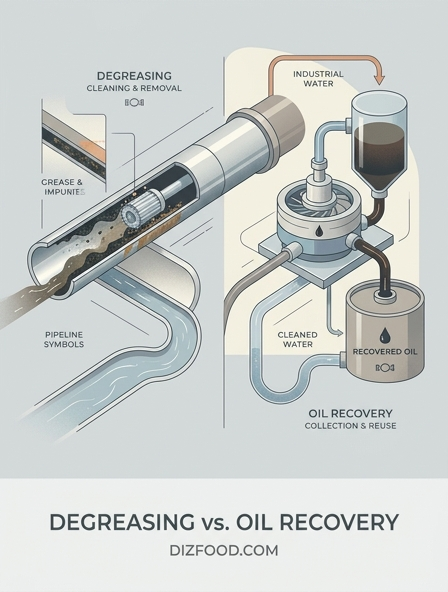
Understanding Degreasing and Oil Recovery
In the high-volume environment of commercial kitchens, managing fats, oils, and grease (FOG) is a critical operational requirement. Understanding the distinction between degreasing and oil recovery is the first step toward effective facility management. Degreasing primarily refers to the process of removing grease deposits from surfaces such as cooktops, ventilation hoods, and floors. This is typically a hygiene-centric activity aimed at preventing fires, ensuring food safety, and maintaining a professional aesthetic. It involves breaking down complex lipid chains so they can be rinsed away, often resulting in the grease being emulsified into the wastewater stream.
Oil recovery, conversely, focuses on the capture and collection of used cooking oil (UCO) and grease before it enters the waste stream or becomes a permanent residue on equipment. Instead of simply washing the byproduct away, recovery systems aim to isolate the oil in a state that remains usable for secondary industrial purposes. While degreasing is a reactive cleaning measure, oil recovery is a proactive resource management strategy. In modern culinary infrastructure, these two processes must work in tandem. Efficient recovery reduces the frequency and intensity of heavy-duty degreasing required, as less oil is permitted to aerosolize or accumulate on kitchen surfaces. By integrating both practices, facility managers can maintain higher sanitary standards while simultaneously participating in a broader sustainability cycle that views kitchen byproduct as a valuable commodity rather than a mere nuisance.
Key Differences in Industrial Cleaning
The technical approach to industrial kitchen cleaning varies significantly depending on whether the objective is total removal or material reclamation. Degreasing is often a chemical-intensive process that utilizes surfactants to lower the surface tension of water, allowing it to mix with oil and carry it away. This process effectively "destroys" the oil as a standalone substance by creating an emulsion. Recovery, however, relies on physical properties like density and hydrophobicity to separate the oil from water and solids without altering the oil's chemical structure.
| Feature | Industrial Degreasing | Oil Recovery |
|---|---|---|
| Primary Goal | Sanitization and surface safety | Material capture and reuse |
| Methodology | Chemical emulsification | Mechanical separation |
| Byproduct | Wastewater effluent | Refined used cooking oil |
| Frequency | Daily/Shift-based cleaning | Continuous or batch collection |
| Equipment | Sprayers, scrubbers, pressure washers | Grease traps, skimmers, centrifuges |
The operational impact also differs. Degreasing is labor-intensive and requires significant manual intervention to reach nooks and crannies in heavy machinery. Recovery is often automated through the plumbing and exhaust systems, requiring specialized hardware like grease interceptors or automatic oil skimmers. While degreasing is essential for meeting health department codes regarding surface cleanliness, oil recovery is essential for meeting environmental regulations regarding wastewater discharge and sewage system protection.
Chemical Degreasing Versus Mechanical Recovery
Chemical degreasing utilizes alkaline or solvent-based cleaners to break the molecular bonds of hardened grease. In a kitchen setting, this is most visible when cleaning deep fryers or heavy-duty griddles where carbonized grease has built up. The chemicals transform the grease into a water-soluble form. While highly effective for deep cleaning, this method often renders the grease useless for recycling and can introduce harsh chemicals into the local water treatment system if not managed correctly. The efficacy of chemical degreasing depends heavily on contact time, temperature, and the concentration of the cleaning agent.
Mechanical recovery employs physical laws to isolate oils. Since oil is less dense than water, it naturally floats to the surface. Mechanical skimmers, belt extractors, and sophisticated grease traps take advantage of this buoyancy. These systems are designed to harvest the oil in its "pure" state, free from the heavy detergents used in cleaning. This is particularly relevant for high-volume frying operations where "yellow grease" can be collected directly from the source. Unlike chemical methods, mechanical recovery is a non-destructive process. It preserves the energy value of the oil, making it an ideal feedstock for biodiesel production. The choice between these methods often depends on the state of the grease; liquid oil is best recovered mechanically, while baked-on resinous grease requires chemical intervention to dislodge.
Environmental Impact of Oil Management
The environmental consequences of improper oil management in commercial kitchens are profound. When fats and oils are simply washed down the drain during a degreasing cycle without proper filtration, they contribute to the formation of "fatbergs" in municipal sewer systems. These massive blockages cause sewage backups and costly infrastructure damage. Furthermore, emulsified grease that bypasses traditional traps can deplete oxygen levels in local waterways, harming aquatic life. Consequently, the reliance on heavy chemical degreasers introduces phosphates and volatile organic compounds (VOCs) into the ecosystem, which can have long-term toxicological effects.
Transitioning toward robust oil recovery systems significantly mitigates these risks. By capturing oil at the source, kitchens reduce the organic load on wastewater treatment plants. This not only prevents pipe blockages but also facilitates the "circular economy." Recovered oil is one of the most efficient feedstocks for renewable energy. For every gallon of used cooking oil recovered and converted into biodiesel, there is a significant reduction in greenhouse gas emissions compared to petroleum-based fuels. Effective oil management, therefore, transforms a potential pollutant into a sustainable asset, reducing the carbon footprint of the food service industry while protecting the integrity of urban plumbing and natural water systems.
Economic Benefits of Oil Reclamation
Implementing an oil reclamation strategy offers substantial economic advantages over a pure disposal-oriented degreasing model. First, there is the direct revenue potential. Many third-party waste management companies pay commercial kitchens for their used cooking oil. This turns what was once a waste expense into a consistent revenue stream. As the global demand for biofuels increases, the market value of recovered "yellow grease" continues to rise, providing a hedge against other operational costs. Additionally, recovered oil is often cleaner than grease trapped in wastewater, fetching a higher market price.
Beyond direct sales, the indirect savings are significant. By using mechanical recovery systems to catch grease before it enters the plumbing, restaurants can drastically reduce the frequency of professional drain snaking and grease trap pumping services. These maintenance costs can be exorbitant, especially in older buildings with sensitive piping. Furthermore, reducing the reliance on expensive degreasing chemicals lowers the procurement budget for cleaning supplies. Efficient oil recovery also extends the life of kitchen exhaust fans and ventilation systems; when oil is captured effectively, there is less buildup on mechanical components, leading to fewer motor failures and lower energy consumption. Ultimately, oil reclamation optimizes the financial lifecycle of kitchen ingredients and infrastructure, maximizing the "yield" of every drop of oil purchased.
Industrial Degreasing Processes Explained
The process of industrial degreasing in a kitchen environment is a systematic approach to removing stubborn, polymerized fats. It typically begins with a "dry" stage, where bulk solids and excess liquid oils are scraped away to prevent overwhelming the chemical agents. Once the bulk material is removed, an alkaline degreaser is applied. These chemicals work through a process called saponification, which essentially turns the grease into a soapy substance that can be dissolved in water. For vertical surfaces like vent hoods, foaming degreasers are preferred as they cling to the surface, increasing the dwell time necessary for the chemical to penetrate the grease layers.
- Pre-treatment: Mechanical removal of heavy deposits to improve chemical efficiency.
- Application: Spraying or foaming of surfactants and alkaline builders onto contaminated surfaces.
- Dwell Time: Allowing the chemicals to break down the molecular structure of the lipids (usually 5 to 15 minutes).
- Agitation: Using abrasive pads or brushes to dislodge softened grease from the substrate.
- Rinsing: Using high-pressure hot water to flush the emulsified mixture into a controlled drainage system.
- Neutralization: Ensuring no corrosive residues remain on food-contact surfaces.
Temperature plays a vital role in this process; heat reduces the viscosity of the grease, making it far more reactive to the degreasing agents. This is why many industrial degreasing units utilize steam or heated pressure washers to achieve a sanitary finish in the shortest possible time.
Efficiency in Oil Separation Systems
The efficiency of an oil separation system determines the purity of the recovered oil and the cleanliness of the discharged water. In commercial kitchens, the most common system is the passive gravity interceptor. These systems rely on the fact that oil has a specific gravity lower than water. Efficiency is maximized by controlling the flow rate; if water moves too quickly through the tank, the oil droplets do not have enough time to rise to the surface. Advanced systems utilize "coalescing media"-surfaces that encourage small oil droplets to merge into larger ones, accelerating the separation process.
For high-volume industrial kitchens, active mechanical separators provide even greater efficiency. These include centrifugal separators, which use high-speed rotation to force denser water and solids outward while pulling lighter oil toward the center. Another efficient method is Dissolved Air Flotation (DAF), where microscopic air bubbles are injected into the waste stream. These bubbles attach to grease particles and float them to the surface for automated skimming. The efficiency of these systems is typically measured by the "Oil and Grease" (O&G) parts per million (ppm) in the effluent. A highly efficient system can reduce grease content from several thousand ppm down to less than 100 ppm, satisfying even the most stringent municipal discharge permits and ensuring the recovered oil is of high enough quality for industrial processing.
Waste Disposal Versus Resource Reuse
The traditional paradigm of kitchen management viewed grease as a waste product to be disposed of as cheaply as possible. This often meant washing it into the sewer or mixing it with general trash, both of which are increasingly regulated and environmentally detrimental. This "linear" disposal model is being replaced by a "circular" resource reuse model. In the reuse framework, used cooking oil is no longer "waste" but a feedstock for secondary industries. By separating degreasing activities (cleaning) from recovery activities (harvesting), kitchens can participate in a global supply chain that transforms lipids into high-value products.
Resource reuse extends beyond just the oil itself. Modern recovery systems can also isolate food solids, which can be sent to anaerobic digesters to produce biogas. This shift in perspective requires a change in kitchen culture. Staff must be trained to keep "clean" used oil separate from "dirty" wash water containing detergents. When oil is kept pure, its reuse potential is maximized. The transition from waste to resource also impacts the facility's bottom line; while waste disposal is an expense that grows with volume, resource reuse creates a system where higher volume can actually lead to higher rebates or credits. This aligns the kitchen's operational success with environmental stewardship, creating a sustainable loop of consumption and reclamation.
Selecting the Right Treatment Method
Choosing between an emphasis on degreasing or recovery-or finding the right balance between them-depends on several factors unique to the kitchen's operation. The volume of oil used is the primary driver; a small cafe might rely heavily on manual degreasing, while a large-scale industrial bakery or a high-output fast-food franchise requires automated recovery systems. The type of fats used also matters. Animal fats (lard, tallow) tend to solidify at room temperature, requiring heated recovery systems or more aggressive chemical degreasers compared to vegetable oils which remain liquid longer.
- Volume Analysis: Calculate the gallons of oil used per week to determine if a recovery system is economically viable.
- Regulatory Compliance: Review local municipal codes regarding grease trap sizing and effluent limits.
- Space Constraints: Determine if there is room for large interceptors or if compact, point-of-source skimmers are necessary.
- Labor Availability: Assess whether staff have the time for manual degreasing or if automated systems are needed to maintain hygiene.
- Infrastructure: Check if current plumbing can support the separation of "gray water" from oil-rich streams.
Ultimately, the most successful operations employ a hybrid approach. They use high-efficiency mechanical recovery to capture the majority of the oil at the source, followed by targeted chemical degreasing for surface maintenance and deep cleaning. This ensures a clean workspace without wasting the potential value of the oil byproduct.
Optimizing Industrial Fluid Lifecycles
Optimizing the lifecycle of oils in a kitchen environment involves a holistic view of the fluid's journey from the delivery truck to the reclamation tank. The goal is to maximize the utility of the oil during the cooking process and then maximize its value during the recovery process. This begins with proper oil filtration during the cooking stage. By removing food particles and carbonized bits throughout the day, the oil stays usable for longer, reducing the total volume of oil that needs to be recovered or degreased. This "active life" extension is the first step in fluid optimization.
The second stage of optimization involves the transition from the fryer to the storage container. Using closed-loop systems that pump used oil directly into a holding tank prevents spills, reduces the need for floor degreasing, and prevents the oil from being contaminated by cleaning chemicals or water. Monitoring technology now allows facility managers to track the levels in their recovery tanks in real-time, optimizing the schedule for collection and ensuring that the systems never overflow. By integrating these steps, a kitchen can achieve a "lean" oil cycle. This reduces the total cost of ownership for kitchen equipment, lowers the environmental footprint, and ensures that every liter of oil is either used to produce food or repurposed to produce energy, leaving nothing to waste in the municipal sewers.





Comments