
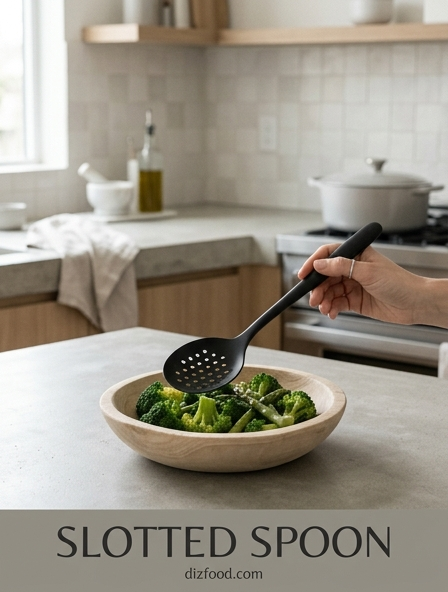
Essential Design of the Classic Slotted Spoon
The architecture of a classic slotted spoon is a masterclass in functional kitchen engineering. At its core, the tool features a wide, shallow bowl specifically designed to cradle solid food items while allowing liquids to pass through unobstructed. The geometry of the bowl is crucial; it must be deep enough to secure a rolling meatball or a buoyant dumpling, yet shallow enough to allow for a quick release onto a serving plate. Manufacturers typically utilize high-grade stainless steel or heat-resistant polymers to ensure the structural integrity of the spoon remains intact under the thermal stress of boiling water or hot oil.
Beyond the bowl, the handle's length and angle play a significant role in user ergonomics. A well-designed slotted spoon often features a slight offset between the handle and the head, providing better leverage and keeping the cook's hand away from rising steam. Key design elements include:
- Long handles for deep-pot safety and reach.
- Perforation patterns that optimize flow rate.
- Beveled edges for easier sliding under delicate items.
- Heat-resistant grips to prevent thermal conductivity to the hand.
- Reinforced neck joints to prevent bending under heavy loads.
Precision Scooping Techniques for Golden Frying
Achieving the perfect golden-brown finish on fried foods requires more than just the right temperature; it demands precision in how items are manipulated within the oil. Using a slotted spoon effectively means mastering the "sweep and lift" motion. This technique involves gliding the spoon along the bottom of the frying vessel to ensure no pieces are sticking, then gently lifting the food to inspect the color without interrupting the convection currents of the oil. This constant monitoring prevents over-browning and ensures an even cook across the entire batch.
To maximize efficiency and maintain the quality of the oil, professional chefs follow a specific sequence of movements during the frying process. This sequence minimizes turbulence and reduces the risk of splashing hot grease:
- Slowly submerge the spoon to locate the submerged food items.
- Gently stir in a circular motion to separate clinging pieces.
- Lift the items vertically, pausing for two seconds above the surface.
- Tilt the spoon slightly to encourage rapid oil runoff from the slots.
- Transfer the fried goods to a wire rack or lined tray immediately.
The Science of Efficient Oil Drainage
The efficiency of a slotted spoon is dictated by the principles of fluid dynamics and surface tension. When food is lifted from a fryer, oil clings to both the food surface and the utensil. The slots or holes in the spoon serve to break the surface tension of the liquid, allowing gravity to pull the oil back into the pot. The size and distribution of these openings are mathematically calculated to balance structural strength with maximum drainage area. Smaller holes provide more support for fragile items, while larger slots allow for faster drainage of high-viscosity liquids or heavy batters.
The following table illustrates the relationship between slot design and the specific culinary applications they are best suited for in a commercial kitchen environment:
| Slot Type | Drainage Speed | Ideal Food Type |
|---|---|---|
| Fine Perforated Holes | Moderate | Small peas, corn, or delicate berries |
| Wide Vertical Slots | High | Large potato wedges, fried chicken |
| Circular Large Openings | Very High | Hard-boiled eggs, large dumplings |
Mastering Temperature Control During Poaching
Poaching is a delicate thermal process that requires maintaining a constant water temperature just below the boiling point. A slotted spoon is indispensable here, acting as a bridge between the poaching liquid and the plating surface. Because stainless steel spoons can conduct heat, they can briefly lower the temperature of the liquid immediately surrounding the food item if they are left submerged. Skilled cooks use the spoon to gently rotate the poaching item, ensuring that the warm water circulates evenly around the entire surface, preventing "cold spots" that result in uneven textures.
To maintain thermal equilibrium while poaching, consider these technical factors when using your utensil:
- Pre-warm the spoon in the liquid to avoid thermal shock to the food.
- Avoid vigorous stirring which introduces air and lowers the water temperature.
- Use the slots to monitor the water's "shimmer" without creating bubbles.
- Lift items slowly to keep the poaching liquid from cooling too rapidly.
- Ensure the spoon head is large enough to support the item's full weight.
Handling Delicate Proteins with Minimum Disturbance
When working with fragile proteins like flaky white fish, silken tofu, or fresh pasta, the primary goal is to minimize shear force. Every movement of the spoon against the food's surface risks tearing the exterior or breaking the internal structure. A slotted spoon provides a stable platform that supports the item from beneath, distributing the weight across its surface area. The slots allow the liquid to exit vertically, which prevents the "suction" effect that often occurs with solid spoons, which can cause delicate skins to stick and tear away upon lifting.
To successfully move delicate items without damage, adhere to the following procedural steps:
- Position the spoon at a shallow angle relative to the food item.
- Slide the leading edge of the spoon underneath the center of gravity.
- Lift upward in a single, smooth, and continuous motion.
- Hold the spoon steady to prevent the food from sliding against the edges.
- Gently tilt the spoon to allow the item to slide onto the plate.
Safety Protocols for Lifting High-Heat Ingredients
Safety is paramount when using a slotted spoon in high-heat environments. Whether dealing with 375-degree frying oil or boiling pasta water, the risk of steam burns or oil splashes is significant. A properly utilized slotted spoon serves as a safety barrier, but only if handled with the correct protocol. The user should always maintain a firm grip on the handle, ensuring that fingers are positioned behind any heat guards. It is also vital to ensure that the spoon is completely dry before dipping it into hot oil; any residual moisture trapped in the slots can cause a violent steam explosion and dangerous splattering.
Standard safety measures for high-heat utensil handling include:
- Wearing heat-resistant gloves when performing long-duration frying.
- Keeping the face and torso away from the direct vertical path of the pot.
- Avoiding overfilling the spoon to prevent items from falling back and splashing.
- Verifying the handle's attachment point is secure before each use.
- Storing the spoon on a dedicated rest to prevent grease from dripping on the stove.
Optimal Materials for Slotted Frying Utensils
The material composition of a slotted spoon dictates its longevity, heat resistance, and interaction with various types of cookware. While stainless steel is the industry standard due to its durability and non-reactive nature, other materials offer specific benefits for different kitchen tasks. For instance, silicone-coated spoons are essential when working with non-stick pans to prevent scratching the delicate coating. Meanwhile, high-temperature nylon is lightweight and easy to handle for high-volume tasks but may lack the rigidity required for heavy lifting. Choosing the right material involves a trade-off between heat tolerance and surface protection.
The table below compares common materials used for slotted spoons and their performance metrics in a professional kitchen:
| Material | Max Temp | Pros | Cons |
|---|---|---|---|
| Stainless Steel | 800°F+ | Highly durable, easy to clean | Conducts heat, scratches non-stick |
| Silicone | 450°F | Non-stick safe, heat resistant | Can be too flexible for heavy items |
| High-Temp Nylon | 400°F | Inexpensive, lightweight | Can melt if left on pot rim |
Achieving Perfect Poached Egg Consistency
The poached egg is perhaps the ultimate test for a slotted spoon. The goal is to remove the egg from its simmering bath while leaving behind the "wispy" or ragged bits of egg white that often detach during the cooking process. A spoon with medium-sized holes is ideal for this task, as it allows the excess liquid and unattached whites to drain away while providing a secure cradle for the soft, delicate yolk and set white. The technique requires a steady hand and a quick but gentle motion to ensure the egg remains intact and aesthetically pleasing for presentation.
Follow these steps to produce a professional-grade poached egg using your slotted spoon:
- Create a gentle vortex in the water before dropping the egg.
- Use the spoon to occasionally nudge the egg to prevent sticking.
- Lift the egg slowly once the white is opaque and the yolk is still soft.
- Dab the bottom of the spoon onto a clean kitchen towel to remove excess water.
- Slide the egg gently onto your toast or serving vessel.
Reducing Grease Transfer in Fried Foods
One of the primary health and culinary benefits of using a slotted spoon is the significant reduction in grease transfer from the cooking vessel to the plate. When food is lifted with a solid spoon, it sits in a pool of oil, which is then absorbed by the coating or the food itself as it cools. This results in a soggy, oily texture and increased caloric content. The slotted spoon solves this by providing an immediate exit path for surface oils. By shaking the spoon very gently over the hot oil, the cook can encourage the "beading" of fat, which then falls back into the fryer where it belongs.
Effective grease management strategies include:
- Allowing a 5-10 second drainage period over the pot for each scoop.
- Using a spoon with wider slots for items with high surface area like fries.
- Rotating the spoon slightly to drain oil trapped in crevices of the food.
- Transferring food to a secondary drainage station immediately after the spoon.
- Maintaining high oil temperatures to prevent excess absorption into the food.
Cleaning and Storing Your Stainless Steel Tools
Proper maintenance of stainless steel slotted spoons ensures they remain hygienic and free from corrosion. Because the slots can easily trap small food particles, starches, or polymerized oils, thorough cleaning is essential. After use in frying oil, the spoon should be wiped down while still warm to remove the bulk of the grease before being washed in hot, soapy water. For stubborn, burnt-on residues, a soak in a mixture of baking soda and vinegar can help loosen the debris without the need for abrasive scrubbers that might scratch the polished finish. Regular inspection of the slots is necessary to ensure no biological matter is left behind.
To extend the life of your professional-grade tools, follow these storage and care tips:
- Dry the spoon immediately after washing to prevent water spots and pitting.
- Store the spoon on a hanging rack to allow for full air circulation.
- Avoid storing steel spoons in damp drawers where they may oxidize.
- Periodically polish with a food-safe stainless steel cleaner.
- Check for any burrs or sharp edges on the slots that could trap bacteria.

Comments