
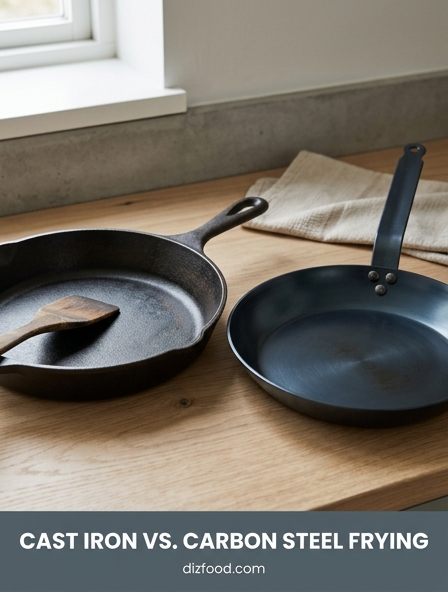
Achieving a restaurant-quality crust depends on mastering the Maillard reaction, and choosing between cast iron and carbon steel is the first step toward that ultimate pro-level sear. While both materials are titans of heat retention and develop a natural non-stick seasoning over time, they cater to different culinary styles. Cast iron is the heavy-duty champion, utilizing its immense thermal mass to maintain steady temperatures even when a cold steak hits the pan. Conversely, carbon steel offers the agility of a frying pan with the soul of a griddle, heating up faster and allowing for precise temperature control. Whether you prefer the rugged, "set-it-and-forget-it" power of iron or the responsive, smooth-gliding surface of carbon steel, both tools are indispensable for any chef looking to upgrade their searing game.
| Feature | Cast Iron | Carbon Steel |
|---|---|---|
| Weight & Build | Heavy; thick-walled; porous surface. | Lighter; thinner gauge; smooth surface. |
| Heat Retention | Superior; stays hot longer for deep searing. | High; loses heat faster than cast iron. |
| Responsiveness | Slow to heat up/cool down. | Fast; reacts quickly to flame adjustments. |
| Searing Style | Constant, radiating heat (Best for thick steaks). | Direct, high-contact heat (Best for fish/poultry). |
| Maneuverability | Difficult; best for stationary cooking. | Excellent; sloped sides for flipping/tossing. |
| Durability | Brittle (can crack); lasts generations. | Ductile (virtually indestructible); lasts generations. |
Cast Iron Heat Retention for Perfect Searing
Cast iron is the undisputed king of thermal mass in the kitchen. Because the material is exceptionally dense and the pans are typically cast with thick walls and bottoms, they possess the ability to store a massive amount of heat energy. When you place a cold protein, such as a thick ribeye steak, onto a preheated cast iron surface, the temperature of the pan does not plummet. This consistency is vital for achieving a professional-grade sear, as it facilitates the Maillard reaction-the chemical process that creates the flavorful, brown crust on cooked meats.
Unlike thinner materials that lose their edge the moment food hits the surface, cast iron acts like a battery for heat. It radiates warmth evenly across the food, ensuring that thick cuts of meat cook through without the exterior burning before the center reaches the desired temperature. This makes it an ideal choice for outdoor searing, campfire cooking, and high-heat stovetop-to-oven transitions. The sheer weight of the pan also ensures a stable cooking surface that won't slide around while you are pressing down on a smash burger or flipping a heavy roast.
- Minimal temperature drop when adding cold ingredients.
- Deep, even crust formation on proteins.
- Excellent performance for thick-cut chops and steaks.
- Radiant heat helps cook the interior of dense foods.
Carbon Steel Agility and Temperature Responsiveness
Carbon steel provides a unique blend of the properties found in cast iron and stainless steel. While it shares the seasoning capabilities of cast iron, its construction is significantly thinner and lighter. This thinness allows for incredible temperature responsiveness. If a sauce begins to break or garlic starts to brown too quickly, a simple turn of the burner dial results in an almost immediate reduction in the pan's surface temperature. This agility is why carbon steel is the preferred tool in professional kitchens where speed and precision are paramount.
The material is also much easier to manipulate for active cooking styles. Sautéing vegetables or flipping delicate crepes requires a pan that moves with the cook's wrist rather than fighting against it. Carbon steel pans typically feature longer, angled handles that provide better leverage for tossing ingredients. This makes them the superior choice for high-heat stir-frying, where constant motion is required to prevent scorching while maintaining a high enough temperature to achieve "wok hei," or the breath of the wok. It bridges the gap between the ruggedness of iron and the finesse of a lightweight skillet.
Comparing Material Weight and Handling Ease
The physical weight of a frying pan significantly impacts the user experience, especially during long cooking sessions. Cast iron is notoriously heavy, with a standard 12-inch skillet often weighing between seven and nine pounds. This mass makes it difficult to perform one-handed maneuvers, such as pouring out hot oil or sliding an omelet onto a plate. For many home cooks, the weight can be a deterrent, leading to wrist fatigue or the need for a secondary "helper handle" to move the pan safely between the stove and the oven.
In contrast, carbon steel offers a more streamlined profile. While it is heavier than aluminum, it is substantially lighter than cast iron, usually weighing about 25% to 40% less for a pan of the same diameter. The ergonomic benefits of carbon steel are most apparent when performing tasks that require frequent lifting. Below is a comparison of typical handling characteristics:
| Feature | Cast Iron | Carbon Steel |
|---|---|---|
| Average Weight (12") | 7.5 - 9 lbs | 4 - 5 lbs |
| Handle Style | Short, integrated | Long, riveted |
| Manovreability | Low (Stationary) | High (Agile) |
| Ease of Pouring | Requires two hands | One-handed control |
Mastering Seasoning for Natural Nonstick Performance
Both cast iron and carbon steel rely on a process called polymerization to create a natural nonstick surface. This involves baking layers of fat or oil into the pores of the metal at high heat, transforming the liquid oil into a hard, plastic-like film. Mastering this seasoning is essential for preventing food from sticking and protecting the metal from oxidation. While many pans come "pre-seasoned" from the factory, the best performance is achieved through a dedicated home seasoning routine and consistent use.
- Thoroughly clean the pan with warm water and mild soap to remove any factory wax.
- Dry the pan completely on a stovetop burner to ensure no moisture remains.
- Apply a very thin layer of high-smoke-point oil (like grapeseed or flaxseed) to the entire surface.
- Wipe away almost all the oil with a clean paper towel until the pan looks dry.
- Place the pan upside down in an oven at 450°F to 500°F for one hour.
- Turn off the oven and let the pan cool inside completely.
As you cook more fatty foods like bacon or seared steaks, the seasoning layer thickens and becomes smoother. Over time, a well-maintained pan will rival the slipperiness of synthetic nonstick coatings without the risk of toxic fumes or surface flaking. The key is thin layers; thick layers of oil will become sticky and gummy rather than hard and slick.
Durability and Lifespan of Heirloom Cookware
One of the most compelling reasons to invest in these materials is their incredible longevity. While modern nonstick pans are essentially disposable items that lose their coating within a few years, cast iron and carbon steel are virtually indestructible. It is common to see cast iron skillets passed down through three or four generations, gaining a smoother finish and better performance with age. Even a pan that has been neglected and covered in rust can be restored to like-new condition with a bit of steel wool and a fresh round of seasoning.
Cast iron is brittle but incredibly tough; while it could crack if dropped from a significant height onto a stone floor, it will never warp under high heat. Carbon steel is slightly more prone to warping if subjected to extreme thermal shock (such as splashing cold water on a red-hot pan), but it is generally more resilient to mechanical stress. Because these pans are made of single pieces of metal or riveted components, there are no coatings to peel and no plastic handles to melt. They are built to withstand the rigors of open flames, metal utensils, and professional-grade heat, making them a one-time purchase for the savvy cook.
Cleaning and Maintenance for Long Term Success
The myth that you can never use soap on seasoned pans has been largely debunked. Modern dish soaps are mild enough that they will not strip away the chemically bonded polymer layer of a well-seasoned pan. However, maintenance still requires more attention than stainless steel or ceramic. The primary enemy of both materials is moisture, which can lead to rust in a matter of hours. Proper cleanup involves a balance of removing food debris while preserving the hard-earned patina of the pan.
- Wash the pan by hand shortly after use; never place it in a dishwasher.
- Use a chainmail scrubber or a stiff brush for stuck-on food bits.
- If food is stubborn, simmer a small amount of water in the pan to loosen the residue.
- Always dry the pan immediately with a towel, then heat it on the stove to evaporate hidden moisture.
- Apply a microscopic layer of oil to the warm pan before storing it in a dry place.
If the surface ever feels rough or looks dull, a quick "mini-seasoning" on the stovetop-heating a thin film of oil until it smokes slightly-can restore the finish. Consistency is the most important factor in maintenance; the more often the pan is used and properly dried, the more resilient the seasoning becomes.
Best Foods to Fry in Cast Iron
Cast iron excels in scenarios where heat stability and high-temperature endurance are required. It is the ultimate vessel for shallow frying and deep frying because the heavy walls help maintain a steady oil temperature, even when cold food is submerged. This leads to crispier results and less oil absorption. Beyond traditional frying, cast iron is the best choice for foods that benefit from a "bottom-up" heat approach, such as cornbread or thick-crust pan pizzas, where the pan acts as a localized oven floor.
Heavier proteins like pork chops, bone-in chicken thighs, and thick steaks are the primary candidates for cast iron frying. The pan's ability to hold onto its heat allows for a deep, even sear that a thinner pan simply cannot match. It is also excellent for "blackening" fish or vegetables, as the pan can withstand the intense, dry heat required for this technique without sustaining damage. Finally, anything that requires a stovetop sear followed by a slow finish in the oven is best handled by cast iron's superior heat retention.
When to Choose Carbon Steel for Sautéing
Carbon steel is the specialist for high-speed, high-movement cooking. Its lighter weight makes it the primary choice for sautéing delicate vegetables, such as asparagus, snap peas, or sliced mushrooms, which require frequent tossing to ensure even cooking without turning to mush. Because carbon steel heats up and cools down so quickly, it gives the cook much more control over the "carry-over" cooking process, preventing sensitive ingredients from overcooking once the heat is turned off.
It is also the superior choice for eggs and delicate seafood. Once seasoned, carbon steel pans are often smoother than cast iron, allowing fried eggs or flaky white fish to slide effortlessly across the surface. Professional chefs prefer carbon steel for omelets because the pan's sloped sides allow the eggs to roll and fold perfectly. If your cooking style involves a lot of wrist action, flipping, or rapid adjustments to heat levels, carbon steel will be your most valuable asset in the kitchen.
Thermal Conductivity and Heat Distribution Differences
Technically, neither cast iron nor carbon steel are great conductors of heat when compared to copper or aluminum. This means they are both prone to developing "hot spots" directly above the heating element. However, they manage this limitation in different ways. Cast iron's thickness allows it to eventually distribute heat more evenly through sheer mass, but it requires a long preheating period (often 5 to 10 minutes) to reach a uniform temperature across the entire surface.
Carbon steel, being thinner, heats up much faster but is more susceptible to the specific shape of your burner. If you use a small burner with a large carbon steel pan, the edges will remain significantly cooler than the center. To compensate for this, cooks must be more proactive in moving the pan or preheating it slowly. Understanding these thermal properties is key to avoiding scorched centers and raw edges. For both materials, the best results come from a gradual preheat on a medium-low setting before cranking up the heat to the desired cooking temperature.
Final Verdict on the Best Frying Pan Investment
Choosing between cast iron and carbon steel ultimately depends on your personal cooking style and physical preferences. Neither is objectively "better," but each fills a specific niche in a well-rounded kitchen. If you prioritize the perfect crust on a steak, enjoy baking in your skillets, and don't mind a bit of heavy lifting, cast iron is a legendary performer that will never let you down. Its ruggedness and heat retention make it a dependable workhorse for traditional, hearty American cooking.
On the other hand, if you prefer the finesse of French cooking, enjoy making stir-frys, or find heavy pans difficult to handle, carbon steel is the superior investment. It offers the same chemical-free nonstick benefits as cast iron but with the speed and agility of a modern skillet. For many enthusiasts, the ideal solution is to own both: a 12-inch cast iron skillet for heavy searing and roasting, and a 10-inch carbon steel pan for eggs, fish, and quick sautés. Regardless of your choice, both materials represent a sustainable, lifetime investment that only improves with every meal you cook.

Comments