
The Science of Surface Moisture
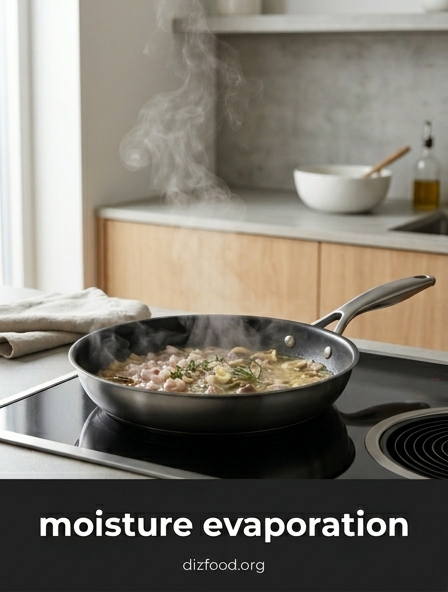
The transition of liquid water into water vapor is the fundamental mechanism behind achieving a crisp culinary texture. When food is introduced to a high-heat environment, the thermal energy causes surface water molecules to move rapidly, eventually overcoming atmospheric pressure to escape as steam. This phase change is an endothermic process, meaning it requires significant energy consumption. In the context of the kitchen, this evaporation creates a protective barrier of steam that prevents the cooking medium, such as oil, from immediately saturating the food's interior.
Effective moisture management relies on the following key physical principles:
- Latent Heat of Vaporization: The specific amount of energy required to turn water into steam without changing its temperature.
- Vapor Pressure Gradient: The difference in pressure between the food surface and the surrounding air, which dictates the speed of evaporation.
- Capillary Action: The movement of internal moisture toward the surface as the exterior dries out.
As the surface dehydrates, the Maillard reaction and caramelization begin, but these browning processes can only occur once the majority of surface water has been successfully evacuated. Without sufficient evaporation, the food remains soft and pale.
Optimal Oil Temperature for Evaporation
Maintaining a precise temperature range is critical for facilitating rapid moisture loss while preventing the absorption of excess fats. If the oil is too cool, the rate of evaporation slows, allowing the oil to seep into the microscopic pores of the food. Conversely, excessively high heat can cause the exterior to carbonize before the internal moisture has a chance to migrate outward, leading to a soggy interior and a burnt exterior.
| Temperature Range | Effect on Moisture | Resulting Texture |
|---|---|---|
| 300°F - 325°F | Slow, steady evaporation | Soft, oily, under-dehydrated |
| 350°F - 375°F | Vigorous steam release | Crisp, light, golden brown |
| 400°F+ | Flash evaporation | Burnt exterior, raw interior |
At the optimal 350°F to 375°F range, the kinetic energy is sufficient to create a "steam muffler" effect. This constant outward flow of gas acts as a pressurized shield, ensuring that the oil remains on the outside while the surface undergoes rapid dehydration and structural hardening.
Surface Area and Crispness Dynamics
The geometry of food significantly influences how quickly it can lose moisture. A larger surface-area-to-volume ratio allows for more exit points for steam to escape. This is why jagged, irregular surfaces-such as those found on crinkle-cut fries or battered chicken with "nooks and crannies"-result in a crunchier final product. Each peak and valley increases the total square footage available for heat transfer and subsequent evaporation.
When a surface is smooth, moisture can become trapped under a uniform film, leading to localized steaming rather than crisping. By creating a textured exterior, chefs maximize the contact points between the food and the heating element. This increased exposure accelerates the dehydration of the outermost cellular layers. As the water departs, it leaves behind a porous, rigid matrix of proteins and starches. This matrix provides the structural integrity necessary for a "crunch." Therefore, techniques like roughing up the surface of parboiled potatoes or using coarse coatings are deliberate strategies to manipulate the physics of evaporation via surface geometry.
The Role of High-Starch Coatings
Starch is an essential tool in the management of kitchen moisture because of its unique ability to undergo gelatinization and subsequent retrogradation. When high-starch coatings, such as cornstarch or potato starch, are applied to the surface of moist food, they initially absorb excess surface water. As heat is applied, the starch granules swell and burst, forming a viscous gel layer that eventually dries into a brittle, glass-like film.
Different starches offer varying levels of efficiency in moisture management:
- Cornstarch: High in amylose, it creates a very thin, crisp, and translucent layer that dehydrates quickly.
- Potato Starch: Contains larger granules that hold onto moisture slightly longer but result in a light, puffy texture.
- Wheat Flour: Contains proteins (gluten) which can trap moisture, often resulting in a chewier rather than purely crisp crust.
By using a high-amylose starch, the chef ensures that the surface moisture is locked into a structure that becomes incredibly rigid once the water is fully evaporated. This prevents the steam from the interior of the food from easily softening the crust during the final stages of cooking.
Alcohol and Rapid Moisture Loss
Incorporating alcohol into batters, such as beer or vodka, is a sophisticated method of manipulating the boiling point of the liquid phase. Ethanol evaporates at approximately 173°F (78°C), which is significantly lower than the boiling point of water (212°F). When a batter containing alcohol hits hot oil, the ethanol flashes into vapor almost instantly. This rapid phase change creates a more violent and immediate expansion of gas within the coating.
This "flash" evaporation has two primary benefits. First, it creates a highly porous and aerated structure within the batter, increasing the total surface area and making the crust lighter. Second, because alcohol is more volatile than water, it carries away heat more efficiently and dries the batter out faster than a water-only mixture would. Additionally, alcohol inhibits the development of gluten in wheat-based batters. Since gluten is a protein that tends to hold onto water, limiting its formation ensures that the crust remains short and brittle, facilitating a faster transition from a wet paste to a dehydrated, crispy shell.
The Double Fry Technique Explained
The double fry technique is a systematic approach to moisture management that addresses the conflict between internal cooking and external dehydration. The process is divided into two distinct thermal stages to ensure the interior is cooked through while the exterior achieves maximum crispness.
- The Low-Temp Initial Fry: Conducted at roughly 300°F, this stage focuses on cooking the interior and softening the starch structure. It drives out a significant portion of internal moisture without browning the surface.
- The Cooling Phase: Removing the food allows moisture to migrate from the center to the surface, and the surface to slightly harden as it cools.
- The High-Temp Final Fry: Conducted at 375°F to 400°F, this stage focuses exclusively on flash-evaporating the surface moisture that migrated outward during the rest.
By separating these stages, the second fry doesn't have to fight against a constant "well" of internal moisture. Instead, it can focus all its energy on dehydrating the outer layer, resulting in a significantly thicker and more durable crunch that stays crispy for a longer duration compared to a single-fry method.
Venting Steam to Prevent Sogginess
Even after a food item has been successfully fried or roasted, the evaporation process does not stop immediately. Residual heat continues to drive moisture from the moist interior toward the dry, crispy exterior. If this escaping steam is trapped against the surface of the food, it will be reabsorbed, turning a crisp crust into a soggy one. This is a common failure in takeout packaging or when food is plated directly onto a flat, non-porous surface.
Effective venting requires providing a clear path for water vapor to escape into the atmosphere. Placing fried foods in a closed container creates a localized high-humidity environment where the air quickly becomes saturated with water vapor. Once the air can hold no more moisture, the steam condenses back into liquid water on the surface of the food. To prevent this, kitchens use perforated containers, open-air racks, or breathable wrappings. The goal is to ensure that the vapor pressure immediately surrounding the food remains low, encouraging the continuous outward migration and dissipation of moisture rather than its re-absorption.
Pre-Frying Dehydration Strategies
The most efficient way to achieve a crisp texture is to reduce the workload of the frying oil by removing as much surface moisture as possible before the food ever hits the pan. If a food item enters the oil with a "wet" surface, the oil must spend a significant amount of energy just to boil off that visible water before it can begin to crisp the actual structure of the food.
Chefs use several strategies to achieve pre-fry dehydration:
- Salt Brining: Salt draws moisture out of the surface cells through osmosis, which can then be patted dry.
- Air Chilling: Leaving uncovered food in a refrigerator utilizes the low-humidity environment to pull moisture from the skin.
- Dusting: A light coating of flour or starch acts as a desiccant, absorbing lingering moisture.
- Par-cooking: Steaming or boiling then allowing the food to steam-dry removes a large percentage of water.
By starting with a "dry" exterior, the transition to the Maillard reaction happens almost instantly upon contact with the heat, resulting in a thinner, more delicate, and more uniform crust.
Airflow and Post-Fry Resting
The period immediately following the removal of food from a heat source is a critical window for moisture stabilization. As the food cools, the rate of evaporation decreases, but it does not hit zero. If the food is placed on a flat paper towel, the towel may absorb some oil, but it also traps steam underneath the food, leading to a "steamed" bottom. Utilizing a wire cooling rack is the superior method because it allows for 360-degree airflow.
Airflow facilitates evaporative cooling, which helps set the structure of the crust. When air moves freely around the food, it carries away the humid micro-climate that forms around the hot surface. This keeps the vapor pressure gradient steep, encouraging any remaining surface moisture to move into the air rather than back into the crust. Furthermore, the rapid cooling of the outer layer through airflow helps the fats and starches to solidify more quickly. This creates a rigid barrier that is more resistant to the internal steam that will continue to push outward as the core of the food reaches thermal equilibrium.
Thermal Conductivity in Frying Mediums
Moisture evaporation is entirely dependent on the efficiency of heat transfer from the medium to the food. Liquid fats, such as vegetable oil or lard, have a much higher thermal conductivity than the air in an oven. This is why deep-frying dehydrates a surface in seconds, whereas baking takes minutes. The oil acts as a bridge, delivering intense heat to every microscopic crevice of the food's surface simultaneously.
| Medium | Heat Transfer Rate | Evaporation Speed |
|---|---|---|
| Air (Convection) | Low | Moderate/Slow |
| Water (Boiling) | Medium | Zero (at surface) |
| Oil (Frying) | High | Very Fast |
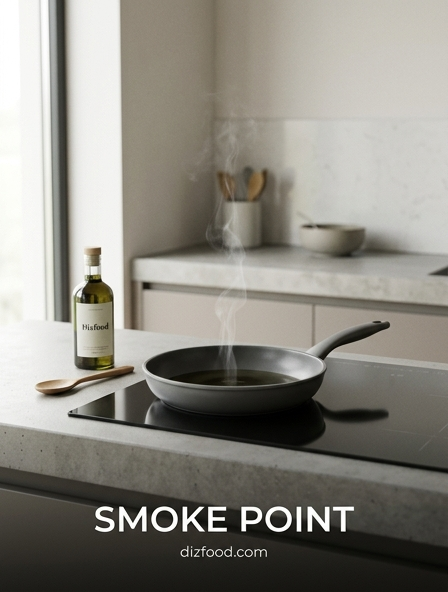
The choice of frying medium also matters regarding its smoke point and viscosity. An oil with high thermal stability allows for the sustained high temperatures necessary for continuous steam production. If the oil begins to break down, its ability to transfer heat efficiently diminishes, leading to a drop in evaporation rates. Rapid evaporation is only possible when the medium can provide a constant, high-energy environment that forces water to transition into the gas phase immediately upon contact.

Comments