
Navigating the transition from first bites to family dinners often leaves parents debating between the classic high chair and the space-saving booster seat. While a high chair offers a dedicated, sturdy environment with ergonomic support ideal for infants just starting solids, the booster seat serves as a bridge to independence, allowing toddlers to sit directly at the dining table. Choosing the right option depends on your child's developmental milestones, your kitchen's footprint, and whether you prioritize the comprehensive safety of a standalone unit or the portable, adaptive nature of a seat that grows with your child's desire to join the "big kid" table.
| Feature | Standard High Chair | Dining Booster Seat |
|---|---|---|
| Ideal Age Range | 6 months to 3 years | 18 months to 5+ years |
| Safety Harness | 5-point adjustable system | 3-point system + chair straps |
| Space Requirement | Large footprint; standalone | Zero footprint; attaches to chair |
| Portability | Low (bulky, heavy) | High (lightweight, travel-ready) |
| Tray & Height | Detachable tray; adjustable height | Uses table surface; fixed height |
| Best For | Early feeding & messy weaning | Socializing & transitioning to chairs |
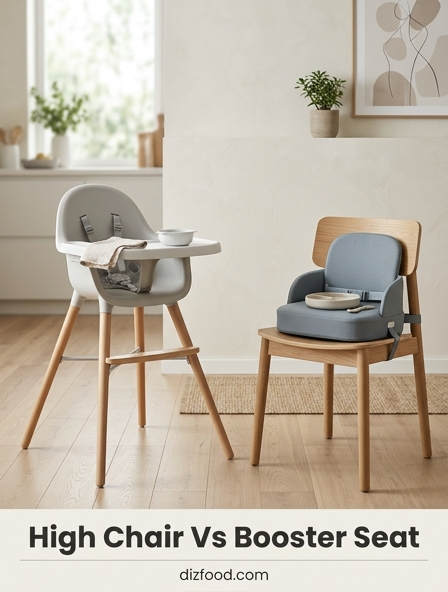
Choosing Between High Chairs and Booster Seats
Selecting the right seating for a child is a pivotal decision for any parent, as it influences both the child's safety and the overall flow of the kitchen environment. The choice between a high chair and a booster seat typically depends on several factors, including the child's developmental stage, the available floor space, and the family's lifestyle. High chairs are often the first step, providing a self-contained environment where an infant can safely experiment with solid foods. They offer comprehensive support for babies who are just learning to sit upright, ensuring they remain secure during mealtime.
As children grow and gain more trunk control, the appeal of the booster seat increases. This transition is often driven by a child's desire to participate more directly at the family table. While a high chair keeps a child somewhat separated by its own tray, a booster seat bridges the gap, allowing the toddler to sit at the same height as adults. When making this choice, parents should consider the following priorities:
- The child's ability to sit unassisted for long periods.
- The size of the kitchen or dining area and how much floor space can be sacrificed.
- Whether the seating needs to be moved frequently or will remain in a fixed position.
- The frequency of shared family meals versus independent feeding times.
Ultimately, the decision is not just about the equipment but about creating a comfortable, safe, and inclusive dining experience that evolves with the child's growing independence and motor skills.
Key Differences in Design and Functionality
The fundamental difference between high chairs and booster seats lies in their structural autonomy. A high chair is a standalone piece of furniture, often equipped with its own legs, a dedicated tray, and a reclining seat. These are designed to be used independently of the dining table. In contrast, a booster seat is a compact accessory designed to be strapped onto an existing dining chair. Its primary function is to provide the necessary height for a child to reach the table surface comfortably.
| Feature | High Chair | Booster Seat |
|---|---|---|
| Footprint | Large, standalone unit | Small, attaches to chair |
| Tray | Integrated and removable | Usually uses the dining table |
| Mobility | Often has wheels for room movement | Lightweight for travel/portability |
| Adjustability | Height, recline, and footrest options | Basic height adjustments |
Functionality also differs in terms of longevity. Many modern high chairs are "convertible," meaning they can transform from an infant seat into a toddler chair or even a youth stool. Booster seats, while less adjustable, focus on integration. They are designed to bring the child into the "big person" dining experience without requiring extra floor space. High chairs provide a more controlled environment with 3-point or 5-point harnesses, whereas boosters rely on simpler straps to keep the child in place while they use the table as their primary eating surface.
When to Transition from High Chair to Booster
Knowing when to move a child from a high chair to a booster seat is less about reaching a specific birthday and more about developmental readiness. Most children make this transition between the ages of 18 months and 3 years. The shift is usually prompted by the child outgrowing the physical dimensions of the high chair or showing a strong desire to sit directly at the table with the rest of the family. Safety is the primary concern; a child must be able to sit steadily without the wrap-around support of a high chair frame.
Parents should look for specific behavioral and physical cues before making the switch. To ensure a smooth transition, consider the following milestones:
- The child can climb into a chair or onto a stool with minimal assistance.
- The child no longer requires the tray of the high chair to contain their mess and can reach the table comfortably.
- The child has outgrown the weight limit specified by the high chair manufacturer.
- The child can sit still for the duration of a meal without attempting to slide out of the harness.
- The high chair has become a source of frustration or resistance during mealtime.
It is important to remember that every child develops at a different pace. If a child is still prone to leaning heavily or falling asleep during meals, the extra support of a high chair remains necessary. Prematurely moving to a booster can lead to safety hazards if the child lacks the core strength to remain upright and centered on a standard dining chair.
Safety Standards and Stability Comparison
Safety is the paramount concern when placing a child in any elevated seating. High chairs are generally more stable due to their wide base and engineered center of gravity. They are designed to resist tipping even when a child is active or leaning. Most modern high chairs must comply with rigorous ASTM standards, which cover everything from latching mechanisms to the stability of the frame. The inclusion of a 5-point harness is a standard safety feature that prevents the child from standing up or sliding out of the seat.
Booster seats, while safe when used correctly, introduce different variables. Because they rely on a secondary piece of furniture-the dining chair-their stability is only as good as the chair they are attached to. If the dining chair is lightweight or has a narrow base, there is a higher risk of the entire unit tipping over if the child pushes off the table with their feet. Key safety features to look for in booster seats include:
- Dual attachment straps that secure the seat to both the back and the bottom of the dining chair.
- Non-slip grips on the bottom of the booster to prevent sliding.
- A 3-point or 5-point harness to keep the child centered.
- Smooth edges and BPA-free materials to prevent scratches or chemical exposure.
Parents should always perform a "shake test" after installing a booster seat to ensure there is no significant movement. Furthermore, never leave a child unattended in either a high chair or a booster, as quick movements can occasionally overcome even the best stability features.
Space Saving Benefits of Toddler Booster Seats
In modern kitchens where floor space is often at a premium, the footprint of baby gear becomes a major consideration. High chairs, particularly traditional models, require a significant amount of square footage. Their wide, splayed legs are designed for stability but can create a tripping hazard in smaller kitchens or narrow dining areas. For families living in apartments or homes with compact eating nooks, the high chair can feel like a bulky intruder that disrupts the flow of the room.
This is where the booster seat excels. By utilizing an existing dining chair, a booster seat effectively has a zero-floor-space footprint. When the meal is over, the chair can be tucked under the table just like any other, keeping the walkway clear. This integration preserves the aesthetic of the dining room and prevents the "clutter" often associated with early childhood gear. Many booster seats are also designed with a low profile, making them nearly invisible when viewed from across the room.
Beyond the floor space, boosters save "visual space." A kitchen filled with a large, plastic high chair can feel overwhelmed by utility. A booster seat allows the dining room to maintain its primary function as an adult space while still being functional for a toddler. For families who host guests frequently, the ability to quickly remove a booster and store it in a pantry or closet is a significant advantage over trying to find a place to hide a full-sized high chair. This streamlined approach to kitchen organization makes boosters the preferred choice for the space-conscious parent.
Portability and Travel Considerations for Parents
For families who are frequently on the move, portability is a non-negotiable feature. High chairs are notoriously difficult to transport. While some models feature folding frames, they remain heavy and awkward, often requiring a large trunk or significant effort to move between locations. They are generally considered "stationary" gear, meant to stay in the kitchen once assembled. This can be a limitation for parents who enjoy dining out, visiting relatives, or traveling.
Booster seats are the gold standard for portability. Most models are lightweight, made of durable plastics or high-density foam, and many include built-in handles or carrying straps. Some even feature a "fold-flat" design or a collapsible backrest, making them small enough to fit into a standard suitcase or a large diaper bag. This portability ensures that a child has a safe, familiar place to sit regardless of the environment. Consider these travel-friendly features:
- Inflatable booster seats that pack down to the size of a book.
- Fabric "harness-style" boosters that can fold into a pocket.
- Hard-shell boosters with internal storage compartments for wipes and utensils.
- Dishwasher-safe components that allow for quick sanitization after a meal at a restaurant.
Having a portable seating solution reduces the stress of dining in unfamiliar places. Instead of relying on a restaurant's potentially dirty or broken high chairs, parents can provide a clean, secure seat that they know fits their child perfectly. This consistency helps toddlers remain calm and focused during meals, even when away from their usual home routine.
Weight and Age Guidelines for Each Option
Adhering to manufacturer guidelines for weight and age is critical for ensuring the structural integrity of the seat and the safety of the child. High chairs are designed for the earliest stages of feeding, typically starting around 6 months when a baby can sit up with minimal support. They usually accommodate children up to 37 or 40 pounds. Some high-end wooden models are "growth chairs" that can support over 100 pounds, but the traditional plastic high chair has a much lower limit.
| Criteria | Standard High Chair | Typical Booster Seat |
|---|---|---|
| Minimum Age | 6 months (can sit up) | 18 months to 2 years |
| Maximum Age | 3 years | 5 years |
| Weight Range | Up to 35-45 lbs | Up to 50-60 lbs |
| Developmental Requirement | Trunk control | Self-correction/sitting stability |
Booster seats take over where high chairs leave off, usually starting around the 2-year mark. Because boosters do not have their own legs, they are often rated for higher weights, sometimes up to 50 or 60 pounds, as the weight is supported by the dining chair beneath. It is vital to check the specific manual for each product, as exceeding weight limits can cause plastic stress fractures or cause the attachment straps to fail. Age is a secondary guideline; the child's physical size and ability to follow instructions (such as staying seated) are more accurate indicators of whether they have reached the upper limits of their current seating option.
Ease of Cleaning and Maintenance Requirements
In the kitchen, mealtime is synonymous with mess. The ease of cleaning a seat can be the difference between a quick wipe-down and an hour-long chore. High chairs often have more "nooks and crannies" where crumbs and liquids can hide. Large padded covers, while comfortable, often require machine washing and can stain over time. However, many modern high chairs now feature seamless designs and dishwasher-safe trays to mitigate these issues. Maintenance involves checking the locking mechanisms and wheels for debris that might hinder movement.
Booster seats are generally easier to maintain due to their simpler construction. Most are made of solid plastic or foam with few seams. To keep a booster seat in top condition, parents should follow a regular cleaning routine:
- Remove the seat from the chair weekly to clean the crumbs that accumulate underneath.
- Check the fabric straps for food buildup, as this can cause the buckles to stick or harbor bacteria.
- Use a mild soap and warm water solution; avoid harsh chemicals that might degrade the plastic.
- Ensure the seat is completely dry before re-attaching it to a wooden dining chair to prevent moisture damage to the furniture.
- Periodically inspect the harness for fraying or weakened stitching.
While boosters are easier to wipe, they can potentially damage the dining chair they are attached to. Food can get trapped between the booster and the chair seat, leading to scratches or stains on the chair's finish. Using a thin protective mat between the booster and the dining chair can help maintain the longevity of your kitchen furniture while keeping the toddler's area hygienic.
Price Range and Long Term Value Assessment
The financial investment for kitchen seating varies significantly between these two categories. High chairs are generally the more expensive option, with prices ranging from $50 for basic plastic models to over $500 for designer wooden chairs that blend with high-end decor. The higher price point often reflects the inclusion of features like adjustable heights, reclining seats, and multiple tray layers. However, the value of a high chair is concentrated in the first two years of a child's life.
Booster seats are considerably more budget-friendly, typically costing between $20 and $60. Because they serve a simpler purpose, they lack the mechanical complexity of high chairs, which keeps production costs low. For parents looking for the best long-term value, two strategies emerge:
- Investing in a "3-in-1" or "4-in-1" convertible high chair that eventually transforms into a booster seat, covering all ages for a single upfront cost.
- Purchasing a mid-range high chair and then switching to a dedicated booster seat later, which allows for more specific features at each stage.
When assessing value, consider the resale market. Popular, high-quality high chairs tend to hold their value well and can be sold once the child outgrows them. Booster seats, while cheaper, are often used for a longer duration (up to age 5) and may undergo more wear and tear, making them less ideal for resale. Ultimately, the "best value" depends on how many children will use the seat and whether the family prefers a single multi-functional piece or specialized items for each developmental phase.
Finding the Best Fit for Your Dining Table
A common mistake when purchasing seating is failing to measure the dining table and chairs. For a booster seat to be effective, it must fit securely within the dimensions of the chair's seat and be the right height for the table's "apron"-the wooden trim that runs under the tabletop. If a booster is too tall, the child's legs may get pinched between the seat and the table. Conversely, if the booster is too low, the child will still struggle to reach their food, defeating the purpose of the seat.
High chairs also require compatibility checks. If the high chair is meant to be pushed up to the table (with the tray removed), the armrests must be able to clear the table's height. Parents should also consider the material of their table. A heavy high chair with wheels can scratch soft wood floors, while a booster seat with a rough plastic bottom can mar the finish of expensive dining chairs. Using felt pads or specialized chair protectors can help bridge the gap between functionality and furniture preservation.
The aesthetic fit is the final consideration. In an open-concept kitchen, the high chair or booster becomes a part of the room's decor. Many parents now opt for neutral colors or natural wood finishes that complement their kitchen cabinets rather than bright, primary-colored plastics. By considering the height, width, and style of the existing dining set, parents can ensure that the transition to toddler seating is a seamless addition to the home's most important gathering space.




Comments