
When crafting a memorable dining experience, understanding the distinction between a serving platter and a charger plate is essential for mastering both functionality and aesthetics. While a serving platter acts as the functional workhorse designed to transport main courses or appetizers from the kitchen to the table, the charger plate serves as a decorative foundation that remains stationary to catch spills and elevate the visual layers of your place setting. Whether you are hosting a casual family-style brunch or a sophisticated formal dinner, choosing the right layer ensures your table presentation flows seamlessly while protecting your linens and showcasing your culinary creations with professional flair.
| Feature | Serving Platter | Charger Plate |
|---|---|---|
| Primary Purpose | Transporting and presenting shared food. | Decorative base for individual place settings. |
| Placement | Center of the table for communal access. | Directly in front of each guest's chair. |
| Food Contact | Direct; must be certified food-safe. | Indirect; supports bowls and dinner plates. |
| Typical Size | Varies widely (12" to 24"+); often oval/oblong. | Standardized at approximately 13" diameter. |
| Service Timing | Brought out and removed with the specific course. | Set before guests arrive; removed before dessert. |
| Material Variety | Durable stoneware, porcelain, wood, or slate. | Acrylic, glass, lacquer, or polished metal. |
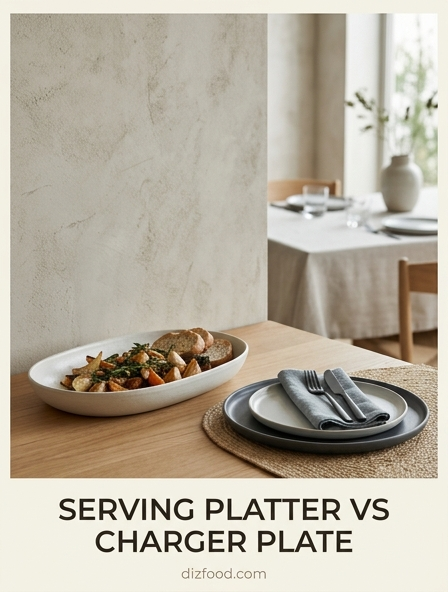
Defining Serving Platters and Charger Plates
In the world of culinary presentation and table setting, distinguishing between a serving platter and a charger plate is essential for effective hosting. A serving platter is a large, shallow dish primarily used to bring food from the kitchen to the table or to display food on a buffet. Its primary purpose is functional; it holds substantial portions of main courses, such as a roasted turkey, a side of salmon, or a mountain of grilled vegetables. Serving platters are designed to be food-safe, as they come into direct contact with the items being consumed.
Conversely, a charger plate, also known as a service plate or underplate, is a large decorative base used to ground a formal table setting. Unlike a platter, a charger is not intended to hold food directly. Instead, it sits beneath the plates used for individual courses, such as the appetizer or dinner plate. Its role is largely aesthetic and protective, providing a visual frame for the meal while shielding the tablecloth from heat and spills. While they share some visual similarities, such as a larger diameter than a standard dinner plate, their utility within a kitchen and dining room remains distinct.
- Serving Platter: A communal vessel used for food distribution.
- Charger Plate: An individual decorative base used for layering.
- Food Safety: Platters are food-grade; many chargers are decorative-only.
Key Differences Between Serving Platters and Charger Plates
While both items are larger than standard dinnerware, their physical characteristics and intended uses differ significantly. The most prominent difference lies in the interaction with food. Serving platters are built to withstand the weight of heavy roasts and the moisture of sauces, often featuring a slight lip or "well" to catch juices. In contrast, many charger plates feature finishes-such as metallic paints or delicate glazes-that are not food-safe and could be damaged by knives or acidic ingredients.
Another key difference is mobility. A serving platter is frequently passed around the table or moved between the kitchen and the dining area. A charger plate is stationary; once it is set at a guest's place, it remains there until it is time for the dessert course or until the main meal concludes. The following table summarizes these primary distinctions:
| Feature | Serving Platter | Charger Plate |
|---|---|---|
| Primary Purpose | Food delivery and service | Decoration and protection |
| Placement | Center of table or buffet | Individual place setting |
| Food Contact | Direct contact | Indirect (underneath plates) |
| Portability | Passed or moved often | Stationary during the meal |
Functional Roles of Platters Versus Chargers in Dining
The functional role of a serving platter is rooted in the efficiency of service. In a family-style dining scenario, the platter acts as the central hub for a specific dish, allowing guests to serve themselves. In more formal settings, platters are used by servers to present food before portioning it onto individual plates. Because they must be lifted and carried, platters often feature ergonomic edges or even handles to ensure a secure grip when transporting hot, heavy meals.
Charger plates serve a functional role that is more passive but equally important for formal dining. They act as a heat barrier, preventing hot plates from damaging delicate wood tables or leaving marks on fine linens. Furthermore, they catch crumbs and small spills that might occur during the first few courses, keeping the tablecloth pristine for the duration of the event. Beyond protection, they maintain the "presence" of a place setting; when a soup bowl or salad plate is cleared, the charger ensures the guest is never left with an empty space before them, maintaining the visual integrity of the table layout throughout the meal transitions.
Comparing Sizes and Dimensions of Platters and Chargers
Size is a defining characteristic for both items, though they adhere to different dimensional standards. A standard charger plate typically measures between 11 and 14 inches in diameter. This size is specifically chosen to be larger than the standard 10-inch dinner plate, allowing the decorative rim of the charger to peek out from underneath, creating a layered, framed effect. Because they must fit within the confines of a single person's place setting, their width is somewhat constrained by the overall size of the dining table and the number of guests.
Serving platters, however, have no such strict size limitations. They can range from small 12-inch oval dishes for side items to massive 24-inch rectangular trays designed for whole fish or large holiday roasts. The shape of a platter is also highly variable; while chargers are almost exclusively round or square to match standard plates, platters are frequently oval, rectangular, or even irregularly organic. This variety allows the cook to choose a platter that best matches the geometry of the food being served. When planning a table, one must ensure that the platters are large enough to be impactful but not so large that they crowd the individual charger plates at each setting.
Proper Table Placement for Serving Platters and Charger Plates
The placement of these items follows specific rules of etiquette and spatial logic. Charger plates are the foundation of the individual place setting. They should be placed exactly in the center of each guest's seat, approximately one inch away from the edge of the table. All flatware-forks, knives, and spoons-is arranged around the charger. Because the charger is the base, it remains on the table through multiple courses, including soup, salad, and the main entree. It is usually removed only before the dessert course is served.
Serving platters are positioned based on the style of service. For a casual "family-style" meal, platters are placed in the center of the table, often on trivets to protect the surface from heat. They should be spaced evenly so that all guests can reach at least one or two dishes comfortably. In a formal "service à la russe" style, platters do not stay on the table at all; they are held by the waitstaff or kept on a sideboard (buffet) where the food is plated. If a platter is used for a centerpiece, such as a fruit display, it remains in the middle of the table as a focal point, separate from the individual chargers.
Common Materials Used for Platters and Decorative Chargers
Material choice is where the distinction between "utility" and "decor" becomes most apparent. Serving platters are frequently made from durable, heat-retaining, and non-porous materials. Common choices include high-fired stoneware, porcelain, and tempered glass. These materials are chosen because they can be put in the dishwasher, and in many cases, the oven or microwave. Wooden platters are also popular for charcuterie or bread, though they require more maintenance to keep the surface food-safe and free of bacteria.
Charger plates offer a much broader range of materials because they do not have to be food-safe or dishwasher-compatible. While high-end chargers are made of fine bone china or silver-plated metal, many affordable options are crafted from acrylic or plastic with decorative finishes. These are lightweight and purely for show. Other popular materials for chargers include:
- Rattan or Seagrass: Ideal for rustic or coastal themes.
- Hammered Copper: Adds warmth and a metallic sheen to formal tables.
- Glass: Often features gold or silver "beaded" rims for a classic look.
- Lacquered Wood: Provides a sleek, modern aesthetic but cannot handle direct heat.
When to Use a Serving Platter versus a Charger Plate
Deciding when to use these items depends on the occasion and the menu. A serving platter is a necessity for almost any meal that involves more than one person, as it is the primary tool for moving food from the cooking vessel to the diners. Even in a casual setting, such as a Sunday brunch, a platter is used for pancakes or bacon. It is the workhorse of the kitchen-to-table transition. If you are serving a meal where guests help themselves, the platter is the most important piece of servingware you will use.
Charger plates, conversely, are optional and generally reserved for special occasions or formal dinner parties. You would use a charger plate when you want to elevate the dining experience and create a sense of ceremony. They are common at weddings, holiday dinners, and formal galas. Using a charger signals to guests that the meal is a multi-course event. However, for a standard weeknight dinner, chargers are often omitted to save space and reduce the amount of cleaning required, as they add an extra layer of "theatre" that may not be necessary for everyday eating.
Table Etiquette and Hosting with Decorative Base Plates
Mastering table etiquette involves understanding the lifecycle of the charger plate during a meal. According to traditional hosting rules, the charger plate should be on the table when the guests arrive. It serves as the landing pad for the first course's dish. When the first course is finished, the bowl or plate is removed, but the charger stays. This continues until the main entree is cleared. Etiquette dictates that the charger should be removed along with the dinner plate, leaving the table clear for the dessert service. Some modern hosts choose to leave the charger for the entire meal, but traditionalists believe it should be cleared to signal the transition to the sweet course.
For serving platters, etiquette focuses on the flow of the meal. If passing a platter, the person holding it should always offer it to the guest on their left before taking food themselves, and then pass the platter to the right. This ensures a consistent clockwise movement around the table, preventing collisions. The host is responsible for ensuring that platters are replenished or removed once they are empty, as an empty, soiled platter in the center of the table can detract from the visual appeal of the dining environment.
How to Style Your Tablescape with Platters and Chargers
Styling a tablescape requires a balance of color, texture, and height. Charger plates are often the "pop" of color or texture that ties the theme together. For a winter holiday theme, one might use a deep red or metallic gold charger to contrast with plain white dinner plates. For a bohemian or earthy look, a woven jute charger provides a tactile foundation that complements ceramic dishes. The charger acts as a frame; therefore, the color should either complement or boldly contrast with the dinnerware to make the presentation stand out.
Serving platters contribute to the "landscape" of the table. To create an appealing visual, vary the heights of your platters using small stands or by placing some items on raised cake tiers. This prevents the table from looking flat and crowded. When styling, coordinate the material of your platters with your chargers. For instance, if you are using silver chargers, choosing serving platters with silver accents or using white porcelain creates a cohesive, sophisticated look. You can also use a serving platter as a base for a centerpiece, arranging candles, pinecones, or flowers on it when it is not being used to hold food, making it a versatile tool for any decorator.
Choosing the Right Servingware for Your Next Formal Dinner
When selecting servingware for a formal event, the first consideration should be the menu. If you are serving a heavy protein like a prime rib, you need a sturdy, large-format porcelain or metal platter that can handle the weight and the carving process. If the menu consists of delicate hors d'oeuvres, a series of smaller, more decorative glass platters may be more appropriate. Always ensure that your platters are wide enough to accommodate the food without it spilling over the edges, which can look messy and create a cleaning hazard.
For chargers, consider the size of your table and the comfort of your guests. If the table is narrow, very large 14-inch chargers may overlap or leave little room for water and wine glasses. In such cases, a more modest 11-inch version is preferable. Additionally, think about the maintenance required. If you are hosting a large group, you may prefer glass or high-quality melamine chargers that are easy to wipe down, whereas for a small, intimate gathering, delicate heirloom silver or hand-painted ceramic chargers might be worth the extra care. Ultimately, the right choice balances the aesthetic goals of the evening with the practical realities of food service and cleanup.





Comments