
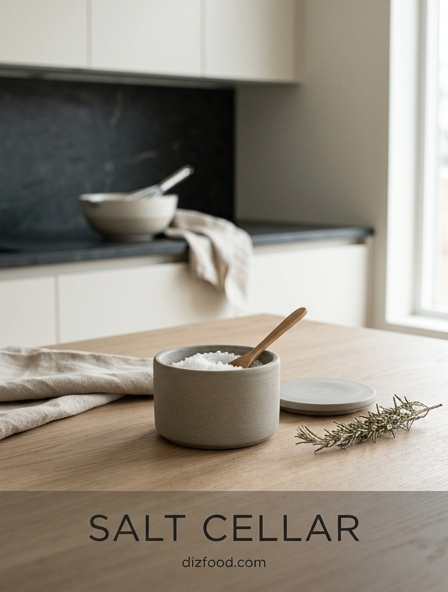
The Power of Tactile Seasoning Control
Tactile seasoning control represents a fundamental shift from mechanical dispensing to sensory-driven cooking. When a cook reaches into a salt cellar, the nerve endings in the fingertips provide immediate feedback regarding the volume and texture of the mineral being handled. This physical connection allows for a more intuitive understanding of how much salt is actually being applied to a dish. Unlike a shaker, which hides the contents behind opaque walls or small holes, the open nature of a salt cellar invites the cook to feel the grain size and adjust their pressure accordingly. This sensory engagement is crucial for developing a "feel" for seasoning, which is often the hallmark of an experienced chef.
By engaging the sense of touch, the cook moves away from standardized measurements and toward a more responsive culinary practice. The weight of the salt between the thumb and forefinger acts as a precise gauge, enabling subtle adjustments that a mechanical device simply cannot replicate. This direct contact fosters a deeper intimacy with the ingredients, ensuring that the final seasoning is a result of conscious intent rather than accidental distribution. Ultimately, the salt cellar transforms a mundane task into a nuanced exercise in professional craftsmanship.
Precision Pinching vs Traditional Shaking
The debate between pinching from a cellar and using a traditional shaker often centers on the level of precision and consistency achieved during high-heat cooking. A salt shaker relies on gravity and the size of its perforations, which can lead to uneven distribution or sudden over-salting if the salt has clumped due to humidity. Conversely, the pinch method allows for a "three-finger pinch" or a "two-finger sprinkle," providing the cook with absolute authority over the flow rate. This technique is particularly vital when seasoning large proteins or delicate vegetables where specific areas require more attention than others.
| Feature | Salt Shaker | Salt Cellar (Pinch) |
|---|---|---|
| Flow Control | Fixed by hole size | Variable by finger pressure |
| Visual Feedback | Low visibility | High visibility |
| Speed | Moderate | Instantaneous |
| Grain Compatibility | Fine grains only | Flake, Kosher, or Coarse |
Furthermore, the physical action of a pinch allows the salt to be released from a higher distance, creating a wider "rain" effect that coats the food more evenly. Shakers often force a more localized, concentrated impact which can create "salt bombs" in specific bites while leaving other areas under-seasoned.
How Salt Cellars Enhance Flavor Layering
Flavor layering is the process of building depth in a dish by seasoning at multiple stages of the cooking process rather than just at the end. A salt cellar is the ideal tool for this technique because it remains accessible throughout the entire preparation. Instead of searching for a grinder or shaker with greasy hands, a cook can quickly grab a pinch of salt to season onions as they sweat, meat as it sears, and sauces as they reduce. This consistent application ensures that the salt penetrates the ingredients deeply, drawing out moisture and intensifying natural flavors from the inside out.
- Initial Seasoning: Draws out moisture from aromatics like onions and celery.
- Intermediate Seasoning: Balances acidity and sweetness as liquids reduce.
- Finishing: Adds a final bright pop of salinity and texture before serving.
When salt is added gradually, it has time to dissolve and interact chemically with the proteins and sugars in the food. The salt cellar facilitates this rhythmic seasoning, encouraging the cook to taste and adjust frequently. This leads to a more balanced profile where the salt enhances the ingredients rather than masking them with a harsh, superficial saltiness added at the table.
The Efficiency of Open Access Cooking
In a fast-paced kitchen environment, efficiency is measured in seconds and the economy of motion. The salt cellar is a masterpiece of functional design because it eliminates the steps required to operate traditional dispensers. There are no caps to unscrew, no grinders to twist with both hands, and no shakers to flip and tap. The open-top design allows for one-handed operation, which is critical when the other hand is busy whisking a sauce, flipping a steak, or holding a knife. This seamless access ensures that the flow of cooking is never interrupted by the logistics of seasoning.
Moreover, the wide mouth of a cellar allows for rapid refills and easy cleaning. Professional cooks often place their cellars in a central location within their "mise en place," ensuring that the most frequently used seasoning is always within a six-inch radius of the primary prep area. This strategic placement reduces fatigue and mental load, allowing the cook to focus entirely on the transformation of the food. By removing the mechanical barriers between the cook and the salt, the cellar streamlines the workflow and elevates the overall speed of production without sacrificing quality.
Why Chefs Choose Kosher Salt in Cellars
Kosher salt is the industry standard for salt cellars, primarily due to its unique physical structure. Unlike table salt, which is comprised of small, uniform cubes that roll easily, Kosher salt features larger, irregular crystals or flakes. This jagged architecture makes it significantly easier to grip between the fingers, providing the tactile resistance necessary for accurate pinching. If a cook were to use fine table salt in a cellar, it would likely slip through the fingers too quickly, making it difficult to gauge the quantity being applied. Chefs favor this specific grain for several practical reasons:
- Dissolution Rate: The large surface area allows crystals to dissolve quickly when they hit moist food.
- Adherence: The flat flakes stick better to the surface of meat and vegetables.
- Purity: Most Kosher salts lack the anti-caking agents and iodine found in table salt, offering a cleaner flavor.
- Visibility: The white crystals are easier to see against the backdrop of most ingredients.
Because Kosher salt is less dense than table salt, it is also harder to over-season a dish by accident. A pinch of Kosher salt contains less sodium by volume than a pinch of table salt, providing a built-in safety margin for the developing palate.
Moisture Control and Salt Texture Preservation
One of the primary challenges of keeping salt in the kitchen is humidity. Salt is naturally hygroscopic, meaning it attracts and holds water molecules from the surrounding environment. If left in an airtight plastic container, salt can become damp and clumpy. However, high-quality salt cellars are often made from breathable materials like unglazed ceramic, marble, or wood. These materials help to regulate the micro-climate inside the cellar, absorbing excess moisture and allowing the salt to stay dry and free-flowing. A wooden cellar, in particular, can offer a natural resistance to bacteria while maintaining the ideal texture of the crystals.
The design of the cellar also plays a role in preservation. Many models feature a pivoting lid or a loose-fitting cover that protects the salt from kitchen splatters and dust while still allowing for minimal air exchange. This prevents the salt from hardening into a solid block, which is a common issue with traditional shakers in humid climates. By maintaining the integrity of the salt's texture, the cellar ensures that every pinch is consistent in weight and feel, which is essential for the precision required in professional and home cooking alike.
Eliminating Guesswork in Salt Distribution
The visual aspect of seasoning is often overlooked, yet it is one of the most effective ways to ensure even distribution. When using a salt cellar, the cook can see exactly how much salt is being held and where it lands on the food. This visibility eliminates the guesswork associated with shakers, where the amount of salt released is often a mystery until the dish is tasted. By releasing the salt from a height of eight to ten inches above the target, the grains naturally spread out, covering a larger surface area with a uniform layer. This technique, often seen in professional kitchens, prevents concentrated "hot spots" of saltiness.
- Visual Tracking: Watching the white crystals land on dark meats or greens.
- Coverage Awareness: Identifying naked spots that were missed during the first pass.
- Quantity Control: Seeing the exact volume of the pinch before it leaves the hand.
This visual feedback loop allows for real-time corrections. If a cook sees that one side of a roast has more coverage than the other, they can immediately adjust their hand position. This level of active monitoring is impossible with a shaker, which obscures the view and relies on repetitive, blind motion to achieve coverage.
The Ergonomics of a Professional Prep Station
Ergonomics in the kitchen is about reducing strain and optimizing movement to prevent injury and increase output. The salt cellar is an ergonomic triumph because it supports the natural mechanics of the human hand. The act of reaching and pinching is a low-impact, fluid motion that requires less wrist strain than the repetitive shaking or twisting required by other dispensers. For a chef who seasons hundreds of plates a day, these small savings in physical effort add up, reducing the risk of repetitive motion injuries like carpal tunnel syndrome.
The physical footprint of a salt cellar also contributes to a more organized prep station. Most cellars are designed with a weighted base to prevent tipping, and their low profile makes them stable even when the kitchen becomes chaotic. Because they do not need to be picked up and held-only reached into-they remain a stationary, reliable point in the cook's workflow. This stability allows for a rhythmic, almost meditative approach to seasoning, where the hand moves instinctively to the cellar without the cook needing to divert their eyes from the pan or the cutting board.
Visual Cues for Perfect Seasoning Levels
A salt cellar serves as a visual indicator of a cook's progress and inventory. Unlike a salt mill, where the remaining volume is often hidden by the grinding mechanism, the open vessel of a cellar provides a constant reminder of how much seasoning is available. This prevents the "empty shaker" surprise in the middle of a critical cooking step. Furthermore, the level of salt in the cellar can serve as a mental cue for the scale of the task at hand. A full cellar provides the confidence for heavy seasoning of a large bird, while a low level prompts a refill before starting a long shift.
| Visual Cue | Indication | Action Required |
|---|---|---|
| Full Basin | Ready for high-volume prep | None; proceed with cooking |
| Half Empty | Mid-way through prep tasks | Monitor for upcoming refill |
| Bottom Visible | Critically low inventory | Refill immediately to avoid interruption |
| Clumped Surface | High humidity exposure | Stir or replace salt to restore texture |
These simple visual cues allow for better kitchen management and ensure that the most important ingredient is always ready for use. The transparency of the process-from seeing the salt in the bowl to seeing it on the food-creates a more controlled and successful culinary environment.
Essential Salt Cellar Features for Home Cooks
For a home cook looking to upgrade their kitchen, choosing the right salt cellar involves balancing aesthetics with functional utility. While a simple bowl can suffice, a dedicated salt cellar offers features designed to enhance the cooking experience. One of the most important considerations is the opening size; it must be wide enough to accommodate the cook's hand comfortably without hitting the sides. Additionally, the material should be durable and easy to clean, as kitchen environments are prone to grease and spills. Many modern cellars include thoughtful design elements that cater to both form and function.
- Swivel or Removable Lids: Protects salt from contaminants while remaining easy to open with one hand.
- Weighted Base: Ensures the cellar stays put during quick, aggressive pinching.
- Non-Porous Interior: Prevents the absorption of odors from other spices or kitchen fumes.
- Stackable Design: Allows for multiple cellars (e.g., one for Kosher salt, one for finishing salt) to be stored in a small footprint.
Ultimately, the best salt cellar is one that fits the cook's personal style and workflow. Whether it is a rustic olive wood box or a sleek marble vessel, the presence of a salt cellar on the counter signifies a commitment to the craft of seasoning and a move toward more professional results.

Comments