
Deciding between classic cotton dish towels and modern microfiber cloths often comes down to your specific kitchen workflow and what you value most: tradition or performance. While cotton offers a nostalgic, natural feel and becomes more absorbent over time, microfiber is a high-tech powerhouse engineered to trap microscopic debris and dry surfaces without leaving a single streak or speck of lint behind. Whether you are polishing delicate glassware or tackling a heavy spill, understanding how these materials differ in absorbency, hygiene, and durability will help you choose the best tool to keep your kitchen pristine and your chores efficient.
| Feature | Cotton Dish Towels | Microfiber Drying Cloths |
|---|---|---|
| Material | 100% Natural organic fibers | Synthetic Polyester/Polyamide blend |
| Absorbency | High capacity; holds water well | Rapid wicking; absorbs 7x its weight |
| Lint & Streaks | Prone to shedding fibers/pilling | Guaranteed lint-free and streak-free |
| Sanitation | Can harbor bacteria; slow to dry | Lifts 99% of bacteria; fast-drying |
| Best Use Case | Drying hands and large cookware | Glassware, stainless steel, and polishing |
| Durability | High; handles hot water/bleach | High; lasts 500+ washes (avoid heat) |
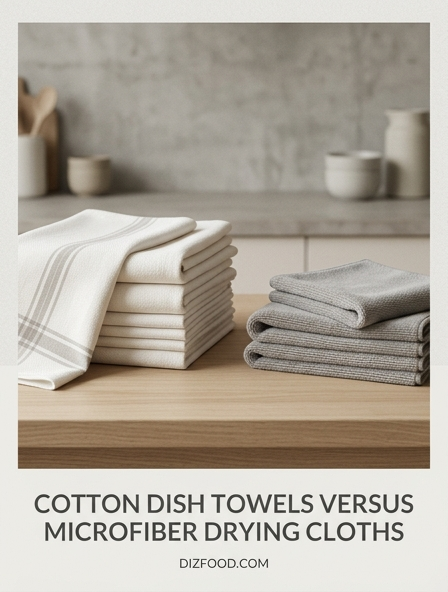
Absorbency Battle Between Cotton and Microfiber
When evaluating the effectiveness of kitchen towels, absorbency stands as the primary metric of performance. Cotton dish towels, particularly those made from ringspun or Terry weave, rely on the natural cellulose fibers to soak up liquids. Initially, a new cotton towel may repel water due to residual manufacturing oils, but after several washes, its "thirst" increases significantly. Cotton fibers act like small straws, pulling moisture into the core of the yarn. However, once a cotton towel becomes saturated, it tends to remain heavy and soggy, losing its ability to take on more liquid until it is fully dried.
Microfiber takes a fundamentally different approach to moisture management. These synthetic cloths are composed of polyester and polyamide blends, with fibers split to be finer than a human hair. This creates a massive surface area characterized by millions of tiny hooks and channels. Instead of soaking moisture into the fiber itself, microfiber uses capillary action to wick water into the spaces between the fibers. This allows a microfiber cloth to hold up to seven or eight times its weight in liquid, often outperforming cotton in rapid spill cleanup and heavy-duty drying tasks.
| Feature | Cotton Towels | Microfiber Cloths |
|---|---|---|
| Mechanism | Natural absorption into fiber core | Capillary action between synthetic filaments |
| Break-in Period | Requires 2-3 washes for max absorbency | Effective immediately from packaging |
| Saturations Point | Becomes heavy and drips when full | Retains liquid securely within the weave |
Environmental Footprint of Kitchen Drying Cloths
The ecological impact of kitchen textiles is a complex issue involving raw material extraction, manufacturing processes, and end-of-life disposal. Cotton is a natural, renewable resource that is fully biodegradable. However, conventional cotton farming is notoriously resource-intensive, requiring vast amounts of water and often involving the heavy use of pesticides and fertilizers. Even organic cotton, while safer for the soil, demands significant water consumption. When a cotton towel reaches the end of its life, it can be composted or recycled into insulation, eventually breaking down without leaving synthetic residues in the environment.
In contrast, microfiber is a petroleum-based product, essentially a form of plastic. The manufacturing process is chemically intensive and non-renewable. A significant environmental concern regarding microfiber is the shedding of microplastics during every wash cycle. these microscopic plastic shards bypass water filtration systems and enter the aquatic food chain. Furthermore, microfiber is not biodegradable and will persist in landfills for centuries. To mitigate this, some manufacturers have begun producing microfiber from recycled plastic bottles, though the microplastic shedding issue remains a persistent drawback compared to natural fibers.
- Cotton Pros: Biodegradable, renewable, can be organically sourced, easy to recycle.
- Cotton Cons: High water footprint, pesticide use in non-organic varieties.
- Microfiber Pros: Long lifespan reduces replacement frequency, requires less detergent.
- Microfiber Cons: Petroleum-derived, releases microplastics, non-biodegradable.
Durability Comparison for Long Term Kitchen Use
Durability in a kitchen setting is measured by a towel's ability to withstand frequent scrubbing, high-heat washing, and exposure to various cleaning agents. Cotton towels are remarkably resilient to high temperatures. They can be laundered in boiling water and dried on high heat settings without structural damage. However, cotton is prone to fraying at the edges over time, and the fibers can eventually thin out or develop holes after hundreds of uses. Natural fibers are also susceptible to degradation if left damp for too long, as mildew can weaken the integrity of the weave.
Microfiber is engineered for longevity and industrial-grade use. A high-quality microfiber cloth can withstand up to 500 wash cycles before the fibers begin to break down or lose their electrostatic properties. Because they are synthetic, they do not rot or weaken when exposed to moisture in the same way cotton does. The primary threat to microfiber durability is heat; high dryer temperatures can melt the microscopic plastic hooks, causing the cloth to lose its softness and "grabby" texture. When cared for correctly with cool air or line drying, microfiber generally outlasts cotton in terms of maintaining its original shape and performance capabilities.
- Microfiber retains its structure longer under standard use conditions.
- Cotton handles "sanitize" heat cycles better than synthetic blends.
- Edge stitching on microfiber is often heat-sealed or reinforced to prevent unraveling.
- Cotton fibers naturally shorten and pill with age, leading to a thinner feel.
Best Towel Material for Streak Free Glassware
Achieving a crystal-clear finish on glassware and polished surfaces is a specific challenge where the choice of material makes a visible difference. Cotton towels, particularly those with a waffle or flat weave, are traditional favorites for drying dishes. However, they frequently leave behind tiny flecks of lint or "pilling" on smooth surfaces like wine glasses or mirrors. As the cotton towel becomes slightly damp, it also begins to leave water streaks, requiring the user to switch to a fresh, dry towel frequently to maintain a polished look.
Microfiber is widely considered the superior choice for streak-free results. Because the fibers are continuous filaments rather than short natural staples, they are virtually lint-free. The unique structure of the split fibers allows the cloth to "grab" oils, fingerprints, and residual soap film rather than just pushing them around the surface. This mechanical cleaning action means you can often achieve a perfect shine using only water, without the need for chemical glass cleaners. For the best results, specialized "glass weave" microfiber-which is smooth and lacks the fluffy loops of standard microfiber-is the industry standard for sommeliers and professional cleaners.
- Microfiber removes 99% of surface bacteria and oils that cause streaks.
- Cotton is better for bulk drying but requires a secondary "polish" step.
- Microfiber's electrostatic charge attracts dust rather than redistributing it.
- Waffle-weave cotton is the best "natural" alternative for minimizing lint.
Drying Speed and Moisture Wicking Performance
The speed at which a towel dries itself is just as important as how fast it dries a dish. In a busy kitchen, a towel that stays damp for hours becomes a liability. Cotton towels have a high moisture retention rate, meaning they hold onto water deep within their fibers. Because cotton is a dense natural material, it lacks the airflow necessary for rapid evaporation. In humid environments or poorly ventilated kitchens, a cotton towel used for the morning dishes may still feel clammy by lunchtime, which eventually leads to the development of "sour" odors caused by bacterial growth.
Microfiber excels in moisture wicking and evaporation speed. Since the water is held in the channels between the synthetic filaments rather than absorbed into the filaments themselves, it is released much more easily into the air. This high surface-area-to-volume ratio allows microfiber cloths to dry in a fraction of the time it takes for a cotton towel of similar thickness. This rapid drying capability not only makes the cloth ready for use again sooner but also significantly reduces the window of time in which microbes can flourish. For homeowners who prefer to hang towels on an oven handle, microfiber will almost always be dry to the touch within an hour.
| Property | Cotton Performance | Microfiber Performance |
|---|---|---|
| Self-Drying Time | Slow (2-4 hours) | Fast (30-60 minutes) |
| Wicking Ability | Moderate; pulls liquid into core | Excellent; spreads liquid across surface |
| Odor Resistance | Low; prone to mustiness | High; due to rapid evaporation |
Bacterial Growth and Kitchen Hygiene Standards
Kitchen towels are notorious hotspots for cross-contamination, often harboring pathogens like E. coli or Salmonella if not managed correctly. Cotton towels provide a hospitable environment for bacteria; they stay damp for long periods, and the organic cellulose fibers can actually serve as a food source for certain types of microbes. Furthermore, the porous nature of cotton can trap food particles deep within the weave, making it difficult to fully rinse the towel by hand. To maintain hygiene, cotton towels must be laundered frequently at high temperatures (at least 60°C/140°F) to kill embedded pathogens.
Microfiber offers a different hygienic profile. The tiny fibers are physically capable of "hooking" and removing bacteria from surfaces more effectively than cotton. Studies have shown that microfiber can remove a significant percentage of bacteria from a countertop using just water. However, because microfiber is so effective at trapping these contaminants, it can be harder to "flush out" the bacteria during a simple hand rinse. While the synthetic nature of the cloth does not support bacterial growth as readily as organic cotton, and its fast-drying nature inhibits mold, microfiber must be cleaned with specialized care to ensure the trapped pathogens are released without damaging the synthetic fibers.
- Microfiber physically removes bacteria via mechanical action.
- Cotton requires high heat for sterilization, which it tolerates well.
- Damp cotton is more likely to develop a "sour" microbial smell.
- Avoid using the same towel for hand-drying and raw-food prep surfaces.
Maintenance Guide for Cotton and Microfiber Towels
Proper maintenance is essential for preserving the functionality of kitchen textiles, but the two materials require vastly different care routines. Cotton is relatively low-maintenance and "forgiving." It can be washed with any standard detergent, bleached to remove stains and sanitize, and dried in a hot dryer. In fact, many people prefer the feel of cotton towels after they have been "broken in" through many wash cycles. The only major caution for cotton is to avoid excessive use of fabric softeners, as these leave a waxy coating that significantly reduces the towel's natural absorbency.
Microfiber maintenance is much stricter. The most critical rule is to never use fabric softener or dryer sheets. These products coat the microscopic fibers, effectively "clogging" the hooks and channels that make microfiber effective, turning a high-performance cleaning tool into a useless piece of plastic. Additionally, microfiber should never be washed with "linty" items like cotton towels, as the microfiber will act as a magnet for the cotton lint, ruining its streak-free properties. Finally, high heat must be avoided; always wash in cool or warm water and air dry or use the lowest heat setting on the dryer to prevent the fibers from melting together.
- Separate microfiber from cotton in the laundry to prevent lint transfer.
- Skip all fabric softeners for both materials to maximize absorbency.
- Use bleach only on 100% cotton towels; never use it on microfiber.
- Wash microfiber with liquid detergent, as powders may not fully dissolve and can clog the weave.
Cost Effectiveness and Life Cycle Analysis
When analyzing cost effectiveness, one must look beyond the initial price tag to the total cost of ownership over several years. Cotton towels are available at a wide range of price points, from budget-friendly bulk packs to high-end designer linens. While cotton is generally affordable, the frequency of replacement adds up. Because cotton loses its integrity, stains more easily, and is prone to developing permanent odors, the average household may replace their cotton dish towels every one to two years to maintain a fresh kitchen environment.
Microfiber often has a slightly higher upfront cost for "professional grade" versions, though consumer-grade cloths are now very inexpensive. The true value of microfiber lies in its longevity and efficiency. Since a single cloth can last for several years and hundreds of washes, the cost per use is remarkably low. Additionally, microfiber can reduce household expenses by minimizing the need for chemical cleaners and paper towels. When considering the "life cycle," microfiber's inability to be composted is a long-term cost to the environment, but its durability makes it a highly economical choice for the budget-conscious consumer who wants a tool that stays functional for the long haul.
| Factor | Cotton | Microfiber |
|---|---|---|
| Initial Cost | Low to High | Moderate | 1-2 Years | 2-5 Years |
| Chemical Savings | Standard usage | High (can use water only) |
Texture Differences and Surface Protection Qualities
The tactile experience of using a kitchen towel is a subjective but important factor. Cotton towels provide a traditional, "homely" feel. They are soft to the touch, flexible, and become even more supple with age. In terms of surface protection, cotton is excellent for wrapping warm bread or lining a basket. It is also heat-resistant, meaning a folded cotton towel can serve as an emergency trivet for a hot pot or a grip for a warm handle-though it should never be used if damp, as water conducts heat and can cause steam burns.
Microfiber has a very different texture that some find "clingy" or unpleasant, particularly if they have dry skin or calluses, as the tiny hooks catch on skin imperfections. However, this "grabby" nature is exactly what makes it so effective at cleaning. Microfiber is exceptionally soft and non-abrasive on delicate surfaces, making it the safest choice for cleaning high-gloss cabinets, stainless steel appliances, and non-stick cookware. Unlike some rougher linen or low-quality cotton weaves, microfiber will never scratch sensitive finishes. However, it should never be used near high heat sources, as it will melt instantly if it touches a hot stove burner or a pan straight from the oven.
- Cotton: Soft, traditional, heat-resistant, gets better with age.
- Microfiber: Grippy, ultra-soft, heat-sensitive, non-abrasive.
- Cotton is better for handling hot items; microfiber is better for delicate polishing.
Final Verdict on the Best Kitchen Drying Tool
The "better" tool ultimately depends on the specific task at hand and the user's priorities regarding sustainability versus performance. Microfiber is the undisputed champion of efficiency, polishing, and rapid drying. It is the best choice for those who want a streak-free kitchen, professional-level cleaning results with minimal chemicals, and a tool that will last for years. For glassware, mirrors, and stainless steel, microfiber is irreplaceable. Its ability to dry quickly also makes it the more hygienic option for households that do not launder their towels daily.
On the other hand, cotton remains the king of versatility and environmental responsibility. It is the safer choice for a kitchen where towels often come into contact with heat, and it provides a classic aesthetic that synthetic cloths cannot match. For those focused on a plastic-free lifestyle, cotton is the only logical choice. In a well-equipped kitchen, the ideal strategy is often a hybrid approach: using cotton for heavy spills and handling hot cookware, while reserving microfiber for drying dishes, polishing glassware, and sanitizing surfaces.
- Use Microfiber for: Glassware, stainless steel, and quick-drying tasks.
- Use Cotton for: Handling hot pans, heavy spills, and eco-friendly composting.
- Choose Waffle-Weave Cotton if you want the "best of both worlds" in a natural fiber.





Comments