
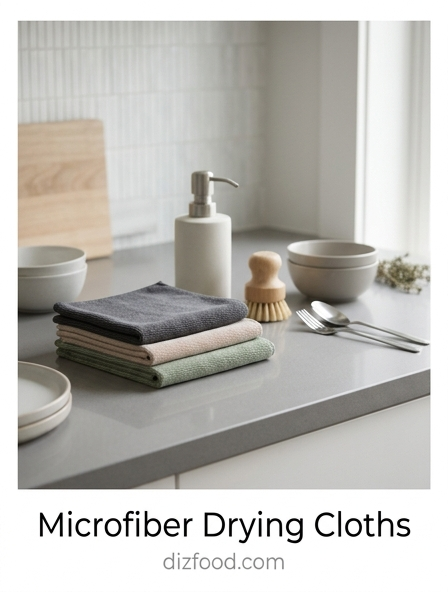
Achieving a streak-free kitchen finish doesn't have to be a chore when you have the right tools in your cleaning arsenal. Microfiber drying cloths are the unsung heroes of a spotless home, using advanced split-fiber technology to lift away grease, dust, and moisture without leaving behind annoying lint or water spots. Because these synthetic fibers are exceptionally absorbent, they allow you to polish stainless steel, glass, and granite surfaces to a brilliant shine with minimal effort. This makes your post-meal cleanup faster and more effective than ever. For a deeper look at which material reigns supreme, explore the differences between Cotton Dish Towels Versus Microfiber Drying Cloths.
Why Microfiber Outperforms Traditional Cotton Towels
In the demanding environment of a modern kitchen, the choice of drying textile significantly impacts efficiency and hygiene. Traditional cotton towels, while common, often fall short due to their thick, rounded fibers. Cotton tends to push liquid and debris across a surface rather than lifting it. In contrast, microfiber is composed of synthetic blends-typically polyester and polyamide-that are split to be finer than a human hair. This structural difference creates a vast surface area capable of trapping particles deep within the weave.
- Fiber Density: Microfiber contains thousands of loops per square inch, providing superior mechanical cleaning power.
- Lint-Free Performance: Unlike cotton, which sheds cellulose fibers as it wears, microfiber is a continuous filament that leaves no residue.
- Fast-Drying Nature: The synthetic material releases moisture much faster than organic cotton, reducing the window for bacterial growth.
By switching to microfiber, kitchen staff and home cooks alike notice an immediate reduction in the effort required to dry dishes. While cotton becomes heavy and sodden quickly, microfiber maintains its effectiveness even when damp, making it the superior choice for high-volume kitchen tasks.
The Science Behind Streak-Free Surface Drying
The secret to the streak-free finish provided by microfiber lies in the "split" nature of the fibers. During manufacturing, the polyester and polyamide strands are physically split, creating microscopic hooks and channels. These channels utilize capillary action to draw moisture and oils away from the surface and into the core of the cloth. When a standard towel moves over a wet countertop, it often leaves behind a thin film of water that dries into unsightly spots or streaks. Microfiber, however, removes the moisture so completely that there is nothing left to evaporate into a spot.
Furthermore, the polyamide component of the blend has a natural affinity for grease and oil. In a kitchen setting, surfaces often have a microscopic layer of cooking oils that contribute to smearing. The split fibers break the surface tension of these oils, lifting them without the need for aggressive chemical degreasers. This mechanical action ensures that polished granite, marble, and glass remain optically clear. Because the cloth holds the debris inside its structure, it prevents the re-deposition of contaminants onto the clean surface, ensuring a professional-grade finish every time.
Maximizing Absorbency for Faster Kitchen Cleanup
Absorbency is the most critical factor when dealing with spilled liquids or a mountain of wet dishes. Microfiber cloths are engineered to hold up to seven or eight times their weight in liquid. This is achieved through the increased surface area provided by the star-shaped cross-section of the split fibers. Instead of water sitting on the outside of the fiber, it is pulled into the internal voids of the cloth. This makes microfiber the most efficient tool for rapidly clearing workstations and drying large pots.
| Feature | Microfiber Cloth | Standard Cotton |
|---|---|---|
| Absorbency Rate | High (Capillary Action) | Moderate (Saturation) |
| Weight Retention | 700% - 800% | 200% - 300% |
| Drying Time | Rapid Air-Dry | Slow Air-Dry |
To maximize this absorbency during cleanup, it is best to use a "fold and wipe" technique. By folding the cloth into quarters, you create a flat, cushioned surface that maintains even contact with the moisture, allowing the capillary channels to work at peak efficiency without becoming prematurely saturated.
Achieving Polished Finishes on Stainless Steel
Stainless steel appliances are notorious for showcasing fingerprints, water spots, and grease splatters. Traditional cleaning methods often involve oily polishes that collect dust over time. Microfiber drying cloths provide a chemical-free alternative that restores the factory shine of stainless steel. Because the fibers are so fine, they can penetrate the microscopic "grain" of the metal, removing the oils left behind by skin contact. For the best results, one should use a damp microfiber cloth to remove grime, followed immediately by a dry, high-GSM (grams per square meter) microfiber cloth to polish.
When polishing, it is essential to follow the direction of the metal's brushed grain. The tiny hooks in the microfiber act like a gentle abrasive, but because they are made of soft plastic polymers, they will not scratch the finish. This method eliminates the hazy "ghosting" effect often caused by paper towels or rough rags. By removing the residues that bacteria feed on, the stainless steel not only looks cleaner but stays hygienically superior for longer periods, maintaining the aesthetic integrity of the kitchen.
Gentle Care for Delicate Glassware and Crystal
Drying fine crystal or thin wine glasses requires a balance of high absorbency and extreme gentleness. Traditional towels can be too bulky, leading to accidental breakage, or too rough, causing microscopic scratches that cloud the glass over time. Microfiber "glass cloths" are specifically designed with a flat, smooth weave to address these concerns. They lack the looped pile of standard microfiber, which ensures that no lint or snagged fibers are left on the rim of the glass.
- Hold the glass by the base or the bowl using a secondary cloth to avoid new fingerprints.
- Gently insert a portion of the microfiber cloth into the bowl, allowing it to wick moisture.
- Use a circular motion to buff the exterior, applying light, even pressure.
- Inspect the glass under a bright light to ensure all water spots are eliminated.
This process ensures that expensive stemware remains crystal clear and ready for the next service. The absence of lint is particularly important for wine enthusiasts, as stray fibers can affect the aeration and visual presentation of the wine.
Reducing Cross-Contamination with Synthetic Fibers
Kitchen hygiene relies on the ability to isolate contaminants from different food groups. Microfiber is an ideal tool for implementing a color-coded safety system, which is a standard practice in professional culinary environments. Because microfiber is synthetic and dries quickly, it is less hospitable to the growth of mold and bacteria compared to organic fibers like cotton or linen, which can trap organic matter and stay damp for hours.
- Blue Cloths: Reserved for drying glassware and clean dishes only.
- Green Cloths: Used for wiping down produce preparation areas.
- Yellow Cloths: Designated for cleaning low-risk surfaces like dining tables.
- Red Cloths: Strictly for high-risk areas where raw proteins are handled.
Beyond color coding, the physical structure of microfiber is proven to remove up to 99% of bacteria from a surface using only water. The fibers literally "scoop up" the pathogens and hold them until the cloth is laundered. This mechanical removal is a powerful supplement to chemical sanitization, ensuring that surfaces are not just visually clean, but biologically safe for food preparation.
Cost-Effective Durability of High-Quality Microfiber
While the initial purchase price of high-quality microfiber cloths may be higher than that of bulk cotton towels, the long-term ROI is substantial. A premium microfiber cloth is engineered to withstand between 300 and 500 wash cycles without losing its structural integrity or cleaning efficacy. In contrast, cotton towels begin to fray, thin, and lose their shape after a fraction of those washes. When calculated over a year of daily kitchen use, the cost-per-use of microfiber is significantly lower.
Furthermore, microfiber reduces the need for expensive chemical cleaners and paper towels. Because the cloth does the majority of the heavy lifting through mechanical action, many daily tasks can be completed with water alone. For a household or commercial kitchen, this translates to hundreds of dollars in savings annually on disposables and cleaning agents. Investing in professional-grade microfiber-characterized by a high polyamide content and heat-sealed edges-prevents the "unraveling" common in cheap alternatives, ensuring that the cloths remain a staple of the kitchen inventory for years.
Eco-Friendly Advantages of Washable Drying Cloths
The environmental impact of kitchen maintenance is often overlooked, particularly regarding the volume of paper waste generated. Millions of tons of paper towels end up in landfills annually, a cycle that requires constant deforestation and chemical processing. Transitioning to microfiber drying cloths is a powerful step toward a zero-waste kitchen. Because these cloths are durable and reusable, a small set can replace thousands of individual paper sheets over its lifespan. This drastically reduces the carbon footprint associated with the manufacturing and transport of disposable goods.
Additionally, microfiber supports "green" cleaning by minimizing the reliance on harsh surfactants and disinfectants. The ability of the fibers to lift oils and microbes mechanically means fewer chemicals enter the local water system through graywater runoff. To maximize the eco-friendly benefits, users should look for high-density cloths that shed fewer microplastics during the wash and use a specialized laundry bag to capture any stray fibers. By choosing a sustainable, long-lasting textile, the modern kitchen becomes a model of environmental responsibility without sacrificing cleanliness or convenience.
Time-Saving Techniques for a Sparkling Kitchen
Efficiency in the kitchen is about minimizing repetitive motions. Microfiber cloths facilitate a "one-pass" cleaning philosophy. Because they are so effective at trapping moisture and soil on the first wipe, there is no need to go over the same area multiple times. This can shave significant time off the nightly cleanup routine. To optimize your workflow, keep separate cloths for "wet work" and "finishing work."
- The Pre-Wipe: Use a damp, low-pile microfiber to remove heavy debris and spills from counters.
- The Final Polish: Immediately follow with a dry, plush microfiber to remove the micro-moisture, leaving a shine.
- The Squeegee Effect: Use a tightly woven microfiber on mirrors and windows in a "Z" pattern to ensure total coverage.
Another time-saving tip is to use the cloth as a drying mat for delicate items. Its high absorbency prevents water from pooling on the counter, keeping the workspace dry and organized. By integrating these specific textures into the routine, the transition from a messy cooking environment to a sparkling kitchen becomes faster and more streamlined.
Proper Maintenance for Long-Lasting Cloth Performance
To preserve the unique properties of microfiber, specific laundering protocols must be followed. The most important rule is to avoid fabric softeners and dryer sheets. These products work by coating fibers with a thin layer of wax or oil, which effectively clogs the split channels of the microfiber, destroying its absorbency and ability to trap dust. Once clogged, the cloth will simply smear water and grease across surfaces rather than lifting them.
- Wash Temperature: Use warm or hot water to expand the fibers and release trapped oils and dirt.
- Detergent Choice: Use a mild, clear liquid detergent; avoid powdered detergents which may not dissolve and can get stuck in the weave.
- Drying: Air dry or tumble dry on a low-heat setting. High heat can actually melt the synthetic polymers, leading to a "crispy" feel and reduced effectiveness.
- Separation: Wash microfiber separately from cotton to prevent the microfiber from picking up cotton lint, which is nearly impossible to remove.
By adhering to these simple maintenance steps, you ensure that the capillary action of the fibers remains intact, allowing the cloths to perform at a professional level for their entire multi-year lifespan.


Comments