
The Science of Textile Fibers
At the microscopic level, kitchen absorbency is dictated by the physical and chemical properties of textile fibers. Natural fibers like cotton and linen are primarily composed of cellulose, a polymer containing hydroxyl groups that naturally attract water molecules through hydrogen bonding. This hydrophilic nature allows liquid to be drawn into the fiber's interior, known as the lumen. In contrast, synthetic fibers such as polyester are naturally hydrophobic, meaning they repel water. For these materials to be effective in a kitchen setting, they must be engineered to utilize capillary action rather than molecular bonding.
- Hydrophilic Fibers: Cotton, linen, and hemp, which pull moisture into the fiber core.
- Hydrophobic Fibers: Polyester and nylon, which typically require structural modification to move water.
- Capillary Action: The process by which liquid travels through the narrow spaces between fibers.
The efficiency of a kitchen textile is a balance between the fiber's ability to hold water and its capacity to transport it away from the surface. While cotton excels at retention, the speed of absorption is often governed by the total surface area available for the liquid to interact with the material.
Cotton Versus Microfiber Performance
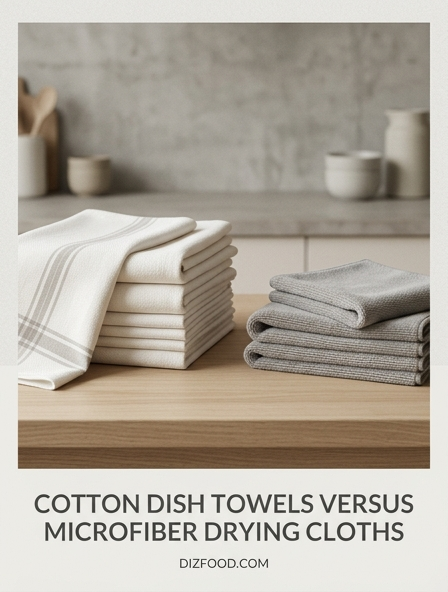
Choosing between cotton and microfiber involves understanding how each material manages liquids. Cotton is a reliable, high-capacity absorber that swells as it takes on water, making it ideal for drying heavy cookware. Microfiber, however, is a split-fiber synthetic material designed to increase surface area exponentially. This allows it to "trap" water and debris mechanically within its wedge-shaped channels. While cotton relies on the chemical affinity of cellulose, microfiber relies on physics and structural density.
| Feature | Cotton Towels | Microfiber Cloths |
|---|---|---|
| Mechanism | Molecular Absorption | Capillary Trapping |
| Drying Speed | Slower (air dry) | Very Fast |
| Durability | High (withstands heat) | High (structural integrity) |
| Best Use | Drying hands and pots | Polishing and spills |
Microfiber can often hold up to seven times its weight in liquid, but it is sensitive to high heat, which can melt the fine plastic filaments. Cotton remains the standard for heat-intensive kitchen tasks, despite having a lower "wicking" speed compared to high-quality synthetic blends.
Impact of Weave Patterns on Drying
The architecture of a fabric's weave is just as critical as its fiber content when determining kitchen performance. A flat-weave towel, such as a traditional flour sack, has a smooth surface with minimal depth, which is excellent for lint-free polishing but offers limited volume for heavy water removal. Conversely, a terry cloth weave features protruding loops that significantly increase the textile's surface area, allowing it to grab and hold substantial amounts of moisture. This makes terry cloth the preferred choice for drying large batches of dishes or cleaning up major spills.
Waffle-weave patterns offer a unique compromise by creating a three-dimensional honeycomb structure. This design increases the surface area without adding excessive bulk, and the "wells" created by the pattern help to trap liquid through surface tension. Waffle weaves also promote airflow through the fabric, allowing the towel itself to dry faster between uses, which prevents the development of mildew and sour odors common in dense, tightly woven fabrics. The specific geometry of these weaves determines whether a towel is better suited for light detailing or heavy-duty moisture management.
How Fabric Softeners Hinder Absorbency
While fabric softeners are popular for making laundry feel plush and smelling fresh, they are detrimental to the performance of kitchen textiles. These products work by depositing a thin, waxy layer of chemicals-usually fatty acids or silicone-over the fibers. This coating reduces friction to make the fabric feel soft to the touch, but it also creates a hydrophobic barrier that prevents water from reaching the absorbent core of the fiber. Essentially, softeners waterproof your towels, causing water to bead up and roll off the surface rather than being absorbed.
- Chemical Barrier: Softeners coat the cellulose or synthetic fibers with a slick film.
- Reduced Wicking: The waxy layer clogs the narrow spaces required for capillary action.
- Build-up: Over time, repeated use leads to a cumulative layer that is difficult to remove.
To restore the absorbency of towels affected by softeners, they often require a "stripping" wash with vinegar or baking soda. For the best kitchen results, air drying or using wool dryer balls is recommended to maintain the natural "thirst" of the fabric without compromising its ability to manage spills.
Maximizing Moisture Retention for Spills
Effective spill management in the kitchen is not just about the material used, but the technique applied to maximize the fabric's retention capacity. When a liquid is spilled, the immediate goal is to break the surface tension of the liquid so it can be drawn into the towel. A common mistake is to wipe aggressively, which often spreads the liquid across a larger area rather than containing it. Instead, placing an absorbent cloth directly over the spill and applying light pressure allows the fibers to saturate through vertical capillary movement.
The saturation point of a kitchen towel is reached when the spaces between the fibers are completely filled with liquid. At this stage, the towel can no longer retain moisture and will begin to leak. To maximize efficiency, one should fold the towel into quarters; this creates multiple layers of fabric that act as a reservoir, pulling moisture away from the contact surface and into the upper layers. This technique ensures that the part of the towel touching the counter remains capable of picking up more liquid for a longer period. Using high-pile fabrics like terry cloth provides the greatest "reservoir" volume for these tasks.
Optimal Material Weight for Dish Towels
The weight of a textile is measured in Grams per Square Meter (GSM), a metric that serves as a primary indicator of its absorbency and intended use. In the kitchen, a towel's GSM dictates its ability to handle water without becoming overly saturated or heavy. Low-GSM towels are thin and quick to dry, while high-GSM towels are thick, plush, and capable of holding significant volumes of water. Choosing the right weight ensures the towel remains functional for its specific task throughout the day.
| GSM Range | Classification | Ideal Kitchen Application |
|---|---|---|
| 100-250 | Lightweight | Flour sacks, glassware, tea towels |
| 300-450 | Medium-weight | Standard dish drying, hand towels |
| 500+ | Heavyweight | Heavy-duty spills, floor drying |
While a high GSM towel can absorb more, it also takes significantly longer to dry, which can lead to bacterial growth if not laundered frequently. For most kitchen environments, a medium-weight towel offers the best balance of moisture capacity and hygienic turnover, ensuring the fabric remains fresh and effective for daily culinary tasks.
Selecting Fabrics for Streak-Free Glassware
Drying glassware requires a specific type of absorbency that prioritizes moisture removal without leaving behind lint or streaks. For this task, linen is the gold standard of fibers. Unlike cotton, which has shorter fibers that can break off and leave "fuzz" on the glass, linen is made from long-staple flax fibers that are exceptionally strong and smooth. Linen also has the unique ability to absorb a large percentage of its weight in water before feeling damp, allowing it to dry multiple glasses with a single cloth while maintaining a polished finish.
- Low Linting: Tight weaves prevent fibers from shedding onto smooth surfaces.
- Wicking Speed: Linen pulls moisture away instantly, preventing water spots.
- Polishing: The slight natural stiffness of the fiber helps remove minor residues.
Microfiber "waffle" or "suede" cloths are modern alternatives that also perform well on glassware. These synthetics are designed to be lint-free and are particularly effective at removing fingerprints and oils. However, for those seeking a traditional, high-performance option, a high-quality linen or linen-cotton blend remains the preferred choice for professional-grade results on crystal and windows.
Proper Pre-Washing for Better Saturation
New kitchen towels often arrive with a disappointing lack of absorbency due to the manufacturing process. During production, fabrics are frequently treated with "sizing"-a mixture of starches, waxes, and chemicals-to keep the fibers stiff and protect them during weaving and shipping. These coatings act as a barrier to moisture, meaning a brand-new towel will often push water around rather than soaking it up. To unlock the full potential of a kitchen textile, a thorough pre-washing routine is essential to strip these finishes away.
- Initial Wash: Use hot water to dissolve starches and factory oils.
- Vinegar Rinse: Add a cup of white vinegar to the rinse cycle to break down residual waxes.
- Avoid Softeners: Do not use dryer sheets or liquid softeners during this initial prep.
- Repetitive Cycles: Some high-quality cotton towels require two or three washes to fully open the fibers.
Once these industrial finishes are removed, the fibers can expand and create the necessary voids for capillary action. This process not only improves absorbency but also helps set the colors and reduces the likelihood of future shrinkage, ensuring the towels are ready for immediate heavy-duty use.
Cellulose Cloths and Surface Efficiency
Cellulose cloths, often referred to as Swedish dishcloths, represent a hybrid between a sponge and a traditional towel. Made from a blend of natural wood pulp (cellulose) and cotton, these cloths are uniquely efficient for kitchen surface management. When dry, they are stiff, but upon contact with water, the cellulose fibers expand, creating a porous structure that can absorb up to twenty times its weight in liquid. This makes them significantly more effective than standard paper towels or thin rags for wiping down wet countertops.
The efficiency of cellulose cloths lies in their ability to release liquid almost as quickly as they take it in. A quick wring removes nearly all absorbed water, allowing the cloth to be used repeatedly in a single cleaning session. Furthermore, because they are made of natural plant fibers, they are highly breathable and dry very quickly. This rapid drying time is a critical factor in kitchen hygiene, as it inhibits the growth of bacteria and mold that thrive in damp, heavy cotton sponges. Their durability allows them to be sanitized in the dishwasher or microwave, extending their lifespan for months.
Maintaining Long-Term Fabric Performance
The longevity and continued absorbency of kitchen fabrics depend on a maintenance routine that avoids the buildup of organic matter and chemical residues. Over time, towels can accumulate grease, proteins, and detergent minerals that clog the fiber structures. When this happens, even the highest-quality cotton or microfiber will lose its "thirst." Periodically "stripping" the towels is necessary to maintain peak performance and ensure they remain a functional tool in the kitchen environment.
- Hot Water Sanitizing: Use the highest heat setting to melt away grease and oils.
- Baking Soda: Add to the wash to neutralize odors and break down detergent buildup.
- Low Heat Drying: Excessive heat can damage synthetic fibers and make natural fibers brittle.
- Separate Loads: Wash kitchen towels separately from clothes to prevent lint transfer.
By avoiding the use of bleach, which can weaken fibers over time, and ensuring that towels are completely dry before being folded and stored, you can prevent the degradation of the material. Proper care ensures that the capillary structures within the weave remain open and ready to manage the inevitable spills and moisture of daily cooking.


Comments