
Understanding Lipid Binding Molecular Chemistry
At the molecular heart of every kitchen cleaning agent lies the surfactant, an amphiphilic molecule designed to bridge the gap between incompatible substances. These molecules possess a dual nature: a hydrophilic head that seeks water and a long hydrophobic tail composed of hydrocarbons that naturally gravitates toward fats and oils. This unique chemical architecture is what allows liquid soap to interact with greasy residues that water alone would simply bead off. When applied to a soiled surface, the surfactant molecules orient themselves at the interface of the oil and water phases.
- Hydrophilic Head: Typically contains ionic or polar groups such as sulfonates or carboxylates.
- Hydrophobic Tail: Consists of a long chain of carbon atoms, usually ranging from 12 to 18 units.
- Amphiphilic Balance: The ratio of water-loving to oil-loving portions determines the detergent's effectiveness.
This molecular interaction is governed by thermodynamic principles. By reducing the free energy at the liquid-liquid interface, surfactants allow for the stable coexistence of lipids and aqueous solutions. This fundamental binding chemistry is the first step in stripping butter, lard, and vegetable oils from culinary tools and countertops, ensuring that lipids are successfully prepared for total removal.
The Mechanism of Grease Emulsification
Emulsification is the process of dispersing one liquid into another with which it is normally immiscible. In the kitchen, this translates to breaking down large globules of cooking grease into microscopic droplets that can be rinsed away. As the surfactant molecules encounter a grease patch, they penetrate the lipid layer, surrounding individual oil particles. This mechanical action reduces the interfacial tension to such a degree that the grease can no longer maintain its structural integrity.
- Adsorption: Surfactant molecules attach to the surface of the oil droplet.
- Fragmentation: Physical agitation or heat breaks the large oil mass into smaller spheres.
- Stabilization: The hydrophilic heads point outward, creating a protective barrier that prevents droplets from recombining.
The result is a stable emulsion where the oil is suspended within the water. This process is essential for deep cleaning porous materials like wooden cutting boards or cast-iron pans where grease might otherwise seep into microscopic crevices. Without efficient emulsification, oil would merely shift from one part of the plate to another rather than being fully decoupled from the surface and flushed into the drain.
Targeting Stubborn Kitchen Oils Effectively
Not all lipids in the kitchen are created equal; the chemical complexity of animal fats versus plant-based oils requires a versatile surfactant approach. Saturated fats, such as those found in bacon grease or butter, often exist as semi-solids at room temperature, making them significantly more difficult to dislodge than liquid oils like olive or canola oil. Effective detergents must be formulated to address these varying viscosities and melting points through targeted chemical interactions.
| Lipid Type | Common Source | Cleaning Difficulty |
|---|---|---|
| Saturated Fats | Butter, Lard, Tallow | High (Requires Heat) |
| Monounsaturated | Olive Oil, Avocado | Moderate |
| Polyunsaturated | Sunflower, Corn Oil | Low to Moderate |
To target these stubborn residues, surfactants often work in tandem with heat. Higher temperatures increase the kinetic energy of the surfactant molecules and lower the viscosity of the fats, allowing the hydrophobic tails to penetrate the lipid matrix more deeply. This synergy ensures that even charred, polymerized oils on baking sheets are effectively broken down into manageable components for thorough sanitization.
How Hydrophobic Tails Trap Residue
The hydrophobic tail of a surfactant is the primary tool for capturing carbon-based kitchen residues. These tails are generally non-polar and repel water, seeking refuge within the fatty structures of food waste. Through Van der Waals forces, the tails align themselves with the long-chain fatty acids found in cooking oils. This process is known as solubilization, where the interior of the surfactant assembly acts as a tiny reservoir for the trapped lipid molecules.
- Chain Length: Longer tails provide stronger binding forces for heavy greases.
- Saturation: The degree of branching in the tail affects how tightly it can pack around oil.
- Affinity: Non-polar tails avoid the aqueous environment, driving them into the oil layer.
Once the tails have embedded themselves into the grease, they essentially "hook" the residue. As more surfactant molecules join the site, they lift the oil away from the substrate. This trapping mechanism is so effective that it can remove even the thinnest films of oil that cause "rainbow" reflections on stainless steel sinks. The tails ensure that once a lipid is captured, it remains locked within the molecular structure until the final rinse phase occurs.
Breaking Surface Tension on Cookware
Surface tension is the cohesive force that keeps water molecules tightly bound together, often preventing them from making intimate contact with a greasy surface. On cookware, this manifests as water "beading" rather than spreading. Surfactants act as wetting agents, drastically lowering the surface tension of the cleaning solution. This allows the soapy water to flow into the smallest scratches on a pan or the tight weave of a dishcloth, where grease often hides.
- Reduction of Cohesion: Surfactants disrupt the hydrogen bonding between water molecules.
- Increased Wetting: The solution spreads evenly across the cookware surface.
- Penetration: The lowered tension allows the cleaner to seep under the grease layer.
By breaking the surface tension, the detergent ensures that the lipid-binding chemistry can occur at the interface of the metal or ceramic. This is particularly vital for non-stick surfaces, where the goal is to lift the oil without damaging the delicate coating. The ability to wet the surface thoroughly means that no area is left untreated, leading to a more consistent clean across the entire geometry of the kitchen tool, from the flat base to the curved edges.
The Science of Micelle Formation
Once the concentration of surfactants in the dishwater reaches a specific threshold, known as the Critical Micelle Concentration (CMC), a fascinating structural transition occurs. The molecules spontaneously organize into spherical clusters called micelles. In these structures, the hydrophobic tails point inward toward a central core, while the hydrophilic heads form an outer shell that remains in contact with the water. This formation is the ultimate delivery system for sequestering kitchen oils and fats.
- Core Sequestration: The center of the micelle becomes a private environment for oils.
- Solubilization: Insoluble fats are dissolved into the micelle core.
- Thermodynamic Stability: Micelles prevent the oils from separating back out of the water.
In a typical kitchen sink, millions of these micelles work simultaneously. Each micelle acts like a microscopic transport vehicle, carrying a cargo of grease safely through the aqueous environment. Because the exterior of the micelle is water-soluble, the entire unit remains suspended in the dishwater. This prevents the grease from floating to the top or coating the sides of the sink, ensuring that when the plug is pulled, the fats are washed away completely.
Dissolving Saturated Fats from Plates
Saturated fats pose a unique challenge because their molecular chains are straight and can pack together tightly, often forming a solid or semi-solid crust on dinnerware. Dissolving these requires more than just superficial contact; it requires a surfactant that can disrupt the crystalline-like structure of the fat. The interaction involves the surfactant molecules wedging themselves between the tightly packed saturated fatty acid chains, forcing them apart and breaking the solid mass into smaller, fluid segments.
| Fat Property | Effect on Cleaning | Requirement for Removal |
|---|---|---|
| High Melting Point | Stays solid at room temp | Warm water (above 40°C) |
| Crystalline Structure | Resists penetration | High-affinity surfactants |
| Non-polarity | Repels plain water | Strong hydrophobic tails |
Effective dishwashing liquids use a blend of surfactants to handle these saturated lipids. By combining anionic surfactants for high foaming and grease-cutting with non-ionic surfactants for better oil emulsification, the cleaner can penetrate the tough fat layers. This ensures that even the "white" grease left behind by beef or pork dishes is thoroughly dissolved, leaving the ceramic or glass plate completely clean to the touch without any waxy residue.
Superior Oil Suspension During Dishwashing
One of the most critical roles of a kitchen surfactant is to ensure that once grease is removed from a plate, it does not redeposit onto other items in the sink. This is achieved through superior oil suspension. As surfactants surround the oil droplets to form micelles, they also impart a net electrical charge to the surface of those droplets. Because like charges repel each other, the suspended oil particles stay pushed apart and away from the clean surfaces of the dishes.
- Electrostatic Repulsion: Charged heads create a "force field" around each oil droplet.
- Steric Hindrance: Large surfactant molecules physically block droplets from coming together.
- Maintenance of Dispersion: Keeps the wash water from becoming a greasy "soup."
This suspension capability is what allows a single basin of soapy water to clean an entire meal's worth of dishes. Even as the concentration of oil in the water increases, the surfactants keep the lipids trapped and floating. Without this mechanism, the last plate washed would likely emerge greasier than the first, as the previously removed oils would simply find a new surface to adhere to during the rinsing process.
Enhancing Detergent Efficiency Against Lipids
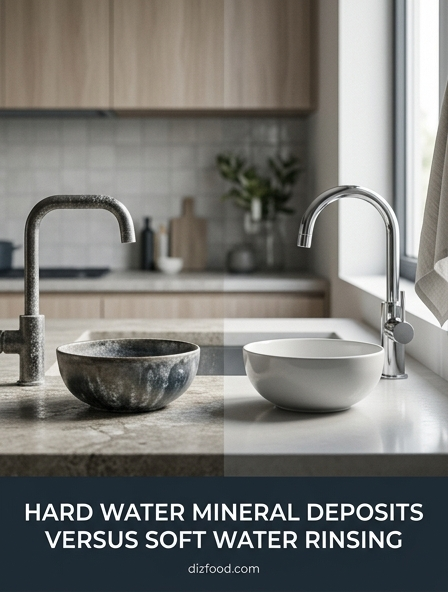
The efficiency of a kitchen surfactant is often boosted by secondary ingredients known as builders and co-surfactants. In many kitchen environments, "hard water" containing calcium and magnesium ions can interfere with the surfactant's ability to bind with lipids. These minerals can bind to the hydrophilic heads, causing the surfactant to precipitate out of the solution as "scum." To prevent this, modern detergents include chelating agents that strip away these minerals, allowing the surfactants to focus solely on the grease.
- Chelating Agents: Bind to minerals to soften the water.
- pH Adjusters: Often slightly alkaline to help hydrolyze certain fats.
- Enzymes: Proteases and amylases that break down food bits stuck in the grease.
By optimizing the chemical environment, the surfactant can reach its maximum lipid-binding potential. This means less scrubbing is required and smaller amounts of detergent can achieve the same results. This synergy is particularly important for automatic dishwashers, where the lack of physical agitation means the chemical efficiency of the lipid-binding process must be flawlessly executed to ensure that every pot and pan emerges spotless and sanitized.
Achieving Residue Free Kitchen Surfaces
The final goal of any lipid-binding surfactant is to leave behind a surface that is not only clean but entirely free of chemical and organic residue. Achieving this requires a perfect balance between the binding of the oil and the ease of the final rinse. If the surfactant binds too strongly to the surface itself, it may leave a film that can be seen on glass or felt on countertops. High-quality kitchen cleaners are designed to have high affinity for lipids but low affinity for common kitchen substrates like granite, steel, or ceramic.
- Complete Rinsability: The surfactant-lipid complex must be easily displaced by fresh water.
- Evaporative Clarity: Minimal solutes should remain after the water dries.
- Surface Neutrality: The cleaner should not etch or dull the finish of the material.
When a surface is truly residue-free, it feels "squeaky clean." This sensation occurs when the natural friction of the surface is restored because all lubricating oils and surfactant molecules have been stripped away. In a professional or home kitchen, this level of cleanliness is vital for food safety, as it ensures that no old fats remain to go rancid or provide a breeding ground for bacteria, maintaining a pristine environment for food preparation.

Comments