
Choosing the right prep surface is about more than just kitchen aesthetics; it is the single most important factor in maintaining your chef knife's razor-sharp edge. While bamboo is often celebrated for its eco-friendly profile and budget-friendly price tag, its high silica content creates a surprisingly hard surface that can lead to micro-chipping and faster blade dulling compared to traditional hardwoods. In contrast, premium wooden boards-especially those made from maple, walnut, or cherry-offer a "forgiving" cellular structure that allows the blade to bite slightly into the grain rather than bouncing off it. Whether you are a professional chef or a home cook, understanding the trade-offs between the fibrous density of bamboo and the self-healing resilience of wood is the key to ensuring your cutlery stays sharper for longer while maintaining a hygienic workspace.
| Feature | Wooden (Hardwood) | Bamboo |
|---|---|---|
| Knife Friendliness | Excellent; soft fibers protect and preserve blade edges. | Poor; high silica content acts like sandpaper on steel. |
| Surface Hardness | 950-1,450 lbf (Janka Scale); optimal for impact. | 1,300-1,800 lbf; significantly harder than most wood. |
| Durability & Repair | High; can be sanded and refinished to look new. | Moderate; prone to splintering and hard to resurface. |
| Hygiene | Naturally antimicrobial; draws bacteria into the grain to die. | High water resistance; less porous but uses more glues. |
| Sustainability | Renewable (if FSC certified); slow growth cycle. | Highly sustainable; grass that matures in 3-5 years. |
| Typical Cost | Premium ($50-$150+); viewed as a lifetime investment. | Budget-friendly ($15-$40); easily replaceable. |
Durability and Hardness Comparison
When comparing the structural integrity of wooden and bamboo cutting boards, hardness is the primary metric of distinction. Most high-quality wooden boards are crafted from hardwoods such as sugar maple, walnut, or cherry. On the Janka hardness scale, North American Hard Maple sits at approximately 1,450 lbf, providing a resilient surface that withstands heavy chopping without significant scarring. However, bamboo is technically a grass, not wood, and its processed form is remarkably dense. Depending on the species and manufacturing process, bamboo can reach hardness levels upwards of 1,600 lbf, making it significantly harder than many traditional hardwoods.
While hardness suggests durability, it also introduces a risk of brittleness. Bamboo boards are constructed by gluing strips of the plant together under high pressure. Over time, the rigidity of bamboo can lead to splitting or cracking if the board is subjected to frequent moisture fluctuations. In contrast, solid wood boards, particularly those with edge-grain or end-grain construction, possess a natural elasticity that allows the fibers to absorb impact and recover. A well-maintained maple board can last for decades, whereas a bamboo board may eventually suffer from delamination due to the failure of the adhesives holding the grass fibers together.
- Hardness: Bamboo is generally harder than most commercial hardwoods.
- Impact Resistance: Wood fibers are more flexible and less prone to shattering.
- Longevity: Solid wood is less likely to delaminate compared to glued bamboo strips.
Knife Blade Wear and Edge Retention
The relationship between a cutting surface and the sharpness of a chef's knife is critical for any culinary enthusiast. Wooden cutting boards, especially end-grain varieties, are widely considered the gold standard for knife health. In an end-grain board, the wood fibers are oriented vertically, allowing the knife blade to slip between the fibers rather than cutting across them. This "self-healing" property ensures that the edge of the knife remains sharp for longer periods, as the surface provides a cushioned landing for the blade.
Bamboo, conversely, presents a much harsher surface for premium cutlery. Because bamboo is high in silica-a natural mineral that is effectively a component of glass-it acts as an abrasive against steel. Every strike on a bamboo board slightly dulls the microscopic edge of the knife. Furthermore, the extreme hardness of bamboo does not offer the same "give" as wood, meaning the energy of the chop is reflected back into the blade, leading to faster edge rolled or blunted tips. Professional chefs who use high-carbon Japanese steel or expensive forged blades typically avoid bamboo in favor of softer woods like hinoki or walnut to preserve their tools.
While bamboo is an affordable and functional choice for casual kitchens, users must be prepared to hone and sharpen their knives more frequently. If you prioritize maintaining a razor-sharp edge with minimal maintenance of the cutlery itself, a high-quality hardwood board is the superior investment for your tool kit.
Eco-Friendliness and Sustainability Factors
Bamboo is frequently marketed as the ultimate eco-friendly choice for kitchenware, largely due to its incredible growth rate. As a member of the grass family, some bamboo species can grow up to three feet in a single day, reaching full maturity in just three to five years. This rapid renewal cycle makes it a highly sustainable raw material compared to hardwoods like maple or walnut, which can take thirty to sixty years to reach a harvestable size. Additionally, bamboo does not require pesticides or fertilizers to thrive, and its extensive root system prevents soil erosion.
However, the environmental footprint of bamboo is complicated by the manufacturing process. Most bamboo cutting boards are produced in East Asia and must be shipped globally, contributing to transportation emissions. Furthermore, because bamboo consists of small stalks, these must be processed into strips and bonded using adhesives. Some low-cost manufacturers use glues containing formaldehyde, which can off-gas and affect indoor air quality or food safety. While many modern brands now use food-safe, formaldehyde-free resins, it remains a factor to consider.
Wooden boards, particularly those sourced from FSC-certified (Forest Stewardship Council) forests, offer a different sustainable profile. When sourced locally, the carbon footprint of transportation is significantly lower. Wood is also a natural carbon sink, and because a high-quality wooden board can last a lifetime, it reduces the waste associated with replacing cheaper, less durable boards every few years.
Hygiene and Bacterial Resistance Profile
A common misconception is that plastic is more hygienic than wood or bamboo because it is non-porous. However, scientific studies have shown that wood possesses natural antimicrobial properties that make it exceptionally safe for food preparation. When bacteria like Salmonella or E. coli enter the microscopic pores of a wooden board, they are drawn into the internal structure where they are trapped and eventually die due to lack of moisture and the presence of natural tannins. Hardwoods with tight grain structures, like maple, are particularly effective at this capillary action.
Bamboo shares many of these hygienic advantages. Because of its extreme density, bamboo absorbs very little liquid compared to softer woods, which prevents the deep penetration of food juices that can harbor bacterial growth. The natural resistance of the bamboo plant to pests and fungi also translates to a surface that is naturally hostile to microbes. However, the hygiene of a bamboo board is heavily dependent on the integrity of its construction. If the adhesives fail and small cracks appear between the strips, these crevices can become breeding grounds for bacteria that are difficult to clean.
Both materials require proper sanitation to remain safe. Washing with hot, soapy water and ensuring the board is completely dry before storage is essential. Neither material is dishwasher safe, as the high heat and prolonged water exposure will cause warping and cracking, compromising the hygienic integrity of the surface.
Maintenance and Oiling Requirements
To prevent drying, cracking, and staining, both wooden and bamboo cutting boards require regular maintenance. The primary method of preservation is the application of food-grade mineral oil or a beeswax-based conditioner. This process "seasons" the material, creating a hydrophobic barrier that prevents water and food juices from soaking into the fibers. For a new board or one that is heavily used, oiling should occur at least once a month, or whenever the surface begins to look dull and feels dry to the touch.
Wooden boards, particularly those with end-grain construction, are more "thirsty" and will absorb a significant amount of oil during the initial seasoning process. This deep penetration is vital for preventing the wood from becoming brittle. Bamboo boards also require oiling, but because they are less porous, they may require less oil per application. However, because bamboo is prone to splintering if it dries out, the edges and seams between the strips must be monitored closely for any signs of separation.
| Maintenance Task | Wooden Board | Bamboo Board |
|---|---|---|
| Oiling Frequency | Monthly (High Absorption) | Monthly (Low Absorption) |
| Resurfacing | Can be sanded and refinished | Difficult to sand; may splinter |
| Washing | Hand wash only; towel dry | Hand wash only; towel dry |
Porosity and Water Absorption Rates
Porosity refers to the volume of open space within a material, which dictates how much liquid it will absorb. In the kitchen, low porosity is generally preferred to prevent cross-contamination and warping. Bamboo is naturally less porous than many hardwoods. Its cellular structure is very dense, which means it acts as an effective barrier against moisture. This makes bamboo particularly resistant to staining from deeply pigmented foods like beets or turmeric, and it is less likely to retain odors from pungent ingredients like garlic and onions.
Wood porosity varies significantly by species. Close-grained woods like maple and cherry have small pores that resist liquid penetration quite well. Open-grained woods, such as red oak, have large pores that can act like straws, drawing in moisture and bacteria, which is why they are rarely used for cutting boards. End-grain wooden boards are the most porous of all because the "cut" ends of the wood fibers are exposed. While this makes them excellent for knife edges, it also means they require a much more robust seal of oil and wax to prevent them from absorbing water and eventually splitting or bowing.
If a cutting board is left in a puddle of water or soaked in a sink, both bamboo and wood will eventually fail. The water causes the fibers to swell unevenly, putting immense pressure on the internal structure. Because bamboo is a composite of glued strips, this swelling often leads to the failure of the adhesive bonds, whereas wood may simply warp or develop a "cup" shape.
Price and Long-Term Value Comparison
When analyzing price, bamboo cutting boards almost always win the initial cost comparison. Because bamboo grows rapidly and is easy to harvest, manufacturers can produce boards at a fraction of the cost of premium hardwood. A standard-sized bamboo board can often be purchased for ten to twenty dollars, making it an accessible option for students, casual cooks, or those on a strict budget. They are frequently sold in sets, providing multiple sizes for a relatively low investment.
Wooden cutting boards, especially those made from walnut or end-grain maple, are significantly more expensive. A high-quality, thick wooden block can cost anywhere from fifty to several hundred dollars. However, the long-term value of wood is often higher. A thick wooden board can be sanded down and refinished multiple times throughout its life, effectively erasing knife scars and deep stains to reveal a brand-new surface. This "reset" capability allows a single wooden board to serve a kitchen for forty years or more.
Bamboo boards are generally considered semi-disposable. Because they are thin and made of glued strips, they cannot be sanded down effectively without risking splintering or hitting the adhesive layers. Once a bamboo board cracks or the surface becomes heavily scarred, it usually must be replaced. Therefore, while wood has a higher barrier to entry, its status as an heirloom-quality tool often makes it the more economical choice over several decades of kitchen use.
Aesthetics and Kitchen Design Impact
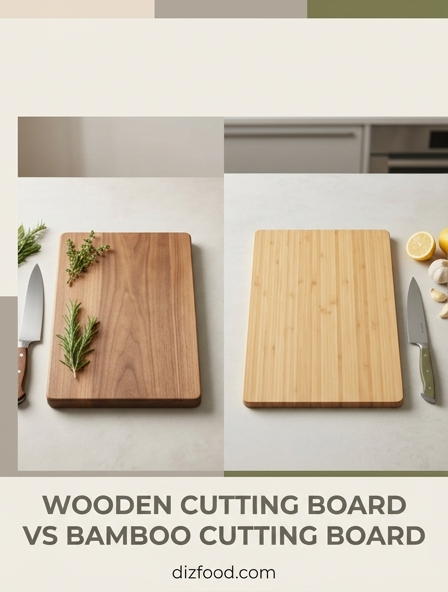
The aesthetic appeal of a cutting board is a significant factor for many homeowners, as these items often live permanently on the countertop. Wooden boards offer a classic, warm, and premium look. The varied grain patterns of walnut, with its deep chocolate tones, or the light, clean appearance of maple, can complement both traditional and modern kitchen designs. End-grain boards, with their "checkerboard" or mosaic patterns, are often treated as functional pieces of art and serve as a focal point in the kitchen.
Bamboo boards provide a more uniform, contemporary aesthetic. They typically feature a light tan or golden hue with a distinct "knuckled" grain pattern characteristic of the bamboo stalk. Because bamboo is constructed from strips, the boards have a linear, geometric appearance that fits well in minimalist or "eco-chic" kitchen environments. Some bamboo boards are also available in "carbonized" finishes, where the material is steamed to caramelize the natural sugars, resulting in a darker, richer brown color without the use of stains.
While bamboo is attractive in its own right, it lacks the depth and character of natural wood. Wood develops a patina over time, becoming richer and more unique with age and proper oiling. For those who view their kitchen tools as part of their home's decor, the organic beauty and substantial presence of a thick hardwood block are difficult to replicate with the more standardized appearance of bamboo products.
Weight and Daily Usability Differences
Daily usability is often determined by the weight and maneuverability of the board. Bamboo is significantly lighter than hardwood. This makes bamboo boards much easier to move from the counter to the stove, or to carry to the sink for cleaning. For individuals with limited wrist strength or those who frequently need to lift and tilt their boards to scrape ingredients into a pot, the lightweight nature of bamboo is a major practical advantage. It also makes them easier to store in vertical racks or narrow cabinets.
Hardwood boards, particularly professional-grade blocks, are heavy and substantial. While this makes them more difficult to move, it provides a level of stability that bamboo cannot match. A heavy wooden board will not slide around on the countertop during vigorous chopping or when slicing through tough vegetables like butternut squash. This "anchored" feeling contributes to a safer cutting environment. Many wooden boards are also thick enough to include finger grooves on the sides to assist with lifting, but they are still primarily designed to stay in one place.
- Portability: Bamboo is superior for quick tasks and easy cleaning.
- Stability: Wood provides a safer, non-slip surface for heavy-duty prep work.
- Versatility: Thin bamboo boards can often double as serving trays due to their low weight.
Final Comparison Pros and Cons Summary
Choosing between wood and bamboo requires balancing priorities such as knife maintenance, budget, and sustainability. Both materials offer distinct advantages and drawbacks that cater to different types of home cooks. Wooden boards are the preferred choice for those who view cooking as a craft and want to protect their high-end cutlery. Bamboo is ideal for the environmentally conscious shopper who needs an affordable, lightweight, and low-maintenance tool for everyday meal preparation.
| Feature | Wooden Cutting Board | Bamboo Cutting Board |
|---|---|---|
| Pros | Excellent for knife edges; can be refinished; lasts a lifetime; natural antimicrobial properties. | Highly renewable; affordable; lightweight; resists deep staining and moisture. |
| Cons | Expensive; heavy; requires more oiling; can be bulky for small kitchens. | Hard on knife blades; can splinter over time; uses adhesives; cannot be easily refinished. |
| Best For | Serious cooks and heirloom quality. | Budget-conscious and eco-focused users. |
Ultimately, the best decision depends on your kitchen habits. If you value the tactile experience of a heavy block and don't mind the occasional sanding and oiling, wood is the winner. If you prefer a board that is easy to grab, wash, and replace every few years without a large financial loss, bamboo is a highly functional and attractive alternative.

Comments