
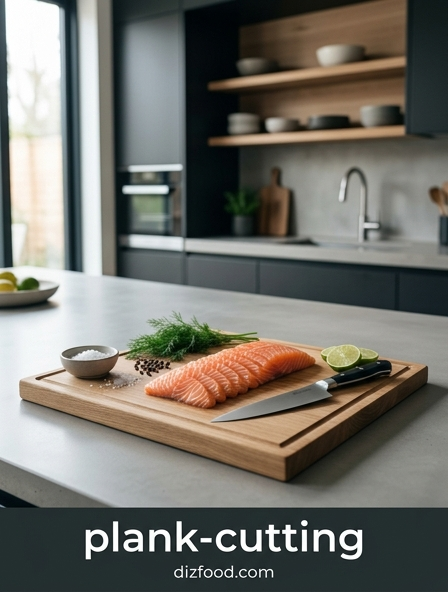
Mastering the Plank Cutting Technique
The plank cutting technique serves as the structural cornerstone for advanced vegetable fabrication in professional kitchens. By definition, a plank is a rectangular slice of a vegetable that has been squared off to remove rounded edges. This method is primarily applied to root vegetables like potatoes, carrots, and parsnips, but it is equally effective for firm fruits and aromatics. Mastering this skill allows a cook to transition from rough, uneven pieces to refined, geometric shapes that are essential for high-end culinary presentations.
To execute a perfect plank, one must first stabilize the ingredient. This involves slicing a thin sliver off one side of the vegetable to create a flat base. Once the ingredient is stationary, the cook proceeds to shave off the remaining three sides until a rectangular block, or "pavement," is formed. The precision required here dictates the success of all subsequent cuts, such as the julienne or the brunoise. Without a properly executed plank, the resulting cubes or strips will lack the symmetry required for even cooking and aesthetic appeal.
Stability and Safety on the Cutting Board
Safety is the primary reason why professional chefs prioritize the plank method over simple round slicing. Round vegetables are inherently unstable; they tend to roll or pivot under the pressure of a knife, which significantly increases the risk of the blade slipping toward the fingers. By transforming a cylindrical ingredient into a series of flat planks, the cook ensures that every subsequent stroke is performed on a steady, unmoving surface. This stability allows for faster work without compromising the physical safety of the user.
- Always create a "bridge" with your non-dominant hand to secure the vegetable during the initial squaring cut.
- Ensure the flat side of the plank is flush against the cutting board before making vertical slices.
- Use a damp paper towel or a non-slip mat under the cutting board to prevent the entire station from shifting.
- Keep the tip of the knife in contact with the board whenever possible to maintain a controlled fulcrum point.
By following these safety protocols and focusing on the stability of the plank, a chef can maintain a rhythmic pace while minimizing the likelihood of kitchen accidents.
Achieving Uniformity in Every Slice
Uniformity is not merely about visual perfection; it is a critical factor in culinary science. When vegetables are cut into planks of identical thickness, they react to heat in a predictable and consistent manner. This prevents the common problem of some pieces being overcooked and mushy while others remain raw and crunchy. The plank method provides a reliable template that ensures every piece of food in the pan is of the same dimension, leading to a professional-grade finish in the final dish.
| Cut Name | Standard Plank Thickness | Common Use Case |
|---|---|---|
| Fine Julienne | 1/16 inch (1.5mm) | Garnish and Salads |
| Batonnet | 1/4 inch (6mm) | French Fries and Stir-fry |
| Pont-Neuf | 3/4 inch (20mm) | Large Roasted Potatoes |
By using the plank as a measurement guide, the cook eliminates guesswork. Whether preparing a delicate slaw or a hearty root vegetable roast, the commitment to uniform planks guarantees a superior mouthfeel and a polished presentation that distinguishes professional cooking from amateur preparation.
The Foundation of Consistent Dicing
A consistent dice is impossible to achieve without first mastering the plank. Many novice cooks attempt to dice by chopping round slices, which results in trapezoids and irregular triangles rather than clean cubes. The plank method interrupts this inaccuracy by establishing a three-dimensional grid system. Once a vegetable is squared into a block, it is sliced into planks, then stacked and sliced into batons, and finally turned 90 degrees to be cut into cubes.
- Square the vegetable to create a rectangular block.
- Slice the block lengthwise into planks of the desired thickness.
- Stack two or three planks on top of one another.
- Cut the stack into long, rectangular sticks (batonnet or julienne).
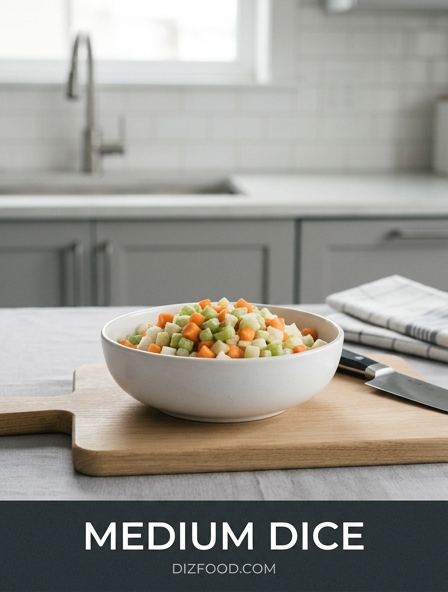
- Align the sticks and cut crosswise to produce uniform cubes (dice).
This systematic workflow ensures that every face of the dice is flat and every angle is ninety degrees. This structural integrity is essential for dishes where the texture of the vegetable is meant to stand out, such as in a classic mirepoix or a precision-focused tartare.
Knife Control and Hand Placement
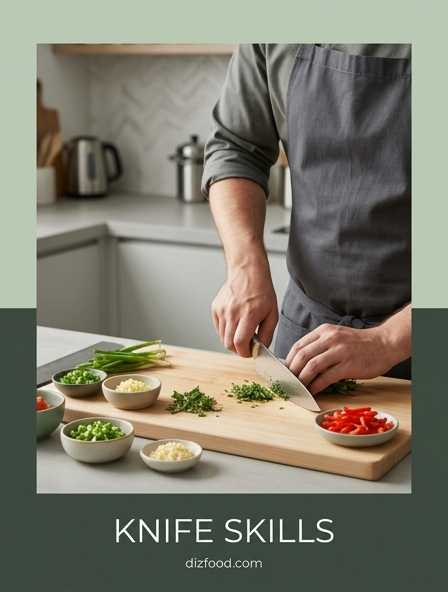
Executing precise planks requires a combination of correct knife grip and disciplined hand placement. The "pinch grip" is recommended, where the thumb and forefinger grip the bolster of the knife while the other three fingers wrap around the handle. This provides maximum leverage and prevents the blade from wobbling during the long, vertical cuts required to square off a vegetable. The stability of the knife is balanced by the "claw grip" used by the non-cutting hand, which guides the blade while keeping fingertips tucked safely away from the edge.
During the planking process, the knuckles of the guiding hand should act as a fence for the side of the blade. This allows the cook to feel the thickness of the plank before the cut is even made. By maintaining constant contact between the knife and the knuckles, you create a tactile feedback loop that ensures cada slice is identical to the last. This level of control is what allows seasoned chefs to produce dozens of perfect planks in a matter of seconds, maintaining high output without sacrificing the geometric quality of the produce.
Transforming Round Vegetables into Flat Planks
Nature rarely provides vegetables in convenient rectangular shapes. Carrots, potatoes, and zucchini are inherently cylindrical or tapered, presenting a challenge for the precision-oriented cook. Transforming these round objects into flat planks involves a process of "squaring off." This involves taking a thin slice off one side to create a base, rotating the vegetable, and repeating the process on all four sides. While this might seem to create food waste, these "scraps" are typically reserved for stocks, purees, or soups where shape is irrelevant.
The key to successful transformation is to minimize the amount of flesh removed while still achieving a perfect right angle. A sharp knife is vital here, as it allows for paper-thin adjustments to the flat surfaces. For highly irregular vegetables like celery root or knobby ginger, the squaring process may require more aggressive trimming. However, the resulting "pavement" or rectangular prism makes the subsequent slicing into planks significantly more efficient. This transformation is the bridge between raw, rustic ingredients and the refined, geometric components required for modern culinary arts.
Essential Tools for Precision Cutting
The quality of your planks is directly influenced by the tools at your disposal. While a variety of knives exist, only a few are truly suitable for the vertical, stabilizing cuts required in planking. A sharp, well-maintained blade reduces the amount of force needed, which in turn increases your control and reduces the risk of the vegetable slipping. Furthermore, the surface upon which you work is just as important as the tool in your hand.
- Chef's Knife: An 8-inch or 10-inch blade provides the length necessary for long, smooth cuts through large vegetables.
- Santoku: The flat edge of a Santoku is excellent for the "push-cut" motion often used in squaring off planks.
- Sharpening Stone: A dull knife will crush the cell walls of the vegetable rather than slicing cleanly, leading to jagged planks.
- Heavy Wooden Cutting Board: A stable, end-grain board absorbs the impact of the knife and provides a reliable, flat surface.
Investing in these high-quality tools and keeping them in top condition is a prerequisite for anyone looking to master the plank method. Without a straight, sharp edge, achieving the flat planes and sharp corners of a perfect plank becomes an exercise in frustration.
Benefits of Square Edges in Cooking
The aesthetic appeal of square edges is undeniable, but the benefits extend deep into the chemistry of cooking. Square-edged planks and cubes provide a greater surface area for Maillard reaction-the browning process that creates complex flavors. When sautéing or roasting, flat surfaces make better contact with the hot pan than rounded ones, ensuring a more even and efficient heat transfer. This leads to better caramelization and a more satisfying texture in the final dish.
Beyond browning, square edges allow for superior stacking and layering. In dishes like vegetable terrines, gratins, or lasagnas, the ability to fit ingredients together with minimal gaps creates a more cohesive internal structure. This prevents the dish from falling apart when sliced and served. Furthermore, in soups and stews, the uniform size of the planks ensures that the vegetables release their sugars and starches at the same rate, resulting in a balanced broth. Ultimately, the transition from round to square is a transition from haphazard cooking to intentional, high-performance culinary craft.
Step-by-Step Guide to the Plank Method
Following a standardized procedure is the most effective way to learn the plank method. Consistency in your workflow will eventually lead to muscle memory, allowing for high-speed preparation. The goal is to move from a whole vegetable to a series of identical flat slices with as few movements as possible. This process should be practiced slowly at first, prioritizing the accuracy of the angles over the speed of the knife.
- Wash and peel the vegetable to remove any dirt or tough outer skin.
- Cut off both ends (stem and root) to create two flat, parallel surfaces.
- Slice a thin strip lengthwise from one side to create a stable base.
- Place the vegetable on the flat base and slice off the remaining rounded sides until it is a rectangular block.
- Determine the desired thickness and slice the block lengthwise into even planks.
- Stack the planks neatly if further cuts, like dicing or julienning, are required.
By adhering to these steps, you eliminate the variables that lead to uneven cooking. This guide provides the skeletal framework for nearly all vegetable fabrication in a professional kitchen environment.
Elevating Your Culinary Knife Skills
The transition from basic chopping to the precision of the plank method marks a significant milestone in a cook's development. It represents a shift in mindset-moving away from merely "getting the job done" toward a focus on craftsmanship and technical excellence. As you become more comfortable with squaring off ingredients and producing uniform planks, you will notice an immediate improvement in the quality of your cooking. Your dishes will look more professional, taste more balanced, and cook more consistently.
Continued practice is the only way to refine these skills. Start with forgiving vegetables like large russet potatoes or zucchini before moving on to tougher, more irregular items like butternut squash or parsnips. Pay close attention to the sound of the knife and the feel of the blade against your knuckles. Over time, the plank method will become second nature, serving as the reliable foundation upon which all your other knife skills are built. Elevating your technique in this manner not only improves your food but also increases your confidence and efficiency in the kitchen.

Comments