
The Science of Self Healing Wood Fibers
The concept of self-healing in kitchen surfaces is primarily a biological phenomenon found in organic wood fibers. Unlike synthetic materials that possess a static, rigid structure, wood is composed of complex cellulose bundles held together by lignin. When a sharp blade makes contact with a wooden cutting surface, particularly one with a vertical grain orientation, the fibers do not typically sever. Instead, the edge of the knife slides between these fibers, momentarily pushing them apart. This lateral displacement is temporary due to the inherent elasticity of the cellular walls.
Once the pressure of the blade is removed, the fibers naturally attempt to return to their original position. This process is facilitated by the hygroscopic nature of wood, which allows it to retain a specific internal moisture balance. This internal tension acts as a spring mechanism. When the board is cleaned or oiled, the moisture causes the fibers to swell slightly, effectively closing the gaps created by the knife. This unique structural behavior ensures that the surface remains relatively smooth and intact even after thousands of localized impacts, distinguishing it from non-regenerative materials.
Preserving Knife Edges Through Surface Resilience
The resilience of a kitchen surface directly dictates the longevity and sharpness of professional cutlery. Hard, non-yielding materials like glass, granite, or low-quality bamboo act as an anvil against the delicate edge of a knife. Upon impact, these surfaces cause the microscopic apex of the blade to roll, chip, or dull prematurely. In contrast, a resilient wooden surface provides a "soft landing," absorbing the kinetic energy of the stroke rather than reflecting it back into the steel. This synergy between the tool and the work surface is essential for maintaining precision in the culinary environment.
- Edge Alignment: Resilient surfaces prevent the lateral folding of the blade's burr.
- Reduced Friction: The slight give in wood fibers minimizes heat buildup during rapid chopping.
- Vibration Dampening: Organic materials absorb the shockwaves that contribute to microscopic metal fatigue.
- Hone Retention: Users find they need to use a honing rod or whetstone significantly less often on self-healing surfaces.
By prioritizing surface resilience, a kitchen reduces the frequency of professional sharpening and extends the total lifespan of high-carbon or stainless steel knives.
Microscopic Mechanics of Fiber Recovery
At a microscopic level, the recovery of wood fibers is a combination of mechanical elasticity and capillary action. Wood is a vascular tissue designed by nature to transport fluids; even after it is processed into a kitchen utility, it retains its cellular memory. When a knife creates a micro-fissure, it interrupts the surface tension. However, the lignin-a natural polymer within the wood-provides a structural "memory" that pulls the cellulose strands back into alignment. This is often referred to as "fiber bounce-back."
The speed and efficacy of this recovery are influenced by the ambient environment and maintenance routines. When food-grade mineral oil is applied, it penetrates the tracheids and vessels, lubricating the fibers so they can slide past one another without snapping. This lubrication reduces internal friction, allowing the microscopic "wounds" to close more efficiently. Without this moisture balance, the fibers become brittle and lose their ability to heal, leading to permanent scarring. Understanding this mechanical behavior allows chefs to better maintain their tools by supporting the natural physics of the material.
Wood Versus Plastic Durability Comparison
While plastic boards are often perceived as more durable due to their resistance to water, they lack the regenerative properties of wood. Plastic is a polymer that undergoes permanent deformation when sliced. Each cut removes a small amount of material or creates a permanent groove that cannot be closed. Over time, these grooves become deep canyons that harbor debris. Wood, through its self-healing capabilities, maintains a more consistent surface level throughout its operational life.
| Feature | Self-Healing Wood | High-Density Plastic |
|---|---|---|
| Surface Response | Fibers separate and close | Material is severed and scarred |
| Knife Longevity | High (Protects edge) | Moderate to Low (Dulls edge) |
| Refurbishment | Can be sanded and re-oiled | Must be discarded when warped |
| Bacteria Resistance | Natural antimicrobial properties | Relies on chemical sanitization |
The comparison highlights that while plastic may survive a dishwasher, it fails to offer the structural resilience required for long-term kitchen efficiency and tool preservation.
Hygiene Benefits of Closing Surface Scars
The ability of a surface to "heal" itself is not merely an aesthetic advantage; it is a critical component of food safety. In non-resilient materials like plastic, knife scars create deep, narrow trenches that are difficult to reach even with high-pressure water and detergents. These areas become breeding grounds for bacteria, as trapped organic matter provides the necessary nutrients for microbial growth. Because wood fibers close back together after a cut, they prevent the deep entrapment of food particles and moisture.
Furthermore, many hardwoods used in kitchen construction, such as maple and walnut, possess natural antimicrobial properties. When a surface scar closes, it often traps any remaining bacteria within the wood's acidic environment, where they are deprived of oxygen and moisture, leading to their eventual demise. Studies have shown that bacteria disappear from the surface of a wooden board more rapidly than from a plastic one. The combination of mechanical closing and chemical inhibition makes self-healing wooden surfaces a superior choice for maintaining a sterile preparation area in both residential and professional kitchens.
Impact Absorption During Precision Dicing
Precision dicing requires consistent, repetitive motions where the knife strikes the board hundreds of times in a single session. The impact absorption of a self-healing surface plays a vital role in both the quality of the cut and the comfort of the user. When a knife hits a rigid surface, the impact force is reflected back through the handle and into the chef's wrist and elbow. This can lead to repetitive strain injuries and fatigue. A resilient wood surface acts as a shock absorber, dissipating the energy through its fibrous network.
This energy dissipation also ensures that the food being cut remains stable. On a hard, slick surface, the blade may "bounce" slightly upon impact, causing the food item to shift and resulting in uneven cuts. The subtle "grip" provided by the opening and closing fibers of a wooden surface holds the edge of the blade momentarily, providing a level of control that is impossible to achieve on glass or steel. This stability allows for thinner slices and more uniform dimensions, which is the hallmark of professional culinary technique.
End Grain Construction for Maximum Longevity
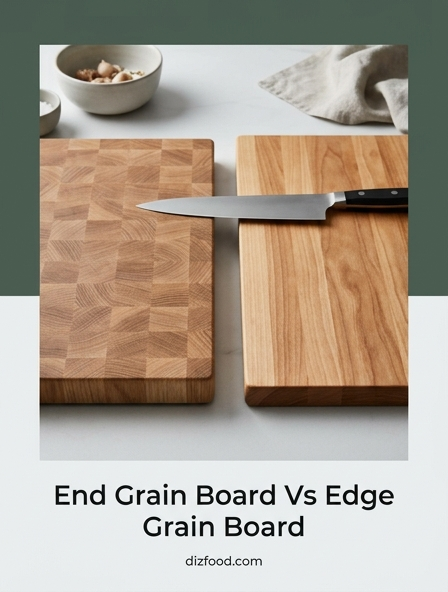
Not all wooden surfaces are created equal; the orientation of the grain determines the degree of self-healing resilience. End grain construction is widely considered the pinnacle of kitchen surface design. In this configuration, the wood blocks are arranged so that the wood fibers stand vertically, like the bristles of a paintbrush. When a knife cuts down, it penetrates between the ends of the fibers rather than cutting across them. This maximizes the self-healing effect because the fibers are designed to withstand vertical compression.
- Vertical Displacement: The blade moves between the grain, resulting in zero fiber breakage.
- Uniform Wear: The surface wears evenly over decades rather than developing "valleys" in high-use areas.
- Enhanced Depth: End grain boards are typically thicker, allowing for more moisture retention and resilience.
- Visual Camouflage: Because the fibers close so tightly, even heavy usage leaves almost no visible trace.
By utilizing the vertical strength of the tree's vascular system, end grain boards offer the highest level of resilience and are often passed down through generations as heirloom kitchen tools.
Long Term Financial Value of Wooden Surfaces
Investing in a self-healing wooden surface provides significant financial advantages over the long term. While the initial purchase price of a high-quality end grain walnut or maple board may be higher than that of plastic or edge-grain alternatives, the cost-per-use is drastically lower. A cheap plastic board may need to be replaced every twelve to eighteen months as it becomes dangerously scarred or warped. In contrast, a well-maintained wooden surface can last thirty years or more, effectively serving as a one-time investment for a lifetime of cooking.
Beyond the cost of the board itself, the self-healing nature of wood saves money on knife maintenance. Professional sharpening services and the eventual replacement of thin-bladed Japanese knives are expenses that add up over time. By preserving the factory edge for longer periods, a resilient board reduces these overhead costs. Additionally, the ability to sand down and refinish a wooden surface means that even after decades of heavy use, the board can be restored to a "like-new" condition for the price of a small amount of sandpaper and mineral oil.
Sustainable Materials for Resilient Kitchens
The resilience of wood is a testament to the efficiency of natural materials. Choosing self-healing wooden surfaces supports a more sustainable kitchen ecosystem. Wood is a renewable resource that sequesters carbon throughout its growth. When sourced from responsibly managed forests (certified by organizations like the FSC), wooden kitchenware represents a biodegradable alternative to the petroleum-based plastics that dominate the modern market. The longevity of a resilient wood board further enhances its sustainability by reducing the volume of waste sent to landfills.
In a circular economy, the durability of a product is its most eco-friendly attribute. Because wood can be repaired rather than replaced, it minimizes the energy consumption associated with manufacturing and shipping new goods. Furthermore, at the end of its multi-decade lifecycle, a wooden board can be composted or repurposed, whereas plastic boards break down into microplastics that persist in the environment for centuries. Choosing resilience is therefore not just a functional decision for the chef, but an ethical decision for the consumer concerned with the ecological footprint of their culinary habits.
Maintaining Natural Fiber Elasticity and Health
To ensure that a wooden surface retains its self-healing properties, consistent maintenance of its moisture content is required. The elasticity of wood fibers depends on the presence of lipids that prevent the cellulose from becoming brittle. Regular application of food-grade mineral oil or a beeswax blend is essential. These substances penetrate the pores, creating a hydrophobic barrier that prevents excess water from entering (which causes warping) while keeping the internal fibers supple enough to move when struck by a blade.
Effective maintenance involves several key steps to preserve resilience:
- Cleaning: Use mild soap and avoid soaking, which can over-saturate and weaken fiber bonds.
- Drying: Always dry the board upright to allow for even air circulation and prevent tension cracks.
- Oiling: Apply oil whenever the wood appears dull or feels "thirsty" to the touch.
- Sanitizing: Use natural acids like lemon or vinegar to maintain the surface without degrading the lignin.
Properly conditioned wood will continue to heal and protect for years, maintaining the structural integrity and hygiene of the kitchen's most important work surface.

Comments