
Ever wondered why some recipes demand a fine mince while others settle for a simple dice? The secret lies in the chemistry of allicin. When you cut into a garlic clove, you trigger a reaction between enzymes and amino acids that creates garlic's signature pungent punch. Mincing maximizes this reaction by rupturing the highest number of cell walls, resulting in a bold, intense flavor that disperses evenly throughout sauces and dressings. In contrast, dicing preserves the clove's structural integrity, offering a mellower, nutty profile with localized bursts of flavor. Choosing between them isn't just a matter of prep time-it's a strategic culinary decision that dictates the aromatic depth and heat of your final dish.
| Feature | Garlic Dicing | Garlic Mincing |
|---|---|---|
| Surface Area | Low (3-5mm cubes) | High (Sub-1mm bits) |
| Flavor Profile | Mild, sweet, localized | Intense, pungent, uniform |
| Allicin Release | Moderate; slower reaction | Maximum; instant peak heat |
| Best Application | Stews, roasts, stir-fry | Marinades, dressings, sauces |
| Burn Risk | Low; survives high heat | High; scorches quickly |
| Texture | Noticeable soft bites | Dissolves into the dish |
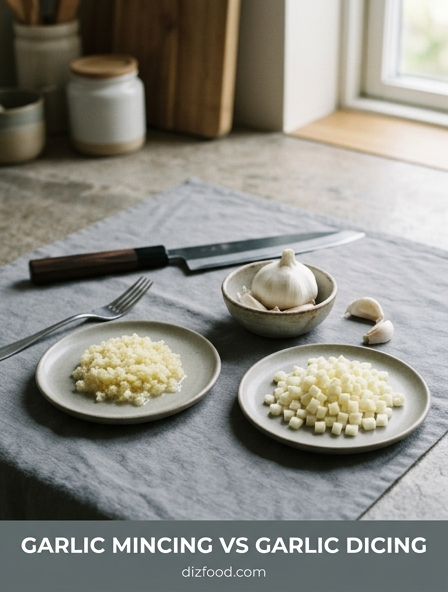
Understanding Garlic Mincing vs Dicing
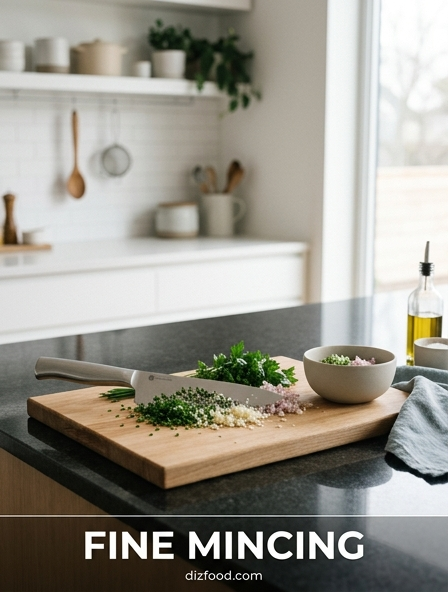
In the culinary world, the distinction between mincing and dicing garlic is a fundamental skill that dictates the flavor profile of a dish. Mincing involves chopping the garlic into the smallest possible pieces, typically less than one-sixteenth of an inch. The goal is to create a fine, almost paste-like consistency where the garlic can be evenly distributed throughout a liquid or fat. This technique maximizes the release of oils and aromatic compounds, resulting in a pervasive, sharp flavor that integrates seamlessly into the foundation of a recipe.
Dicing, conversely, refers to cutting the cloves into uniform cubes, generally ranging from one-eighth to one-quarter of an inch in size. This method preserves more of the garlic's physical structure, allowing it to maintain its individual identity within a dish. Diced garlic provides a more localized burst of flavor when encountered, rather than a continuous background note. Understanding which technique to apply depends largely on the cooking duration and the desired prominence of the ingredient.
| Feature | Mincing | Dicing |
|---|---|---|
| Typical Size | < 1/16 inch | 1/8 to 1/4 inch |
| Texture | Grainy/Paste-like | Distinct cubes |
| Flavor Profile | Intense and Uniform | Mild and Localized |
The Impact of Size on Flavor Intensity
The intensity of garlic flavor is directly proportional to the amount of cellular damage inflicted during the preparation process. When garlic cells are ruptured, an enzymatic reaction occurs that produces sulfur-based compounds. Mincing causes extensive cellular destruction, which leads to a rapid and aggressive release of these pungencies. Because the pieces are so small, they provide a vast cumulative surface area that interacts with the surrounding ingredients, making the dish significantly more "garlicky" in a shorter amount of time.
Dicing is a more conservative approach. By maintaining larger pieces, fewer cells are broken, and the enzyme reaction is limited to the exterior surfaces of the cubes. This results in a milder, sweeter flavor profile as the garlic cooks. While minced garlic can easily become overpowering if used in excess, diced garlic offers a sophisticated restraint. The larger the cut, the more the natural sugars within the garlic can caramelize during cooking without being overshadowed by raw sulfurous heat.
- Mincing: Highest intensity; best for bold, sharp applications.
- Dicing: Moderate intensity; allows for sweet, nutty development.
- Slicing: Lowest intensity; provides subtle infusion.
Best Culinary Uses for Minced Garlic
Minced garlic is the preferred choice for recipes where the garlic is intended to melt into the background or provide a sharp, immediate kick. Because it disperses so easily, it is the standard for emulsified dressings, cold sauces, and quick-cooking sautés. In a classic vinaigrette, for instance, minced garlic ensures that every drop of dressing carries a hint of allium without the diner encountering a large, raw chunk. Similarly, in dishes like Pasta Aglio e Olio, the fine mince allows the garlic to flavor the oil rapidly before the pasta is tossed in.
Another primary application for minced garlic is in marinades. The small particles can find their way into the crevices of meats and vegetables, providing deep flavor penetration. In stir-fries, where cooking times are measured in seconds rather than minutes, the high surface area of minced garlic allows it to release its full aromatic potential almost instantly. However, chefs must remain vigilant, as the small size makes it extremely susceptible to scorching in the high-heat environments common to these cooking styles.
Common uses include:
- Tzatziki and yogurt-based dips.
- Quick pan sauces and gravies.
- Compound butters for steaks or bread.
- Garlic-infused oils for drizzling.
- Spice rubs for grilled proteins.
When to Choose Diced Garlic for Recipes
Diced garlic is most effective in recipes that involve long cooking times or where a textural element is desired. In stews, braises, and slow-roasted dishes, minced garlic would likely dissolve completely or, worse, burn during the early searing stages. Diced garlic pieces are robust enough to withstand several hours of simmering, gradually softening and releasing their flavor into the liquid while retaining enough structure to be seen and tasted as individual components. This creates a complex layering of flavor where the liquid is infused with garlic notes, but the pieces themselves become sweet, buttery morsels.
Vegetable roasts and hearty grain dishes also benefit from diced garlic. When tossed with root vegetables and olive oil, diced garlic browns slowly in the oven, developing a toasted, nutty flavor that complements the earthiness of carrots, potatoes, or parsnips. Unlike minced garlic, which might dry out and turn bitter in a 400-degree oven, diced pieces have enough mass to remain moist in the center while the exterior caramelizes. It is the ideal choice for rustic, farmhouse-style cooking where the ingredients are meant to be hearty and identifiable.
Essential Tools for Mincing and Dicing
The quality of garlic preparation is heavily influenced by the tools used. For dicing, a sharp Chef's knife or a Santoku is indispensable. These knives provide the necessary control to create uniform cuts, which ensures that all garlic pieces cook at the same rate. A dull knife will crush the garlic rather than slice it, leading to uneven flavor release and a messy workspace. For precise dicing, the clove should first be sliced lengthwise into thin planks, then into matchsticks (julienne), and finally turned and cut into cubes.
Mincing can be achieved with a knife through repeated rocking motions, but other specialized tools are often employed for speed and consistency. A garlic press is a popular home kitchen tool that forces the clove through a mesh, essentially mincing it instantly, though this often results in a more pungent, "bruised" flavor. For a finer, paste-like mince, many chefs prefer using a Microplane or a fine grater. This technique is excellent for raw applications where a smooth texture is paramount. Each tool offers a different balance between convenience and culinary precision.
- Chef's Knife: Best for precise dicing and manual mincing.
- Garlic Press: Fastest way to mince; yields high intensity.
- Microplane: Creates a garlic puree; ideal for dressings.
- Garlic Rocker: A modern alternative to the press for easy cleaning.
How Surface Area Affects Garlic Potency
The concept of surface area is central to understanding why minced garlic tastes different than diced garlic. In chemical terms, increasing the surface area of a solid increases the rate at which it can react with its environment. For garlic, this means that more of the interior compounds are exposed to heat, oxygen, and fat. When you mince garlic, you are creating thousands of tiny surfaces, each acting as an exit point for essential oils. This leads to a rapid infusion of the cooking medium, creating a high-potency flavor that hits the palate immediately.
Diced garlic has a much lower surface-area-to-volume ratio. Most of the garlic's flavor remains locked inside the cube, protected from the immediate effects of heat and oxidation. As the garlic cooks, the flavor slowly migrates from the center to the surface. This "slow-release" mechanism is why diced garlic is perceived as being more subtle and mellow. If you want a dish to have a "lingering" garlic flavor that develops as you eat, dicing is the superior method. If you want a "sharp" garlic flavor that defines the first bite, mincing is the required approach.
Preventing Burnt Garlic in High Heat
One of the most common mistakes in the kitchen is burning garlic, which results in an acrid, bitter taste that can ruin an entire dish. Because minced garlic is so small, it loses its moisture almost instantly when it hits a hot pan. Once the moisture is gone, the sugars and proteins in the garlic begin to brown (the Maillard reaction) and can quickly move to carbonization. To prevent this, minced garlic should usually be added toward the end of the sautéing process, often only requiring 30 to 60 seconds of heat to reach its peak aromatic state.
Diced garlic is slightly more forgiving due to its size, but it still requires careful management. When cooking at high heat, such as in a stir-fry or when searing meat, it is often beneficial to "buffer" the garlic with other ingredients. Adding garlic alongside moisture-rich vegetables like onions or peppers can lower the surface temperature of the pan and prevent the garlic from scorching. Additionally, using an oil with a high smoke point or lowering the heat before adding the garlic can ensure the cloves soften and brown beautifully rather than turning black and bitter.
- Lower the pan temperature before adding garlic.
- Add minced garlic during the last minute of sautéing.
- Use plenty of fat (oil or butter) to distribute heat evenly.
- If the garlic begins to brown too quickly, deglaze the pan with liquid.
Textural Differences in Finished Dishes
Mouthfeel is an often-overlooked aspect of the mincing vs. dicing debate. Minced garlic is intended to disappear. In a smooth tomato sauce or a cream-based soup, the presence of large chunks of garlic might be considered a technical flaw. The goal in these dishes is a homogenous texture where the garlic provides flavor without interrupting the silkiness of the sauce. Mincing allows the garlic to soften to the point of disintegration, ensuring the diner never actually "bites" into a piece of garlic.
In contrast, diced garlic provides a rustic appeal and a variation in texture. In a chunky salsa, a hearty bean stew, or a stir-fry, the occasional bite of a soft, cooked garlic cube adds interest to the dish. It provides a concentrated burst of flavor that contrasts with the other ingredients. This is particularly effective in Mediterranean or rustic Italian cooking, where the visibility of the ingredients is a hallmark of the style. The choice between mincing and dicing is therefore as much an aesthetic and textural decision as it is a flavor-based one.
The Science of Allicin Release
The characteristic aroma and bite of garlic are primarily due to a compound called allicin. Interestingly, allicin does not exist in a whole, intact clove of garlic. Instead, it is formed when the precursor compound, alliin, comes into contact with the enzyme alliinase. This contact only happens when the garlic's cell walls are ruptured by cutting, crushing, or mincing. The more the cells are broken, the more allicin is produced. This is the scientific reason why minced garlic, which involves maximum cell damage, is significantly more pungent than diced or sliced garlic.
Furthermore, allicin is a volatile and somewhat unstable compound. It begins to degrade as soon as it is created, especially when exposed to heat. However, there is a culinary technique known as the "10-minute rule" based on this science: after mincing or dicing garlic, letting it sit on the cutting board for 10 minutes before cooking allows the allicin to fully develop and become more heat-stable. This results in a dish that retains more of the garlic's health benefits and a more complex, robust flavor profile regardless of the cut size used.
A Quick Guide to Garlic Prep Techniques
Choosing the right garlic preparation technique requires a quick assessment of your recipe's needs. If the recipe calls for a "clove of garlic, minced," it is looking for maximum integration and high flavor intensity. If it calls for "garlic, chopped" or "diced," it is likely prioritizing a milder flavor and more structural integrity. Beyond these two, there are intermediate techniques such as smashing, which is often used to infuse oil before removing the clove entirely, or slicing, which is popular in dishes like "Garlic Chips" or specific pasta recipes where a subtle, elegant look is desired.
To master these techniques, always start with fresh garlic. Older cloves with green sprouts in the center (the germ) tend to be more bitter, and this bitterness is amplified when minced. For the best results, remove the germ before you begin dicing or mincing. By matching the prep technique to the cooking method-mincing for fast, high-impact dishes and dicing for slow, mellow builds-you can significantly elevate the quality of your home cooking and achieve professional-level flavor balances.
- Smashing: Lightly crushing for easy peeling or oil infusion.
- Slicing: Creating thin "coins" for mild flavor and visual appeal.
- Dicing: Small cubes for stews, roasts, and chunky textures.
- Mincing: Tiny bits for sauces, dressings, and intense flavor.
- Pasting: Grinding with salt to create a smooth, potent puree.

Comments