
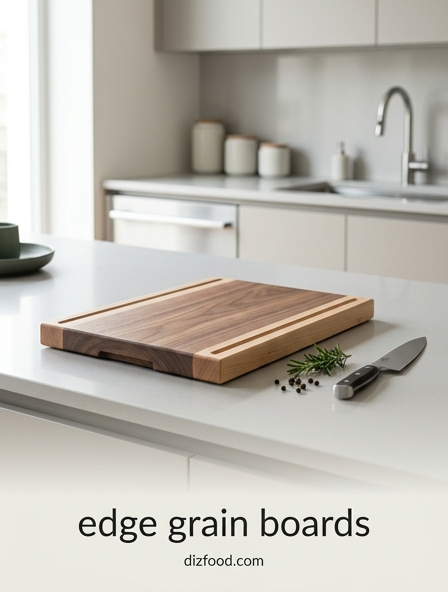
Edge Grain Construction Basics
Edge grain construction is a fundamental method in the production of high-quality kitchen cutting boards. This process involves taking long strips of hardwood and laminating them together so that the narrow edge of the board faces upward. By orienting the wood fibers in this specific direction, the resulting surface becomes significantly harder and more resilient than a standard face grain board. Manufacturers typically select premium hardwoods like maple, cherry, or walnut, cutting them into uniform rails before bonding them under high pressure using food-safe adhesives.
Understanding the structural advantages of this orientation is key for any culinary enthusiast. When the edge grain is exposed, the wood density is concentrated, providing a stable and flat surface that resists deep gouges. This construction style is often recognizable by its linear, striped appearance, showcasing the varied color tones of the wood planks. The structural integrity of an edge grain block makes it a favorite for permanent countertop installations and heavy-duty portable boards. Common features of this construction include:
- Increased thickness for structural stability.
- Tight lamination seams to prevent moisture intrusion.
- Directional strength that minimizes natural wood expansion.
- Aesthetic versatility through alternating wood species.
Affordable Kitchen Cutting Surfaces
For home cooks seeking a balance between performance and price, edge grain boards offer the most logical investment. While end grain boards are often prized for their self-healing properties, they come with a significant price premium due to the complexity of their manufacture. Conversely, while face grain boards are the most inexpensive, they lack the durability required for daily meal preparation. Edge grain surfaces occupy the middle ground, providing professional-level utility at a fraction of the cost of artisanal end grain blocks.
The affordability of these boards stems from the efficiency of the manufacturing process. Because the wood is cut into long, continuous strips rather than small individual blocks, there is less labor involved and less material waste. This efficiency is passed on to the consumer, allowing for the purchase of a thick, heavy-duty hardwood board without a massive financial commitment. When considering the price-to-performance ratio, many chefs choose edge grain for their primary prep stations because they provide the necessary weight and surface area for complex tasks while remaining replaceable or refurbishable over several years of intense use.
Durable Wood for Heavy Dicing
The demands of heavy dicing and repetitive chopping require a surface that can withstand constant impact without splintering. Edge grain boards are engineered specifically for this type of mechanical stress. Because the wood fibers are tightly packed and aligned vertically along the cutting plane, the surface resists the crushing force of a heavy chef's knife or a meat cleaver. This durability ensures that the board remains flat and functional even when subjected to the preparation of fibrous vegetables or dense proteins.
In a high-volume kitchen environment, the density of the wood species used in edge grain construction plays a vital role. Harder woods like Rock Maple or Beech are preferred because they do not easily yield to the blade, preventing the "fuzzing" effect often seen on softer surfaces. This hardness also prevents the board from developing deep ruts where bacteria can hide. Professional cooks often prefer these boards for the following reasons:
- Resistance to heavy impact from dicing.
- Stability during high-speed vegetable prep.
- Minimal surface shedding during intense scraping.
- Capability to handle heavy-weight tasks like quartering poultry.
Knife Friendly Board Characteristics
A primary concern for any cook is maintaining the sharpness of their cutlery. While edge grain boards are harder than face grain alternatives, they remain significantly more forgiving than glass, ceramic, or stone surfaces. Wood is naturally composed of cellulose and lignin, which creates a microscopic structure that allows for a slight amount of "give" when the knife edge makes contact. This interaction is crucial for preserving the fine edge of a high-carbon steel or stainless steel blade, extending the time between sharpening sessions.
The relationship between the knife and the board is determined by the Janka hardness rating of the wood used. Edge grain boards made from traditional hardwoods offer a sweet spot of resistance. They provide enough feedback for the cook to feel the cut without being so hard that the blade rolls or chips. Unlike plastic boards, which can develop deep grooves that snag the knife tip, a well-maintained edge grain surface stays relatively smooth, allowing for a fluid rocking motion during mincing and slicing. This characteristic makes it the preferred choice for those who invest in premium kitchen knives.
Resisting Warps and Surface Cracks
Wood is a biological material that reacts to changes in humidity and moisture, but edge grain construction is designed to mitigate these natural movements. By laminating multiple strips of wood together, the internal stresses of the individual planks are balanced against one another. If one strip attempts to cup or bow, the adjacent strips, which are glued with their grain running in the same direction but often mirrored, provide the necessary counter-force to keep the overall board flat.
To further prevent warping and surface cracks, these boards must be treated with food-grade mineral oil. This oil penetrates the fibers and creates a hydrophobic barrier, preventing water from soaking into the wood during cleaning. When wood absorbs water, it swells, and as it dries, it shrinks; this cycle is what leads to cracking. Edge grain boards are particularly resilient to this because their longitudinal fibers are less prone to "checking" than the exposed pores of end grain boards. Regular maintenance ensures the laminated bonds stay tight and the surface remains free of hairline fractures that could compromise food safety and structural integrity.
Simple Maintenance and Longevity
Maintaining an edge grain board is a straightforward process that ensures the tool lasts for decades. Unlike synthetic boards that must be discarded once they are heavily scarred, a wooden edge grain board can be easily refurbished. When the surface becomes dull or shows significant knife marks, it can be sanded down to reveal a fresh layer of wood. This ability to be renewed makes it a permanent fixture in the kitchen rather than a disposable commodity. The daily routine is simple: wash with mild soap, dry immediately, and store in a way that allows air to circulate around both sides.
Long-term care involves a periodic application of board cream or mineral oil to keep the wood hydrated. This prevents the board from becoming brittle and ensures the adhesive bonds remain stable. A well-oiled board also resists staining from vibrant foods like beets or turmeric. Follow these steps for optimal longevity:
- Hand wash only; never submerge or place in a dishwasher.
- Apply food-grade mineral oil once a month or when the wood looks dry.
- Use a board cream containing beeswax to seal the surface.
- Sand with 220-grit sandpaper once a year to remove deep scratches.
Sustainable Hardwood Surface Benefits
In an era of environmental consciousness, selecting an edge grain board made from sustainable hardwoods is a responsible choice for any kitchen. Most high-quality boards are manufactured from North American hardwoods like maple, walnut, and cherry, which are managed under strict forestry regulations. Unlike plastic cutting boards that contribute to microplastic pollution and eventually end up in landfills for centuries, wood is a biodegradable and renewable resource. When a wooden board finally reaches the end of its multi-decade lifespan, it can be composted or repurposed.
Beyond their environmental impact, hardwoods possess natural antimicrobial properties. Studies have shown that wood can trap bacteria beneath the surface where they are deprived of oxygen and moisture, eventually dying off. This is a significant advantage over plastic boards, where bacteria can thrive in deep knife scars that are difficult to sanitize. By choosing a sustainable hardwood surface, the cook benefits from a safer prep environment while supporting renewable industries. The natural beauty of the wood grain also eliminates the need for synthetic dyes or coatings, ensuring that no harmful chemicals leach into the food during preparation.
Cost Effective Professional Quality
The edge grain board is often referred to as the "workhorse" of the professional kitchen. Its popularity among chefs stems from its ability to provide a high-performance surface at a cost-effective price point. In commercial settings where equipment is subjected to grueling use, the durability of edge grain construction is essential. It offers the weight and stability required for safety, ensuring the board does not slide across the stainless steel prep table during rapid knife work. This professional quality is now widely available for home use, allowing amateur cooks to utilize the same tools as the experts.
| Feature | Edge Grain | Plastic/Poly |
|---|---|---|
| Durability | High (Years) | Medium (Months) |
| Knife Protection | Excellent | Poor to Fair |
| Sanitation | Natural Antimicrobial | Requires Chemical Sanitizing |
| Aesthetics | Professional Wood Finish | Utility/Industrial |
Investing in professional-grade edge grain tools reduces the frequency of replacements, ultimately saving money while improving the overall cooking experience through better ergonomics and tool reliability.
Optimizing Your Food Prep Area
An edge grain board is more than just a cutting surface; it is an organizational tool that optimizes the workflow of a food prep area. Because these boards are typically heavier and thicker than their face grain counterparts, they provide a stationary "anchor" for the kitchen. This stability is vital when performing precise tasks like julienning vegetables or deboning meat. Many users choose oversized edge grain blocks to create a "permanent" prep station, effectively extending their counter space and providing a dedicated zone for all culinary tasks.
To further optimize the area, consider the height and placement of the board. A thick edge grain board raises the cutting surface, which can improve ergonomics for taller cooks, reducing back strain during long sessions of meal preparation. Some boards feature integrated juice grooves to catch liquids from resting meats, keeping the surrounding workspace clean. By utilizing a large, stable edge grain surface, the cook can organize their "mise en place" directly on the board, separating prepped items from waste and streamlining the transition from the cutting board to the stove or oven.
Long Term Kitchen Budget Value
When evaluating the cost of kitchen essentials, it is important to look beyond the initial purchase price and consider the long-term budget value. A high-quality edge grain board may cost more upfront than a set of thin plastic mats or a basic face grain board, but its lifespan is significantly longer. A plastic board often needs to be replaced every six to twelve months as it becomes warped and heavily scarred. In contrast, an edge grain board, with minimal maintenance, can easily last twenty years or more, making the cost per use remarkably low.
Furthermore, the protection it offers to expensive kitchen knives provides secondary savings. By preserving the edge of the blade, the user spends less on professional sharpening services and avoids the premature wear of their cutlery. The aesthetic value also plays a role in the budget; a beautiful hardwood board serves as a serving platter or a decorative element, providing multi-functional utility. Ultimately, the edge grain board represents a "buy it once" philosophy that appeals to the economically and environmentally conscious consumer, proving that quality construction is always the most valuable choice in the long run.



Comments