
Mastering the Uniform Dice
Achieving a uniform dice is a fundamental skill that separates the amateur from the professional chef. When ingredients are cut to the exact same dimensions, they respond to heat in a predictable manner, ensuring that no piece is overcooked or underdone. This consistency is particularly vital in dishes with short cooking times, such as stir-fries or sautés, where a few millimeters can mean the difference between a crisp-tender vegetable and a charred remnant. Beyond the functional benefits, a uniform dice provides a level of visual sophistication that elevates the presentation of any plate.
- Ensures even heat distribution during the cooking process.
- Enhances the aesthetic appeal of the final presentation.
- Promotes a consistent mouthfeel across every spoonful.
- Facilitates better integration of flavors within sauces.
- Demonstrates high-level knife control and discipline.
To master this, one must focus on the preparation of the "miseen place." Squaring off round vegetables into rectangular blocks is the first step, providing a stable base that prevents slipping. By committing to these preliminary cuts, the cook creates the geometric framework necessary for perfect, repeatable cubes that define culinary excellence.
Impact of Surface Area on Flavor
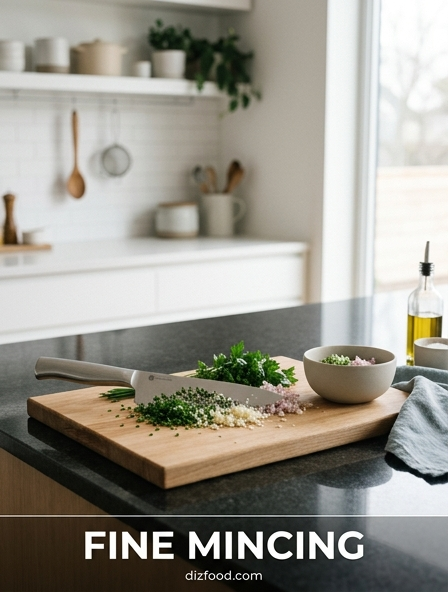
The science of flavor extraction is deeply rooted in the physical dimensions of the ingredients. Fine mincing significantly increases the total surface area of a vegetable or herb, which in turn accelerates the release of essential oils and juices. In a kitchen environment, this is most evident when working with aromatics. A finely minced shallot, for example, will soften and caramelize much faster than a roughly chopped one, allowing its natural sugars to interact more efficiently with the cooking fats and surrounding liquids.
This increased surface area also facilitates the Maillard reaction, the chemical process responsible for the browning and complex savory flavors in cooked food. Because more of the ingredient comes into direct contact with the hot pan, the flavor profile becomes deeper and more concentrated. However, chefs must remain vigilant, as the high surface-area-to-volume ratio makes minced items highly susceptible to burning. When managed correctly, this technique allows for a sophisticated layering of flavors that permeates the entire dish, ensuring that the essence of the ingredient is fully realized rather than trapped within a large, unyielding chunk.
Essential Knife Safety and Grip
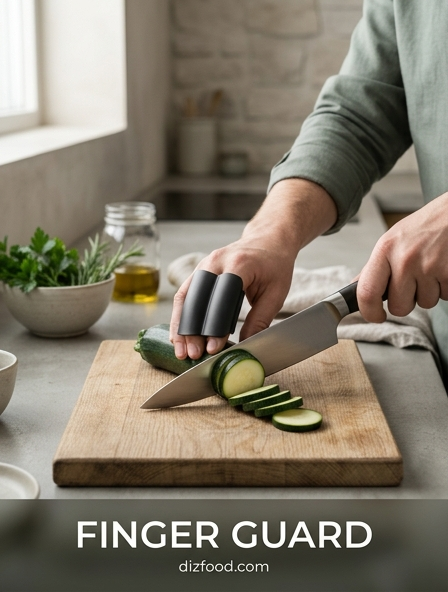
Before attempting precision mincing, a cook must internalize the principles of knife safety and proper grip. The "pinch grip" is the industry standard, where the thumb and index finger grip the blade's bolster while the remaining fingers wrap around the handle. This provides maximum leverage and prevents the blade from twisting during difficult cuts. Simultaneously, the non-cutting hand must adopt the "claw" position, tucking the fingertips inward and using the knuckles as a guide for the blade. This configuration keeps the fingers safely away from the sharp edge while allowing for precise control over the thickness of each slice.
- Secure the cutting board with a damp paper towel to prevent sliding.
- Maintain a sharp edge to reduce the force required for each cut.
- Always cut away from the body and keep the knife tip on the board.
- Curl fingertips under to create a protective "knuckle guide."
- Focus entirely on the task to avoid distractions and potential slips.
Mastering these safety protocols is not merely about preventing injury; it is about building the confidence required for speed and accuracy. When the cook feels secure in their grip, they can focus on the rhythm of the knife, leading to cleaner and more consistent results.
The Fine Art of Brunoise Cutting
The brunoise is arguably the most precise cut in the culinary repertoire, requiring a level of focus that borders on the surgical. This technique involves reducing vegetables into tiny, uniform cubes measuring approximately two millimeters on each side. The process begins by creating a julienne-long, thin matchsticks-which are then gathered together and sliced crosswise. Because the pieces are so small, any deviation in size is immediately apparent, making it a true test of a chef's technical proficiency and patience.
In high-end gastronomy, the brunoise is frequently used for garnishes, consommés, and delicate sauces where a subtle texture is desired without overwhelming the palate. Because the cut is so fine, the ingredients practically melt into the dish, contributing flavor and color without requiring significant chewing. Vegetables like carrots, leeks, and celery are the most common candidates for this treatment. Achieving a perfect brunoise requires a razor-sharp knife and a steady hand, but the result is a sophisticated component that signals a high level of craftsmanship and attention to detail in the kitchen.
Consistency for Even Spice Distribution
In the world of fine mincing, consistency is the primary safeguard against "flavor hot spots." When aromatics like garlic, ginger, or chilies are processed into uneven pieces, the diner may encounter a sudden, overwhelming burst of heat or pungency that disrupts the balance of the meal. By ensuring every piece is of a similar size, the chef guarantees that these potent ingredients are distributed evenly throughout the sauce or base. This uniformity allows the spices to meld into a cohesive flavor profile rather than standing out as isolated, aggressive notes.
- Prevents unpleasant surprises of raw garlic or high-heat chili.
- Allows for a more accurate seasoning of the entire batch.
- Ensures that every bite contains a balanced ratio of all ingredients.
- Promotes a smoother texture in emulsified sauces and dressings.
Furthermore, consistent mincing aids in the chemical integration of spices. Smaller, uniform pieces have more contact points with liquids, allowing fat-soluble and water-soluble compounds to infuse the medium more rapidly. This leads to a more "rounded" flavor where the spices support the main protein or vegetable rather than competing with it for the diner's attention.
Releasing Aromatics Through Precision Dicing
The aromatic potential of ingredients like onions, garlic, and shallots is unlocked through the physical breaking of their cellular structures. When you dice an aromatic with precision, you are essentially managing a chemical reaction. For instance, crushing or finely mincing garlic triggers the enzyme alliinase to convert alliin into allicin, the compound responsible for garlic's characteristic aroma and health benefits. A clean, precise cut ensures that these cells are severed sharply rather than crushed or bruised, which can lead to a bitter or "off" metallic taste.
Precision dicing also allows the cook to control the timing of flavor release. A very fine mince will release its aromatics almost instantly upon hitting the pan, making it ideal for quick pan sauces. Conversely, a slightly larger dice will release its flavor more slowly over a long simmer. By mastering the size of the cut, the chef gains a powerful tool for orchestrating the aromatic timeline of a recipe. This level of control is essential for creating complex, multi-dimensional dishes where the fragrance of the aromatics serves as a sophisticated preamble to the flavors themselves.
Standard Culinary Dice Sizes Explained
Communication in a professional kitchen relies on a shared language of measurements. When a head chef calls for a specific cut, there is no room for ambiguity. These standard sizes are designed to match various cooking times and culinary applications. For instance, a "Large Dice" is typically reserved for slow-cooked stews and stocks, where the ingredient must withstand hours of simmering without disintegrating. On the other end of the spectrum, the "Brunoise" is intended for rapid cooking or raw applications where elegance is paramount.
| Cut Name | Dimensions (Metric) | Common Use |
|---|---|---|
| Fine Brunoise | 1.5 x 1.5 x 1.5 mm | Garnish, Vinaigrette |
| Brunoise | 3 x 3 x 3 mm | Consommé, Fine Sauce |
| Small Dice | 6 x 6 x 6 mm | Sautés, Mirepoix |
| Medium Dice | 12 x 12 x 12 mm | Soups, Hash |
| Large Dice | 20 x 20 x 20 mm | Stews, Roasts |
Understanding these dimensions is crucial for any cook looking to replicate professional recipes with accuracy. By adhering to these standards, you ensure that your ingredients will cook at the rate intended by the recipe creator, leading to more consistent and successful results in the kitchen.
Texture and Balance in Every Bite
The physical sensation of food-the mouthfeel-is as important as the taste. Fine mincing plays a vital role in achieving a balanced texture, particularly in dishes where multiple ingredients must coexist without any single one dominating. In a classic salsa or a tartare, the goal is to create a harmony of textures. If the onions are cut too large, they provide an aggressive crunch that distracts from the tenderness of the protein or the acidity of the citrus. When they are minced finely and uniformly, they provide a subtle, supporting texture that enhances the overall experience.
Balance is also achieved through the way finely minced ingredients carry moisture. A fine mince creates more "interstitial space" between pieces, allowing sauces to cling to the ingredients more effectively. This results in a dish that feels cohesive rather than a collection of separate parts. In sauces like a gremolata or a chimichurri, the fine mincing of herbs and citrus zest ensures that the bright, acidic, and herbaceous notes are felt simultaneously in every bite. This creates a rounded sensory experience that leaves the diner satisfied without feeling overwhelmed by any single texture.
Professional Chopping Techniques for Home Cooks
Transitioning from basic chopping to professional-grade mincing requires a shift in both mindset and physical movement. Home cooks often rely on a "hacking" motion, which is tiring and imprecise. Professionals, however, use rhythmic, fluid motions that maximize the blade's edge. The "rocking motion" is the most versatile; by keeping the tip of the knife anchored to the board and moving the handle in a circular, up-and-down arc, the cook can process large quantities of herbs or vegetables with minimal effort and high precision.
- Adopt a comfortable stance with feet shoulder-width apart for stability.
- Use the full length of the blade, sliding it forward or backward as you cut.
- Let the weight of the knife do the work; do not force the blade down.
- Keep your workspace clear of scraps to maintain a steady rhythm.
- Practice slow, deliberate movements before increasing speed.
Another essential technique is the "draw cut," where the knife is pulled toward the cook. This is particularly useful for delicate leafy herbs like basil or parsley, as it prevents bruising and keeps the herbs bright and green. By adopting these ergonomic and efficient methods, home cooks can achieve professional results while reducing fatigue and improving safety.
Maintaining Sharpness for Clean Cuts
A sharp knife is the most important tool in any kitchen, especially when fine mincing is required. Precision cutting is impossible with a dull blade, as it tends to slide off the slick skins of vegetables or crush the delicate fibers of herbs rather than slicing through them cleanly. This crushing action not only ruins the visual appeal of the dice but also causes the ingredients to lose moisture and flavor on the cutting board. A clean cut, achieved with a razor-sharp edge, preserves the integrity of the ingredient, keeping the juices inside where they belong.
Maintenance involves two distinct practices: honing and sharpening. Honing, performed with a ceramic or steel rod, realigns the microscopic "teeth" of the blade's edge and should be done before every use. Sharpening, usually involving whetstones, actually removes metal to create a new, sharp edge and is performed less frequently. For fine mincing, a blade should be sharp enough to slice through a sheet of paper with no resistance. By keeping tools in peak condition, the chef ensures that every mince is effortless, every cube is perfect, and the risk of accidents caused by a slipping blade is minimized.



Comments