
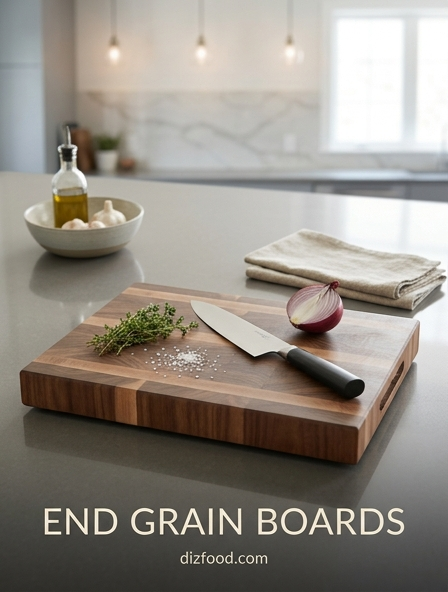
Understanding End Grain Board Construction
End grain cutting boards are distinguished by their unique structural orientation, where the individual wood blocks are arranged vertically so that the cut ends of the fibers face upward. This construction method differs significantly from edge grain or face grain boards, where the wood fibers run horizontally across the surface. By exposing the "rings" of the tree, the board utilizes the natural capillary action of the wood, which provides a resilient and forgiving workspace for intensive culinary tasks.
The manufacturing process involves several critical steps to ensure structural integrity and longevity:
- Precision milling of hardwood lumber into uniform strips.
- Primary gluing to create edge grain panels.
- Cross-cutting panels into blocks and rotating them ninety degrees.
- Secondary gluing using food-safe, waterproof adhesives.
- Extensive sanding to achieve a level, high-grit finish.
Because the fibers stand upright, they can withstand significant downward pressure without splitting. However, this vertical orientation also makes the board more susceptible to moisture fluctuations, requiring a greater thickness-typically two to four inches-to prevent warping or cracking over time.
The Science of Knife Edge Protection
The primary mechanical advantage of an end grain surface lies in its interaction with a sharpened blade. On a standard plastic or edge grain wood board, the knife blade strikes the fibers perpendicularly, effectively severing them and causing the steel edge to roll or dull rapidly. In contrast, the end grain surface allows the knife to slip between the vertical wood fibers, much like a needle passing through the bristles of a brush.
| Surface Type | Blade Interaction | Edge Retention |
|---|---|---|
| Plastic/Composite | Abrasive Impact | Low |
| Edge Grain Wood | Fiber Severing | Medium |
| End Grain Wood | Fiber Separation | High |
This separation reduces the friction and resistance encountered by the apex of the knife. Consequently, the microscopic "teeth" of a professional edge remain aligned for longer periods, reducing the frequency of aggressive sharpening. This synergy between the board and the tool is essential for maintaining the performance of high-end cutlery.
Superior Dicing Performance on Wood Fibers
End grain boards offer a superior tactile experience that directly influences the precision of a chef's knife work. The vertical fiber orientation provides a subtle "grip" on the blade, preventing the micro-slippage that often occurs on smoother, harder surfaces. This stability is crucial when executing rapid dicing techniques or delicate julienne cuts where consistency is paramount.
- Enhanced feedback: The user can feel the blade's contact point more clearly.
- Reduced bounce: The vertical fibers absorb the shock of the impact.
- Improved safety: The natural texture minimizes lateral sliding of ingredients.
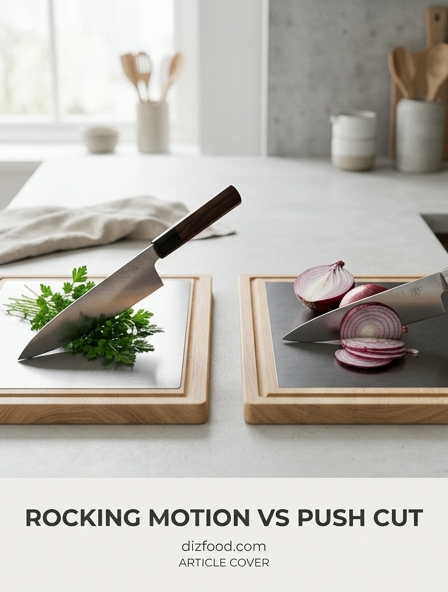
When performing high-volume prep work, the shock absorption qualities of the end grain construction reduce hand and wrist fatigue. This allows for a more fluid rocking motion or push-cut, as the board works with the knife rather than against it. The result is a more controlled culinary environment where the chef can focus on the geometry of the cut rather than fighting the surface tension of the workspace.
Essential Board Seasoning and Oil Maintenance
Proper maintenance is the cornerstone of end grain board longevity. Because the vertical fibers act as open straws, they are highly efficient at absorbing liquids. Without regular seasoning, the board may absorb moisture from food, leading to bacterial growth, or lose internal moisture to the air, resulting in structural cracks. A strict maintenance regimen ensures the wood remains hydrophobic and dimensionally stable.
- Food-grade mineral oil: The primary saturant to prevent drying.
- Beeswax creams: Used to create a topical moisture barrier.
- Application frequency: Monthly or when the wood appears parched.
- Buffing: Removing excess wax to maintain a non-slip surface.
To season a new or dry board, apply a generous amount of mineral oil and allow it to penetrate for several hours. Once the wood no longer "drinks" the oil, a board cream containing beeswax should be applied to seal the surface. This dual-layer protection prevents deep staining from ingredients like beets or turmeric and ensures that the board remains a sanitary and durable tool for decades of kitchen service.
Professional Knife Sharpening and Honing Standards
While an end grain board preserves an edge, it does not eliminate the need for regular maintenance of the steel itself. Professional standards dictate a two-tiered approach: daily honing and periodic sharpening. Honing uses a ceramic or steel rod to realign the edge without removing significant material, while sharpening on whetstones restores the actual geometry of the blade's apex.
| Maintenance Type | Tool Used | Purpose |
|---|---|---|
| Honing | Honing Rod | Realigning the micro-edge |
| Sharpening | Whetstones | Removing steel to reset the bevel |
| Stropping | Leather Strop | Polishing and removing burrs |
When used in conjunction with a high-quality end grain board, a knife sharpened to a 15-degree angle will maintain its "bite" significantly longer than on other surfaces. Professional chefs typically check their edges before every shift, ensuring the blade glides through the wood fibers with minimal effort. This relationship between the board's softness and the blade's hardness is the foundation of efficient kitchen production.
Benefits of Self Healing Cutting Surfaces
One of the most remarkable properties of end grain construction is its "self-healing" capability. When a knife makes a cut on an end grain surface, it parts the fibers rather than slicing through them. Once the blade is removed, the resilient nature of the wood allows these fibers to spring back toward their original position. This process significantly limits the depth and permanence of scarring on the board.
- Visual longevity: The surface maintains a newer appearance for longer.
- Sanitary advantages: Fewer deep grooves mean fewer places for bacteria to hide.
- Structural integrity: Minimal fiber loss prevents the "valley" effect in the center.
Over time, while the board will eventually show some wear, the self-healing effect ensures that it does not develop the jagged, feathered texture common in edge grain boards. If the surface eventually becomes too scarred after years of use, the thick construction allows for professional resurfacing, where a thin layer is sanded away to reveal a completely fresh end grain face, effectively resetting the life of the tool.
Advanced Techniques for Precision Kitchen Dicing
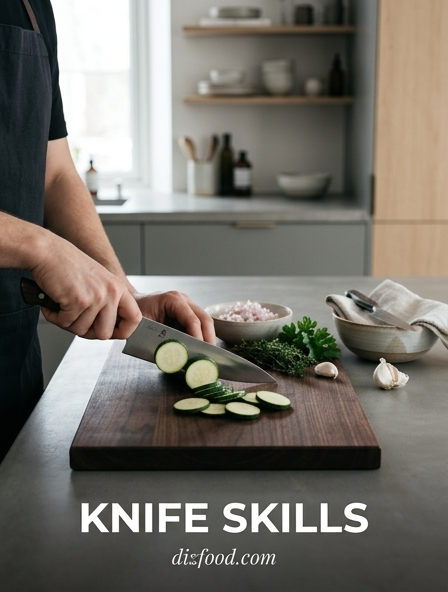
Mastering precision dicing on an end grain board requires an understanding of how the knife interacts with the wood's density. The stability of the end grain allows for advanced movements, such as the "glide-cut" or the "vertical chop," with a high degree of accuracy. Because the board absorbs the impact, the chef can maintain a consistent rhythm without the jarring feedback associated with harder surfaces.
- The Claw Grip: Securing the ingredient while protecting fingertips.
- The Fulcrum Point: Using the board's texture to pivot the knife tip.
- The Follow-Through: Completing the cut into the fiber bed for a clean separation.
For consistent dice, such as brunoise or macédoine, the lack of lateral blade drift is essential. On inferior surfaces, a blade might skip or slide upon impact, leading to uneven cuts or potential injury. The end grain surface provides the necessary friction to keep the blade on its intended path. This precision is not merely aesthetic; uniform cuts ensure that ingredients cook at the same rate, which is a hallmark of professional culinary execution.
Sanitation Protocols for Professional Wood Boards
Proper sanitation of end grain boards is often misunderstood. Wood possesses natural antimicrobial properties; specifically, the tannins and the cellular structure of hardwoods like maple work to neutralize bacteria. However, a strict cleaning protocol must be followed to maintain a safe environment, especially when transitioning between different types of produce or proteins.
- Immediate rinsing: Remove debris before it dries into the grain.
- Mild detergent: Use pH-neutral soap to avoid stripping natural oils.
- Scrubbing: Use a stiff brush to reach between the vertical fibers.
- Sanitizing: Apply a solution of white vinegar or a diluted bleach spray.
- Air drying: Stand the board on its edge to ensure even evaporation.
Never submerge an end grain board in water or place it in a dishwasher, as the excessive moisture will cause the wood to swell and the glue joints to fail. For deep cleaning and deodorizing, a paste of coarse salt and lemon juice can be scrubbed into the surface, which draws out deep-seated moisture and neutralizes odors from pungent ingredients like garlic and onions.
Daily Care for High Carbon Steel Blades
High carbon steel knives are the preferred choice for many professionals using end grain boards due to their extreme sharpness and ease of sharpening. However, these blades require more diligent care than stainless steel. The interaction between carbon steel and the moisture trapped within wood fibers can lead to oxidation if the blade is not handled correctly during and after use.
| Action | Frequency | Benefit |
|---|---|---|
| Wipe Dry | Constant | Prevents rust and spotting |
| Forced Patina | Occasional | Protects against reactive acids |
| Oil Coating | Storage | Prevents atmospheric corrosion |
A carbon steel blade should never be left resting on a damp end grain board. The acidity of certain foods can cause immediate discoloration. Developing a "patina"-a grey or blue protective layer of oxidation-is encouraged, as it helps stabilize the steel. By keeping the knife dry and the board well-oiled, the chef ensures that the two tools function in a harmonious, rust-free environment.
Selecting Premium Hardwoods for Culinary Longevity
Not all woods are suitable for end grain construction. The selection process focuses on Janka hardness, pore structure, and the presence of natural oils or toxins. A wood that is too soft will wear away too quickly, while a wood that is too hard will be as detrimental to a knife edge as glass or stone. Ideal hardwoods strike a balance between durability and forgiveness.
- Sugar Maple: The industry standard for its closed grain and ideal hardness.
- Black Walnut: Valued for its aesthetic appeal and natural rot resistance.
- Cherry: A softer option that is very gentle on knives but darkens with age.
- Teak: High in silica, which can be slightly more abrasive but very water-resistant.
Avoid open-pored woods like Red Oak, which can trap bacteria and moisture deep within the grain, making sanitation nearly impossible. When selecting a board, ensure it is crafted from sustainable, kiln-dried hardwoods. The density of the wood should be consistent throughout the board to prevent uneven expansion and contraction, which is the leading cause of structural failure in premium kitchen woodware.

Comments