
Non-Stick vs. Ceramic: The One That Guarantees the Most Effortless Flip Every Time!
Achieving that legendary, gravity-defying flip in the kitchen requires more than just technique; it demands a surface with the lowest possible friction. While traditional PTFE (Teflon) non-stick pans remain the undisputed champions of "slickness" for delicate proteins like eggs and crepes, ceramic pans offer a hard, silica-based alternative that caters to health-conscious cooks seeking high-heat resistance. Choosing the right tool depends on whether you value the long-lasting, industrial-grade glide of synthetic coatings or the eco-friendly, toxin-free promise of a ceramic finish that can withstand a serious sear.
| Feature | Traditional Non-Stick (PTFE) | Ceramic (Sol-Gel) |
|---|---|---|
| Coating Material | Fluoropolymer (Synthetic plastic) | Silica-based "sand" derivative |
| Surface Friction | Lowest; superior "slide-off" effect | Low; smooth but slightly more drag |
| Max Temperature | 500°F (Fumes released if exceeded) | 800°F+ (Extremely heat stable) |
| Average Lifespan | 3-5 years (With proper care) | 1-2 years (Non-stick degrades faster) |
| Safety Profile | PFOA-free, but contains PFAS | 100% PTFE & PFAS-free |
| Best Culinary Use | Delicate eggs, fish, and pancakes | Low-fat cooking and searing meats |
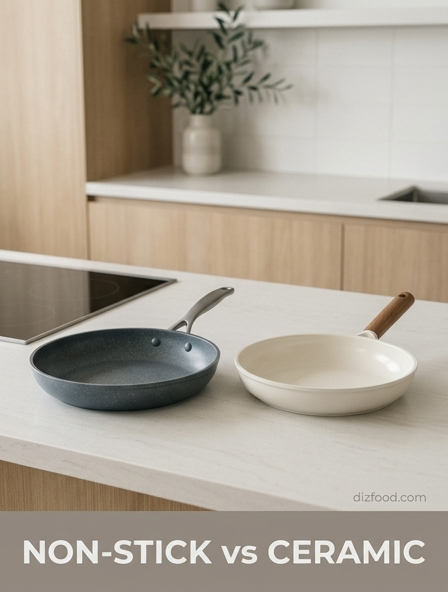
Ceramic vs Teflon Safety and Health Comparison
The debate between ceramic and Teflon safety primarily centers on the chemicals used during manufacturing and the potential for off-gassing during high-heat cooking. Traditional non-stick pans utilize Polytetrafluoroethylene (PTFE), a synthetic polymer that is stable at low to medium temperatures. However, when heated above 500°F (260°C), PTFE begins to degrade, releasing fumes that can cause polymer fume fever in humans and can be lethal to pet birds. Modern Teflon is now manufactured without PFOA, a persistent environmental pollutant, which has significantly improved its safety profile for home use.
Ceramic cookware is often marketed as the "healthier" alternative because it is naturally free of PTFE and PFOA. Instead of a plastic-based coating, ceramic pans use a "sol-gel" process that converts a silica-based liquid into a glass-like surface. This inorganic material is inert and does not release toxic fumes, even if the pan is accidentally overheated. For consumers prioritizing a chemical-free kitchen, ceramic offers peace of mind regarding respiratory health and chemical leaching.
- PTFE Safety: Safe below 500°F; requires careful temperature management to avoid degradation.
- Ceramic Safety: Generally considered the safest for high-heat accidents; contains no synthetic polymers.
- Chemical Leaching: Both are safe at room temperature, but ceramic remains more stable at extreme heat thresholds.
Durability and Lifespan of Non Stick Surfaces
When considering the longevity of kitchen investments, traditional PTFE-based pans generally outperform ceramic alternatives. A high-quality, multi-layered PTFE coating can maintain its food-release properties for three to five years with proper care. These coatings are flexible and can withstand the thermal expansion and contraction of the metal base without losing their bond. Over time, the surface may thin or develop micro-scratches, but the non-stick effectiveness remains relatively consistent until the coating is physically worn away.
Ceramic coatings, while harder, are significantly more brittle. The non-stick effect in ceramic pans is derived from a thin layer of silicone oil that is released during cooking. Once this layer is depleted-often within six to twelve months of heavy use-the pan loses its food-release properties, despite the ceramic surface appearing intact. This phenomenon, often called "non-stick fatigue," frequently leads to ceramic pans being replaced much sooner than their traditional counterparts.
| Feature | Traditional Non-Stick (PTFE) | Ceramic (Sol-Gel) |
|---|---|---|
| Average Lifespan | 3-5 Years | 6-18 Months |
| Failure Mode | Surface Scratches/Thinning | Loss of Release Properties |
| Coating Texture | Soft and Flexible | Hard and Brittle |
Heat Tolerance Limits for Ceramic and Traditional Coatings
Heat management is the most critical factor in preserving the integrity of non-stick cookware. Traditional PTFE coatings are strictly designed for low to medium heat. Exceeding the 500°F threshold not only compromises the safety of the air in the kitchen but also causes the chemical bonds in the coating to break down, leading to a permanent loss of non-stick performance and potential flaking. For this reason, PTFE pans are never recommended for searing meats or for use under a broiler.
Ceramic coatings boast a much higher heat tolerance, often rated to withstand temperatures up to 800°F (450°C) without structural damage or toxic emissions. This makes them more versatile for recipes that require a quick transition from the stovetop to a hot oven. However, there is a caveat: while the ceramic itself won't melt, high heat can cause food proteins and fats to "carbonize" onto the surface. This creates a microscopic layer of burnt residue that is incredibly difficult to remove and effectively kills the non-stick functionality of the pan.
- Low Heat: Ideal for both; ensures the longest life for the coating.
- Medium Heat: The maximum recommended setting for PTFE to avoid gas release.
- High Heat: Technically possible for ceramic, but increases the risk of carbonization and surface "stickiness."
The Environmental Impact of Non Stick Manufacturing
The environmental footprint of cookware manufacturing is a complex issue involving chemical persistence and energy consumption. Traditional non-stick coatings were historically linked to PFOA (Perfluorooctanoic acid), a "forever chemical" that does not break down in the environment and has contaminated water supplies globally. While PFOA has been phased out of manufacturing in most regions, the production of PTFE still involves the use of other PFAS (Per- and polyfluoroalkyl substances), which present ongoing environmental challenges regarding waste management and industrial runoff.
Ceramic cookware is frequently marketed as the eco-friendly choice. The "sol-gel" manufacturing process is generally more energy-efficient because it requires shorter curing times at lower temperatures in the kiln compared to the multiple high-heat cycles required for PTFE. Furthermore, the silica-based materials are derived from sand and do not involve the complex fluoropolymer chemistry associated with traditional non-stick surfaces. However, the shorter lifespan of ceramic pans means they end up in landfills more frequently, which can offset the initial environmental gains made during production.
Best Cooking Performance for Delicate Foods
For professional results with delicate ingredients, the choice of pan surface can be the difference between a perfect dish and a ruined meal. Traditional PTFE non-stick remains the gold standard for "extreme" non-stick tasks. This includes cooking over-easy eggs, delicate white fish, or thin crepes where any amount of sticking would lead to tearing. The lower surface tension of PTFE allows food to slide effortlessly across the pan with almost zero oil, providing the most consistent performance for fat-free cooking styles.
Ceramic pans provide excellent performance when they are new, often feeling even slicker than PTFE during the first few weeks of use. They are particularly good for tasks that benefit from a slightly crisper exterior, as the ceramic material transfers heat more efficiently than the plastic-like PTFE. However, because ceramic requires a small amount of fat to protect the surface and maintain its release properties, it is less suited for those attempting to cook completely oil-free. For foods like omelets, ceramic is a fantastic choice, provided the user monitors the heat levels to prevent the surface from losing its slickness over time.
Maintenance and Cleaning Requirements for Long Lasting Pans
To maximize the utility of any non-stick pan, strict adherence to maintenance protocols is required. Neither ceramic nor PTFE pans should ever be placed in a dishwasher, despite what the packaging might claim. The harsh detergents and high-pressure water can strip the non-stick properties and corrode the aluminum base. Hand washing with a soft sponge and mild dish soap is the only way to ensure the coating remains intact. For ceramic pans, it is especially important to remove every trace of oil residue after cooking; if oil is left behind and reheated, it will "varnish" onto the surface, causing food to stick permanently.
Storage is another critical factor in maintenance. Because both surfaces are susceptible to physical damage, they should never be stacked directly on top of one another. Using felt pan protectors or simple paper towels between stacked items prevents the bottom of one pan from scratching the interior coating of another. Additionally, the transition from heat to cold must be gradual. Plunging a hot pan into cold water can cause thermal shock, which in ceramic pans can lead to "crazing"-the development of thousands of tiny cracks in the glass-like finish.
- Hand Wash Only: Avoids chemical and abrasive damage from dishwashers.
- Soft Utensils: Use silicone, wood, or nylon to prevent surface gouging.
- Gradual Cooling: Prevents warping and coating separation.
Understanding PTFE and PFOA Free Alternatives
The terminology surrounding non-stick cookware can be confusing for the average consumer. PTFE (Polytetrafluoroethylene) is the chemical name for the slippery coating found in traditional pans. PFOA was a processing aid used to make PTFE until it was banned or phased out globally due to health concerns. Today, many brands advertise their products as "PFOA-free," which is an industry standard, but this does not mean the pan is "PTFE-free." If a pan is marketed as traditional non-stick, it almost certainly contains PTFE, even if it is free of PFOA.
Ceramic cookware is the primary "PTFE-free" alternative. It uses a sand-derived silicon coating that provides a non-stick effect without any fluoropolymers. For consumers who want to avoid all chemicals in the PFAS family, ceramic is the most common path. Other alternatives include carbon steel and seasoned cast iron; while these are naturally PTFE and PFOA free, they require a different maintenance style involving "seasoning" with oil to create a natural non-stick patina, which is technically a different category of cookware than the modern coated pans discussed here.
Surface Composition and Scratch Resistance Factors
The physical composition of a pan's surface dictates how it responds to the rigors of a busy kitchen. Traditional PTFE is a relatively soft material. Because it is a polymer (a type of plastic), it can be easily gouged or scratched by metal forks, spatulas, or knives. Once the surface is scratched, the non-stick integrity is compromised, and the coating may begin to peel away from the metal substrate. Hard-anodized PTFE pans attempt to mitigate this by hardening the aluminum base, but the top layer remains vulnerable to sharp objects.
Ceramic coatings are significantly harder because they are made of inorganic minerals. On the Mohs scale of hardness, ceramic ranks much higher than PTFE, making it more resistant to surface abrasions from stirring. However, this hardness comes at the cost of flexibility. While a PTFE pan might survive a drop on the floor with only a dent, a ceramic coating can chip or crack upon impact. This brittleness also means that metal utensils, while less likely to scratch, can still cause "micro-chipping" at the edges of the pan, eventually leading to a degraded cooking surface.
Price Comparison and Value for Home Cooks
The market for non-stick cookware spans from budget-friendly grocery store finds to high-end designer sets. Generally, ceramic pans are priced slightly higher than entry-level PTFE pans due to the "green" marketing and the perceived health benefits. However, at the professional level, high-quality PTFE pans from brands like All-Clad or Scanpan can be quite expensive, justified by their multi-ply construction and long-lasting coatings. For a home cook, the value proposition depends heavily on how often the pan will be used and the user's willingness to hand-wash.
From a cost-per-use perspective, traditional PTFE pans often provide better value. A $40 PTFE pan that lasts four years costs $10 per year. A $40 ceramic pan that loses its non-stick properties in 12 months costs $40 per year. For those who only use non-stick for Sunday morning eggs, a ceramic pan may last several years and provide excellent value. For daily cooks, the durability of PTFE often makes it the more economical choice in the long run, despite the initial appeal of ceramic's eco-friendly branding.
Final Verdict Choosing the Right Cookware for Your Kitchen
Choosing between ceramic and traditional non-stick requires balancing health priorities against performance expectations. If your primary concern is the total absence of synthetic chemicals and the ability to withstand high-heat accidents without fumes, ceramic is the clear winner. It is an excellent choice for environmental enthusiasts and those who cook occasionally or at lower volumes. Its aesthetic appeal and variety of colors also make it a favorite for modern kitchen designs where the cookware is on display.
However, for the serious home chef who demands consistent food release for years on end, traditional PTFE non-stick remains the superior tool. Its unmatched slickness and significantly longer lifespan make it a more reliable workhorse for daily meal preparation. Regardless of the choice, longevity is entirely dependent on user behavior. By avoiding high heat, using soft utensils, and committing to hand-washing, you can extend the life of either surface. Ultimately, many kitchens benefit from having one of each: a ceramic pan for general sautéing and a high-quality PTFE pan dedicated solely to the most delicate eggs and fish.

Comments