
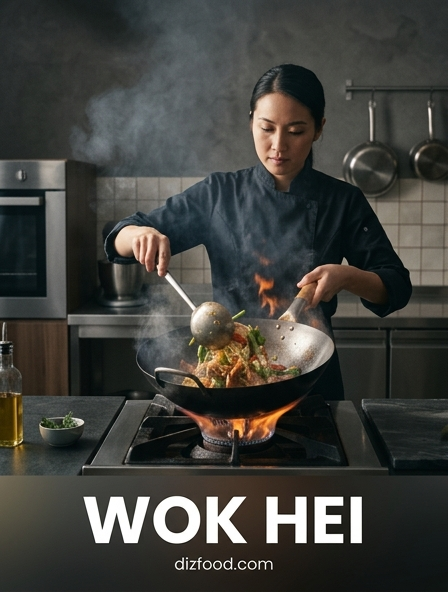
Understanding the Science of Wok Hei
Wok hei, translated literally as the "breath of the wok," is a complex chemical phenomenon that occurs when food is cooked over intense heat in a seasoned carbon steel vessel. At its core, this unique flavor profile is a result of several simultaneous reactions: the Maillard reaction, the caramelization of sugars, and the partial combustion of oil droplets. When ingredients are tossed vigorously, oil is atomized into a fine mist that briefly catches fire above the pan's surface, creating a distinct smoky aroma. This process requires temperatures exceeding 200 degrees Celsius to ensure that moisture evaporates instantly rather than steaming the food. The interaction between the porous patina of the wok and the high-velocity air creates a sensory experience that defines traditional Cantonese stir-frying.
- Pyrolysis of fats at high temperatures creates aromatic compounds.
- Rapid evaporation prevents the sogging of cellular structures in vegetables.
- Short contact times preserve the crunch while imparting deep charred notes.
- Aerosolized oil droplets provide the characteristic "singed" fragrance.
Choosing the Best Carbon Steel Wok
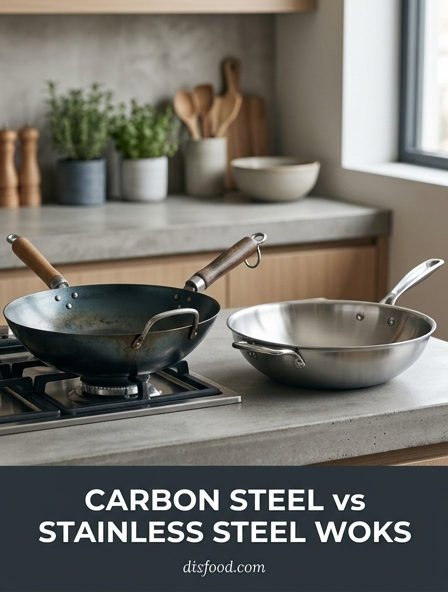
Selecting the right vessel is the first step toward achieving professional results at home. Carbon steel is the industry standard because it responds rapidly to temperature changes and possesses a lightweight profile that allows for continuous tossing. While stainless steel is too sticky and cast iron is too heavy for the constant motion required, carbon steel provides the perfect middle ground for heat retention and maneuverability. A thickness of 1.5mm to 2mm is generally considered ideal for home burners. Thinner woks may warp under intense heat, while thicker ones take too long to reach the necessary temperature for wok hei.
| Material Gauge | Heat Response | Durability |
|---|---|---|
| 14-gauge (2.0mm) | Steady/Controlled | Excellent |
| 16-gauge (1.6mm) | Very Fast | Good |
| 18-gauge (1.2mm) | Instant | Prone to Warping |
Achieving High Heat on Home Stoves
The primary challenge for home cooks is the discrepancy in British Thermal Units (BTUs) between commercial jet burners and residential ranges. A standard home stove typically produces between 7,000 and 15,000 BTUs, whereas a restaurant burner can exceed 100,000 BTUs. To compensate for this lack of raw power, cooks must utilize specific strategies to concentrate heat. Using a wok ring on a gas stove can help stabilize the vessel and direct the flames toward the bottom of the pan. Alternatively, allowing the wok to preheat until it is wispy with smoke before adding oil is a crucial step in building the necessary thermal energy for searing.
- Preheat the dry wok for at least three minutes on the highest setting.
- Use a flat-bottomed wok for electric or induction surfaces to maximize contact.
- Cook in smaller batches to prevent the pan temperature from dropping.
- Consider using a portable outdoor propane burner for maximum power.
The Importance of High Smoke Point Oils
In the high-heat environment of stir-frying, the choice of fat is critical. Using an oil with a low smoke point, such as extra virgin olive oil or unrefined flax oil, will result in bitter, acrid flavors and the production of harmful free radicals as the fat breaks down. For wok hei to develop, the oil must survive temperatures above 400 degrees Fahrenheit without decomposing prematurely. Neutral-flavored oils are preferred so they do not distract from the natural flavors of the ingredients and the subtle smoky notes provided by the pan itself. The oil acts as a heat transfer medium, enveloping food particles in a protective, high-energy layer that facilitates rapid browning.
| Oil Type | Smoke Point (°F) | Best Use |
|---|---|---|
| Peanut Oil | 450°F | Traditional Stir-fry |
| Grapeseed Oil | 420°F | Clean, Neutral Flavor |
| Avocado Oil | 520°F | Ultra-high Heat |
| Canola Oil | 400°F | Budget Friendly |
Mastering the Wok Toss Technique
Tossing is not merely for show; it is a fundamental mechanical process that regulates temperature and aerates the food. The motion involves a rhythmic push and pull, combined with a flick of the wrist that sends the ingredients into an arc through the air. As the food leaves the surface of the pan, it encounters a plume of rising heat and vaporized oil, which is where the "smoky" flavor is primarily captured. This brief suspension allows moisture to escape as steam, preventing the ingredients from stewing in their own juices. Mastering this physical skill ensures that every piece of meat and vegetable is evenly exposed to the searing heat of the metal and the flavor-enhancing properties of the flames.
- Maintain a firm grip on the handle with a towel or silicone sleeve.
- Push the wok forward and snap it back toward your body.
- Ensure food travels up the far curve of the wok and flips in mid-air.
- Keep the food in constant motion to prevent localized burning.
Maillard Reaction Secrets for Stir Fry
The Maillard reaction is the chemical dance between amino acids and reducing sugars that creates the savory, complex flavors associated with browned meat and charred vegetables. In a wok, this reaction happens at an accelerated pace due to the extreme surface area and high heat. To maximize this effect, proteins should be dried thoroughly before they hit the pan. Any surface moisture will first need to evaporate, consuming energy and delaying the browning process. Many chefs use a technique called "velveting," which involves coating meat in a thin layer of cornstarch and egg white. This protects the protein from toughening while providing a surface that browns beautifully and catches the wok's intense heat.
- Dry all meats with paper towels to remove surface moisture.
- Avoid moving the meat for the first 30 seconds to establish a sear.
- Use small, uniform cuts to maximize the surface-area-to-volume ratio.
- Add a pinch of sugar to sauces to encourage faster caramelization.
Essential Prep Tips for Rapid Cooking
The speed of wok cooking means that there is zero time for chopping or measuring once the heat is on. A successful stir-fry is won or lost during the "mise en place" phase. Ingredients must be prepared in a way that respects their individual cooking times. Hard vegetables like carrots or broccoli should be sliced thinly or blanched briefly, while aromatics like garlic and ginger should be minced to release their oils instantly. Because the window for wok hei is measured in seconds, having all sauces pre-mixed in a single bowl allows for a seamless finish. This rapid-fire execution prevents the wok from cooling down, which is the most common reason for a failed stir-fry at home.
- Organize ingredients in the order they will enter the pan.
- Slice proteins against the grain for maximum tenderness.
- Keep aromatics separate as they burn faster than other ingredients.
- Whisk starch-based sauces just before pouring to redistribute the thickener.
Seasoning Your Wok for Maximum Flavor
A new carbon steel wok is a blank slate of silver metal that requires a foundational layer of polymerized oil to become functional. This process, known as seasoning, creates a naturally non-stick surface and contributes to the overall flavor profile of every dish. When oil is heated to its smoke point on the steel, it undergoes polymerization, transforming from a liquid into a hard, plastic-like film bonded to the metal. Over time, this "patina" deepens and traps microscopic carbonized particles from previous cooks, adding depth to the wok hei. Maintaining this surface requires careful cleaning without harsh detergents, ensuring the protective layer remains intact for future high-heat sessions.
- Scrub off the factory protective oil with hot water and soap initially.
- Heat the wok until it turns blue and yellow across its entire surface.
- Apply a very thin layer of high-smoke point oil with a paper towel.
- Buff away excess oil and heat until the pan stops smoking.
Why Crowd Control Matters in the Pan
Overcrowding is the most frequent mistake made in home wok cooking. Every time an ingredient is added to the pan, the temperature of the metal drops. If too much cold food is introduced at once, the heat cannot recover quickly enough to flash-fry the ingredients. Instead of searing, the food begins to release its internal moisture, resulting in a pool of liquid at the bottom of the wok that steams everything. This effectively kills any chance of developing wok hei. To maintain the necessary high-energy environment, it is better to cook in smaller increments, removing each component once it is 80% done and combining everything only at the very final stage for the sauce application.
- Limit meat portions to 250 grams per batch on a home burner.
- Allow the wok to return to a smoking heat between batches.
- Spread ingredients in a single layer against the sides of the wok.
- Remove cooked items to a side bowl to keep them from overcooking.
Capturing Authentic Smoky Char at Home
To capture the authentic smoky char associated with high-end Chinese restaurants, the cook must manipulate the interaction between the oil and the air. This is achieved by allowing the oil to reach a state of "longyau"-adding cold oil to a hot wok and swirling it to coat the surface. As the food is tossed, the fat is pushed to the edges where the temperature is highest, creating micro-flames that lick the ingredients. This controlled "singeing" is what imparts the characteristic charred flavor. Finishing the dish with a splash of soy sauce or rice wine around the hot perimeter of the wok creates a final burst of steam and aroma that seals the wok hei into the sauce.
- Drizzle liquids down the hot sides of the wok, not directly onto the food.
- Look for "wisps" of blue smoke as a signal of peak temperature.
- Use a metal wok spatula to scrape and move food at high velocity.
- Serve immediately; the delicate aromatics of wok hei dissipate within minutes.


Comments