
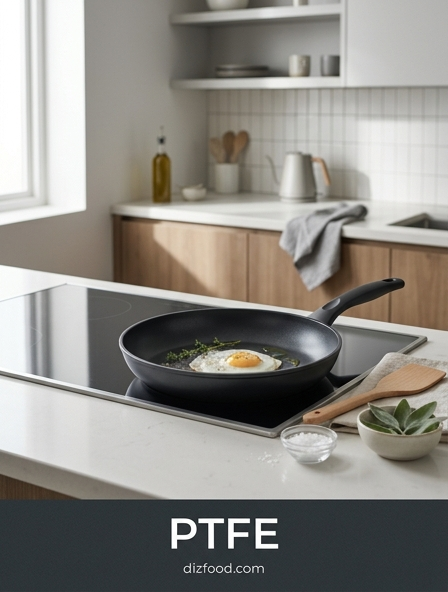
The Science of PTFE Molecular Stability
Polytetrafluoroethylene, commonly known as PTFE, owes its extraordinary properties to its unique molecular architecture. At its core, the material consists of a long chain of carbon atoms, each saturated with fluorine atoms. The carbon-fluorine bond is one of the strongest in organic chemistry, characterized by high electronegativity and short bond lengths. This creates a dense electronic cloud that shields the carbon backbone from chemical attacks and thermal degradation. Because the fluorine atoms effectively "wrap" the carbon chain, the molecule is incredibly stable and chemically inert.
This stability is the primary reason why PTFE does not react with food, acids, or bases during the cooking process. In a kitchen environment, this molecular integrity ensures that the coating remains non-reactive even when exposed to diverse ingredients. The intermolecular forces, known as London dispersion forces, are relatively weak between separate PTFE chains, which contributes to its characteristic slipperiness. However, the internal strength of each polymer chain remains the foundation of its durability, allowing it to withstand the rigors of daily culinary use without breaking down into harmful components under recommended temperatures.
Comparing PTFE and Ceramic Coating Durability
When selecting non-stick cookware, the debate often centers on the durability of PTFE versus ceramic (sol-gel) coatings. While both offer non-stick properties, their performance lifespans differ significantly due to their chemical compositions. PTFE is a flexible polymer that can withstand minor mechanical stresses, whereas ceramic is a hard, brittle inorganic layer that is more prone to microscopic cracking and "heat shock." Over time, the non-stick capabilities of ceramic coatings tend to diminish as the surface develops silica-based build-up.
| Feature | PTFE Coating | Ceramic Coating |
|---|---|---|
| Typical Lifespan | 3-5 years | 6-12 months |
| Non-Stick Persistence | High / Long-term | Moderate / Short-term |
| Flexibility | High (Resists chipping) | Low (Prone to chips) |
| Surface Hardness | Moderate | Very High |
PTFE remains the industry standard for long-term food release. Because it is inherently hydrophobic and oleophobic, it maintains its release properties much longer than ceramic alternatives, which rely on a temporary silicone oil layer that eventually leaches out or degrades.
Why Professional Chefs Choose PTFE Surfaces
In high-pressure professional kitchens, consistency and speed are the two most critical metrics. Chefs often turn to PTFE-coated pans for specific tasks that require delicate handling, such as preparing omelets, searing scallops, or cooking flaky white fish. The primary advantage is the "zero-fail" reliability of the surface. In a fast-paced environment, a chef cannot afford for a protein to tear or stick to the pan, as this leads to food waste and delayed service times.
Furthermore, PTFE surfaces allow for precise temperature control and minimal use of fats. Professional applications include:
- Reduction of added fats and oils, maintaining the pure flavor of the ingredients.
- Efficient cleanup between orders, allowing for a faster station reset.
- Uniform heat distribution when applied to high-quality aluminum or multi-clad bases.
- Reliable release of starch-heavy foods like crepes and delicate pasta.
While cast iron and stainless steel have their places for high-heat searing, the specialized PTFE pan is an indispensable tool for technical accuracy. It provides a level of insurance that allows culinary professionals to execute complex textures without the risk of surface adhesion.
The Evolution of PFOA Free Non Stick
The history of non-stick cookware has undergone a massive transformation over the last two decades, particularly regarding environmental and health standards. Previously, the manufacturing process for PTFE involved PFOA (perfluorooctanoic acid), a processing aid that raised significant environmental concerns. However, the industry has evolved, and modern PTFE coatings are manufactured without the use of PFOA, ensuring they are safe for both the consumer and the environment during production.
This evolution was driven by both regulatory pressure and technological innovation. Manufacturers developed new emulsifiers and polymerization techniques that maintain the superior performance of PTFE while eliminating legacy chemicals. Today's "PFOA-free" labels signify a commitment to modern chemistry. The current generation of PTFE is applied in multiple layers-often reinforced with titanium or diamond particles-to increase scratch resistance. This transition marks a new era where the convenience of non-stick technology is balanced with rigorous safety protocols. Consumers can now enjoy the benefits of advanced polymer science, knowing that the materials undergo stringent testing by global health authorities to ensure they remain inert and non-toxic when used according to manufacturer guidelines.
Superior Food Release and Low Friction Cooking
The most recognizable feature of PTFE is its incredibly low coefficient of friction, which is one of the lowest of any solid material. This physical property translates directly to "food release," the ability of cooked items to slide off the surface without mechanical assistance. In the kitchen, this minimizes the need for excessive butter or oil, supporting heart-healthy cooking techniques without sacrificing the integrity of the food. The friction is so low that even highly adhesive substances like burnt sugar or melted cheese struggle to find a grip.
- Minimal Surface Energy: The surface does not attract other molecules, preventing chemical bonding with food.
- Structural Smoothness: On a microscopic level, high-quality PTFE fills the pores of the metal substrate.
- Reduced Mechanical Interlocking: Food fibers cannot "anchor" into the surface.
This low-friction environment also means that heat is transferred directly to the food rather than being spent on creating a bond between the food and the pan. This results in more efficient cooking times and a more uniform crust on delicate items. By removing the friction barrier, PTFE transforms the cooking process into a more fluid and manageable task.
Heat Resistance and Performance Retention
PTFE is engineered to perform exceptionally well within the standard range of stovetop cooking. Most PTFE coatings are rated for continuous use at temperatures up to 260°C (500°F). Within this envelope, the polymer retains its full structural integrity and non-stick properties. It is important to understand that most domestic cooking-such as frying eggs, sautéing vegetables, or simmering sauces-occurs well below this threshold, typically between 150°C and 200°C. Performance retention is a hallmark of quality PTFE; it does not become brittle or lose its slipperiness when used correctly.
To maximize performance retention, users should avoid the "dry heating" of pans, as empty pans can quickly exceed safe temperature limits. When used on medium to medium-high heat, the coating remains stable for years. The thermal stability of PTFE is a result of the strong carbon-fluorine bonds mentioned previously, which require significant energy to disrupt. As long as the pan is not overheated to the point of polymer degradation, the molecular "slickness" remains constant, providing the same level of release in the hundredth use as it did in the first.
Understanding the Longevity of PTFE Cookware
The lifespan of a PTFE-coated pan is determined by the thickness of the coating, the quality of the application, and the user's maintenance habits. While PTFE is a durable polymer, it is softer than stainless steel, meaning its longevity is tied to the preservation of the surface layer. Modern high-end cookware often utilizes a three-layer system: a primer for adhesion, a mid-coat for reinforcement, and a top-coat for maximum release. This multi-layer approach ensures that even if the top layer experiences microscopic wear, the non-stick functionality persists.
To extend the life of these surfaces, several factors should be considered:
- Utensil Choice: Using silicone, wood, or plastic prevents physical gouging of the polymer.
- Temperature Management: Avoiding the "Power" setting on induction hobs prevents localized overheating.
- Storage: Using pan protectors or felt liners when stacking prevents the bottom of one pan from scratching the interior of another.
By following these protocols, a high-quality PTFE pan can maintain its peak performance for several years, offering a much better return on investment than cheaper, single-layer alternatives that may fail within months.
The Daily Benefits of PTFE Surface Tension
Surface tension plays a vital role in how liquids and fats behave in a pan. PTFE has extremely low surface energy, which results in high contact angles for both water and oil. This phenomenon causes liquids to "bead up" rather than spread out and wet the surface. In daily cooking, this means that sauces don't cling to the sides of the pan, and oil stays concentrated under the food where it is needed most. This lack of "wetting" is what makes the surface feel inherently clean even during the cooking process.
This property offers several practical benefits for the home cook:
- Improved Deglazing: Fond and juices lift off the surface instantly when liquid is added.
- Portion Control: Every drop of a sauce or reduction can be poured out, reducing waste.
- Visual Monitoring: It is easier to see the color and consistency of a sauce against a non-wetting surface.
The high contact angle also prevents the formation of "carbonized" oil spots, which are common on stainless steel. Because the oil does not "stain" the polymer, the pan remains free of the sticky, brown residue that typically requires harsh scrubbing to remove.
Cleaning Efficiency for Long Term Maintenance
One of the most significant advantages of PTFE in the kitchen is the reduction in cleaning time and the elimination of harsh chemical cleaners. Because food does not bond to the surface, most residues can be removed with a simple combination of warm water, mild dish soap, and a soft sponge. This ease of cleaning is not just about convenience; it is essential for the long-term maintenance of the pan. Hard scrubbing with abrasive pads can create micro-scratches that eventually compromise the non-stick layer.
For optimal maintenance, the following routine is recommended:
- Allow the pan to cool completely before immersion in water to prevent thermal shock.
- Hand wash exclusively, even if the pan is labeled "dishwasher safe," as harsh detergents can dull the finish.
- Dry the pan thoroughly with a soft cloth to prevent mineral deposits from tap water.
By minimizing the mechanical and chemical stress during cleaning, the PTFE coating remains smooth and effective. Avoiding the dishwasher also protects the exterior aluminum or steel from oxidation, ensuring the entire vessel remains in top condition for its intended lifespan.
Maximizing Value Through Durable Non Stick Technology
Investing in high-quality PTFE cookware is a matter of calculating value over time rather than focusing on the initial purchase price. Cheap, thinly coated pans often lose their non-stick properties quickly, leading to a cycle of disposal and replacement. In contrast, durable non-stick technology utilizes advanced reinforcement techniques-such as infusing the PTFE matrix with ceramic or mineral particles-to create a surface that resists abrasion and maintains its release properties under heavy use.
| Factor | Economy PTFE | Premium Reinforced PTFE |
|---|---|---|
| Coating Layers | 1 Layer | 3+ Layers |
| Scratch Resistance | Low | High (Reinforced) |
| Cost Per Year | High (Frequent replacement) | Low (Long-term use) |
When consumers choose premium PTFE, they are paying for a more robust bond between the coating and the metal substrate. This prevents peeling and flaking, ensuring the pan remains safe and functional. Ultimately, the value is found in the consistent cooking results and the significant reduction in food waste and cleaning effort over the years.

Comments