
Choosing between an Instant Pot and a traditional slow cooker often comes down to your personal lifestyle and how you prefer to develop flavor in your favorite dishes. While the Instant Pot acts as a high-speed multi-cooker that uses intense pressure to tenderize tough cuts of meat in a fraction of the time, the slow cooker excels at "set it and forget it" simplicity, gently simmering ingredients over several hours to achieve a deep, melded richness. Whether you need a lightning-fast midweek dinner or a long-braised Sunday roast, understanding the nuances of heat distribution and moisture retention between these two kitchen staples ensures you always achieve the best culinary results for your family meals.
| Feature | Instant Pot (Pressure Cooker) | Slow Cooker (Crock-Pot) |
|---|---|---|
| Cooking Speed | Ultra-fast; cooks most meals in 30-60 minutes. | Slow; typically requires 4-10 hours of cook time. |
| Primary Method | High-pressure steam traps heat and moisture. | Low, steady heat simmered over a long duration. |
| Versatility | 7-in-1 functions: Sauté, yogurt, rice, steam, etc. | Specialized for braising, stews, and slow-cooking. |
| Flavor Profile | Intense flavor extraction; great for infused grains. | Deep, complex flavors developed through time. |
| User Effort | Requires monitoring steam valves and sealing. | True "set and forget" with minimal supervision. |
| Best For... | Last-minute meals and frozen-to-table meats. | Classic pot roasts, chilis, and budget-friendly cuts. |
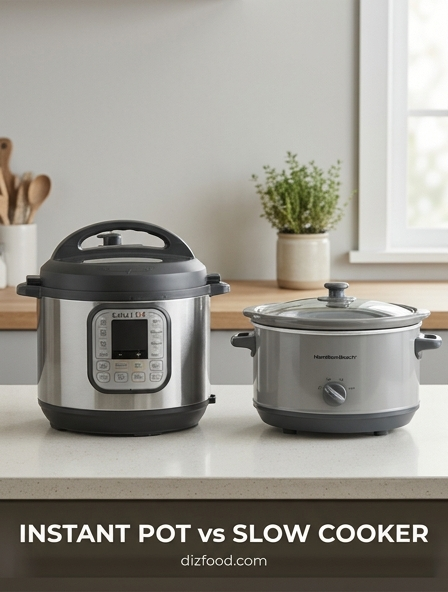
Instant Pot vs Slow Cooker Key Differences
The primary distinction between an Instant Pot and a slow cooker lies in their method of heat application and moisture management. An Instant Pot is a multi-functional pressure cooker that uses a sealed environment to trap steam, thereby increasing internal pressure and raising the boiling point of water. This allows food to cook at much higher temperatures than a standard stovetop. Conversely, a slow cooker, often referred to as a Crock-Pot, utilizes a steady, low-temperature heating element-usually located in the base or sides of the unit-to simmer food over several hours. This method relies on the gradual breakdown of connective tissues and fibers without the use of pressure.
- Mechanism: Pressure vs. Thermal Conduction.
- Heating Element: Instant Pots have a powerful internal heating plate, while slow cookers use low-wattage coils around a ceramic insert.
- Seal: The Instant Pot requires a hermetic seal with a silicone gasket to function, whereas slow cookers feature heavy lids that allow a small amount of steam to escape.
- Material: Most Instant Pots use stainless steel inner pots, while slow cookers typically feature heavy ceramic or stoneware crocks.
While both appliances aim to simplify the cooking process, the Instant Pot is designed for speed and versatility, acting as a pressure cooker, steamer, and even a yogurt maker. The slow cooker is a specialized tool intended for "set-it-and-forget-it" convenience, focusing exclusively on gentle, long-duration cooking that requires minimal supervision throughout the day.
Speed vs Patience Cooking Time Comparison
When comparing these two kitchen staples, the most dramatic difference is observed in the time required to reach a finished meal. The Instant Pot is engineered to reduce cooking times by up to 70% compared to traditional methods. For example, a tough cut of beef that might take all day in a slow cooker can be rendered tender in under an hour using high pressure. This makes the Instant Pot a superior choice for last-minute meal planning where time is a luxury. In contrast, the slow cooker operates on a timeline of four to ten hours, prioritizing the slow development of flavors over immediate results.
| Dish | Instant Pot Time | Slow Cooker Time |
|---|---|---|
| Beef Stew | 35-45 minutes | 8 hours (Low) |
| Dry Beans | 30 minutes | 6-8 hours (Low) |
| Whole Chicken | 25 minutes | 4-6 hours (High) |
| Pulled Pork | 60 minutes | 8-10 hours (Low) |
It is important to note that the Instant Pot's "total time" includes the period required for the unit to come to pressure and the subsequent time for pressure release, which can add 15 to 20 minutes to the active cook cycle. Even with these additions, the speed of pressure cooking remains significantly faster than the slow cooker's gradual approach. For those who prefer to prep in the morning and return to a finished meal, the slow cooker's patience is an asset, whereas the Instant Pot caters to the evening rush.
Pressure Cooking Benefits for Busy Families
For modern families juggling school, work, and extracurricular activities, the Instant Pot serves as a vital tool for maintaining a healthy diet without the time commitment of traditional cooking. One of the most significant advantages for busy households is the ability to cook frozen meats directly without thawing. While a slow cooker cannot safely bring frozen meat to a safe temperature quickly enough to prevent bacterial growth, the Instant Pot's high-pressure steam penetrates frozen food rapidly, ensuring it is cooked through in a fraction of the time.
- One-Pot Meals: Sautéing and pressure cooking in the same vessel reduces the number of dishes to wash after dinner.
- Nutrient Retention: Because pressure cooking uses less water and shorter cook times, more vitamins and minerals are often preserved compared to boiling or long simmering.
- Last-Minute Flexibility: If you forget to start dinner in the morning, the Instant Pot can save the evening with a 30-minute meal.
Beyond speed, the Instant Pot offers a level of automation that benefits families. Features like "Delay Start" allow users to time their meals perfectly, while the "Keep Warm" function ensures that if a soccer practice runs late, the food remains at a food-safe temperature without overcooking. This versatility transforms the kitchen workflow, allowing for home-cooked meals even on the most chaotic weeknights.
Traditional Slow Cooking for Tender Results
The slow cooker remains a beloved appliance for its unique ability to transform inexpensive, tough cuts of meat into succulent, melt-in-your-mouth dishes. By maintaining a temperature just below the boiling point for several hours, the slow cooker facilitates the gradual conversion of collagen into gelatin. This process is essential for achieving the specific texture found in classic pot roasts and barbecued brisket. Unlike the intense heat of pressure cooking, the gentle simmer of a slow cooker prevents the muscle fibers from tightening too quickly, resulting in a more uniform tenderness.
Slow cooking is also highly valued for its safety and simplicity. Most slow cookers are designed to operate for extended periods with minimal risk, allowing users to leave the house while the appliance does its work. This "set-it-and-forget-it" philosophy is the hallmark of the device. The heavy ceramic insert provides excellent heat retention, which helps in maintaining a stable environment for delicate ingredients like root vegetables, which can sometimes become overly mushy or "blown out" under the high-pressure conditions of an Instant Pot.
Furthermore, the slow cooker is ideal for liquid-heavy dishes such as chilis, broths, and soups. The long duration allows spices and aromatics to fully infuse into the liquid, creating a depth of flavor that is difficult to replicate in a short window of time. For the home cook who enjoys the ritual of morning preparation and the comforting aroma of a meal cooking throughout the day, the slow cooker offers a sensory experience that the more industrial Instant Pot cannot match.
Comparing Flavor and Texture Profiles
The flavor profiles produced by these two appliances are distinct due to the chemical reactions facilitated by their respective cooking environments. In an Instant Pot, the high-pressure environment forces moisture and seasonings into the food quickly. This can result in incredibly flavorful meats, but some users find that the high heat can occasionally mute the nuances of delicate herbs. However, because the lid is hermetically sealed, none of the aromatic compounds escape through steam, which can lead to a very concentrated flavor profile in the braising liquid.
In contrast, the slow cooker allows for a gradual reduction and concentration of flavors. Because the lid is not perfectly sealed, a small amount of evaporation occurs over many hours, which can thicken sauces and intensify flavors in a way that pressure cooking does not. Texture is where the two devices diverge most noticeably. Pressure-cooked meat tends to be very soft and easy to shred, but it can sometimes feel slightly drier if the pressure is released too quickly, causing the internal moisture to boil out of the fibers. Slow-cooked meat typically retains a more "silky" mouthfeel because the fat and connective tissues have had ample time to melt and coat the fibers.
- Instant Pot: Best for infusing flavor quickly; produces very soft, shredded textures.
- Slow Cooker: Best for building complex flavor depth; produces silky, cohesive textures.
- Vegetables: Stay more intact in a slow cooker; can turn to puree in an Instant Pot if not timed perfectly.
Ultimately, the choice often depends on the specific dish. A delicate seafood chowder might benefit from the gentle heat of a slow cooker, while a hearty bean chili might be indistinguishable between the two, making the Instant Pot's speed the deciding factor.
Versatility and Multi-Functional Kitchen Features
The Instant Pot is frequently marketed as a multi-cooker, and for good reason. Most models combine the functionality of several different kitchen appliances into one footprint. This is a significant advantage for those with limited counter space or for minimalist cooks who want to reduce their inventory of gadgets. While a slow cooker is generally a single-purpose tool, the Instant Pot is designed to handle a wide array of culinary tasks that extend far beyond simply stewing meat.
- Sauté Function: Allows you to brown meat and soften onions directly in the pot before pressure cooking, which is essential for flavor and impossible in most basic slow cookers.
- Rice Cooker: Includes programmed settings for white rice, brown rice, and grains, often performing as well as dedicated rice appliances.
- Yogurt Maker: Maintains a specific low temperature for 8-12 hours to incubate homemade yogurt.
- Steamer: Comes with a rack to elevate vegetables or fish above boiling water for healthy steaming.
Standard slow cookers lack these integrated features. While some high-end slow cookers now include a browning function, the vast majority require you to use a separate skillet on the stove if you want to sear your meat before slow cooking. This adds to the cleanup time and complexity of the meal. The Instant Pot's ability to act as a sterilizer, cake maker, and even a sous-vide circulator in newer models makes it a powerhouse of versatility that the traditional slow cooker simply cannot compete with in terms of sheer utility.
Ease of Use and Learning Curves
When it comes to user-friendliness, the slow cooker is the clear winner for beginners. Most models feature a simple dial with three settings: Low, High, and Warm. There are no complicated timers to program, no valves to manage, and very little that can go wrong. It is a highly intuitive appliance that has remained virtually unchanged for decades. The barrier to entry is extremely low, making it a favorite for those who find modern digital interfaces intimidating or unnecessary.
The Instant Pot, however, comes with a steeper learning curve. The control panel is often populated with numerous buttons, presets, and manual settings that can be overwhelming at first glance. Users must learn the difference between "Natural Pressure Release" and "Quick Pressure Release," and they must understand how to properly seat the silicone sealing ring and the steam release valve. Failure to do so can result in the pot failing to come to pressure or, in rare cases, food spraying from the valve. However, once these basic mechanics are mastered, the "set" part of the process becomes just as easy as a slow cooker.
The complexity of the Instant Pot is the trade-off for its speed and multi-functionality. For some, the requirement to read a manual and watch instructional videos is a deterrent. For others, the precision offered by digital timers and specific pressure settings is a welcome upgrade from the vague "Low" and "High" settings of a crock pot. Ultimately, the slow cooker appeals to the "set and forget" mindset, while the Instant Pot appeals to the "tech-savvy" or "time-pressed" cook.
Energy Efficiency and Operating Costs
Energy efficiency is an often-overlooked factor when choosing between these two appliances. At first glance, one might assume the slow cooker is more efficient because it uses low wattage. However, because a slow cooker must stay on for eight hours or more, the total energy consumption can be higher than an Instant Pot, which uses higher wattage but for a much shorter duration. The Instant Pot is also heavily insulated to maintain high pressure, which means it loses very little heat to the surrounding environment during the cooking process.
| Factor | Instant Pot | Slow Cooker |
|---|---|---|
| Wattage | 700-1200 Watts | 70-250 Watts |
| Cook Time | Short (30-60 min) | Long (4-10 hours) |
| Heat Loss | Minimal (Insulated) | Moderate (Uninsulated) |
| Kitchen Heat | Stays cool | Can warm up the room |
In terms of operating costs, the difference on a monthly electric bill is negligible for most households. However, in hot summer months, the Instant Pot has a distinct advantage. Because it is a sealed, insulated system that cooks quickly, it does not heat up the kitchen. A slow cooker, emitting heat steadily for an entire day, can noticeably raise the temperature of a small kitchen, potentially increasing the load on an air conditioning system. For those focused on a "green" kitchen, the Instant Pot is generally considered the more thermally efficient tool due to its speed and design.
Cleaning and Maintenance Requirements
Maintenance and cleanup procedures vary significantly between the two devices due to their construction. The most challenging part of cleaning an Instant Pot is the lid and the silicone gasket. The gasket tends to absorb strong odors-such as onion, garlic, or spices-and may require specialized cleaning or periodic replacement. The lid itself has several small parts, including the anti-block shield and the float valve, which must be checked regularly to ensure they are free of food debris. However, the inner stainless steel pot is highly durable and usually dishwasher safe.
Slow cookers are generally simpler to clean. They consist of two main parts: the heating base and the ceramic insert. The ceramic insert is heavy and can be prone to cracking if subjected to extreme temperature shocks, but it is typically easy to soak and scrub. Many users utilize plastic slow cooker liners to eliminate cleanup entirely, though this adds to household waste. Unlike the Instant Pot, there are no gaskets or valves to worry about, making the long-term maintenance of a slow cooker much lower.
For the Instant Pot, it is recommended to have multiple sealing rings-one for savory dishes and one for sweet dishes (like cheesecakes)-to prevent flavor transfer. You also need to ensure the rim of the base is kept clean so the lid can lock properly. While the slow cooker is the simpler device to maintain, the Instant Pot's stainless steel pot is often preferred by those who want to avoid the lead-safety concerns sometimes associated with older or low-quality ceramic glazes.
Which Appliance Best Fits Your Lifestyle
Deciding between an Instant Pot and a slow cooker depends almost entirely on your personal schedule and cooking style. Neither is objectively "better," but one will likely align more closely with how you navigate your kitchen. If you are a proactive planner who enjoys prepping ingredients in the morning and likes the comfort of walking into a house that smells like dinner, the slow cooker is your ideal match. It is also the better choice for those who prefer absolute simplicity and a very low learning curve.
Conversely, the Instant Pot is designed for the reactive cook or the person with a high-pressure lifestyle. If you frequently find yourself at 5:00 PM with no plan for dinner, the Instant Pot's ability to cook frozen food and finish complex meals in under an hour is a game-changer. It is also the superior choice for those who want to declutter their kitchen by replacing several appliances with one multi-functional unit. Consider your typical Tuesday evening: are you looking for a meal that has been waiting for you all day, or do you need a tool that can keep up with a sudden change in plans?
- Choose a Slow Cooker if: You have a set routine, prefer traditional textures, and want a budget-friendly, simple tool.
- Choose an Instant Pot if: You need speed, value versatility, enjoy kitchen tech, and often cook from frozen.
Many modern kitchens now find room for both. Using the slow cooker for overnight bone broths and the Instant Pot for quick weeknight grains or beans provides the ultimate flexibility. However, if you must choose only one, prioritize based on your most common "pain point" in the kitchen: time or simplicity.

Comments