
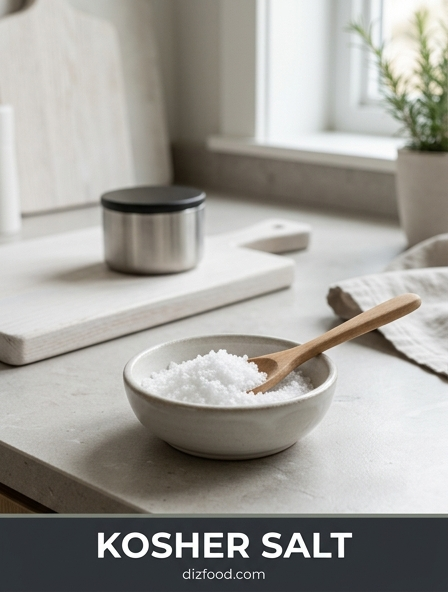
Unique Crystal Structure and Texture
Kosher salt is distinguished by its unique physical architecture, which differs significantly from the uniform cubes of standard table salt. Depending on the manufacturing process-whether through evaporation or the Alberger process-the crystals result in either flat, plate-like flakes or hollow, pyramidal structures. This irregular geometry provides a tactile experience that is essential for culinary professionals who rely on the physical sensation of the grain to gauge quantity. The coarse texture is not merely for aesthetics; it increases the surface area of the salt, allowing it to interact more dynamically with the moisture on the surface of various ingredients.
- Large, craggy flakes for better grip.
- Pyramidal shapes that provide a satisfying crunch.
- Flat plates that cover more surface area with less mass.
- Coarse grains that resist clumping in humid environments.
Because these crystals are less dense than traditional granulated salt, they occupy more volume for the same weight. This structural lightness is why kosher salt feels more substantial between the fingertips, offering a degree of physical feedback that fine salt cannot replicate. Understanding this structure is the first step in mastering its application across different cooking techniques.
Precision Seasoning with Easy Pinching
The ability to accurately season food by hand is a hallmark of professional cooking, and kosher salt is the primary tool for this task. Its coarse, flaky nature makes it exceptionally easy to pick up between the thumb and forefingers, a technique known as "pinching." Unlike fine table salt, which often slips through the fingers or pours out too quickly from a shaker, kosher salt stays put, allowing the cook to feel exactly how much seasoning they are about to apply. This tactile control leads to more consistent results and reduces the risk of over-salting a dish.
When seasoning from a height, the large flakes disperse more evenly across the food. As the salt falls, the wind resistance against the flat surfaces of the crystals causes them to flutter and spread, ensuring that no single spot receives an overwhelming concentration of salinity. This technique is vital for seasoning large cuts of meat or vast trays of roasted vegetables. By using their hands rather than a mechanical dispenser, chefs develop a sensory memory for seasoning, translating the physical volume in their grip into a predictable flavor profile in the final meal.
Pure Flavor Without Bitter Additives
One of the most significant advantages of kosher salt is its purity. Most commercial table salts are fortified with iodine and treated with anti-caking agents like sodium ferrocyanide or calcium silicate to prevent clumping. While these additives serve a functional or nutritional purpose, they often introduce a subtle metallic or bitter aftertaste that can interfere with the delicate flavors of fresh ingredients. Kosher salt, particularly high-quality brands, typically lacks these additives, providing a clean, "bright" saltiness that enhances rather than masks the natural profile of the food.
Because it lacks iodine, kosher salt is the preferred choice for fermentation and pickling. Iodine can sometimes inhibit the growth of beneficial bacteria or cause unappealing color changes in preserved vegetables. In high-heat applications, such as searing or roasting, the absence of anti-caking chemicals ensures that the salt does not produce any off-aromas. For the discerning palate, the neutrality of kosher salt makes it a versatile canvas, allowing the nuances of premium olive oils, fresh herbs, and high-quality proteins to take center stage without chemical interference.
Enhanced Adhesion to Food Surfaces
The physical geometry of kosher salt plays a crucial role in how it adheres to the surface of ingredients. Due to the large, irregular surface area of each crystal, it clings more effectively to the natural moisture of meats, fish, and vegetables. When applied to a damp piece of protein, the flat edges of the salt flakes act like small anchors, staying in place rather than bouncing off or sliding into the bottom of the pan. This is particularly important when preparing food for high-heat cooking methods like grilling or pan-searing.
This adhesion ensures that every bite is seasoned uniformly. In the context of breading or crusting, the coarse texture of kosher salt integrates better with flour or breadcrumbs, creating a more robust coating. When used on roasted vegetables, the salt sticks to the oil and the vegetable's natural juices, ensuring that the seasoning remains on the food throughout the cooking process. Without this level of adhesion, much of the salt would be lost during handling or lost to the cooking surface, resulting in an unevenly seasoned and lackluster final product.
Controlled Salt Dissolution Rates
The rate at which salt dissolves is a critical factor in building layers of flavor. Kosher salt dissolves more slowly than fine table salt because of its larger particle size. This slow dissolution provides a window of opportunity for the cook to adjust seasoning as the dish progresses. In liquid-based dishes like soups, stews, or sauces, the gradual melting of the flakes allows for a more controlled integration of salinity. Instead of an immediate spike in saltiness, the flavor unfolds over time, permitting the chef to taste and refine the balance periodically.
This characteristic is also beneficial when used as a finishing salt. If sprinkled on a dish just before serving, the flakes may only partially dissolve, providing small bursts of concentrated flavor and a subtle crunch. This contrast between the soft texture of the food and the crystalline snap of the salt adds a sophisticated sensory layer to the eating experience. By understanding the timing of dissolution, a cook can strategically decide when to add salt-whether at the beginning to draw out juices, or at the end to provide a structural and flavorful highlight to the finished plate.
The Difference Between Kosher and Table Salt
While both substances are chemically composed of sodium chloride, their functional roles in the kitchen are vastly different. The most immediate distinction is density. Because kosher salt crystals are large and irregular, they do not pack together tightly. In contrast, the small, uniform grains of table salt fit together perfectly, making it much denser. This means that a tablespoon of table salt contains nearly twice as much salt by weight as a tablespoon of most kosher salts. Failing to account for this difference is a common cause of over-seasoned dishes when following recipes.
| Feature | Kosher Salt | Table Salt |
|---|---|---|
| Grain Size | Coarse/Flaky | Fine/Granular |
| Additives | Usually None | Iodine/Anti-caking |
| Density | Low | High |
| Best Use | General Cooking/Prepping | Baking/Shakers |
Furthermore, the absence of iodine in kosher salt provides a cleaner flavor profile. Table salt is often used in baking where it can dissolve quickly into doughs and batters, but for topical seasoning and meat preparation, the physical properties of kosher salt make it the superior choice for professional and home cooks alike.
Standardized Professional Kitchen Measurements
In the professional culinary world, consistency is the foundation of excellence. Kosher salt has become the industry standard because it allows for a standardized language of seasoning. Most professional recipes are developed using kosher salt as the baseline for salinity. Because of its predictable volume-to-weight ratio (within specific brands), chefs can communicate "pinches" or "handfuls" with a high degree of accuracy. This standardization ensures that a dish prepared in one kitchen will taste identical to the same dish prepared elsewhere by a different member of the team.
However, it is important to note that different brands of kosher salt have different densities. For example, Diamond Crystal salt is much lighter and fluffier than Morton's kosher salt. Professional kitchens usually stick to one brand exclusively to avoid confusion. By using a consistent type of salt, cooks develop an intuitive sense of how much is needed for various volumes of food. This reliability is essential in high-pressure environments where there is little time for constant re-weighing. Kosher salt provides the dependable foundation required for precise, repeatable seasoning across all stations of the kitchen.
Superior Moisture Extraction for Searing
The science of a perfect sear relies heavily on the management of moisture, and kosher salt is an expert tool for this process. Through the process of osmosis, salt applied to the surface of meat draws out moisture. Because kosher salt has a large surface area, it is particularly effective at this task. When meat is salted well in advance, the salt draws out protein-rich juices, which then dissolve the salt into a concentrated brine. Eventually, the meat reabsorbs this brine, seasoning the interior and breaking down muscle fibers for a more tender result.
For immediate searing, applying kosher salt just before the meat hits the pan helps create a dry surface. The large crystals absorb surface moisture that would otherwise turn into steam. Steam is the enemy of the Maillard reaction; if the surface of the meat is wet, it will boil rather than brown. The presence of kosher salt flakes ensures that the heat of the pan goes directly into browning the proteins and fats, resulting in a deeply flavorful, caramelized crust. This moisture management is the secret behind the steakhouse-quality results that many home cooks strive to achieve in their own kitchens.
Why Iodized Salt Alters Final Flavors
Iodized salt was introduced in the early 20th century as a public health initiative to prevent iodine deficiency. While successful for health, it introduced a significant variable into culinary flavor profiles. Iodine has a distinct chemical bitterness that becomes more pronounced when heated or when used in large quantities. For sensitive palates, this can translate into a metallic "tinny" taste in the back of the throat. When cooking complex dishes with many layers of flavor, these chemical notes can clash with the natural acidity or sweetness of the ingredients.
Moreover, the anti-caking agents found in many iodized table salts can affect the clarity of liquids. In a clear consommé or a delicate brine, these additives can cause cloudiness, detracting from the visual appeal of the dish. Because kosher salt is generally free from these inclusions, it offers a "true" salt flavor. This purity allows the cook to season aggressively when necessary-such as in pasta water or when dry-brining a turkey-without the fear of accumulating off-flavors. In the modern kitchen, where the quality of raw ingredients is paramount, using a salt that does not alter the ingredient's essence is a fundamental requirement.
Mastering Culinary Balance with Large Flakes
Achieving the perfect balance in a dish often requires a final touch of seasoning that provides both flavor and texture. Kosher salt's large flakes make it an ideal "finishing" element for certain preparations. When a dish lacks a certain "pop," a light sprinkle of coarse salt can elevate the existing flavors by providing focused bursts of salinity. This is particularly effective on rich, fatty foods like sliced avocado, roasted root vegetables, or even chocolate-based desserts where the salt provides a sharp contrast to the sweetness.
- Taste the dish near the end of the cooking process to assess current salinity.
- Apply a small amount of kosher salt from a height for even distribution.
- Evaluate the texture; the flakes should provide a slight, pleasant crunch.
- Adjust based on the acidity and fat content of the meal.
Mastering this balance is an art form. It requires the cook to understand that salt is not just a flavor enhancer but also a structural component. The visual presence of the large white flakes on a finished plate also signals to the diner that the dish has been prepared with care and precision, adding to the overall aesthetic and sensory enjoyment of the meal.




Comments