
Choosing between a carbon steel and a stainless steel wok is the defining factor in achieving that coveted "wok hei"-the smoky, charred essence of professional stir-fry. While carbon steel is the industry standard for its rapid heat conductivity and ability to develop a natural non-stick patina through seasoning, stainless steel offers a modern, low-maintenance alternative that thrives in high-acid cooking environments. Whether you prioritize the lightning-fast temperature control of traditional steel or the rugged, dishwasher-safe durability of stainless alloys, understanding their thermal dynamics is the first step toward mastering restaurant-quality results in your own kitchen.
| Feature | Carbon Steel Wok | Stainless Steel Wok |
|---|---|---|
| Heat Response | Ultra-fast; reacts instantly to flame changes. | Slower to heat; retains heat longer once hot. |
| Surface Type | Requires seasoning; becomes naturally non-stick. | Non-reactive; prone to food sticking if not oiled. |
| Maintenance | Hand wash only; must stay dry to prevent rust. | Dishwasher safe; rust-resistant and easy care. |
| Durability | Virtually indestructible; improves with age. | Highly durable; won't pit or react to acidic foods. |
| Weight | Lightweight; ideal for tossing and flipping. | Heavier; often requires two hands to maneuver. |
| Best For | High-heat searing and authentic "Wok Hei." | Steaming, boiling, and acidic (tomato/vinegar) sauces. |
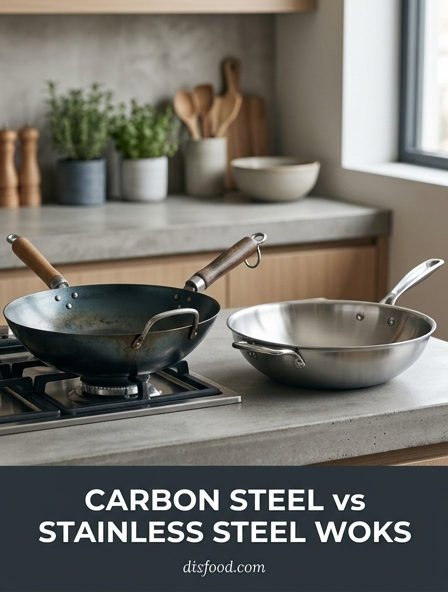
Carbon Steel vs Stainless Steel Woks Key Differences
The debate between carbon steel and stainless steel woks centers on performance versus convenience. Carbon steel is the traditional choice for Asian cuisine, favored for its unique ability to develop a seasoned surface over time. It is generally thinner and more responsive to temperature changes than its stainless counterpart. In contrast, stainless steel woks are often constructed with multiple layers, such as a three-ply design featuring an aluminum core sandwiched between steel, to compensate for the material's poor natural conductivity.
| Feature | Carbon Steel | Stainless Steel |
|---|---|---|
| Material Composition | Iron and Carbon | Steel, Chromium, and Nickel |
| Surface Type | Requires Seasoning | Non-reactive / Polished |
| Heat Response | Very Fast | Moderate to Slow |
| Maintenance | High (Hand wash/Dry) | Low (Dishwasher safe) |
While carbon steel is susceptible to rust if not cared for properly, it is significantly more affordable than high-end multi-clad stainless steel. Stainless steel maintains a beautiful, mirror-like finish that resists corrosion and scratches, making it a centerpiece for modern kitchens. However, the lack of a porous surface means stainless steel cannot develop a natural non-stick patina, which is the hallmark of traditional wok cooking. Weight also plays a role; carbon steel is typically lighter and easier to maneuver during high-heat tossing, whereas stainless steel woks feel substantial and sturdy on the stove.
The Science of Heat Conductivity and Wok Hei
Wok Hei, translated as the "breath of the wok," refers to the complex charred aroma and flavor produced by stir-frying at extremely high temperatures. This phenomenon relies heavily on the thermal properties of the cooking vessel. Carbon steel excels in this arena because of its low thermal mass and high conductivity. It heats up almost instantly and, more importantly, cools down just as fast when the flame is lowered. This allows a chef to sear proteins without overcooking delicate aromatics like garlic or ginger.
The science involves the Maillard reaction and the combustion of oil droplets in the air as food is tossed. Carbon steel's ability to maintain a blistering surface temperature while food is constantly moving ensures that moisture evaporates immediately, preventing the food from steaming in its own juices. Stainless steel, while capable of reaching high temperatures, often suffers from "hot spots" unless it is a high-quality clad version. Because stainless steel retains heat longer, it lacks the surgical precision required to stop the cooking process instantly. For those seeking the authentic smoky flavor of a professional kitchen, the thermal responsiveness of carbon steel provides a distinct advantage that stainless steel struggles to replicate under home-cooking conditions.
Pros and Cons of Carbon Steel for Professional Stir Fry
In a professional environment, efficiency and results are the primary metrics for success. Carbon steel is the industry standard for several practical reasons, though it comes with specific demands that may deter casual users. Professionals value the material's ability to take a beating under industrial burners without warping or losing its structural integrity.
- Pro: Natural Non-Stick - With proper seasoning, the surface becomes as slick as Teflon without the harmful chemicals.
- Pro: Weight Management - The lighter weight reduces wrist fatigue during shifts where hundreds of dishes are tossed.
- Pro: Cost-Effective - Replacing a worn-out carbon steel wok is inexpensive compared to premium metals.
- Con: Rust Vulnerability - If left in a damp sink for even an hour, carbon steel can begin to oxidize and develop rust.
- Con: Initial Setup - New woks require a "burning" process to remove factory oils and establish the first layer of seasoning.
The primary disadvantage for the professional is the maintenance cycle. Every time the wok is cleaned, it must be dried over a flame and lightly oiled. For a high-volume kitchen, this is second nature, but for a chef who values a "set it and forget it" approach to cleaning, the high-maintenance nature of carbon steel can be a drawback. Nevertheless, the ability to control heat with micro-adjustments makes it the superior tool for professional-grade stir fry.
Why Stainless Steel is the Easiest Wok to Maintain
For the average home cook, the allure of stainless steel lies in its effortless maintenance. Unlike other metals that require a ritualistic cleaning process, stainless steel is non-porous and non-reactive. This means you can soak it in soapy water, scrub it with abrasive pads, or even place it in a dishwasher without worrying about destroying a specialized finish. There is no need to worry about rust, even if the pan remains wet overnight in a drying rack.
The aesthetic longevity of stainless steel is also a major selling point. While carbon steel turns black and mottled over time-a look some find unappealing-stainless steel retains its silver luster with minimal effort. If food does happen to burn or stick to the surface, a quick soak with some vinegar or a specialized stainless steel cleaner restores the shine. This material is also incredibly hard, meaning it won't react with metal utensils or develop pits from salt exposure. For families who prioritize hygiene and ease of use over the specific culinary nuances of traditional stir-frying, stainless steel offers a "buy it once, use it forever" convenience that eliminates the learning curve associated with seasoned cookware.
Understanding the Importance of Wok Seasoning and Patina
Seasoning is the process of creating a protective layer on the surface of a carbon steel wok through the polymerization of fats. When oil is heated to its smoke point on the steel, it transforms from a liquid into a hard, plastic-like film that bonds to the metal. This layer, known as the patina, is what gives carbon steel its non-stick properties and prevents rust. Over time, as more layers of oil are carbonized, the wok turns from a bright silver to a deep, matte black.
- Cleaning: The wok must be scrubbed to remove any shipping wax or food debris.
- Heating: The metal is heated until it changes color, indicating it is ready to receive oil.
- Application: A thin layer of high-smoke-point oil (like peanut or grapeseed) is buffed into the surface.
- Polymerization: The wok is heated until the oil stops smoking and sets into the pores of the metal.
The patina is not a permanent coating like a chemical non-stick pan; it is a living surface that evolves. It can be stripped by acidic foods or harsh detergents but can always be rebuilt. This cycle of maintenance is considered a badge of honor for many cooks, as a well-seasoned wok is a testament to years of use. Stainless steel woks do not support this process, as their surface is too smooth for the oil to bond effectively, which is why food tends to stick more easily in stainless vessels.
Weight and Maneuverability for High Heat Cooking
The technique of "tossing" a wok is essential for ensuring even cooking and aerating the ingredients to achieve Wok Hei. This movement requires a vessel that is balanced and manageable. Carbon steel woks are typically manufactured from 14-gauge to 16-gauge steel, offering a thickness that is durable enough to resist warping but light enough to be flicked with one hand. This maneuverability allows the cook to keep the ingredients in constant motion, preventing them from sitting in one spot and burning under intense heat.
Stainless steel woks, especially those with 3-ply or 5-ply construction, are significantly heavier. The addition of aluminum and extra layers of steel increases the total mass, making it difficult to perform the traditional "wok toss" for extended periods. While the extra weight provides stability on the burner-preventing the wok from sliding around-it often forces the cook to rely more on a spatula for stirring rather than the physical movement of the pan itself. For cooks with wrist issues or those who prefer a more stationary cooking style, the heavy-bottomed stainless steel wok may be preferable, but for those wanting to master traditional techniques, the nimble nature of carbon steel is unrivaled.
Cooking Acidic Foods in Stainless Steel vs Carbon Steel
Acidity is a major factor when choosing between these two materials. Carbon steel is a reactive metal, meaning it chemically interacts with acidic ingredients such as tomatoes, vinegar, lemon juice, or wine. If you attempt to simmer a tomato-based sauce or a heavy vinegar glaze in a carbon steel wok, the acid will eat away at the seasoned patina. This not only ruins the non-stick surface but can also impart a metallic, "tinny" taste to the food. Consequently, carbon steel is best reserved for quick stir-frys and dry heat applications.
Stainless steel is non-reactive, making it the superior choice for versatile cooking. You can deglaze a stainless wok with white wine or simmer a sweet and sour sauce for 20 minutes without any fear of the metal leaching into the dish. This makes stainless steel woks more like a deep sauté pan, capable of handling a wider variety of global cuisines beyond traditional Chinese cooking. If your cooking style involves a lot of braising, steaming with acidic liquids, or making pan sauces, the inert nature of stainless steel provides a level of freedom that carbon steel simply cannot match without constant re-seasoning.
Durability and Longevity Comparison for Home Cooks
Both carbon steel and stainless steel are incredibly durable compared to non-stick coated pans, which eventually peel and must be discarded. However, their longevity manifests in different ways. Carbon steel is virtually indestructible in terms of mechanical failure; if it rusts, you can sand it down; if the seasoning is lost, you can redo it. It can last for decades, often becoming better with age as the patina deepens.
- Carbon Steel Longevity: Can handle metal spatulas, high flames, and accidental drops without cracking.
- Stainless Steel Longevity: Resists stains and rust indefinitely, but low-quality versions may see the cladding layers separate over time.
- Warping: Thin carbon steel can warp if subjected to extreme temperature shocks (like cold water on a red-hot pan). Heavy stainless steel is more resistant to warping.
For the home cook, stainless steel often wins the durability contest regarding appearance, as it won't "age" in the traditional sense. Carbon steel wins on "fixability," as there is almost no mistake that cannot be undone with a bit of steel wool and oil. Both materials represent a lifetime investment, but carbon steel requires the cook to be an active participant in its preservation, whereas stainless steel remains resilient with passive care.
Which Wok Material Offers the Best Natural Non Stick Surface
When it comes to the "best" non-stick surface, carbon steel is the clear winner, provided the user understands how to maintain it. A well-seasoned carbon steel wok behaves very much like a modern non-stick pan, allowing eggs to slide and delicate fish to be flipped without tearing. This is achieved through the layers of polymerized oil that fill the microscopic peaks and valleys of the steel, creating a smooth, hydrophobic barrier. The more you cook with it, the more non-stick it becomes.
Stainless steel is notorious for food sticking, particularly proteins. This happens because the metal surface has microscopic pores that expand when heated; if meat is placed in a pan that isn't hot enough, the proteins bond to the metal as they cook. While there is a technique called the "Leidenfrost Effect"-heating the pan until water beads dance on the surface-to minimize sticking in stainless steel, it is never as inherently slick as a seasoned carbon steel surface. If your goal is to cook with minimal oil and have food release effortlessly every time, carbon steel is the superior choice. If you prefer the look of stainless, you will generally need to use more oil and exert more control over your temperature to prevent sticking.
The Final Verdict on Choosing the Best Wok for Your Kitchen
Choosing the best wok depends entirely on your priorities as a cook. If you are a culinary enthusiast who wants to master authentic Chinese techniques, values the flavor of Wok Hei, and doesn't mind a bit of maintenance, carbon steel is the only logical choice. It is the gold standard for performance, offering a natural non-stick surface and unparalleled heat responsiveness. The minor chore of seasoning is a small price to pay for the professional-level results it yields in the kitchen.
On the other hand, if you are a busy home cook who wants the versatility of a deep pan without the "babysitting" required for carbon steel, stainless steel is the better investment. It is ideal for those who want a single piece of cookware that can handle stir-frying, steaming, and acidic sauces without a second thought. While you might sacrifice a bit of that traditional smoky flavor and lightweight maneuverability, the ease of cleaning and the ability to use the dishwasher make it a more practical tool for many modern households. Ultimately, carbon steel is a specialized tool for a specific craft, while stainless steel is an all-purpose workhorse that fits into any kitchen routine with ease.

Comments