
Choosing the right tool for a green kitchen often boils down to the battle of the sponges: the ocean-harvested natural sea sponge versus the plant-based cellulose alternative. While both offer a significant upgrade over synthetic plastic sponges, understanding their lifecycle is key to achieving a truly sustainable home. Natural sea sponges are incredibly durable, renewable organisms that boast natural enzymes to inhibit mold and bacterial growth, whereas cellulose sponges-typically made from wood pulp and flax-provide a familiar, highly absorbent, and budget-friendly way to scrub away grime without shedding microplastics. Whether you prioritize the raw, biodegradable power of the sea or the compostable efficiency of plant fibers, switching to these eco-warriors ensures your dish routine respects the planet as much as your countertops.
| Feature | Natural Sea Sponge | Cellulose Sponge |
|---|---|---|
| Primary Source | Harvested marine organisms (Renewable) | Wood pulp, cotton fiber, and flax |
| Durability | High; lasts 6-12 months with care | Moderate; typically lasts 1-2 months |
| Hygiene | Natural enzymes inhibit mold/bacteria | Porous; requires frequent sanitizing |
| Absorbency | High; holds significant water volume | Exceptional; can hold 20x its weight |
| End of Life | 100% Biodegradable & Compostable | Compostable (if dye/glue free) |
| Price Point | Premium ($10-$20 per unit) | Budget-friendly ($1-$5 per unit) |
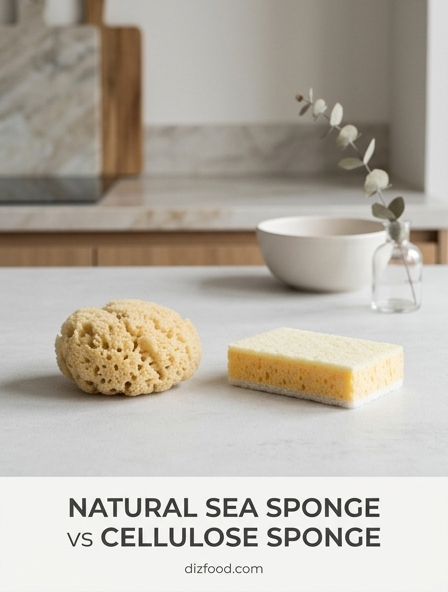
Natural Sea Sponges vs Cellulose Sponges Overview
The modern kitchen requires efficient tools for sanitation and maintenance, leading to a long-standing debate between natural sea sponges and their synthetic cellulose counterparts. Natural sea sponges are multi-cellular organisms harvested from the ocean floor, primarily consisting of a structural protein called spongin. They have been used for centuries due to their unique fibrous architecture, which allows for immense water retention and gentle scrubbing. Because they are biological entities rather than manufactured goods, each sponge varies in shape, size, and density, providing a bespoke cleaning experience that synthetic alternatives struggle to replicate.
In contrast, cellulose sponges are the most common cleaning implement found in contemporary households. They are manufactured from wood pulp, hemp fibers, and sodium sulfate crystals. While they are often perceived as "natural" due to their plant-based origins, the industrial process required to transform raw pulp into a porous cleaning block involves significant chemical intervention. These sponges are uniform in shape, usually rectangular, and are often dyed in vibrant colors to appeal to consumers. Understanding the fundamental differences between these two options involves looking at their composition, lifecycle, and interaction with various surfaces.
| Feature | Natural Sea Sponge | Cellulose Sponge |
|---|---|---|
| Origin | Marine Organism | Wood Pulp / Plant Fiber |
| Texture | Irregular and Soft | Uniform and Firm |
| Biodegradability | 100% Compostable | Varies (often contains plastics) |
Durability Comparison of Natural and Synthetic Sponges
Durability is a critical factor when selecting kitchen tools, as it dictates both the cost-effectiveness and the environmental footprint of the product. Natural sea sponges are renowned for their incredible resilience. Because the spongin fibers are naturally evolved to withstand the pressures and currents of the ocean, they do not easily tear or crumble. When maintained properly-rinsed and dried between uses-a high-quality sea sponge can last for several months or even a year without losing its structural integrity. They are less prone to the "pilling" or shredding that occurs when a sponge is used on abrasive surfaces like cast iron or textured stoneware.
Cellulose sponges, while initially firm and sturdy, tend to degrade much faster under heavy use. The manufacturing process creates a lattice that is susceptible to shearing forces. Over time, the wood pulp fibers begin to break down, leading to the common phenomenon of "sponge rot," where the center of the sponge becomes soft and eventually tears. Furthermore, if a cellulose sponge is reinforced with a polyester scrubbing pad, the adhesive bond between the two layers frequently fails, rendering the tool less effective. While cellulose is cheaper upfront, the frequency of replacement is significantly higher than that of a sea sponge.
- Sea sponges possess high tensile strength due to natural protein bonds.
- Cellulose sponges often develop cracks and fissures after repeated drying cycles.
- Synthetic reinforcements in cellulose sponges can detach and cause waste.
- Proper sterilization (vinegar or weak bleach) extends sea sponge life significantly.
Environmental Impact of Harvested Sea Sponges
The environmental footprint of natural sea sponges is often misunderstood. When harvested responsibly, sea sponges are a highly sustainable resource. Professional divers use a specific technique where they leave the "root" or the base of the sponge attached to the ocean floor. Because sponges are capable of asexual reproduction and regeneration, this practice actually stimulates growth, often resulting in a healthier and more populated sponge bed than before the harvest. This "pruning" mechanism ensures that the marine ecosystem remains balanced while providing a biodegradable product for human use.
Furthermore, sea sponges require no chemical processing to become functional cleaning tools. Once harvested, they are simply washed, trimmed, and sometimes lightly bleached with oxygen-based cleaners to achieve a golden hue. They do not release microplastics into the water system during use, which is a growing concern with synthetic cleaning pads. When a sea sponge finally reaches the end of its lifespan, it can be tossed into a backyard compost bin, where it will break down into organic matter within a few months. This creates a closed-loop system that is nearly impossible to achieve with mass-produced kitchen products. By choosing sea sponges, consumers support a traditional industry that relies on the health of the ocean, providing a direct incentive for marine conservation.
How Cellulose Sponges Affect the Planet
While cellulose sponges are marketed as an eco-friendly alternative to plastic sponges, their environmental impact is more complex than it appears. The primary ingredient, wood pulp, must be harvested from forests, which can lead to habitat loss if not managed through FSC-certified sources. However, the most significant impact occurs during the manufacturing phase. The "viscose process" used to turn wood into sponge material requires heavy chemicals, including carbon disulfide, which can be hazardous to factory workers and the surrounding environment if not strictly controlled. These chemicals are necessary to dissolve the pulp and reform it into the porous blocks we recognize.
Additionally, many cellulose sponges are not 100% plant-based. To increase their durability or to add a "scrubby" side, manufacturers often incorporate polyester or nylon fibers. These synthetic additions prevent the sponge from being truly biodegradable. Even those labeled as "natural" are often treated with antimicrobial agents like triclosan (though this is becoming less common) or chemical dyes to give them their bright yellow or blue color. When these sponges sit in landfills, the synthetic components persist for decades, and the chemicals used in their creation can leach into the soil. Consumers looking for a truly green option must be diligent in reading labels to ensure no hidden plastics are included in the cellulose matrix.
Bacterial Resistance in Natural Sea Sponges
One of the most significant advantages of natural sea sponges in the kitchen is their inherent resistance to bacteria and mold. Sea sponges contain natural enzymes and minerals that inhibit the growth of odors and microorganisms. Because they evolved to filter water and nutrients while resisting the harsh conditions of the sea, they possess a complex system of internal channels that facilitate massive airflow. This open-pore structure allows the sponge to dry much faster than a dense synthetic material. Bacteria thrive in damp, anaerobic environments; by drying quickly and thoroughly, the sea sponge denies bacteria the moisture they need to colonize.
In contrast, cellulose sponges act like a petri dish for kitchen germs. The tiny, uniform holes in wood pulp sponges trap food particles and moisture deep within the core, where air cannot easily reach. This is why cellulose sponges often develop a "sour" smell after only a few days of use. This odor is a direct byproduct of bacterial metabolism. While users often try to microwave or boil cellulose sponges to disinfect them, these methods provide only temporary relief and can actually damage the sponge's structure. Sea sponges, through their natural architecture, provide a more hygienic surface for washing dishes and countertops without the need for constant chemical sanitization.
Absorbency and Performance Differences
When it comes to pure liquid capacity, the sea sponge is an unparalleled performer. A high-quality sea sponge can hold up to 20 to 30 times its own weight in water. This is due to the intricate network of canals and chambers designed by nature to move water through the organism's body. In a kitchen setting, this means a sea sponge can hold a significant amount of soapy water, allowing you to wash more dishes with a single "charge" of detergent. This efficiency not only saves time but also reduces the amount of soap washed down the drain. Their ability to release water is also superior; a simple squeeze expels almost all liquid, allowing for a quick transition from washing to drying.
Cellulose sponges are also highly absorbent, but they function differently. They rely on capillary action within the wood fibers to "suck up" spills. While they are excellent for wiping down flat surfaces like countertops or glass stovetops, they struggle to release food debris as easily as sea sponges. The dense structure of cellulose tends to trap grease and oils, which can make the sponge feel "slimy" over time. In terms of scrubbing power, cellulose sponges are generally stiffer when wet, providing a bit more leverage for stuck-on food, whereas sea sponges are softer and better suited for delicate items. However, for sheer volume of liquid management, the sea sponge remains the gold standard in the culinary world.
Texture and Sensitivity for Skin and Surfaces
The texture of a sponge determines its versatility across different tasks. Natural sea sponges are incredibly soft when wet, making them the safest choice for high-end kitchenware. If you have fine bone china, hand-painted ceramics, or delicate silver, a sea sponge provides a non-abrasive touch that will not cause micro-scratches. This softness is also why they are favored for skin care; they gently exfoliate without causing irritation. In a kitchen that doubles as a space for sensitive tasks-such as cleaning baby bottles or organic produce-the gentle, hypoallergenic nature of a sea sponge is a distinct advantage.
Cellulose sponges have a more aggressive texture. When dry, they are hard and brittle; when wet, they are pliable but retain a certain level of coarseness. This makes them excellent for general-purpose scrubbing of stainless steel sinks or plastic containers. However, the uniform edges of a cellulose sponge can sometimes trap grit, which may inadvertently scratch soft plastics or non-stick coatings. For those who prioritize a "scrubbing" feel, cellulose is the winner, but for those who value the preservation of delicate finishes and skin health, the sea sponge is vastly superior. The organic variations in a sea sponge's surface also allow it to contour to odd shapes-like the tines of a fork or the curves of a wine glass-more effectively than a rigid rectangular block.
Cost Analysis and Longevity Value
The initial price point of a natural sea sponge can be a deterrent for some consumers, as they often cost three to five times more than a standard pack of cellulose sponges. However, a comprehensive cost analysis must take longevity into account. A standard cellulose sponge usually needs to be replaced every two weeks due to odor, bacteria buildup, or physical degradation. In contrast, a well-maintained sea sponge can last six months or longer. If a consumer buys 12 cellulose sponges a year versus one or two sea sponges, the total expenditure often balances out, with the sea sponge potentially being the cheaper option over the long term.
- Initial Cost: Cellulose ($1-$2) vs. Sea Sponge ($10-$15).
- Lifespan: Cellulose (2 weeks) vs. Sea Sponge (24+ weeks).
- Replacement Rate: Cellulose (26/year) vs. Sea Sponge (2/year).
- Environmental Cost: Sea sponges reduce landfill waste by over 90% compared to disposables.
Beyond the direct financial cost, there is the value of performance. The time saved by not having to constantly sanitize or replace smelly sponges adds to the sea sponge's value proposition. Furthermore, because sea sponges are more durable, they do not leave behind the small, annoying bits of yellow foam that cellulose sponges often deposit on dishes as they begin to disintegrate. For the budget-conscious but quality-oriented home cook, investing in a natural sponge represents a shift toward "slow" household goods that prioritize quality over disposable convenience.
Chemical Free Advantages of Organic Sea Sponges
Natural sea sponges are essentially raw materials. They are not treated with the synthetic chemicals found in mass-market cleaning products. Many cellulose sponges are infused with antimicrobial chemicals like triclosan to prevent them from smelling. These chemicals can leach onto your dishes and eventually into your food. Additionally, the bright dyes used to color cellulose sponges are often synthetic and can bleed out during the first few uses. For individuals with chemical sensitivities or those striving for a "toxin-free" home, the sea sponge is a clear winner.
Because sea sponges are naturally hypoallergenic and contain no artificial fragrances or colors, they are ideal for households with children or pets. When you use a sea sponge, you are cleaning with a biological structure that is compatible with the environment. There is no risk of chemical residue being left on a high-chair tray or a cutting board. The only "processing" a sea sponge undergoes is a thorough cleaning to remove sand and sea debris, followed by a sun-drying or a mild oxygen soak. This simplicity provides peace of mind that synthetic manufacturing cannot match. Choosing an organic sea sponge is an extension of a holistic lifestyle that values purity in every aspect of the home, from the food on the plate to the tools used to clean it.
Choosing the Best Sponge for Your Needs
Selecting between a natural sea sponge and a cellulose sponge ultimately depends on your cleaning priorities and environmental values. If your primary goal is high-intensity scrubbing of burnt-on food and you prefer a tool you can throw away frequently without guilt, a 100% plant-based cellulose sponge might be your best bet. They are inexpensive, easy to find, and provide a familiar rectangular grip that many find comfortable for quick chores. They are particularly useful for wiping down large, flat surfaces where a consistent edge is beneficial.
However, if you prioritize longevity, bacterial resistance, and a truly sustainable lifestyle, the natural sea sponge is the superior choice. It is a more versatile tool, capable of handling everything from delicate glassware to heavy-duty washing, all while remaining odor-free. For the environmentally conscious, the fact that a sea sponge is a renewable resource that supports marine ecosystems is a compelling reason to make the switch. While it requires a slightly higher upfront investment and a bit more care-such as ensuring it dries in a well-ventilated area-the rewards are a cleaner kitchen, a healthier planet, and a more pleasant sensory experience. Consider keeping one of each: a sea sponge for your fine dishes and daily washing, and a cellulose sponge for the grittier, dirtier tasks that might stain a natural product.


Comments