
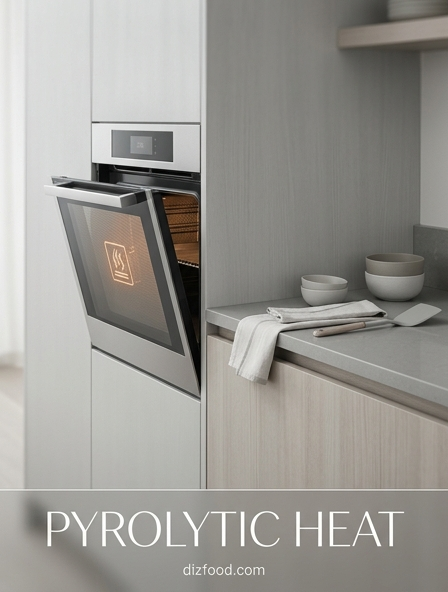
Science behind pyrolytic cleaning cycles
The science of pyrolytic cleaning is rooted in the process of thermal decomposition, a chemical reaction that occurs when organic materials are subjected to high temperatures in an oxygen-deprived or oxygen-controlled environment. Unlike standard baking or roasting, which operates between 150°C and 250°C, a pyrolytic cycle pushes the internal oven temperature toward a threshold of approximately 500°C. At this level, the chemical bonds within food molecules-primarily composed of carbon, hydrogen, and oxygen-begin to break down.
- Temperature Threshold: Typically 480°C to 500°C (900°F+).
- Molecular Fragmentation: Large organic chains are reduced to simpler volatile gases and solid carbon.
- Atmospheric Control: Specialized airflow prevents the ignition of large spills during the process.
This phase change is highly efficient because it targets the structural integrity of the grime. Instead of relying on surfactants or mechanical scrubbing, the oven utilizes sheer kinetic energy at the molecular level to vibrate atoms until the molecular structure of the residue collapses. What remains is a dry, inorganic substance that no longer adheres to the enamel surface of the oven cavity.
Extreme heat and thermal decomposition
Thermal decomposition, or pyrolysis, is the fundamental mechanism that enables an oven to clean itself without the use of harsh detergents. When the oven enters this mode, it bypasses the standard thermostat limits to reach extreme temperatures. This heat causes the complex organic polymers found in fats and proteins to undergo a "cracking" process. As the thermal energy exceeds the bond energy of the molecules, the waste matter is effectively vaporized or reduced to its elemental state.
| Temperature Range | Physical Effect |
|---|---|
| 100°C - 200°C | Dehydration and surface browning (Maillard reaction). |
| 250°C - 350°C | Partial carbonization and release of heavy smoke. |
| 450°C - 500°C | Complete thermal decomposition into ash and light gases. |
The oven's interior is coated with a specialized acid-resistant enamel that can withstand these repeated thermal shocks. This coating prevents the expanding metal of the oven walls from cracking under the intense pressure of the heat. By maintaining these extreme temperatures for several hours, the oven ensures that even the most stubborn, baked-on grease is reduced to a fine, manageable powder.
Carbonization of grease and food spills
During the cooking process, grease and sugars undergo polymerization, creating a sticky, varnish-like coating on oven walls. Traditional cleaning requires significant friction and chemical intervention to break these bonds. However, the pyrolytic process uses carbonization to solve this. As the heat climbs, the volatile components of the grease-such as moisture and light oils-evaporate first, leaving behind a concentrated carbon structure. This carbon is then further oxidized until it loses its adhesive properties.
- Lipid Breakdown: Fats are converted into glycerol and fatty acids, then further decomposed.
- Sugar Carbonization: Caramelized sugars are scorched until only the carbon skeleton remains.
- Adhesion Failure: The bond between the enamel and the residue is severed as the residue shrinks.
The result of this carbonization is the total destruction of the biological matter. Because the process is so thorough, it eliminates the odors typically associated with old grease. The carbonization ensures that no "sticky" spots remain; any residue that survived the initial heating phase is eventually rendered into a dry, brittle state that cannot stick to the glass or metal surfaces.
How pyrolytic safety locks function
Given the dangerous temperatures involved in a pyrolytic cycle, safety mechanisms are paramount. Modern ovens utilize an automated electronic-mechanical locking system that engages as soon as the internal temperature crosses a safety threshold, usually around 250°C to 300°C. This prevents the user from accidentally opening the door while the oven is at a temperature that could cause severe burns or ignite oxygen-rich air from the kitchen environment.
- Initiation: The user selects the pyrolytic mode and the oven verifies the door is closed.
- Engagement: A solenoid or motorized bolt slides into place, physically securing the door.
- Thermal Sensing: A high-temperature thermostat monitors the heat; the lock remains engaged until the temperature drops to a safe level (typically below 200°C).
- Power Cut-off: If the lock fails to engage, the heating elements are automatically disabled.
This "fail-safe" logic ensures that the kitchen remains a safe environment. The cooling-down period is often as long as the heating period itself, as the oven must naturally dissipate the extreme energy stored in its cavity before the software releases the latch, protecting the household from thermal surges.
Thermal insulation and cabinet protection
One of the primary engineering challenges of pyrolytic ovens is containing 500°C of heat within a confined space without damaging the surrounding kitchen cabinetry. To achieve this, manufacturers use ultra-high-density fiberglass insulation and reflective heat shields. The insulation is significantly thicker than that found in standard ovens, ensuring that the exterior skin of the appliance remains at a touch-safe temperature. This is crucial for protecting the adhesives and finishes of modern kitchen units.
Beyond passive insulation, pyrolytic ovens utilize active cooling systems. A tangential cooling fan circulates ambient air through a series of channels between the oven cavity and the outer casing. This "air curtain" acts as a thermal barrier, whisking away heat before it can conduct into the wooden or laminate cabinets. Additionally, the oven door usually features three or four layers of heat-reflective glass with air gaps in between. These layers work in tandem to reflect infrared heat back into the oven, maximizing efficiency while keeping the outermost pane cool to the touch.
Converting organic waste into ash
The ultimate goal of the pyrolytic cycle is the total conversion of kitchen waste into a minimal volume of ash. As the temperature reaches its peak, the organic materials undergo a process called "incineration without flame." The high heat breaks down the complex molecular chains into a fine, white or grey dust. This ash consists mostly of inorganic minerals and carbon remnants that have been stripped of all oils and moisture.
- Residue Volume: A large spill may be reduced to a tablespoon of ash.
- Chemical State: The ash is chemically inert and non-toxic.
- Ease of Access: Because the ash does not bond to the enamel, it sits loosely on the floor of the oven.
This conversion is highly satisfying for the user, as it replaces hours of scrubbing with a simple 30-second task. The completeness of the conversion depends on the duration of the cycle; most ovens offer varying settings (90 to 180 minutes) depending on the level of soil. Regardless of the duration, the end product is always the same: a sterile, dry powder that represents the total destruction of all food-based contaminants within the oven cavity.
Managing smoke and internal ventilation
As food spills and grease decompose, they inevitably release smoke and volatile organic compounds (VOCs). If left unmanaged, this would fill the kitchen with unpleasant odors and haze. To prevent this, pyrolytic ovens are equipped with a catalytic converter located in the exhaust vent. As the hot, smoke-laden air exits the oven cavity, it passes through a heated ceramic honeycomb coated with precious metals like palladium or platinum.
| Component | Function |
|---|---|
| Exhaust Fan | Draws smoke out of the cavity and through the filter. |
| Catalytic Oxidizer | Chemically burns off smoke particles at high temperatures. |
| Mixing Chamber | Dilutes hot exhaust with cool room air before expulsion. |
This system ensures that the air expelled into the kitchen is virtually odorless and free of visible smoke. The catalyst works by lowering the ignition temperature of the smoke particles, allowing them to burn off completely before they reach the kitchen environment. While a slight "hot" smell is normal during the cycle, the advanced ventilation systems of modern appliances make the process remarkably clean and unobtrusive.
Pyrolytic vs chemical cleaning methods
Choosing between pyrolytic heat and chemical cleaners involves weighing convenience against chemical exposure. Chemical oven cleaners rely on caustic substances like sodium hydroxide (lye) to dissolve grease. While effective, these chemicals pose risks to the respiratory system and skin, and they often leave behind a lingering chemical scent that can affect the flavor of food. Pyrolytic cleaning, by contrast, uses only heat, making it a "green" alternative that requires no additional consumables.
- Safety: Pyrolysis eliminates the risk of chemical burns or toxic fumes.
- Labor: Chemicals require scrubbing; pyrolysis is entirely hands-off.
- Cost: Pyrolysis uses more electricity per cycle, while chemicals have a recurring purchase price.
- Thoroughness: Heat reaches into corners and crevices where a sponge cannot fit.
While the initial cost of a pyrolytic oven is higher, the long-term benefits often outweigh the price. Users avoid the mess of caustic sprays and the physical toll of scrubbing. Furthermore, the high-quality enamel required for pyrolytic ovens is generally more durable than the enamel found in budget ovens, leading to a longer overall lifespan for the appliance.
Post-cycle cleanup and residue removal
Once the pyrolytic cycle is complete and the oven has cooled down sufficiently to unlock the door, the final stage is a manual wipe-down. Despite the "self-cleaning" label, the oven cannot physically remove the ash it has created. However, because the ash is not adhered to the surface, this process is effortless. The interior should look like a greyish landscape of fine dust, concentrated primarily on the floor of the oven.
- Verification: Ensure the "hot" indicator light has turned off.
- Access: Open the door and remove any residual ash using a damp microfibre cloth.
- Detailing: Wipe the inner door glass, where ash may have settled on the ledges.
- Reinstallation: Place the chrome racks and side rails back into the oven (if they were removed).
It is important to use only water or a very mild detergent during this phase. Using abrasive pads or harsh chemicals on the pyrolytic enamel is unnecessary and can actually damage the specialized coating. A simple sweep with a cloth is usually all that is required to restore the oven to a factory-clean condition, ready for the next cooking session.
Optimizing oven energy during high heat
A common concern regarding pyrolytic cleaning is the energy consumption required to maintain 500°C for several hours. While it does use more power than a standard bake cycle, the efficiency of modern insulation minimizes the impact. To optimize energy usage, many homeowners schedule the cleaning cycle during "off-peak" hours when electricity rates are lower. Additionally, running a cycle immediately after cooking can save energy, as the oven is already preheated to 200°C.
The energy used in a single pyrolytic cycle is roughly equivalent to a few hours of intensive roasting. Because the oven is so well-insulated, once it reaches the target temperature, the heating elements cycle on and off just enough to maintain the heat, rather than running at full capacity the entire time. Furthermore, the cleanliness of the oven actually improves future energy efficiency; a clean oven with reflective walls distributes heat more evenly and warms up faster than one coated in a thick layer of heat-absorbing grease. This makes pyrolysis not just a matter of hygiene, but a strategy for maintaining peak appliance performance.



Comments