
Natural Fiber Foundations for Modern Kitchens
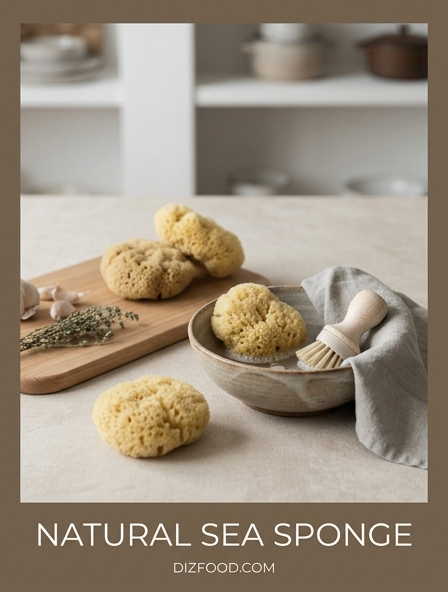
The modern kitchen is increasingly becoming a space where traditional wisdom meets contemporary sustainability. Natural sea sponges represent a cornerstone of this transition, offering a high-performance alternative to mass-produced synthetic tools. Unlike polyurethane foams, these marine organisms possess an intricate network of canals that have evolved over millennia to move water efficiently. This natural architecture translates perfectly to the culinary environment, where liquid management and surface contact are paramount. Integrating these fibers into a daily routine allows homeowners to reduce their reliance on petroleum-derived products while benefiting from the superior tactile feedback of organic material.
- Sourced from renewable Mediterranean and Caribbean beds.
- Free from artificial dyes and chemical fragrances.
- Highly absorbent structure capable of holding up to ten times its weight.
- Naturally hypoallergenic and safe for food-contact surfaces.
Beyond their functionality, these sponges introduce a sculptural, organic aesthetic to the sink area. Their varied shapes and honey-colored hues contrast beautifully with stainless steel and stone countertops, signaling a commitment to eco-conscious living without sacrificing the professional-grade performance required in a high-traffic kitchen.
Engineered by Nature for Maximum Durability
While many consumers assume that natural materials are more fragile than their industrial counterparts, sea sponges prove the opposite through their complex structural proteins. The primary component, spongin, is a flexible, fibrous protein that provides the sponge with its characteristic resilience. This biological engineering allows the sponge to be compressed, twisted, and heavily utilized without the internal tearing common in cheap yellow-and-green synthetic sponges. When properly maintained, a high-quality sea sponge can outlast several cycles of plastic sponges, making it a cost-effective choice for the discerning chef.
The durability of these organisms is rooted in their density. Varieties such as the "Honeycomb" or "Silk" sponge feature varying pore sizes that distribute mechanical stress evenly across the entire body of the tool. This prevents "hot spots" of wear, ensuring that the edges do not crumble into the drain. In a kitchen setting, this means reliable service through hundreds of dishwashing cycles, maintaining integrity even when exposed to hot water and various degreasing agents found in modern soaps.
The Bio-Based Advantage in Dish Sanitation
Sanitation is the highest priority in any kitchen, and sea sponges offer a unique biological advantage in this arena. Synthetic sponges are notorious for harboring bacteria due to their closed-cell structure, which traps moisture and food particles in dead-end pockets. In contrast, the natural sea sponge is a masterpiece of fluid dynamics. Its open-channel system is designed for constant water flow, which means that with a simple rinse, food debris and soap scum are flushed out completely rather than migrating to the center of the sponge.
| Feature | Natural Sea Sponge | Synthetic Foam |
|---|---|---|
| Bacterial Resistance | Naturally antimicrobial enzymes | Prone to biofilm buildup |
| Air Flow | High (Rapid drying) | Low (Stays damp longer) |
| Rinsability | Full particle release | Traps micro-debris |
Furthermore, sea sponges contain natural enzymes that inhibit the growth of mold and mildew. This biological defense mechanism ensures that the sponge remains fresh and odor-free for a longer duration. When a sponge dries quickly and thoroughly between uses, the environment becomes inhospitable to the pathogens that typically thrive in the warm, damp conditions of a kitchen sink.
Sustainable Scouring Without Microplastic Pollution
Every time a synthetic sponge is used to scrub a pan, tiny fragments of plastic break off and enter the wastewater system. These microplastics are too small for most municipal filtration systems to catch, eventually ending up in our oceans and food supply. Switching to natural sea sponges eliminates this invisible pollution at the source. Because the sponge is a completely organic material, any fibers that happen to shed during an intense scrubbing session are fully biodegradable and harmless to marine ecosystems.
The environmental impact of the kitchen extends beyond the visible trash can. By choosing a bio-based scouring tool, you are supporting a circular economy. These sponges are harvested using traditional methods that involve leaving the "root" of the organism intact, allowing it to regrow even stronger than before. This makes the sponge a truly renewable resource that doesn't rely on the carbon-intensive manufacturing processes associated with polymer production. It is a cleaning solution that honors the earth while maintaining the highest standards of cleanliness for your cookware and surfaces.
Renewable Resilience for Heavy Duty Cleaning
Heavy-duty kitchen tasks require a tool that can provide significant friction without failing under pressure. Sea sponges, particularly the coarser varieties, offer a "stiff-when-dry, soft-when-wet" transition that is ideal for tackling stubborn residues. When damp, the fibers remain firm enough to lift burnt-on food from cast iron or stainless steel but are lubricated enough to prevent deep scratching. This balance is difficult to achieve with man-made materials, which often rely on glued-on abrasive layers that peel off after a few uses.
- Soak the sponge in warm water to reach optimal flexibility.
- Apply a small amount of pH-neutral dish soap to the center.
- Use a circular motion to engage the sponge's natural ridges against the grime.
- Rinse thoroughly and squeeze-never wring-to preserve fiber alignment.
The resilience of these fibers also means they are resistant to the chemicals found in heavy-duty degreasers. While some foams might melt or become "gummy" when exposed to certain oils and solvents, the sea sponge maintains its structural form, providing a consistent tactile experience regardless of the cleaning agent used.
Premium Plant-Based Fibers for Delicate Surface Care
While often grouped with other natural cleaning tools, the softest sea sponges provide a level of care that is unsurpassed for delicate kitchen items. High-end crystal, hand-painted ceramics, and silver service pieces require a non-abrasive touch that synthetic pads simply cannot replicate. These sponges, often referred to as "Silk Sponges," feature a micro-pore structure that creates a massive surface area for soap suds. This results in a thick, luxurious lather that acts as a protective cushion between the sponge and the fragile surface.
The organic fibers are inherently soft and lack the sharp edges found in fractured plastic filaments. This ensures that even the most mirror-polished finishes remain free of swirl marks and micro-scratches. In the context of a premium kitchen, where professional-grade appliances and artisanal plating are investments, using a natural sponge is a form of insurance. It allows for thorough cleaning without the risk of degrading the aesthetic value of your most prized culinary tools. The gentle nature of these fibers also makes them a favorite for cleaning delicate stone backsplashes and marble countertops that are sensitive to mechanical abrasion.
Compostable Performance in Every Scrub
The end-of-life stage for kitchen tools is frequently overlooked, resulting in millions of sponges sitting in landfills for centuries. Natural sea sponges offer a radical departure from this linear "take-make-waste" model. Once a sea sponge eventually reaches the end of its functional life-usually after months of rigorous use-it can be returned to the earth. Because it is a 100% biological organism, it is fully compostable in both backyard and industrial composting systems.
- Chop the old sponge into small pieces to accelerate decomposition.
- Add to the "brown" or carbon-rich layer of your compost bin.
- The sponge will break down into nitrogen-rich organic matter.
- Contributes to soil health rather than landfill volume.
This "cradle-to-cradle" lifecycle ensures that your kitchen's ecological footprint is minimized. There is no need for specialized recycling programs or chemical processing to dispose of the item. It simply dissolves back into its basic elements, completing a natural cycle that began in the ocean and ends in the garden soil, reflecting a truly holistic approach to domestic sustainability.
Elevating the Eco-Conscious Kitchen Experience
Adopting natural sea sponges is more than a functional choice; it is an aesthetic and sensory upgrade to the kitchen environment. The tactile experience of a natural sponge is far superior to the static, artificial feel of foam. There is a weight and a "grab" to the material that makes the chore of dishwashing feel more connected and intentional. This elevation of the mundane into a more mindful practice is a hallmark of the modern eco-conscious lifestyle, where every object in the home is chosen for its story and its impact.
Furthermore, the visual presence of natural materials in the kitchen has a calming effect. The soft, earth-toned palette of the sponges complements wood, copper, and stone, creating a cohesive look that feels curated rather than cluttered. By replacing neon-colored plastic sponges with these organic forms, the kitchen sink is transformed from a utility zone into a display of natural beauty. This shift encourages a greater appreciation for the tools we use daily and fosters a deeper respect for the natural world from which these incredible cleaning organisms are sourced.
The Lifecycle of a Renewable Cleaning Organism
Understanding the journey of a sea sponge helps one appreciate its value in the kitchen. These organisms are part of a strictly regulated industry designed to ensure the health of marine ecosystems. Professional divers harvest the sponges by hand, a method that is far more targeted and less destructive than mechanical dredging. By selecting only the mature sponges and leaving a portion of the base, harvesters actually stimulate the colony's growth and help maintain the biodiversity of the reef.
- Sustainable hand-harvesting by certified divers in deep-water beds.
- Traditional curing and cleaning to remove calcium carbonate and sea debris.
- Natural sun-drying to set the fibers and ensure long-term stability.
- Sorting by size and texture for specific kitchen and home applications.
This labor-intensive process results in a product that is uniquely suited for human use. Unlike synthetic sponges that are "born" in a chemical vat, each natural sponge has a unique history and a physical form shaped by the currents and minerals of the ocean. This connection to the sea brings a sense of vitality and authenticity to the domestic sphere that no factory-made product can match.
Why Natural Textures Outperform Synthetic Sponges
The technical superiority of natural sponges over synthetic alternatives is most evident in their fluid retention and release. Synthetic sponges often hold water in a way that makes them heavy and prone to dripping, yet they struggle to distribute soap evenly. Natural sea sponges, however, feature a complex capillary system that draws liquid deep into the core and releases it gradually. This results in more efficient soap usage and better control over moisture levels when wiping down sensitive surfaces like wood or electronics near the kitchen area.
| Attribute | Sea Sponge Performance | Synthetic Performance |
|---|---|---|
| Soap Lather | Rich, dense, and long-lasting | Thin and dissipates quickly |
| Surface Tension | High grip for lifting oils | Slides over oily residues |
| Compression | Springs back instantly | Loses shape over time |
The texture of a natural sponge is also self-cleaning to a degree that synthetics cannot mimic. Because the pores are interconnected, a simple squeeze under running water creates a high-pressure internal flow that ejects trapped particles. This ensures that the texture remains consistent and abrasive-ready for every use, whereas synthetic sponges often become clogged and smoothed over with grease, losing their effective cleaning surface long before the material actually wears out.


Comments