
Deciding between malt extract and all-grain brewing is a pivotal choice for any homebrewer, as it balances the convenience of a streamlined process against the creative depth of total recipe control. While extract brewing simplifies the brew day by using concentrated wort-perfect for beginners or those with limited time-all-grain brewing allows you to build your beer from scratch, manipulating temperatures and grain bills to achieve specific mouthfeel and flavor profiles. Ultimately, the "best" method depends on your personal brewing goals: whether you prioritize a quick, reliable path to a delicious pint or the intricate, hands-on artistry of traditional professional-grade brewing techniques.
| Feature | Malt Extract Brewing | All-Grain Brewing |
|---|---|---|
| Brew Day Duration | 2-3 Hours (Fast boil-and-go process) | 5-7 Hours (Includes mashing & sparging) |
| Difficulty Level | Beginner-friendly; fewer technical variables | Intermediate; requires enzyme/pH management |
| Equipment Setup | Minimal; standard kettle and fermenter | High; requires mash tun and larger kettles |
| Batch Cost | Higher ($35-$55 avg. per 5 gallons) | Lower ($20-$35 avg. per 5 gallons) |
| Recipe Control | Limited to available extract profiles | Full control over fermentability and body |
| Flavor Potential | Consistent; clean; limited malt nuance | Professional depth; superior freshness |
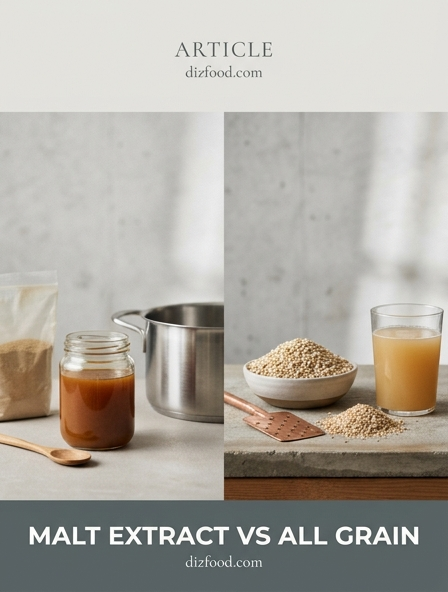
Understanding the Basics of Malt Extract and All Grain
In the world of homebrewing, the choice between malt extract and all grain brewing represents the most fundamental decision a hobbyist can make. Malt extract is essentially a concentrated form of wort-the sugary liquid extracted from malted grain. Producers perform the mashing process on a massive industrial scale, then dehydrate the resulting liquid into a thick syrup known as Liquid Malt Extract (LME) or a fine powder called Dry Malt Extract (DME). This allows the homebrewer to skip the most labor-intensive step of brewing: converting starches into fermentable sugars.
Conversely, all grain brewing is the traditional method utilized by professional craft breweries. Instead of using a pre-made concentrate, the brewer starts with raw, crushed malted barley. This process involves "mashing," where the grains are steeped in hot water at specific temperatures to activate enzymes. These enzymes break down the grain starches into the sugars that yeast will eventually consume to produce alcohol and carbonation. While malt extract is often viewed as the entry point for beginners due to its simplicity, all grain brewing is seen as the ultimate expression of the craft, offering a deeper connection to the agricultural roots of beer. Both methods result in high-quality beverages, but they cater to different philosophies regarding time, control, and the hands-on nature of the kitchen experience.
The Core Differences Between Extract and All Grain Brewing
The primary distinction between these two methods lies in the "mash" phase. In an extract batch, the "mashing" has already been completed by the manufacturer. The brewer simply dissolves the extract in water and brings it to a boil. In an all grain setup, the brewer is responsible for the chemistry of the mash, managing water-to-grain ratios, pH levels, and temperature rests to achieve a specific sugar profile. This fundamental difference affects every subsequent stage of the brew day, from the volume of water required to the physical exertion involved in handling ingredients.
- Ingredient Composition: Extract brewing relies on concentrated syrups or powders, while all grain uses whole or crushed cereal grains.
- Enzymatic Conversion: All grain requires a 60-to-90-minute mash to convert starches; extract brewing bypasses this entirely.
- Wort Volume: Extract brewers often perform "partial boils" and top up with water later, whereas all grain brewers typically boil the full volume of the final product.
- Customization: All grain offers infinite control over the fermentability and body of the beer, while extract is limited by the profile chosen by the manufacturer.
Ultimately, extract brewing is about assembly and boiling, whereas all grain brewing is about extraction and conversion. Choosing between them depends on whether you view brewing as a culinary assembly task or a raw manufacturing process.
Time Efficiency Comparing Extract vs All Grain Methods
For many modern homebrewers, time is the most precious resource. Extract brewing is significantly faster, making it an ideal choice for a weeknight activity. A typical extract brew day, from setup to cleanup, can often be completed in two to three hours. Since the mash step is eliminated, the brewer can move straight to the boil. This efficiency makes it easier to fit the hobby into a busy lifestyle without sacrificing an entire Saturday to the kitchen or garage.
- Setup: Extract requires less equipment and shorter prep time.
- The Process: All grain requires a 60-minute mash and a 15-to-30-minute "sparge" (rinsing the grains), adding nearly two hours to the process before the boil even begins.
- Heating Time: All grain involves heating much larger volumes of water, which can take an additional 30 to 45 minutes depending on the burner's strength.
- Cleanup: All grain produces significant "spent grain" waste, which must be hauled away and cleaned out of the mash tun, adding further labor.
An all grain brew day usually spans six to eight hours. While many enjoy the slow, methodical pace of a full day spent brewing, those who prefer to see results quickly will find extract brewing far more accommodating. The time saved in extract brewing allows for more frequent batches, which can be beneficial for those looking to practice fermentation techniques and yeast management.
Essential Equipment Needed for Each Brewing Style
The equipment requirements for extract brewing are minimal, making it accessible for those with limited kitchen space. At its most basic, an extract brewer needs a large stockpot, a fermenter, and a thermometer. Because extract brewing often utilizes a partial boil, a standard kitchen stove is usually sufficient to bring three gallons of liquid to a boil. This low barrier to entry is one of the main reasons new brewers start with extract kits.
| Equipment Item | Extract Brewing | All Grain Brewing |
|---|---|---|
| Brew Kettle | 3-5 Gallons | 8-10+ Gallons |
| Mash Tun | Not Required | Essential (Insulated) |
| Heat Source | Kitchen Stove | Propane Burner or Induction |
| Wort Chiller | Optional | Highly Recommended |
| Grain Mill | Not Required | Optional/Recommended |
All grain brewing necessitates a more substantial investment. Because you are rinsing sugars from a large bed of grain, you need a mash tun-typically a modified insulated cooler or a dedicated stainless steel vessel with a false bottom. Additionally, because you are boiling the full volume of the beer (usually 6 to 7 gallons for a 5-gallon batch), a standard indoor stove rarely provides enough BTUs to maintain a vigorous boil, often requiring a dedicated outdoor propane burner or a high-wattage electric system. The sheer footprint of all grain equipment can quickly take over a small kitchen or utility room.
Analyzing Flavor and Quality in Homebrewing Techniques
A common debate in the brewing community is whether all grain beer tastes "better" than extract beer. In the past, extract beers were often criticized for having a "twang"-a metallic or overly sweet aftertaste caused by old or poor-quality extract. However, modern manufacturing has improved extract quality significantly. If the extract is fresh, it is possible to produce award-winning beer that is indistinguishable from all grain versions in many styles, particularly those with heavy hop or malt profiles like Stouts or IPAs.
Where all grain truly shines is in delicate, malt-forward styles like Pilsners, Helles, or Light Lagers. Because the brewer has total control over the grain bill and the mash temperature, they can achieve a "crispness" and a specific fermentability that is difficult to replicate with extract. Extract tends to have a fixed fermentability, which can sometimes result in a finished beer that is slightly more full-bodied or sweeter than intended. Furthermore, the ability to use specialized grains that cannot be steeped-such as Flaked Oats or Munich malt-allows all grain brewers to create complex layers of flavor and mouthfeel that extract brewers can only approximate. While extract provides consistency, all grain provides the nuance and "fresh-baked bread" aromatics that define world-class beer.
Cost Analysis of Malt Extract Versus Bulk Grain
When looking at the long-term economics of homebrewing, the cost structures of extract and all grain are inversely related. Extract brewing has a low initial equipment cost but a high "per-batch" cost. Malt extract is an expensive ingredient because you are paying for the manufacturer's labor, energy, and packaging. A typical five-gallon batch using extract might cost between $40 and $60 in ingredients alone.
All grain brewing requires a much higher upfront investment in gear, but the cost per batch is significantly lower. Raw malted barley purchased in 50-pound sacks can reduce the grain cost to under a dollar per pound. For a standard five-gallon batch, an all grain brewer might spend only $15 to $25 on ingredients. Over time, the savings on ingredients will eventually "pay off" the cost of the mash tun and larger kettle.
- Extract: Best for occasional brewers who don't want to store large quantities of ingredients.
- All Grain: Best for high-volume brewers who can leverage bulk purchasing.
- Shipping: Dry extract is light and cheap to ship, whereas grain is heavy and can incur high shipping fees if not bought locally.
For the budget-conscious brewer who produces beer every month, all grain is the clear winner. However, for the casual hobbyist who brews only a few times a year, the simplicity and low storage requirements of extract may outweigh the ingredient savings.
Recipe Customization and Control for Advanced Brewers
Recipe customization is the "holy grail" for many advanced brewers, and this is where all grain brewing is unparalleled. When brewing with all grain, you are the master of the sugar profile. By adjusting the mash temperature by just two or three degrees, you can dictate whether the yeast produces a dry, thin beer or a rich, chewy one. This level of precision allows for the fine-tuning of a "signature" house ale that extract simply cannot match.
Furthermore, all grain brewing allows for the use of adjuncts and alternative grains. Want to brew a beer with 30% flaked rye or raw wheat? In an all grain system, you simply add it to the mash. Extract brewers are limited to what they can "steep" in a mesh bag, which generally only includes specialty colored grains like Caramel or Roasted Barley. These steeping grains add flavor and color but do not provide fermentable sugars through enzymatic conversion. All grain brewers can also manipulate water chemistry more effectively, adjusting calcium, magnesium, and sulfate levels to accentuate bitterness or maltiness, a process that is much more complicated when using extract that already contains the mineral profile of the manufacturer's water source.
The Complexity Factor Learning the All Grain Process
The transition from extract to all grain is often described as moving from "cooking with a box mix" to "cooking from scratch." The complexity factor increases exponentially because there are more variables to manage and more things that can go wrong. A successful all grain brew requires an understanding of "strike water" temperatures-calculating exactly how hot your water must be so that when the cold grain is added, the mixture hits the target mash temperature perfectly.
The brewer must also master the art of the "lauter," which involves separating the liquid wort from the grain husks without getting a "stuck mash" (where the liquid refuses to flow). Managing the flow rate and ensuring the grain bed doesn't compact requires patience and technique. There is also the challenge of "efficiency"-calculating how much of the potential sugar you actually managed to extract from the grain. While this complexity can be intimidating for some, for others, it is the most rewarding aspect of the hobby. It transforms the kitchen into a laboratory, requiring a mix of physics, chemistry, and culinary intuition. The learning curve is steep, but the sense of accomplishment when pouring a perfect pint of all grain beer is unmatched.
Space and Storage Requirements for Homebrewers
Space is often the deciding factor for urban homebrewers or those living in apartments. Extract brewing is highly "space-efficient." A few jars of LME or bags of DME take up very little room in a pantry. The equipment-a single pot and a fermenter-can easily be tucked away in a closet. This makes it possible to maintain a brewing hobby in even the smallest living arrangements without the hobby "bleeding" into the rest of the home.
All grain brewing, however, is a space-intensive endeavor. Beyond the larger kettle and mash tun, you must account for the storage of grain. Serious all grain brewers often buy grain in 50-pound sacks to save money, which requires dry, pest-proof storage containers. You may also need a grain mill to crush the malt, a large propane tank or high-voltage electric controller, and a more robust cooling system like a copper immersion chiller. Additionally, the process generates a large amount of wet, heavy spent grain that must be disposed of immediately to avoid odors. If your kitchen is your only workspace, the footprint of all grain brewing can quickly become a point of contention with housemates or family members. Many all grain brewers eventually migrate to a garage or basement specifically to accommodate the physical scale of the equipment.
Choosing the Right Brewing Path for Your Lifestyle
Choosing between malt extract and all grain brewing ultimately comes down to an honest assessment of your lifestyle, goals, and patience. There is no "right" way to brew, only the way that best fits your current circumstances. If you are a busy professional who enjoys the reward of a home-cooked meal but doesn't want to spend all day in the kitchen, extract brewing offers a fantastic balance of quality and convenience. It allows you to focus on the "cold side" of brewing-fermentation and sanitation-which are arguably the most important factors in beer quality anyway.
On the other hand, if you view brewing as a meditative, hands-on craft and want to explore the deepest nuances of recipe design, all grain is the logical progression. It requires more time, more space, and more equipment, but it rewards the brewer with total creative freedom and a lower cost per pint. Some brewers even find a middle ground through "Partial Mash" brewing, which combines extract with a small-scale grain mash to get the best of both worlds. Regardless of the path you choose, the end goal remains the same: creating a delicious, handcrafted beverage to share with friends and family. Evaluate your space, your budget, and your free time, and you will find the brewing style that turns your kitchen into your favorite place to work.





Comments