
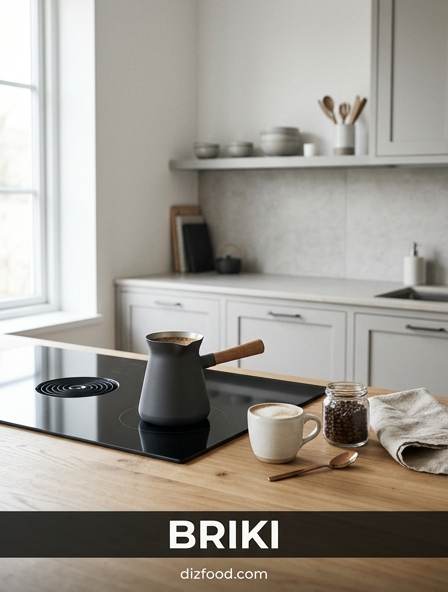
The iconic design of the narrow neck vessel, traditionally known as a briki, is the secret behind the authentic Greek coffee experience. Its unique tapered shape serves a vital functional purpose: the wide base captures heat efficiently while the narrow neck concentrates the rising pressure to create the signature thick, velvety froth called kaimaki. This specialized geometry ensures that the fine coffee grounds settle perfectly at the bottom, resulting in a rich, full-bodied cup that honors Mediterranean tradition. By mastering this heat distribution, the vessel preserves the delicate aromatic oils that define the brew's bold flavor profile. Understanding these structural nuances provides excellent context when exploring the cultural similarities and distinctions of Turkish Coffee Vs Greek Coffee.
The Anatomy of the Traditional Briki
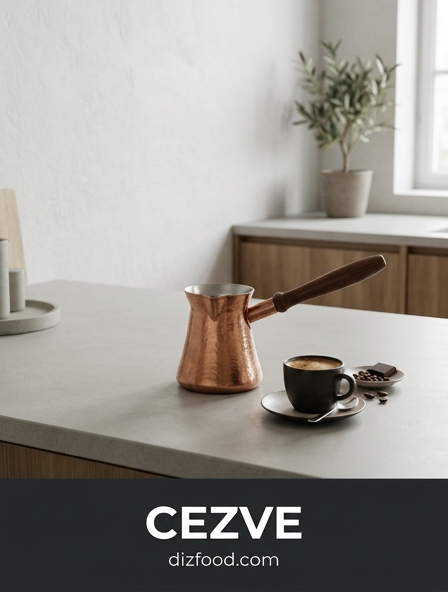
The traditional briki is a specialized vessel designed specifically for the preparation of Greek and Turkish coffee. Its construction is intentional, featuring a wide base that tapers significantly toward a narrow neck before flaring slightly at the rim. This hourglass-like silhouette is not merely aesthetic; it is a functional requirement for the unique brewing process that defines this style of coffee. Most authentic models are crafted from hammered copper or brass, metals chosen for their superior thermal properties and durability in high-heat kitchen environments.
Beyond the body, the handle is a critical anatomical feature, typically made from brass, wood, or heat-resistant plastic. It is often elongated and angled upward to keep the user's hand away from the direct heat source, which is frequently a gas flame or hot sand. The interior of a copper briki is usually lined with a thin layer of tin to prevent the copper from leaching into the acidic coffee, ensuring a safe and clean taste profile. Key components include:
- The Wide Base: Maximizes surface area for heat absorption.
- The Tapered Neck: Creates pressure and concentrates the rising foam.
- The Spout: Engineered for a precise, steady pour to preserve the kaimaki.
- The Tin Lining: Provides a non-reactive surface for the brewing liquid.
Physics of the Narrow Neck Design
The physics of the briki's narrow neck design revolves around the principles of fluid dynamics and thermal concentration. As the water and finely ground coffee mixture heats up, the wide base allows for rapid energy transfer. However, as the liquid reaches its boiling point, the narrowing of the vessel increases the velocity of the rising steam and foam. This constriction creates a controlled environment where the rising bubbles are forced into a smaller cross-sectional area, increasing the height and density of the foam layer known as the kaimaki.
This neck design also acts as a thermal regulator. By reducing the surface area at the top of the liquid, the briki minimizes heat loss through evaporation while simultaneously trapping volatile aromatic compounds. This ensures that the water reaches the necessary temperature to extract deep flavors without boiling over too quickly. The narrow opening provides a physical "choke point" that gives the brewer a several-second window to remove the pot from the heat exactly as the coffee begins its characteristic rise, preventing the delicate oils from scorching or the foam from collapsing.
The Science of the Perfect Kaimaki
Kaimaki is the thick, creamy foam that sits atop a properly brewed cup of briki coffee, serving as a hallmark of quality and skill. Scientifically, this foam is a complex emulsion of CO2 bubbles, coffee oils, and microscopic solid particles. The narrow neck of the briki is essential for stabilizing this structure. As the coffee approaches a simmer, the proteins and polysaccharides within the coffee grounds act as surfactants, lowering the surface tension of the water and allowing stable bubbles to form and accumulate.
The process of achieving the perfect kaimaki requires precise temperature management and vessel geometry. If the heat is applied too rapidly, the bubbles become large and unstable, popping quickly. Conversely, a slow rise allows for a micro-foam to develop. The following steps are critical in this scientific extraction:
- Combining ultra-fine grounds with cold water to maximize gas retention.
- Applying low heat to allow the surfactants to coat the rising air bubbles.
- Observing the rise within the narrow neck to trap oils before they dissipate.
- Pouring gently to ensure the surface tension of the foam remains intact in the cup.
Thermal Dynamics of Copper and Brass
The choice of materials in briki construction is dictated by the laws of thermodynamics. Copper is the preferred metal for professional-grade brikia because of its exceptional thermal conductivity. It allows heat to distribute evenly across the bottom and up the sides of the vessel, eliminating hot spots that could burn the coffee grounds. Brass, while slightly less conductive than copper, is often used for handles and decorative elements due to its strength and lower rate of heat transfer, which helps keep the handle cool to the touch.
A comparison of the thermal properties of common kitchen materials highlights why copper remains the industry standard for this specific brewing method. When the briki is placed on a heat source, the copper responds almost instantly to temperature adjustments, giving the brewer total control over the extraction speed. This responsiveness is vital for the "slow-cooking" method required for traditional coffee.
| Material | Thermal Conductivity (W/m·K) | Heat Retention |
|---|---|---|
| Copper | 401 | Low/Medium |
| Brass | 109 | Medium |
| Stainless Steel | 16 | High |
Concentrating Aromas Through Vessel Geometry
The geometry of the briki is intentionally designed to act as an olfactory funnel. In standard coffee brewing, many of the volatile organic compounds (VOCs) that constitute coffee's aroma are lost to the air as steam. The briki combats this through its unique inward-sloping walls. As the liquid heats, the steam carries these aromatic molecules upward, where they are concentrated in the narrow neck. This creates a high-pressure zone of aroma just below the rim, which is then released directly into the cup during the pour.
Furthermore, the shape of the briki influences the way water circulates during the heating process. A convection current forms, where the hotter liquid at the bottom rises through the center and cooler liquid sinks along the tapered sides. This internal movement ensures that the coffee grounds are constantly agitated without the need for mechanical stirring, which would break the developing foam. This natural agitation helps in the uniform release of aromatic oils, resulting in a cup that is significantly more fragrant and intensely flavored than coffee made in a straight-sided pot.
Achieving the Ideal Slow Extraction
Extraction in a briki is a race against time and temperature, where the goal is to pull maximum flavor from powder-fine grounds without introducing bitterness. Because the grounds are ground to a flour-like consistency, they have a massive surface area relative to their volume. This makes them highly susceptible to over-extraction. The briki's shape facilitates a slow, steady rise in temperature, which is the key to a balanced cup. The thick metal base acts as a heat sink, tempering the intensity of the flame.
To achieve the ideal slow extraction, brewers must follow a specific methodology that respects the vessel's design. The process usually takes between three and five minutes, depending on the size of the briki and the heat source. Factors influencing this extraction include:
- Water-to-Coffee Ratio: Typically 1:10 for a rich, viscous body.
- Grind Size: Ultra-fine to ensure rapid flavor release during the slow heat-up.
- Heat Management: Maintaining a low flame to prevent the water from reaching a rolling boil.
- Resting Time: Allowing the coffee to sit for a moment after removal from heat to settle the fines.
The Role of Shape in Foam Retention
Foam retention is perhaps the most difficult aspect of briki brewing to master, and it is here that the vessel's shape is most impactful. The upward taper of the walls creates a physical support structure for the kaimaki. As the foam rises, the narrowing walls compress the bubbles, increasing their density and making the foam more resilient. This prevents the bubbles from expanding to the point of rupture, which is common in wider pots where the surface area is too great for the foam to maintain its structural integrity.
Once the briki is removed from the heat, the flared rim plays its part. The flare allows the brewer to tilt the vessel at an angle where the foam can slide out smoothly over the liquid. If the walls were straight, the foam would likely remain trapped against the sides or collapse during the pour. The specific angle of the taper ensures that the thickest part of the foam is the last to leave the pot, allowing it to settle on top of the liquid in the cup, creating a protective seal that keeps the coffee underneath hot and flavorful for a longer duration.
Managing Sediment with Tapered Walls
Unlike drip or press coffee, briki coffee is unfiltered, meaning the grounds remain in the final cup. Managing this sediment is a primary function of the briki's tapered design. During the brewing process, the inward-slanting walls help direct the coffee particles toward the center of the convection currents. As the coffee finishes brewing and the vessel is removed from the heat, the taper encourages the heavier particles to slide down the sides and settle at the wide base, away from the pouring spout.
This "sediment trap" effect is crucial for a pleasant drinking experience. When the coffee is poured slowly, the geometry of the briki keeps the majority of the silt at the bottom of the pot. The wider base provides ample space for the sludge to collect without being easily disturbed by the movement of the liquid above it. Consequently, while some fine sediment does enter the cup, it is significantly reduced compared to brewing in a vessel with a uniform width. This allows the grounds in the cup to settle into a firm layer at the bottom, leaving the liquid above clear and drinkable.
Precision Pouring and Spout Engineering
The spout of a briki is a masterpiece of functional engineering. It is usually a small, V-shaped indentation or a slightly protruding lip located at the widest part of the rim. Its purpose is to provide a laminar flow-a smooth, non-turbulent stream of liquid-as the coffee is transferred to the cup. Because preserving the kaimaki is the ultimate goal, the spout must allow the foam to pour out first, followed by the coffee, without causing enough turbulence to mix the two or pop the delicate bubbles.
Effective pouring technique using the briki's spout involves a two-stage process. First, the brewer brings the briki close to the rim of the cup, tilting it just enough to let a portion of the foam slide out. Second, the vessel is lifted slightly while continuing the pour to allow the liquid to flow under the foam. The engineering of the spout ensures that even a tiny amount of liquid can be controlled with precision. This prevents splashing and ensures that each cup in a multi-serving brew receives an equal share of the prized foam, a task that would be impossible with a standard rounded pot rim.
Enhancing Flavor Profiles Through Shape
The relationship between the briki's shape and the final flavor profile of the coffee is profound. The vessel's design promotes a specific type of extraction that emphasizes body and sweetness over the bright acidity found in other brewing methods. By keeping the coffee grounds in constant, gentle contact with the water throughout the entire heating cycle, the briki extracts the heavy oils and caramelized sugars that give traditional coffee its signature "syrupy" mouthfeel. The shape ensures that these heavy elements are well-integrated into the brew.
Furthermore, the tapered walls prevent the over-extraction of bitter tannins. Because the heat is concentrated at the base and the top remains relatively cooler until the very end, the coffee doesn't reach a harsh, rolling boil which would typically release astringent compounds. The result is a cup that is incredibly intense and concentrated, yet remarkably smooth. The geometry essentially acts as a filter through temperature and movement, refining the flavor profile into something that is both robust and balanced, a characteristic that cannot be replicated by modern automated machines or standard stovetop pots.




Comments