
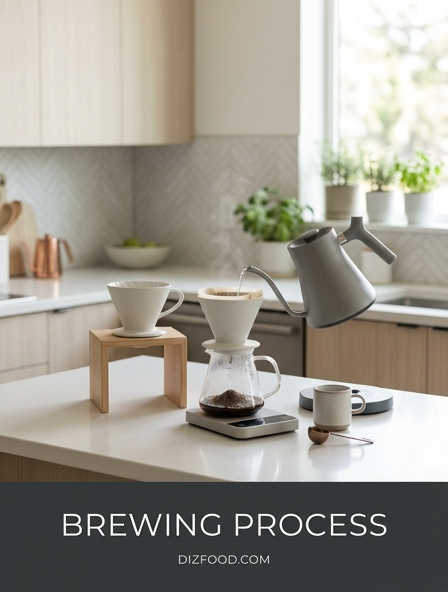
The Science of Cold Water Extraction
Cold water extraction operates on the principle of molecular solubility governed by temperature. Unlike traditional brewing, which uses thermal energy to agitate and dissolve compounds rapidly, cold brewing relies on an extended immersion period to pull flavors from the coffee grounds. This process significantly alters the chemical profile of the resulting beverage. At lower temperatures, certain oils and acids that contribute to bitterness and astringency remain trapped within the cellulose structure of the bean.
The solubility of caffeine remains relatively high even in cold water, but the volatile aromatics that define a "bright" coffee are often left behind. This results in a beverage characterized by high body and sweetness. Several factors influence the efficiency of this extraction:
- Diffusion rate of solutes into the solvent.
- The polarity of the water molecules at room temperature.
- The permeability of the coffee ground cell walls.
- The saturation levels of the water over a twenty-four-hour period.
By removing heat from the equation, the kinetic energy available for chemical reactions is lowered. This prevents the degradation of chlorogenic acids into quinic and caffeic acids, which are responsible for the sour "burnt" taste often found in over-boiled coffee. The result is a stable, concentrated liquid that maintains its flavor profile for several days.
Time versus Temperature in Brewing
The relationship between time and temperature is the most critical variable in any brewing process. In high-heat scenarios, extraction occurs in seconds or minutes because the thermal energy accelerates the movement of water molecules, allowing them to penetrate coffee particles and dissolve solids quickly. Conversely, cold brewing substitutes time for heat, extending the contact period to anywhere between 12 and 24 hours to reach a comparable extraction yield.
| Method | Temperature | Time Duration | Resulting Body |
|---|---|---|---|
| Espresso | 195°F - 205°F | 25 - 30 Seconds | Syrupy / Intense |
| Pour Over | 198°F - 202°F | 3 - 4 Minutes | Clean / Complex |
| French Press | 195°F - 200°F | 4 - 5 Minutes | Heavy / Textured |
| Cold Brew | 35°F - 70°F | 12 - 24 Hours | Smooth / Low Acid |
The inverse relationship dictates that as temperature decreases, time must increase exponentially to achieve the desired total dissolved solids. If the temperature is too low, such as inside a refrigerator, the extraction slows down even further, often requiring the full 24-hour cycle. Steeping at room temperature can accelerate the process, but it risks different enzymatic reactions that may alter the final flavor profile slightly.
Grind Size Impact on Flavor
In cold water extraction, grind size serves as the primary controller of surface area and flow rate. Because the water is not pressurized or heated, it requires a coarse, consistent grind to prevent the mixture from becoming a muddy, over-extracted silt. A coarse grind, resembling sea salt or breadcrumbs, allows water to circulate freely around the particles, ensuring a slow and even release of flavors without clogging filtration systems later in the process.
- Coarse: Ideal for long immersion, preventing the extraction of heavy tannins.
- Medium: May lead to over-extraction and bitterness if steeped beyond 12 hours.
- Fine: Not recommended, as it creates a restrictive bed that produces a cloudy, metallic taste.
Using a burr grinder is essential for achieving the uniformity required for this method. Blade grinders produce "fines"-microscopic dust particles-that extract almost instantly. These fines contribute to a harsh, "chalky" mouthfeel and can easily pass through most filters, muddying the clarity of the brew. By maintaining a large particle size, the brewer ensures that the sugars and more desirable compounds are pulled out gradually, maintaining the signature smoothness of the cold extraction method while avoiding the sediment that ruins the texture of the drink.
The Role of Oxidation in Taste
Oxidation is the chemical reaction that occurs when coffee compounds interact with oxygen, and it is the primary enemy of flavor longevity. During the long steeping process of cold brewing, the liquid is exposed to air for an extended duration. This can lead to the degradation of lipids and oils, eventually creating "stale" or "cardboard-like" off-flavors. While cold brew is more stable than hot coffee-which oxidizes rapidly as it cools-it is not immune to the effects of the atmosphere.
To mitigate oxidation, brewers often use airtight vessels during the steeping phase. Minimizing the headspace in the container reduces the amount of oxygen available to react with the coffee. Furthermore, once the grounds are filtered out, the remaining concentrate should be stored in a sealed glass bottle. The absence of heat actually helps slow down the oxidation of certain delicate oils, allowing cold brew to stay fresh in the refrigerator for up to two weeks. However, once the coffee is diluted with water or milk, the rate of flavor degradation increases. Keeping the concentrate chilled and sealed ensures that the volatile compounds remain trapped within the liquid, preserving the chocolatey and nutty notes that are the hallmark of a well-executed cold extraction.
Achieving the Perfect Water Ratio
Determining the correct water-to-coffee ratio is the foundation of a balanced brew. Cold brewing typically focuses on creating a concentrate, which offers versatility in serving. A standard starting point for a concentrate is a 1:4 or 1:5 ratio by weight. This means for every 100 grams of coffee, you would use 500 grams of water. This creates a dense, potent liquid that is intended to be diluted with water, milk, or ice before consumption.
If the goal is a ready-to-drink beverage that requires no dilution, a ratio of 1:12 or 1:15 is more appropriate. The choice depends largely on the intended use and the desired strength. Consider the following common ratios used in professional kitchens:
- 1:2 to 1:4 - Ultra-concentrated; best for coffee cocktails or baking.
- 1:5 to 1:8 - Standard concentrate; perfect for mixing with equal parts milk.
- 1:10 to 1:15 - Light and refreshing; designed for immediate consumption over ice.
Accuracy is paramount; using a digital scale ensures consistency between batches. Because coffee beans vary in density, measuring by volume (cups) rather than weight (grams) often leads to inconsistent results. Water quality also plays a role; filtered water is preferred to ensure that chlorine or mineral imbalances do not interfere with the delicate extraction of the coffee solids.
Acidity Levels in Cold Extraction
One of the most significant benefits of cold extraction is the substantial reduction in perceived acidity. Laboratory tests indicate that cold-brewed coffee can have up to 60% less acid than its heat-brewed counterparts. This is because the hot water required to extract certain acidic compounds, such as chlorogenic acid, is absent. For individuals with sensitive stomachs or acid reflux, cold brew provides a much gentler alternative that does not sacrifice the caffeine content or the depth of flavor.
The pH level of cold brew is generally higher, making it more alkaline. While this reduces the "bright" or "citrusy" notes often prized in light-roast pour-overs, it enhances the perception of sweetness and chocolate. The lack of acidity also affects the shelf life and stability of the coffee; since there are fewer acids to break down and become bitter over time, the flavor remains consistent for much longer. However, it is important to note that "acidity" in coffee terms often refers to a flavor profile rather than just pH. Cold brew shifts the profile from a sharp, phosphoric acidity to a rounded, mellow experience. This chemical shift is why many drinkers find they do not need to add sugar or cream to cold-extracted coffee, as the natural bitterness is so significantly muted.
Flash Chilling versus Slow Steeping
Flash chilling, often referred to as the Japanese Iced Coffee method, involves brewing coffee hot directly over ice. This method is fundamentally different from slow steeping, as it utilizes heat to extract the full range of acids and aromatics before immediately locking them in through rapid cooling. This preserves the bright, floral, and fruity notes that are often lost during the 24-hour cold steeping process. The ice is calculated as part of the total brew water to ensure the coffee is not over-diluted.
| Feature | Flash Chilling | Slow Steeping |
|---|---|---|
| Extraction Time | 3 - 5 Minutes | 12 - 24 Hours |
| Acidity Profile | High / Vibrant | Low / Mellow |
| Aromatic Intensity | High | Moderate |
| Body | Light / Tea-like | Heavy / Syrupy |
Slow steeping, on the other hand, creates a profile that emphasizes body and sugar browning notes. While flash chilling is ideal for showcasing the terroir of light-roast single-origin beans, slow steeping is better suited for producing a consistent, bold base for milk-based drinks. Both methods have their place in the kitchen, but they cater to very different palates and service requirements.
Essential Equipment for Smooth Results
Achieving a professional-grade cold brew requires specific tools designed to handle long immersion and fine filtration. While a simple jar and a cheesecloth can suffice, dedicated equipment ensures a cleaner cup and a more streamlined workflow. The primary requirement is a large-capacity steeping vessel, which can range from glass carafes to specialized stainless steel buckets for high-volume production. These vessels often include integrated valves for "cold drip" methods or mesh inserts for immersion.
Effective filtration is the second most important factor. To achieve a smooth, sediment-free result, brewers often utilize a multi-stage filtration process:
- Stainless Steel Mesh: Captures the largest grounds and allows oils to pass through for a fuller body.
- Paper Filters: Removes fine particles and oils, resulting in a crisp, clean clarity.
- Felt or Cloth Filters: A middle ground that offers reuseability and excellent sediment capture.
A high-quality burr grinder is also non-negotiable. Without a consistent coarse grind, the filtration process becomes frustrated by "fines" that clog the paper or mesh. Finally, a digital scale is necessary to maintain the precise water-to-coffee ratios required for repeatability. Together, these tools transform a simple kitchen setup into a controlled environment for extracting the best possible flavors from the beans.
Choosing Beans for Cold Methods
Not all coffee beans are suited for the cold extraction process. Because the method emphasizes low acidity and heavy body, beans with chocolatey, nutty, or earthy profiles tend to perform best. Medium to dark roasts are frequently preferred because the roasting process has already developed the sugars and oils that the cold water will eventually extract. Light roasts, which rely on heat to express their complex acidity and floral notes, can sometimes taste "papery" or underdeveloped when brewed cold.
When selecting beans, consider the origin and the processing method. Brazilian and Sumatran coffees are popular choices due to their naturally low acidity and bold flavor profiles. Natural process beans, which are dried with the fruit still on the seed, can add a unique fermented fruitiness to cold brew that is quite distinct. However, the most important factor is freshness. Even though cold brewing is more forgiving than espresso, using beans that were roasted within the last two to four weeks ensures that the volatile oils haven't fully oxidized. This leads to a more vibrant and aromatic concentrate. Avoiding oily, over-roasted "Italian" style beans is also recommended, as the oils can turn rancid during the long steeping time, leading to an unpleasant aftertaste.
Consistency and Filtration Techniques
The final stage of the brewing process-filtration-is where the clarity and mouthfeel are defined. Consistency in cold brew is difficult to maintain because the long steeping time makes it sensitive to environmental changes. To ensure every batch tastes the same, a standardized filtration technique must be followed. The goal is to remove all suspended solids without stripping away the desirable flavors. If the filtration is too slow, the coffee continues to extract, potentially becoming bitter.
To optimize the filtration process, follow these steps:
- Initial Decanting: Allow the grounds to settle at the bottom before pouring to avoid clogging the filter.
- Primary Filtration: Use a coarse metal sieve to remove the bulk of the spent grounds.
- Secondary Filtration: Pass the liquid through a fine paper or cloth filter to catch the remaining "sludge."
- Chilling: Immediately refrigerate the filtered liquid to stop any remaining enzymatic activity.
Some advanced techniques involve double-filtering through paper to achieve a "sparkling" clarity. It is also important to avoid squeezing the filter or the coffee grounds; doing so forces bitter tannins and fine dust into the concentrate, ruining the smooth texture. By treating the filtration with the same precision as the steeping, you ensure a professional result that is free of sediment and rich in flavor.


Comments