
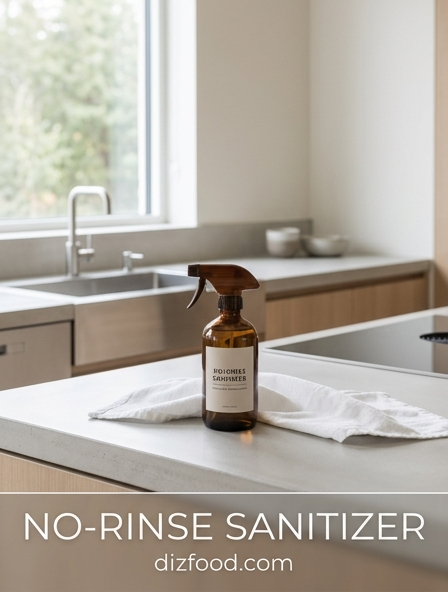
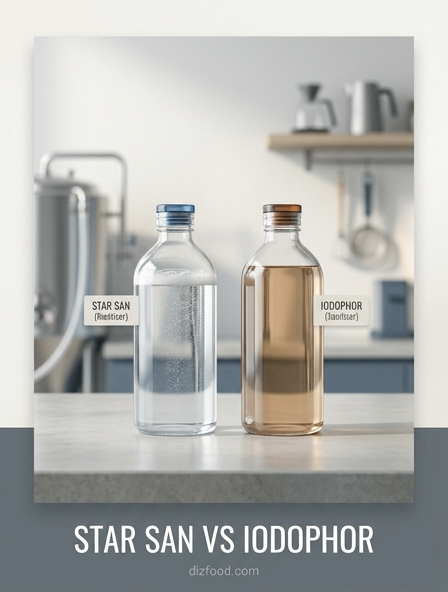
Maintaining a spotless, food-safe environment is the backbone of any successful commercial kitchen, and selecting the right no-rinse sanitizer is key to achieving professional-grade results efficiently. These specialized solutions are essential for high-traffic environments because they eliminate harmful pathogens without requiring a final water rinse, saving valuable time during a busy shift. When choosing a product, you should consider its contact time, surface compatibility, and whether it's foam-based or liquid. To help you decide which chemical profile fits your specific sanitation needs, it is vital to compare the pros and cons of Star San vs. Iodophor.
Key Properties of Food Grade Sanitizers
Food grade sanitizers are specifically engineered to eliminate 99.9% of harmful pathogens on kitchen surfaces without leaving toxic residues that could contaminate ingredients. Unlike standard household cleaners, these formulas are categorized by their "no-rinse" capability, meaning they can safely air-dry on food contact surfaces after application. The most critical properties include a high rate of evaporation and a broad-spectrum efficacy against bacteria, viruses, and fungi common in culinary environments. To be effective, these solutions must maintain stability across various water temperatures and hardness levels.
- Non-Toxic Residue: Breaks down into harmless components after application.
- Fast Acting: Achieves significant microbial reduction within seconds to minutes.
- Odorless and Flavorless: Ensures that the sensory profile of the food remains untainted.
- Stability: Remains active in the presence of minor organic soil or hard water minerals.
- Surface Safety: Formulated to be non-corrosive to plastics, glass, and treated metals.
These properties allow high-volume kitchens to maintain a rapid pace of service without compromising the health of the consumer or the integrity of the prepared dishes.
Professional Kitchen Hygiene Standards
In a professional setting, sanitization is the final step in a rigorous four-stage cleaning process: clear, clean, rinse, and sanitize. Maintaining hygiene standards requires strict adherence to protocols that prevent cross-contamination between raw and cooked foods. Professional kitchens often utilize color-coded spray bottles and dedicated wiping cloths to ensure that sanitizing agents are applied correctly to prep tables, cutting boards, and high-touch areas like refrigerator handles and faucet taps.
- Pre-Cleaning: All visible debris and grease must be removed using detergent before sanitizing.
- Solution Verification: Staff must test the concentration of the no-rinse solution every four hours.
- Application Method: Surfaces should be saturated using a spray or immersion technique.
- Air Drying: Using towels to dry sanitized surfaces is prohibited as it introduces new contaminants.
- Frequency: Food contact surfaces must be sanitized at least every four hours during continuous use.
By following these systematic steps, commercial kitchens meet the high expectations of safety auditors and protect the public from foodborne illnesses such as E. coli and Salmonella.
Sanitizing Brewing Equipment Effectively
Sanitation is perhaps the most critical variable in brewing, where the goal is to create a sterile environment for specific yeast strains to thrive while excluding wild bacteria. No-rinse sanitizers, particularly those that are acid-based, are preferred because they do not require a water rinse that might introduce new microbes into the chilled wort. In a brewery or home kitchen, this involves treating fermentation vessels, airlocks, and transfer tubing. Even the smallest amount of contamination can lead to "off-flavors" or complete batch failure.
- Immersion: Submerging small parts like bottle caps and bungs in a sanitizer bath.
- Circulation: Running sanitizer through pumps and heat exchangers for closed-system cleaning.
- Spraying: Coating the interior of large fermenters where immersion is not practical.
- Foam Management: Utilizing the foam to reach crevices and high spots in tanks.
Properly sanitized brewing equipment ensures that the delicate balance of hops and malt is preserved, leading to a consistent and safe final product. The "no-rinse" aspect is vital here, as it minimizes oxygen exposure and keeps the process streamlined.
Acid Based vs Iodine Sanitizers
Kitchens and breweries typically choose between phosphoric acid-based sanitizers and iodine-based solutions (iodophors). Both are effective no-rinse options, but they possess distinct chemical behaviors that influence their application. Acid-based sanitizers are often preferred for their ability to remove mineral scale and their long shelf life when diluted. In contrast, iodine-based sanitizers are valued for their low-foaming properties and visible color indicator, which signals when the solution is still active and at the correct concentration.
| Feature | Acid-Based Sanitizer | Iodine Sanitizer (Iodophor) |
|---|---|---|
| Primary Active Ingredient | Phosphoric Acid | Titratable Iodine |
| Foaming Level | High Foaming | Low to No Foam |
| Staining Potential | Very Low | High (can stain plastics) |
| Contact Time | 30 to 60 Seconds | 1 to 2 Minutes |
| Effective pH Range | Below 3.0 | Neutral to Slightly Acidic |
Choosing between these two depends on the specific equipment being cleaned and the preference for foam versus liquid coverage. Acid sanitizers are excellent for stainless steel, while iodophors are often used in cold-water applications.
Proper Dilution and Safety Ratios
The effectiveness of a no-rinse sanitizer is entirely dependent on the accuracy of its dilution ratio. Using too little concentrate results in an ineffective solution that fails to kill pathogens, while using too much can leave a chemical residue that exceeds safety limits, potentially leading to chemical poisoning or off-tasting food. Most professional concentrates require a very small amount of chemical per gallon of water. Precision is key, and staff should always use dedicated measuring cups or automated dispensing systems to ensure consistency.
- Read the Label: Always confirm the manufacturer's specific ratio (e.g., 1 ounce per 5 gallons).
- Water Temperature: Use cool or lukewarm water; hot water can cause the chemicals to dissipate too quickly.
- Mixing Order: Add the water to the container first, then add the chemical to prevent excessive foaming.
- Testing: Use the appropriate chemical test strips to verify the parts per million (PPM).
- Labeling: Every secondary container must be labeled with the chemical name and concentration level.
Maintaining the "sweet spot" of concentration ensures that the kitchen remains compliant with food safety regulations while maximizing the cost-efficiency of the cleaning supplies.
Minimum Contact Time Requirements
Simply spraying a surface with a no-rinse sanitizer is insufficient; the chemical must remain in contact with the surface for a specific duration to effectively neutralize microorganisms. This period, known as "wet contact time," varies depending on the chemical composition of the sanitizer. For most acid-based sanitizers, a contact time of 30 to 60 seconds is standard, whereas quaternary ammonium or iodine-based products may require up to two minutes. If the solution evaporates before this time is reached, the surface is not considered sanitized.
- Vertical Surfaces: These require foaming agents or frequent re-spraying to maintain wetness.
- Immersion: Items submerged in a basin are guaranteed to meet contact time requirements.
- Ambient Conditions: High heat or airflow in a kitchen can accelerate drying, necessitating more product.
- Surface Porosity: Non-porous surfaces like stainless steel allow for more uniform contact than wood or scratched plastic.
Failure to respect contact times is a common error in fast-paced kitchens. Managers must ensure that staff understand that the sanitizing process is not finished until the mandatory time has elapsed and the surface has air-dried naturally.
Material Compatibility for Stainless Steel
Stainless steel is the industry standard for professional kitchens due to its durability and resistance to corrosion. However, certain sanitizers can damage the "passive" protective layer of the metal if used improperly. Chlorine-based sanitizers, for instance, can cause pitting and rusting over time if the concentration is too high or if the surface is not properly rinsed after the sanitizing cycle. Acid-based sanitizers are generally safer for stainless steel as they help maintain the passivity of the metal, preventing the formation of rust spots.
- Avoid Chlorides: Minimize the use of bleach-based products on high-quality stainless steel.
- Temperature Control: Avoid using acidic sanitizers with boiling water, which can accelerate metal fatigue.
- Rinse if Necessary: If a non-no-rinse chemical is used, thorough rinsing is mandatory to prevent corrosion.
- Inspection: Regularly check for "tea staining" or dark spots, which indicate a breakdown in the metal's integrity.
Using the correct no-rinse sanitizer not only keeps the kitchen germ-free but also extends the lifespan of expensive equipment. Protecting the chromium oxide layer of the steel ensures it remains easy to clean and aesthetically pleasing for years of service.
Foaming vs Non Foaming Formulas
The choice between foaming and non-foaming no-rinse sanitizers often comes down to the specific application within the kitchen or brewery. Foaming sanitizers are highly effective for open surfaces and complex equipment because the bubbles cling to vertical walls and penetrate hard-to-reach crevices. The foam provides a visual indicator of where the sanitizer has been applied, ensuring total coverage. Non-foaming formulas, on the other hand, are designed for "clean-in-place" (CIP) systems where air pockets and bubbles could damage pumps or interfere with the flow of liquids through pipes.
| Application | Foaming Sanitizer | Non-Foaming Sanitizer |
|---|---|---|
| Prep Tables | Excellent (clings to edges) | Good (requires thorough spraying) |
| Closed Pipelines | Poor (causes cavitation) | Excellent (smooth flow) |
| Vertical Walls | Excellent (high dwell time) | Poor (runs off quickly) |
| Small Parts Soaking | Acceptable | Excellent (no residue) |
In many commercial settings, both types are kept on hand. Foaming versions are used for daily surface wipe-downs, while non-foaming versions are reserved for automated equipment cleaning and circulation through draft lines.
Health Department Compliance Guidelines
Local health departments mandate specific protocols for the use of sanitizers to ensure public safety. Compliance is not just about having the chemicals on site; it involves demonstrating that they are being used at the correct concentrations and frequencies. Health inspectors will frequently check the PPM of sanitizing buckets and spray bottles using specialized test strips. They also look for proper storage, ensuring that sanitizing chemicals are kept away from food items and clean utensils to prevent accidental contamination.
- Documentation: Maintain a log of concentration checks performed throughout the day.
- Test Kits: Keep fresh, non-expired test strips available for the specific chemical in use.
- Storage: Chemicals must be stored in a dedicated area below or away from food.
- Employee Training: Staff should be able to explain the correct dilution and contact time to an inspector.
- Safety Data Sheets (SDS): Accessible records for every chemical used must be kept on file.
Adhering to these guidelines prevents costly fines and potential closures while fostering a culture of safety and accountability within the kitchen team.
Commercial Sanitation Best Practices
To maximize the effectiveness of a no-rinse sanitizer, commercial kitchens should implement a set of best practices that go beyond basic cleaning. One fundamental rule is that you cannot sanitize a dirty surface; any organic matter like grease or food particles will neutralize the sanitizer, rendering it useless. Therefore, surfaces must be visibly clean before the sanitizer is applied. Additionally, the rotation of sanitizers can occasionally be used to prevent the development of resistant bacterial strains, though this is more common in industrial food processing than in standard restaurant kitchens.
- Daily Rotation: Ensure spray bottles are emptied, rinsed, and refilled with fresh solution daily.
- Microfiber Use: Use microfiber cloths which are more effective at trapping microbes than cotton.
- Verification: Use "kill-time" charts posted near sanitation stations for quick reference.
- Airflow: Ensure the kitchen is well-ventilated to assist in the natural air-drying process.
- Audit: Conduct internal "mock inspections" to identify weaknesses in the sanitation routine.
By treating sanitation as a precise science rather than a chore, commercial kitchens ensure a high-quality environment for both staff and patrons. Consistency is the hallmark of a truly professional sanitation program.



Comments