
Choosing between an immersion blender and a stand blender often feels like a culinary crossroads where convenience meets raw power. If you're chasing velvety soups or a quick homemade aioli, the handheld immersion blender offers incredible point-and-shoot control and direct-to-pot ease that significantly slashes cleanup time. However, when the goal is pulverizing frozen fruit, crushing ice, or achieving that commercial-grade silkiness in a green smoothie, the stand blender remains the undisputed heavyweight champion. Mastering every texture isn't just about the motor's wattage; it's about selecting the right tool for your specific workflow-balancing the nimble, space-saving agility of a wand against the high-velocity vortex of a stationary powerhouse.
| Feature | Immersion Blender | Stand Blender |
|---|---|---|
| Best For | Soups, sauces, small batches | Smoothies, ice, nut butters |
| Peak Texture | Rustic to creamy (liquid-based) | Ultra-fine, aerated, silk-smooth |
| Power Range | 200W - 800W | 500W - 1500W+ |
| Cleanup | Instant (rinse detachable wand) | Moderate (wash jar and lid) |
| Portability | High; fits in a kitchen drawer | Low; heavy countertop footprint |
| Avg. Cost | $30 - $150 | $50 - $500+ |
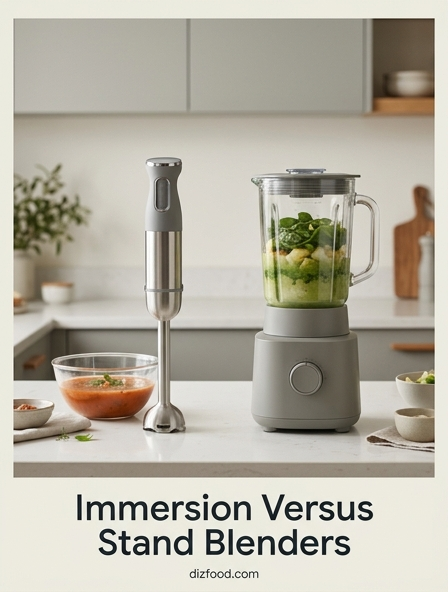
Choosing Between Immersion and Stand Blenders for Your Kitchen
Selecting the right blending appliance requires a clear understanding of your frequent culinary habits and the specific tasks you perform most often. The fundamental difference between an immersion blender, also known as a hand or stick blender, and a traditional stand blender lies in their physical design and the way they interact with ingredients. A stand blender features a stationary motor base with a jar that sits on top, while an immersion blender is a handheld device that you lower directly into a container or pot. This structural distinction dictates not only the volume of food you can process but also the texture and speed of the results.
Home cooks who prioritize speed and minimal cleanup often gravitate toward the immersion blender. It is the ideal tool for small-scale tasks like emulsifying a quick vinaigrette or blending a single serving of mayonnaise. Conversely, those who frequently prepare large batches of frozen drinks or thick smoothies find the stability and power of a stand blender indispensable. The decision often comes down to whether you prefer to bring the tool to the food or the food to the tool. While many modern kitchens house both for maximum flexibility, identifying your primary "workhorse" appliance will help you allocate your budget toward the features that matter most, such as motor longevity or blade sharpness.
Power and Performance Differences in Modern Blenders
The performance gap between handheld and countertop models is largely a function of motor size and cooling capabilities. Stand blenders are equipped with robust, heavy-duty motors housed in a large base, allowing them to sustain high speeds for several minutes without overheating. Immersion blenders, designed for portability, utilize smaller, compact motors that provide significant torque but are generally intended for short bursts of operation. When comparing the two, it is essential to look at wattage and blade velocity, as these factors determine how effectively the machine can pulverize fibrous greens or hard seeds.
| Feature | Immersion Blender | Stand Blender |
|---|---|---|
| Typical Wattage | 200W - 600W | 600W - 1500W+ |
| Blade Speed | Variable, hand-controlled | Pre-set programs and high RPM |
| Primary Strength | Emulsifying and mixing | Pulverizing and crushing |
High-performance stand blenders often utilize a "vortex" effect, pulling ingredients down into the blades through a combination of jar shape and high-speed rotation. Immersion blenders rely on the user to move the wand through the ingredients to ensure even processing. While a high-end immersion blender can certainly handle soft fruits and cooked vegetables with ease, it rarely matches the sheer pulverizing force required to turn dry grains into flour or nuts into completely smooth butter, tasks where the stand blender excels.
The Convenience of Direct-in-Pot Immersion Blending
One of the most significant advantages of the immersion blender is its ability to operate directly inside a hot cooking vessel. For enthusiasts of soups and stews, this eliminates the dangerous and messy process of transferring boiling liquids into a blender jar in batches. By simply submerging the wand into a stockpot, you can transform chunky vegetables into a silky bisque in seconds. This direct interaction provides the cook with tactile feedback, allowing for precise control over the final texture, whether you want a completely smooth puree or a rustic, chunky consistency.
This "in-place" functionality also significantly reduces the amount of dishware used during meal preparation. Instead of washing a large blender jar, lid, and tamper, you only need to rinse the detachable blending shaft of the hand blender. This makes it the superior choice for "one-pot" meals and quick weekday dinners. Furthermore, the immersion blender's ability to work in shallow containers makes it perfect for small quantities that would get lost under the blades of a large stand blender. From frothing milk for a latte to whipping up a two-egg white meringue, the convenience of the handheld design is unmatched for localized, efficient kitchen tasks.
Crushing Ice and Frozen Ingredients With Stand Blenders
When it comes to processing frozen materials, the stand blender is the undisputed champion. The structural integrity of the jar and the fixed position of the blades allow for the application of immense force against hard objects like ice cubes, frozen berries, and nuts. High-wattage stand blenders are designed to withstand the violent impact of these ingredients, quickly turning ice into a snow-like consistency that is essential for professional-grade margaritas, daiquiris, and frappes.
- Blunt Blade Technology: Many high-end stand blenders use thick, blunt blades that rely on speed rather than sharpness to pulverize frozen items.
- Tamper Integration: Stand models often include a tamper to push frozen chunks back into the blades without stopping the motor.
- Thermal Resistance: Heavy-duty jars are built to handle the friction-induced heat and the extreme cold of frozen ingredients simultaneously.
Attempting to crush ice with an immersion blender is generally discouraged by manufacturers, as the impact can easily damage the smaller blades or burn out the compact motor. Even immersion blenders with "ice-crushing" attachments often struggle with larger quantities or produce an uneven, slushy texture. The enclosed environment of a stand blender jar ensures that ice shards are contained and repeatedly cycled through the cutting zone, resulting in a uniform texture that handheld tools simply cannot replicate.
Space Saving Benefits of Compact Hand Blenders
For those living in urban apartments or kitchens with limited counter real estate, the immersion blender is a revolutionary tool. Unlike the stand blender, which requires a dedicated footprint on the counter or a significant height clearance in a pantry, the immersion blender is remarkably low-profile. Most models feature a detachable motor body and blending wand, allowing them to be tucked away in a standard kitchen drawer alongside whisks and spatulas. This portability also means it can be easily transported for catering events or used in outdoor kitchen setups where space is at a premium.
The compact nature of the tool does not necessarily mean a sacrifice in utility. Many modern hand blender kits come with slim attachments, such as whisk heads or mini-chopper bowls, which further consolidate multiple appliances into one small storage footprint. Because the device is held in the hand, it does not require the heavy, weighted base that makes stand blenders so cumbersome to move. For the minimalist cook who avoids "unitaskers" and bulky machinery, the immersion blender provides high utility with almost zero impact on the visual clutter of the kitchen workspace.
Achieving the Perfect Smoothie Texture with Countertop Models
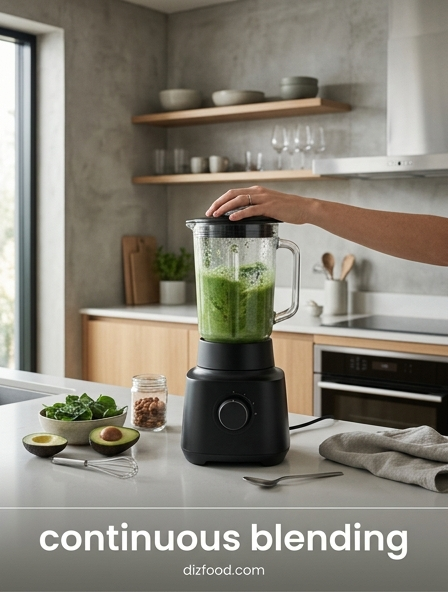
While an immersion blender can mix a simple protein shake, a high-performance stand blender is required to achieve the "liquefied" texture found in commercial smoothie bars. The key to a perfect smoothie is the aeration and total breakdown of cellular structures in leafy greens like kale or spinach, as well as the pulverization of tiny seeds from fruits like raspberries and strawberries. Stand blenders achieve this through high-velocity rotations that create a powerful vortex, ensuring every particle passes through the blades multiple times.
The result is a beverage that is perfectly smooth, creamy, and free of unappealing fibrous bits. Stand blenders also allow for the gradual addition of liquids or powders through a lid plug while the machine is running, which is crucial for achieving the correct viscosity. Furthermore, the pre-programmed "smoothie" cycles on many modern units automatically vary the speed to pull ingredients down and then whip them at high speed for a silky finish. For those who consume daily green smoothies or rely on meal-replacement shakes, the superior homogenization provided by a countertop model justifies the extra space it occupies.
Cleaning and Maintenance Comparisons for Kitchen Blenders
Maintenance is a critical factor in the longevity of any kitchen appliance. Immersion blenders are generally considered the easiest to clean because the blending arm can be detached and rinsed under a faucet immediately after use. Many of these shafts are dishwasher safe, making cleanup nearly instantaneous. Because there are no gaskets or complicated locking mechanisms on the wand itself, there are fewer places for food particles to hide, reducing the risk of bacterial growth or cross-contamination between different recipes.
Stand blenders require a more deliberate cleaning routine. While many feature a "self-cleaning" mode-where you run the machine with warm water and a drop of dish soap-the lids, gaskets, and blade assemblies occasionally need to be disassembled for a deep clean. If food is allowed to dry under the blades of a stand blender jar, it can be difficult to reach without a specialized brush. However, stand blenders are built for durability; their motors are encased in heavy housings that protect them from spills. In contrast, the handheld nature of an immersion blender puts the motor closer to the food, requiring the user to be careful not to submerge the handle or motor unit in water, which would cause permanent electrical failure.
Versatility and Culinary Applications for Handheld Tools
Beyond simple blending, the immersion blender is a versatile culinary wand that excels in delicate emulsification and aeration. It is the gold standard for creating hollandaise sauce, homemade mayonnaise, and aioli, as the head of the blender can be positioned directly over the egg yolks to start the emulsion before slowly drawing in the oil. This level of precision is difficult to achieve in a large stand blender jar, where the ingredients might not even reach the blades in small quantities.
- Whipped Cream: Using the whisk attachment, an immersion blender can whip cream in under a minute.
- Frothing: It serves as an excellent milk frother for cappuccinos and lattes.
- Pulsing: The manual control allows for quick pulsing to make chunky salsas or pesto.
- Baby Food: Ideal for pureeing small, fresh portions of cooked vegetables for infants.
The ability to use the immersion blender in any vessel-a wide-mouth mason jar, a measuring cup, or a deep stockpot-opens up a range of applications that are simply not practical for a countertop unit. It bridges the gap between a manual whisk and a full-scale food processor, providing a middle ground of power that is perfectly suited for everyday gourmet cooking and quick flavor enhancements.
Large Batch Processing with High Capacity Stand Blenders
When cooking for a family or prepping meals for the week, volume becomes the most important factor. Stand blenders typically offer jars ranging from 48 to 72 ounces, allowing you to blend several liters of liquid at once. This is essential for making large batches of soup, gazpacho, or pancake batter. The hands-free operation of a stand blender is a major benefit in a busy kitchen; once the timer is set, the cook can walk away to perform other tasks, whereas an immersion blender requires constant physical presence and manual effort.
High-capacity blenders are also designed with safety features meant for large volumes, such as locking lids and heavy bases that prevent the machine from "walking" across the counter during high-speed operation. For entertaining, the stand blender is the primary tool for frozen cocktails or large-format dips like hummus. Trying to process three pounds of chickpeas with a hand blender is not only exhausting for the user but can also strain the motor of the device. The stand blender's ability to maintain high speed under a heavy load makes it the heavy-lifter of the kitchen, designed to handle the weight and resistance of bulk ingredients without losing efficiency.
Determining the Best Value for Your Cooking Style
The "best" blender is ultimately defined by your specific culinary needs and frequency of use. If you are a casual cook who primarily makes pureed soups once a week or occasionally emulsifies a dressing, a mid-range immersion blender offers incredible value. It provides the necessary functionality without taking up counter space or requiring a large financial investment. Many high-quality stick blenders are available at a fraction of the cost of a high-performance stand blender, making them an accessible entry point for improving your cooking kit.
However, if your lifestyle involves daily smoothies, frequent nut butter production, or heavy ice crushing, a premium stand blender is a worthwhile investment that will pay for itself in durability and performance. While the initial cost is higher, the versatility in texture and the ability to process large volumes quickly make it a cornerstone of a functional kitchen. When determining value, consider not just the price tag, but the "cost per use." A stand blender that lasts ten years through daily heavy use is often a better value than a series of cheaper handheld models that may burn out when pushed beyond their design limits. Evaluate your most frequent recipes, your available storage, and your tolerance for cleanup to choose the tool that best supports your cooking journey.

Comments