
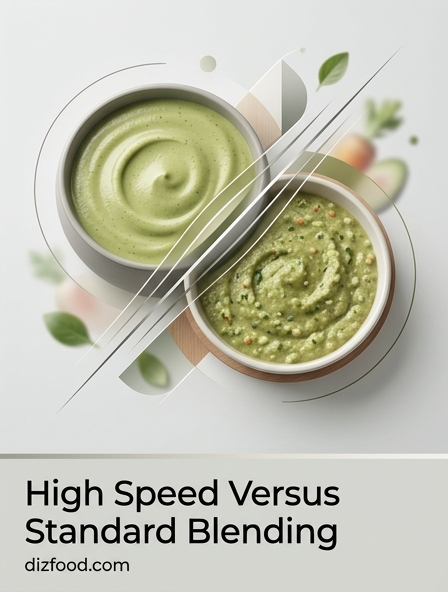
When it comes to elevating your culinary game, the debate between high-speed and standard blenders centers on the science of texture and cellular breakdown. A standard blender is a reliable kitchen staple, perfect for aerating protein shakes and crushing soft fruits for a quick morning fix. However, if you are chasing the velvety consistency of professional-grade purées, nut butters, or steaming-hot soups made via friction, the high-speed blender is a non-negotiable upgrade. By utilizing high-wattage motors and sheer kinetic force, these powerhouses don't just chop ingredients-they pulverize fibers and seeds at a microscopic level. Choosing the right tool depends on whether you need a simple mixing assistant or a versatile machine capable of transforming tough, fibrous greens into liquid silk.
| Feature | Standard Blender | High-Speed Blender |
|---|---|---|
| Motor Power | 300 - 700 Watts | 1,000 - 1,500+ Watts |
| Blade Speed (RPM) | Approx. 10,000 - 15,000 | 20,000 - 30,000+ RPM |
| Texture Quality | Grainy; struggles with skins/seeds | Ultra-smooth; pulverizes all solids |
| Versatility | Basic smoothies and soft food | Flours, nut butters, hot soups, dough |
| Build & Longevity | Plastic components; short duty cycle | Metal drives; commercial-grade durability |
| Best For | Occasional use; budget-conscious users | Daily power-users; culinary enthusiasts |
The Core Differences in Motor Power and RPM
The primary distinction between high-speed and standard blenders lies in their mechanical capabilities, specifically measured through wattage and rotations per minute (RPM). Standard blenders typically operate with motors ranging from 300 to 700 watts. These machines are designed for light tasks, moving blades at speeds sufficient to circulate liquids and soft foods but often struggling when faced with dense resistance. Because the RPM is relatively low, these units rely on the sharpness of the blades to cut through ingredients rather than sheer force.
In contrast, high-speed blenders are engineered with heavy-duty motors that often exceed 1,000 to 1,500 watts. These powerful engines can propel blades at speeds surpassing 20,000 to 30,000 RPM. At this velocity, the blades do not just cut; they pulverize cell walls through impact. This allows the machine to maintain its speed even when the pitcher is packed with frozen fruit or fibrous vegetables. The following table summarizes these technical differences:
| Feature | Standard Blender | High-Speed Blender |
|---|---|---|
| Average Wattage | 300W - 700W | 1000W - 1800W+ |
| Typical RPM | 5,000 - 15,000 | 20,000 - 38,000 |
| Blade Action | Cutting/Slicing | Pulverizing/Impact |
Texture Results Comparing Smoothies and Purees
When it comes to the final product, the disparity in texture between these two appliance categories is immediately noticeable. Standard blenders often produce "textured" smoothies where small fragments of kale, berry seeds, or ice crystals remain palpable on the tongue. While perfectly acceptable for simple milkshakes or soft fruit blends, these machines frequently leave behind a pulp-like consistency that can be unappealing in more complex recipes. Users often find themselves "chewing" their drinks when using tough, leafy greens.
High-speed blenders excel at creating a micro-smooth consistency that standard models simply cannot replicate. By breaking down ingredients at a cellular level, they transform fibrous stalks and hard seeds into a completely homogenous liquid. This is particularly vital for professional-grade purees and silken soups. The results of high-speed blending are characterized by:
- Total emulsification of fats and liquids, preventing separation.
- Complete breakdown of blackberry and raspberry seeds.
- A creamy mouthfeel in dairy-free alternatives like cashew cream.
- Aerated, light textures in mousses and foams.
For those who prioritize a "velvet" finish in their culinary creations, the high-speed motor is the only tool capable of achieving that specific professional standard without the need for manual straining through a fine-mesh sieve or nut milk bag.
Nutrient Retention and Heat Friction Factors
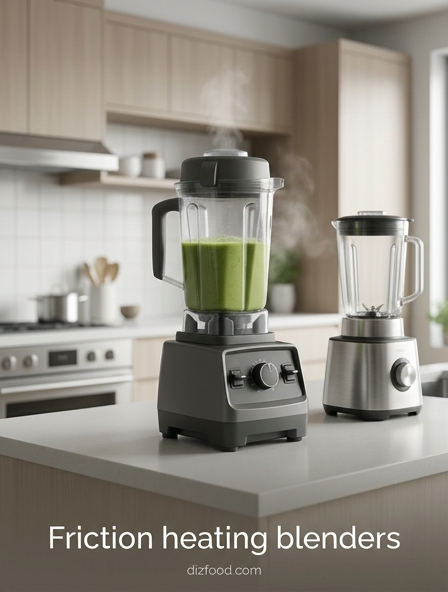
The relationship between blending speed and nutritional value is a topic of significant debate in the health community. High-speed blenders generate a substantial amount of friction due to the rapid movement of the blades. If left running for several minutes, this friction can actually cook the contents of the pitcher, turning raw vegetables into steaming hot soup. While this is a convenient feature for some, the heat generated can potentially degrade certain heat-sensitive enzymes and vitamins, such as Vitamin C, if the blending cycle is excessively long.
However, high-speed blenders also offer a nutritional advantage by rupturing the cell walls of tough plants. This process makes phytonutrients more bioavailable, allowing the body to absorb minerals that might otherwise remain trapped in undigested fiber. Standard blenders, which operate at lower speeds, generate very little heat and are less likely to oxidize ingredients. Because they take longer to process tough items, the ingredients are exposed to oxygen for a more extended period, which can also lead to nutrient loss. Ultimately, the best way to retain nutrients in a high-speed model is to blend for the shortest time necessary to achieve the desired texture, utilizing the power to minimize the total duration of exposure to both heat and air.
Versatility with Hard Ingredients and Dry Goods
Standard blenders are largely limited to wet applications. Attempting to grind hard grains or turn granulated sugar into powder in a standard unit can result in scratched plastic jars, dull blades, or a burnt-out motor. These machines require a significant amount of liquid to create a vortex that pulls ingredients down into the blades. Without sufficient fluid, the ingredients simply sit on top of the blades, resulting in uneven processing and localized overheating of the motor.
High-speed blenders function as multi-purpose kitchen robots. Their torque is high enough to process dry ingredients into fine powders and thick pastes with minimal or no added liquid. This versatility opens up a wide range of kitchen tasks that would otherwise require separate appliances. Common dry and hard-ingredient tasks include:
- Milling whole wheat or oats into fine flour.
- Grinding coffee beans to a specific coarse or fine grit.
- Crushing ice into a "snow" consistency for cocktails or desserts.
- Turning roasted nuts into smooth, drippy nut butters.
- Processing granulated sugar into confectioners' sugar.
The ability to handle these "extreme" ingredients makes the high-speed blender a replacement for spice grinders, grain mills, and even food processors in certain contexts, justifying the higher initial investment for home cooks who experiment with diverse textures.
Durability and Long Term Motor Performance
The build quality of a blender is often reflective of its price point and intended use. Standard blenders are frequently constructed with plastic drive sockets and smaller cooling fans. These components are prone to wear and tear, especially if the user frequently pushes the machine beyond its intended limits by blending frozen items or thick doughs. Over time, the plastic gears can strip, or the motor can overheat, leading to a permanent "burning" smell and eventual mechanical failure.
High-speed blenders are built for longevity and heavy daily use. They often feature all-metal drive systems, where the connection between the motor and the blade is steel-on-steel. This prevents stripping and ensures that the full power of the motor is transferred to the blades. Additionally, these units are equipped with advanced cooling systems and thermal sensors that automatically shut the machine down if it begins to overheat, protecting the internal electronics. Many high-end brands offer warranties ranging from five to ten years, acknowledging that their motors are designed to withstand thousands of cycles. While a standard blender might be replaced every two to three years in a busy kitchen, a high-speed model is often viewed as a "lifetime" investment, providing consistent performance for over a decade with proper care.
Noise Level Comparisons Between Blender Types
One of the most significant trade-offs for power is the acoustic output. High-speed blenders are notoriously loud, often reaching decibel levels between 80 and 100 dB. This is comparable to a lawnmower or a handheld drill. The sound is a combination of the high-wattage motor's whine and the physical impact of the blades hitting hard ingredients at hundreds of miles per hour. For users in small apartments or those who blend early in the morning while others are sleeping, this noise can be a major deterrent.
Standard blenders are considerably quieter, generally operating in the 65 to 75 dB range. While they still make noise, it is a lower-pitched hum that is less likely to vibrate through walls or floors. Some manufacturers of high-speed blenders have attempted to mitigate this issue by including sound enclosures-large plastic domes that sit over the pitcher to dampen the noise. However, these enclosures increase the physical footprint of the appliance significantly. When choosing between types, users must weigh the desire for a perfect smoothie against the reality of the auditory environment in their home. In a professional kitchen, noise is rarely a concern, but for a domestic setting, the "jet engine" sound of a high-speed motor is a factor that cannot be ignored.
Cleaning Efficiency and Maintenance Requirements
Maintenance routines differ based on the design of the blade assembly. Many standard blenders feature a removable blade base with a rubber gasket. While this allows for deep cleaning of the individual parts, it also introduces the risk of leaks if not reassembled correctly. The rubber gaskets can also degrade over time or trap food particles and bacteria if they are not scrubbed thoroughly after every use. These models usually require manual scrubbing of the jar and base, which can be tedious given the sharp edges of the blades.
High-speed blenders typically utilize a "sealed" design where the blades are permanently integrated into the pitcher. This design is optimized for a self-cleaning cycle, which is one of the most popular features of these high-end machines. To clean a high-speed blender, the user simply fills the jar halfway with warm water, adds a drop of dish soap, and runs the machine on high for 30 to 60 seconds. The centrifugal force creates a powerful vortex that reaches under the blades and into the corners of the jar, effectively sanitizing the unit. Because the blades are not meant to be removed, there are fewer small parts to lose or break. Regular maintenance is generally limited to wiping down the motor base and ensuring the drive socket remains free of debris.
Standard Blending for Simple Kitchen Tasks
Despite the popularity of high-performance appliances, standard blenders remain a staple in many kitchens because they are perfectly suited for common, low-resistance tasks. Not every culinary job requires the pulverizing power of a 2-horsepower motor. For many users, a blender is primarily used for mixing soft fruits, making protein shakes, or preparing thin batters like crepes or pancakes. In these scenarios, a standard blender is actually more efficient and easier to handle.
Standard blenders are also ideal for tasks where you want to retain some texture. For example, when making a chunky salsa or a rustic pesto, the lower RPM of a standard motor allows for better control, preventing the ingredients from being turned into a liquid puree. Furthermore, the cost-to-utility ratio for a casual user is high; a standard model can be purchased for a fraction of the price of a high-speed unit. For someone who only blends once a week or primarily handles soft ingredients, the high-speed option represents an unnecessary expense. Key tasks where standard blenders shine include:
- Mixing powder-based supplements into water or milk.
- Whipping up eggs for large batches of omelets.
- Pureeing soft, cooked vegetables for baby food.
- Creating frothy iced coffees and simple fruit lassis.
High Speed Advantages for Professional Results
For culinary enthusiasts and professionals, the high-speed blender is an indispensable tool that transcends basic mixing. The primary advantage is the ability to achieve "molecular" consistency, which is essential for high-end cooking. If a recipe calls for a sauce to be perfectly smooth without being passed through a chinois, only a high-speed motor can deliver that result. These machines allow chefs to experiment with modernist techniques, such as creating stable emulsions without heavy stabilizers or making hot soups directly in the blender through friction heat.
The efficiency of a high-speed model also translates to time savings in a busy kitchen environment. Ingredients that would take several minutes to process in a standard blender are pulverized in seconds. This speed is particularly beneficial when working with frozen components, as the blend happens so quickly that the ingredients don't have time to melt, resulting in a thicker, colder sorbet or frozen cocktail. Additionally, the ability to create plant-based milks and flours from scratch allows for greater control over ingredients and costs. The professional-grade result is not just about texture, but about the expanded culinary possibilities that a standard machine simply cannot facilitate due to its mechanical limitations.
Choosing the Right Blender for Your Lifestyle
Selecting between a high-speed and standard blender ultimately depends on your dietary habits, kitchen space, and budget. If your daily routine involves heavy green smoothies with kale, ginger, and frozen berries, a high-speed blender is a worthwhile investment that will save time and provide a more enjoyable drinking experience. Similarly, if you are moving toward a plant-based diet and intend to make your own nut butters, milks, and vegan cheeses, the power of a high-speed motor is non-negotiable. However, these machines are bulky and require significant counter clearance, which may be a drawback in smaller kitchens.
On the other hand, if your blending needs are occasional or limited to soft foods, a standard blender is a practical and economical choice. It is lighter, easier to store, and significantly quieter. Before making a purchase, consider the following checklist:
- Frequency: Do you blend daily or once a month?
- Ingredients: Will you be using hard nuts, seeds, and tough greens?
- Budget: Are you prepared to spend $300-$600 for a high-speed model, or is $50-$100 more appropriate?
- Noise: Do you have neighbors or family members who will be disturbed by high decibel levels?
By assessing these factors, you can ensure that you choose a tool that complements your lifestyle without overpaying for features you may never use.


Comments