
Finding the sweet spot between a standard kitchen appliance and a commercial-grade powerhouse depends entirely on how you treat your ingredients. While home blenders are fantastic for quick smoothies and soft fruits, professional-grade models offer the raw motor power and high-speed torque necessary to pulverize fibrous greens, nuts, and frozen solids into a perfectly smooth, microscopic consistency. Choosing the right wattage isn't just about speed; it's about mechanical endurance and the ability to achieve total nutrient extraction without overheating the motor during heavy-duty tasks. Whether you are a casual meal-prepper or a culinary enthusiast, understanding where home convenience meets industrial performance ensures you get the maximum flavor and best texture out of every recipe.
| Feature | Home Blenders | Professional Blenders |
|---|---|---|
| Motor Power | 300 - 900 Watts (0.5 - 1.2 HP) | 1200 - 1800+ Watts (2.0 - 3.5 HP) |
| Blade Velocity | 10,000 - 18,000 RPM | 22,000 - 37,000+ RPM |
| Duty Cycle | Intermittent (60s max run time) | Continuous / Commercial-rated cooling |
| Consistency | Textured / Pulpy (Seeds remain) | Liquefied / Silky (Total emulsification) |
| Durability | Plastic drive sockets / Light use | Metal-to-metal drive / Daily heavy use |
| Best For | Soft fruits, protein shakes, sauces | Nut butters, hot soups, frozen desserts |
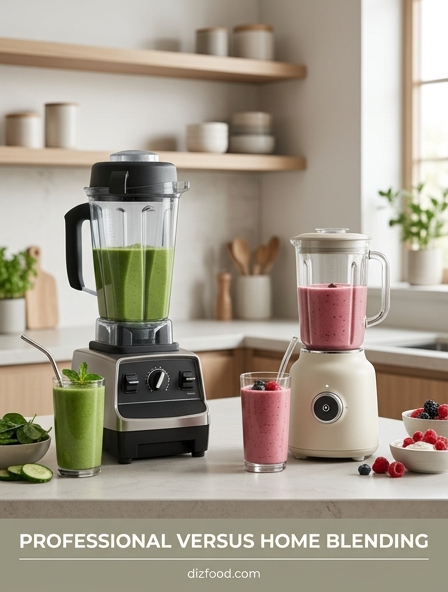
Motor Power and Performance Differences
The primary distinction between professional and home blending units lies within the motor's core architecture and its ability to maintain high torque under heavy loads. Professional-grade blenders typically feature motors ranging from 2.0 to 3.5 peak horsepower. This immense power is not merely about speed; it is about the ability to maintain consistent revolutions per minute (RPM) when the blades encounter resistance from dense ingredients like frozen fruit or thick nut butters. High-performance motors are engineered with advanced cooling systems, often utilizing larger fans and sophisticated airflow patterns to prevent overheating during back-to-back blending cycles.
In contrast, standard home blenders usually operate within the 500 to 900-watt range. While sufficient for soft fruits and liquids, these motors often struggle with sustained high-speed tasks. When a domestic motor meets significant resistance, it draws more current, which can lead to the smell of ozone or electrical strain, eventually triggering a thermal cutout. Professional machines use high-torque DC motors that can start at low speeds and ramp up efficiently, whereas cheaper home models often rely on high-speed AC motors that lack the "grunt" needed to pull thick mixtures down into the blades without cavitation.
- Professional motors: 1500+ Watts with dedicated cooling cycles.
- Home motors: 300-900 Watts designed for intermittent use.
- Torque: Professional units maintain blade speed under heavy resistance.
- Duty Cycle: Commercial units can run for several minutes without thermal shutdown.
Blade Engineering and Durability Standards
Blade design philosophy differs significantly between the two categories. Home blenders often rely on "razor-sharp" blades to slice through food. While effective initially, these blades dull over time, leading to a decrease in performance. Professional blenders, such as those used in smoothie shops, utilize blunt-edge technology. These blades are made from hardened, aircraft-grade stainless steel and are designed to pulverize ingredients through sheer impact and speed rather than cutting. This ensures that the performance remains consistent over years of heavy use, as there is no sharp edge to lose.
| Feature | Home Blenders | Professional Blenders |
|---|---|---|
| Blade Material | Standard Stainless Steel | Hardened, Laser-Cut Stainless |
| Edge Type | Sharp/Slicing | Blunt/Impact |
| Drive Socket | Plastic or Rubber | Metal-on-Metal |
| Bearing Assembly | Single Sealed | Double-Sealed Ball Bearings |
Furthermore, the connection between the motor and the blade-the drive socket-is a critical failure point. Home models frequently use plastic or rubber couplings to reduce manufacturing costs and noise. Professional models employ metal-on-metal drive systems, which provide a direct, rigid transfer of power. This construction allows for the processing of hard spices and ice without the risk of stripping the gears or melting the coupling due to friction heat.
Achieving Professional Texture at Home
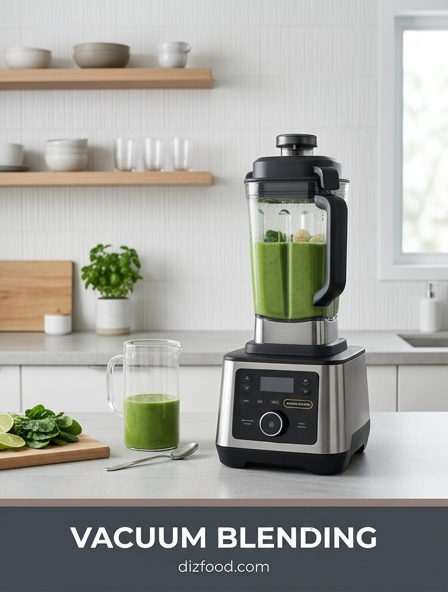
The hallmark of a professional blender is the "vortex" it creates within the container. Container geometry is scientifically engineered to fold ingredients back onto the blades repeatedly, ensuring that every particle is processed. Professional units can break down ingredients to a microscopic level, resulting in textures that are impossible to achieve with standard appliances. For example, when making a green smoothie, a professional unit will rupture the cell walls of fibrous greens like kale, resulting in a perfectly smooth liquid rather than a pulpy juice with suspended bits of fiber.
This level of emulsification is particularly evident in fats and oils. Making a hot soup in a professional blender allows the high speed of the blades to create friction heat, cooking the ingredients while simultaneously emulsifying the fats into a creamy, stable suspension. Home blenders often lack the tip speed necessary to achieve this state, leading to separations or grainy textures in sauces and dressings. The result of using a high-performance machine is a luxurious mouthfeel that mimics restaurant-quality purees and silken ganaches, which is the primary reason culinary enthusiasts justify the higher price point.
Commercial Build Quality Versus Portability
Professional blenders are built to be the "workhorses" of the kitchen. Their bases are heavy, often weighing between 10 and 15 pounds, to provide stability and prevent "walking" across the counter during high-speed operation. This weight comes from the massive copper-wound motors and reinforced housing. The materials used are typically BPA-free Tritan copolyester for the containers, which is impact-resistant and designed to withstand the thermal shock of moving from ice-cold to boiling temperatures. While they are durable, their height can be a drawback, as many professional-grade containers do not fit under standard kitchen cabinets.
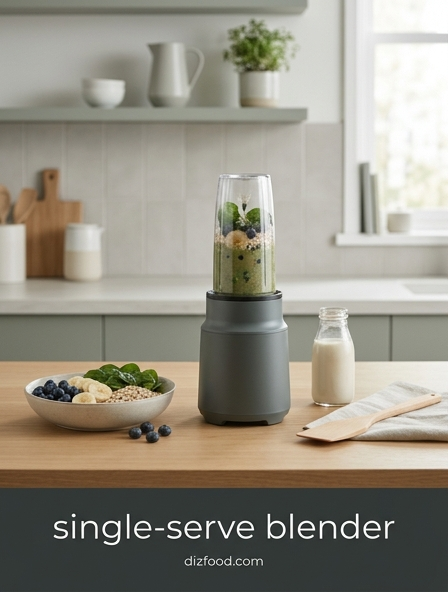
Home blenders prioritize convenience and portability. Many models feature "personal" blending cups that double as travel mugs, catering to the "grab-and-go" lifestyle. These units are lightweight and easy to store in a cupboard. However, the trade-off for this portability is a lack of structural longevity. The plastic components in home units are thinner, and the gaskets are more prone to leaking over time. For a user who blends once a week, a portable unit is ideal; however, for those who blend daily, the robust, albeit bulky, build of a commercial-grade machine ensures the device remains a permanent fixture on the countertop for decades rather than months.
Advanced Features and Variable Controls
The control interface represents another major divide. Home blenders often utilize pre-set buttons labeled "Smoothie," "Ice Crush," or "Pulse." These are designed for ease of use, allowing the user to press a button and walk away. While convenient, these presets offer limited control over the final texture, as the motor follows a hard-coded sequence of speeds. Professional blenders often include a variable speed dial, which gives the user granular control from a slow stir to a high-speed pulverize. This manual control is essential for tasks like chopping vegetables (at low speeds) or folding in delicate ingredients without liquifying them.
- Variable Speed Dial: Allows for precision control over the vortex and texture.
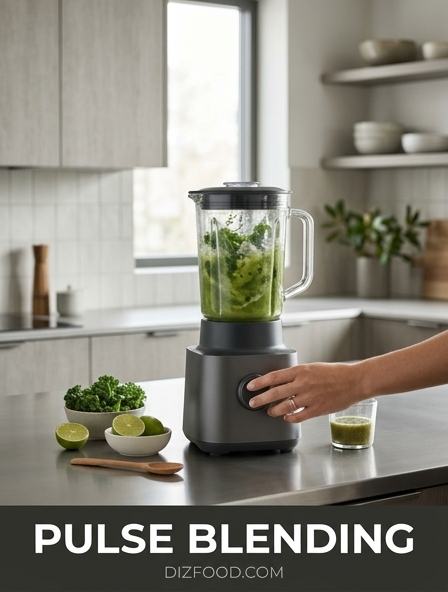
- Pulse Toggle: Provides immediate bursts of power for quick chops or refreshing a blend.
- Digital Timers: Found on high-end models to ensure consistency in recipes.
- Pre-Programmed Cycles: Professional models often include these for walk-away convenience in busy environments.
Advanced professional models may also include smart sensing technology. This feature detects the size of the container attached and adjusts the maximum power output and timing accordingly. Such features prevent the motor from overworking when using a smaller cup and ensure that the blade speed remains safe for the specific volume of food being processed. This level of sophistication is rarely found in budget-friendly domestic models.
Investment Value and Long Term Cost
At first glance, the price gap between a $50 home blender and a $500 professional unit seems astronomical. However, the investment value becomes clear when calculating the cost per use and the lifespan of the product. A cheap home blender is often considered a "disposable" appliance; if the motor burns out or the blades dull, the cost of repair often exceeds the cost of a new unit. Most budget blenders last between one and three years under regular use. This creates a cycle of replacement that can be more expensive in the long run.
Professional blenders are designed to be repaired rather than replaced. Components like the blade assembly, drive socket, and even the motor brushes are often user-replaceable. Many of these machines come with warranties spanning 7 to 10 years, covering both parts and labor. When the cost is amortized over a decade, a $500 blender costs approximately $50 per year, which is comparable to buying a new mid-range home blender every year. Additionally, the superior performance often reduces food waste, as it can process stems, seeds, and skins that would otherwise be discarded, further increasing the overall value of the investment.
Noise Levels and Operational Volume
A significant disadvantage of professional blenders is the noise. Because the motors are so powerful and the blades spin at such high velocities (sometimes exceeding 270 mph at the tip), they generate a substantial amount of decibels. In a home environment, a professional blender at full speed can be loud enough to interrupt conversation or be heard in other rooms. Manufacturers of professional units attempt to mitigate this through vibration-dampening pads and insulated motor housings, but the sheer physics of the operation makes them inherently louder than lower-powered domestic models.
To address this, some high-end professional models designed for home or commercial use come with "sound enclosures"-large plastic domes that sit over the blender to trap the noise. While highly effective, these add significant bulk to the machine. Home blenders, having smaller motors and spinning at lower speeds, are generally quieter. However, the "pitch" of a cheap home blender can often be more grating due to the high-pitched whine of a struggling motor. When choosing a blender, operational volume is a key factor for those living in apartments or those who prepare smoothies early in the morning while others are sleeping.
Processing Tough Ingredients and Fibers
The ability to handle "difficult" ingredients is where professional blenders truly shine. Ingredients that typically stall a home blender-such as frozen mango, raw ginger, or dry grains-are processed with ease by professional units. For instance, a professional blender can turn granulated sugar into powdered sugar or grind whole wheat berries into fine flour in under a minute. This versatility turns the blender into a multi-purpose tool that replaces a coffee grinder, a grain mill, and a food processor for certain tasks.
- Fibrous Greens: Complete breakdown of cell walls in kale, spinach, and celery.
- Hard Nuts: Transformation of almonds or peanuts into creamy, smooth butter without added oils.
- Frozen Solids: Ability to process 100% frozen fruit into "nice cream" without needing liquid.
- Seeds: Pulverizing blackberry or raspberry seeds so they are no longer detectable.
Home blenders often leave "grit" when processing these items. For example, a strawberry smoothie made in a home blender will contain crunchy seeds, whereas a professional unit will smash those seeds into microscopic particles. This capability is not just about texture; it also aids in nutrient absorption, as the blender does the "chewing" for you, breaking down tough plant fibers that the human digestive system might otherwise struggle to process.
Maintenance and Warranty Coverage Comparison
Maintenance for professional blenders is surprisingly simple. Most feature a self-cleaning design where the user simply adds a drop of dish soap and warm water, then runs the machine on high for 30 to 60 seconds. Because the blades are blunt and the containers are often one-piece designs, there is no need to disassemble the base or risk cutting fingers on sharp edges. In contrast, many home blenders require the user to unscrew the bottom of the jar, remove a rubber gasket, and wash the blade assembly separately, which increases the risk of leaks if not reassembled perfectly.
Warranty coverage is perhaps the most significant indicator of quality. Home blenders typically offer a 1-year limited warranty, which often excludes the motor or the "wear parts" like the blades. Professional brands like Vitamix or Blendtec offer 5, 7, or even 10-year full warranties. These warranties usually cover everything from the container to the motor base, and in many cases, the company will even pay for shipping both ways. This reflects the manufacturer's confidence in the product's durability and provides the consumer with peace of mind that their high initial investment is protected against mechanical failure.
Selecting the Best Tool for You
Choosing between a professional and a home blender depends entirely on your culinary habits and frequency of use. If your blending needs are limited to the occasional weekend milkshake or protein shake with soft powder and milk, a high-end professional unit is likely an unnecessary expense. A mid-range domestic blender will provide sufficient power and occupy less space. However, if you are moving toward a plant-based diet, enjoy making your own flours and nut butters, or use a blender daily, the professional option is the superior choice for its durability and performance.
Consider the following factors before making a purchase:
- Kitchen Space: Do you have the vertical clearance for a 20-inch tall machine?
- Noise Tolerance: Is your household sensitive to loud appliance noise?
- Texture Preference: Do you demand perfectly smooth textures, or are you okay with a little pulp?
- Budget: Are you looking for a long-term investment or a short-term solution?


Comments