
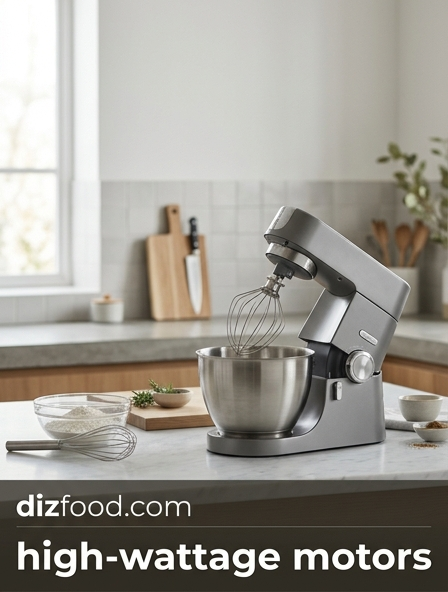
The Power Behind Professional Texture
The culinary difference between a grainy purée and a velvet-smooth sauce often lies in the wattage of the blender motor. High-wattage motors, typically ranging from 1,200 to 1,800 watts, provide the essential force required to drive blade assemblies at ultra-high speeds, sometimes exceeding 20,000 rotations per minute. This sheer mechanical power is necessary to pulverize solid particles into microscopic sizes, ensuring a mouthfeel that meets professional standards. In a commercial environment, the ability to achieve this texture quickly is not just about quality; it is about maintaining the integrity of delicate ingredients that might otherwise degrade under prolonged processing times.
- Particle Reduction: High wattage allows for sub-micron breakdown of solids.
- Emulsification: Rapid blade speed facilitates the permanent suspension of oils in liquids.
- Aeration: Powerful motors can incorporate air precisely to create stable foams and mousses.
- Standardization: High-power units ensure every batch possesses the same refined finish.
Ultimately, the motor acts as the engine of culinary creativity. By removing the physical limitations of ingredient toughness, chefs can experiment with textures that were previously impossible to achieve with standard residential equipment. This power transforms simple ingredients into sophisticated components of high-end gastronomy.
Maximizing Torque for Dense Ingredients
While raw wattage indicates the potential energy of a kitchen appliance, torque represents the actual rotational force delivered to the blades under load. When a motor encounters resistance from dense ingredients-such as frozen fruits, heavy nut butters, or thick bread doughs-it must maintain its momentum to prevent stalling. High-wattage motors are engineered with heavy-duty windings and robust magnets to maximize this torque, allowing the machine to plow through thick mixtures without "bogging down." This capability is crucial for specialized tasks like making homemade tahini or grinding soaked legumes for falafel.
| Ingredient Type | Resistance Level | Motor Requirement |
|---|---|---|
| Frozen Berries | Medium-High | High Torque / Sustained RPM |
| Nut Meats | Very High | Maximum Torque / Thermal Control |
| Fibrous Greens | Medium | High Speed / Constant Flow |
| Bread Dough | High | Low Speed / High Torque |
The relationship between torque and wattage ensures that even as the mixture thickens, the motor continues to draw enough current to overcome the physical drag. Without this mechanical advantage, the motor would overheat rapidly, leading to inconsistent results and potential hardware failure during demanding prep sessions.
Achieving Silky Smooth Consistency
Consistency is the hallmark of a high-performance kitchen. To achieve a perfectly silky result, a motor must sustain a powerful vortex that pulls ingredients down into the blades continuously. High-wattage motors are designed to keep this vortex stable even when the container is filled to capacity. This movement ensures that every seed, skin, and fiber is cycled through the cutting zone multiple times. For ingredients like raspberry seeds or tomato skins, which are notoriously difficult to liquefy, the sustained energy of a 2-horsepower motor is the only way to ensure they are fully integrated.
- Initial Impact: The high-wattage motor provides the burst of energy needed to shatter large frozen or hard chunks.
- Vortex Stabilization: Constant RPMs create a funnel effect, preventing "bridge" formation where ingredients sit above the blades.
- Shear Force Application: Rapid rotation creates intense shear stress, breaking down molecular bonds in fats and proteins.
- Final Refinement: The motor maintains speed for a polished, uniform finish across the entire batch.
This process eliminates the need for manual straining, saving time and preserving the full nutritional profile of the ingredients. The result is a consistent, premium product that remains stable over time without separating or weeping.
Efficient Heat Generation for Hot Blending
In the world of high-wattage kitchen appliances, friction is not always a waste product; it is often a functional tool. When blades spin at extreme velocities, the kinetic energy transferred to the food molecules generates significant heat. A high-wattage motor can spin blades fast enough to bring raw, cold ingredients to a steaming boil in roughly five to seven minutes. This allows for the preparation of "blender soups" and hot sauces directly in the container. The efficiency of this heating method relies entirely on the motor's ability to maintain peak performance without thermal cutout.
- Direct Energy Transfer: Mechanical energy is converted to thermal energy through molecular friction.
- Time Efficiency: Eliminates the need to transfer mixtures from a blender to a stovetop pot.
- Enzyme Preservation: Controlled heating can be stopped at specific temperatures to maintain raw food benefits.
- Sauce Activation: High heat combined with high shear activates starches and thickeners instantly.
This dual-purpose functionality-processing and cooking simultaneously-highlights the versatility of high-wattage engineering. It simplifies the workflow in busy kitchens, reducing the number of dirty dishes and shortening the total time from prep to service.
Motor Longevity and Durability Standards
Investing in a high-wattage motor is as much about durability as it is about power. Professional-grade motors are constructed with premium components designed to withstand the rigors of daily, multi-hour use. These units often feature all-metal drive sockets, sealed ball bearings, and advanced cooling fans. Unlike budget motors that use plastic components and simple bushings, high-wattage variants are built to dissipate heat effectively, preventing the internal degradation that leads to a "burnt out" motor smell and eventual failure.
| Feature | Standard Motor | High-Wattage Professional Motor |
|---|---|---|
| Drive Socket | Plastic/Nylon | Zinc Alloy or Stainless Steel |
| Cooling System | Passive Airflow | Active Radial Fans / Heat Sinks |
| Bearings | Sleeve Bushings | Dual-Sealed Ball Bearings |
| Duty Cycle | Short (1-2 mins) | Extended (10+ mins) |
By over-engineering the motor's capacity, manufacturers ensure that the machine is rarely working at its absolute limit. This "headroom" is what allows a high-wattage appliance to last for decades in a home kitchen or years in a high-volume restaurant, providing a much higher return on investment than cheaper alternatives.
Rapid Processing for Busy Kitchens
Time is the most valuable commodity in a commercial kitchen. High-wattage motors significantly reduce the duration of food preparation tasks, allowing for higher throughput and faster service. When a motor can turn a gallon of vinaigrette into a stable emulsion in thirty seconds, it frees up the prep cook for other essential duties. This speed is particularly critical during peak service hours when "made-to-order" items, such as smoothies or puréed soups, must be delivered to the pass within minutes of an order being placed.
- Reduced Prep Cycles: Tasks that take five minutes in a standard unit are finished in under sixty seconds.
- Instant Recovery: High-powered motors do not need long rest periods between batches.
- High Volume Capability: Larger containers can be processed without straining the internal circuitry.
- Labor Savings: Faster processing reduces the man-hours required for bulk prep.
The efficiency of these motors allows kitchens to operate with more agility. Instead of prepping large quantities of sauces days in advance, chefs can produce fresh batches on demand, ensuring a higher quality final product for the customer while maintaining a rapid pace of operations.
Breaking Down Fibrous Cell Walls
Many of the most nutrient-dense foods, such as kale, ginger, and wheatgrass, are encased in tough cellulose cell walls that are difficult for the human body to digest. High-wattage motors provide the mechanical "crushing" force required to rupture these cell walls, a process known as micronization. This doesn't just improve the texture; it increases the bioavailability of the nutrients contained within the cells. By breaking the food down to such a fine degree, the motor essentially performs the first stage of digestion, allowing the body to absorb vitamins and minerals more efficiently.
- Cell Wall Rupture: High-velocity impact breaks through tough plant fibers.
- Nutrient Release: Phytochemicals and chlorophyll are released from the cellular structure.
- Flavor Enhancement: Breaking down cells releases more of the ingredient's natural essence and aroma.
- Suspension: Finely milled fibers remain in suspension longer, preventing the "sludge" at the bottom of a glass.
This capability is what defines a true "nutrition extractor." Without the high wattage necessary to maintain speed against fibrous resistance, a blender merely chops the greens into smaller pieces rather than fully liquefying them, resulting in a gritty and less nutritious beverage.
Versatility From Nut Butters to Flours
A high-wattage motor transforms a single appliance into a multi-functional culinary center. The extreme power available allows for "dry milling," where whole grains like corn, rice, or wheat are ground into fine, artisanal flours. Similarly, the motor can handle the intense friction and density of grinding roasted nuts into smooth, creamy butters without the addition of extra oils. This versatility eliminates the need for separate grain mills or specialized food processors, saving valuable counter space in both home and professional kitchens.
- Grain Milling: Creating gluten-free flours from oats, chickpeas, or rice.
- Nut Processing: Crafting almond, peanut, or cashew butters with zero additives.
- Spice Grinding: Pulverizing whole cinnamon sticks or peppercorns into fine powders.
- Confectionery: Turning granulated sugar into powdered sugar for frostings and glazes.
The ability to switch from wet blending to dry grinding is a testament to the motor's engineering. Because it can maintain high RPMs under the varying resistance of different physical states, it provides the chef with a wide range of creative possibilities within a single footprint.
Preventing Motor Overload and Burnout
High-wattage motors are powerful, but they are not invincible. To ensure they remain operational under heavy loads, they are equipped with sophisticated protection systems. Modern motors utilize thermal sensors that monitor internal temperatures in real-time. If the motor begins to overheat due to an excessively thick mixture or an unusually long run time, a "trip" mechanism will automatically cut the power. This prevents the copper windings from melting and ensures the motor can be used again once it has cooled down. Understanding these limits is key to the long-term health of the equipment.
| Cause of Overload | Protective Action | Prevention Strategy |
|---|---|---|
| Excessive Thickening | Automatic Cut-off | Use of Tamper / Add Liquid |
| Low-Speed High-Load | Thermal Trip | Increase Speed to Maximize Fan |
| Air Pockets (Cavitation) | RPM Spike | Pulse or Use Tamper |
| Extended Run Time | Shut-down | Allow 15-minute Cool Down |
These safety features are a hallmark of high-quality engineering. They act as a fail-safe, protecting the user's investment from accidental misuse and ensuring that the high-wattage motor remains a reliable tool for years of service.
Engineering Consistency in Every Batch
Consistency is often the hardest thing to achieve in a kitchen, but high-wattage motors make it manageable through precise engineering. Many of these units are now paired with microprocessors that employ "load-sensing" technology. This allows the motor to detect the resistance inside the container and automatically adjust the power output to maintain a constant blade speed. Whether the container is half-empty or filled with heavy cream, the motor ensures that the blades spin at exactly the programmed RPM. This leads to predictable results that can be replicated by any staff member.
- Load Sensing: Real-time adjustments to current to keep speeds stable.
- Programmable Cycles: Pre-set timers that ramp speeds up and down for specific recipes.
- Pulse Control: Precision bursts of power for rough chopping without puréeing.
- Digital Feedback: Displays that alert the user to the exact speed and time remaining.
This level of control is what separates high-wattage professional machines from their basic counterparts. It provides a level of precision that allows for the creation of complex textures and perfectly timed results, ensuring that the final dish is identical every time it leaves the kitchen.



Comments