
When it comes to achieving the perfect bake, the battle between silicone baking mats and parchment paper is more than just a matter of convenience-it's about precision and performance. If you're aiming for the ultimate non-stick experience, silicone mats offer a durable, eco-friendly alternative that excels in heat insulation, effectively preventing the bottoms of your cookies from browning too quickly. On the other hand, parchment paper remains the king of versatility, providing an effortless, disposable solution that can be custom-trimmed for any specialty cake tin or roasting pan. Whether you prioritize the long-term cost savings of a reusable mat or the crisp edges and easy cleanup of traditional paper, understanding how these tools interact with heat will help you level up your home bakery game.
| Feature | Silicone Baking Mat | Parchment Paper |
|---|---|---|
| Reusability | 3,000+ uses; sustainable & eco-friendly. | Single-use; generates kitchen waste. |
| Heat Resistance | High (up to 480°F); provides insulation. | Moderate (up to 425°F/450°F). |
| Non-Stick Quality | Superior; ideal for sticky sugar & syrups. | Excellent; prevents fat absorption. |
| Cleanup | Requires hand washing & thorough drying. | Zero cleanup; discard after use. |
| Versatility | Fixed sizes; cannot be cut or folded. | Trimmable to fit any pan or shape. |
| Cost Impact | High initial investment; low long-term. | Low upfront cost; recurring expense. |
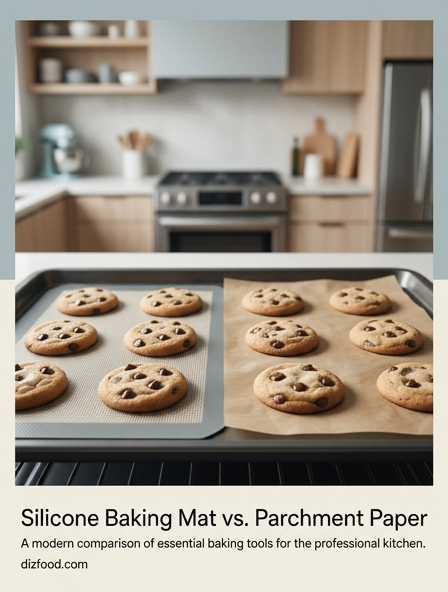
Silicone Baking Mat vs Parchment Paper Comparison
The debate between silicone baking mats and parchment paper is a fundamental consideration for both professional pastry chefs and home bakers. While both serve the primary purpose of preventing food from sticking to baking sheets, they differ significantly in material composition, tactile experience, and performance. Silicone mats are typically made from a combination of food-grade silicone and a fiberglass mesh core, providing a thick, cushioned surface that stays flat on the pan. In contrast, parchment paper is a cellulose-based product treated with silicone to make it non-stick and heat-resistant. Each tool offers distinct advantages depending on the specific culinary task at hand.
- Texture and Stability: Silicone mats are heavy and grip the pan, whereas parchment paper is lightweight and may curl or blow around in convection ovens.
- Versatility: Parchment paper can be cut to fit any size, including round cake pans or loaf tins, while silicone mats are restricted to their pre-manufactured dimensions.
- Browning: Due to their thickness, silicone mats provide more insulation, whereas parchment paper allows for faster heat transfer.
Choosing between the two often comes down to whether a baker prioritizes the convenience of a disposable product or the long-term reliability of a reusable one. Understanding these core differences is essential for achieving consistent results in the kitchen, whether you are roasting vegetables or baking delicate macarons.
Cost Differences Between Reusable and Disposable
When analyzing the financial impact of your kitchen tools, it is necessary to look at both the immediate upfront cost and the long-term cumulative expenditure. Silicone mats represent a higher initial investment but offer significant savings over several years. A high-quality silicone mat can cost anywhere from $10 to $25, while a roll of parchment paper typically retails for $4 to $7. While the paper seems cheaper at a glance, the recurring need to repurchase it eventually outweighs the one-time cost of the mat.
| Feature | Silicone Baking Mat | Parchment Paper |
|---|---|---|
| Initial Price | $10.00 - $25.00 | $4.00 - $7.00 |
| Lifespan | Up to 3,000 uses | Single use (usually) |
| Annual Cost (Approx.) | $0.00 (After purchase) | $20.00 - $50.00 |
For the frequent baker who uses their oven three to four times a week, the silicone mat pays for itself within the first few months. However, for the occasional baker who only uses the oven during holidays, a single roll of parchment paper might last for two years, making it a more sensible short-term expense. Additionally, the hidden cost of parchment includes the gas and time spent traveling to the store for replacements, a factor often overlooked in household budgeting.
Environmental Impact and Sustainability Benefits
Sustainability is increasingly becoming a deciding factor in kitchen purchases. Silicone baking mats are championed as the eco-friendly choice because they eliminate the "use-and-toss" cycle. A single mat can replace thousands of sheets of parchment paper, significantly reducing the amount of waste sent to landfills. While silicone is not biodegradable, its extreme durability means it stays out of the waste stream for many years. When a mat eventually reaches the end of its life, it can sometimes be recycled at specialized facilities, though this remains less common than standard curbside recycling.
Parchment paper presents a more complex environmental profile. While it is derived from wood pulp, it is often coated with silicone or other chemicals to make it greaseproof, which can interfere with the composting process. Many municipal composting programs do not accept silicone-coated parchment because the coating does not break down at the same rate as the paper fibers. Consequently, much of the parchment paper used in homes ends up in the trash. Even "unbleached" or "compostable" versions require energy-intensive manufacturing and shipping processes for a product that is used only once. For those looking to minimize their carbon footprint, transitioning to reusable mats is a high-impact change that requires very little effort but yields measurable results in waste reduction.
Heat Conductivity and Baking Results
The way heat moves from the oven air through the pan and into your food is significantly altered by your choice of liner. Silicone mats are thick and act as insulators. This insulation slows down the heat transfer to the bottom of your baked goods, which can be an advantage or a disadvantage depending on the recipe. For items that are prone to burning on the bottom, such as delicate sugar cookies or light-colored shortbread, silicone provides a protective barrier that ensures even, pale browning.
- Insulation Effect: Silicone prevents the bottom of the food from reaching the same high temperature as the pan surface.
- Air Flow: Parchment paper is thin enough that it doesn't significantly change the pan's heat profile, allowing for crisper edges.
- Moisture Retention: Silicone can sometimes trap a small amount of moisture underneath the food, leading to a softer bottom.
Professional bakers often prefer parchment paper when they want a crisp, golden crust on roasted vegetables or a snap on the bottom of a cookie. Because parchment is so thin, it allows the food to react almost directly with the hot metal of the baking sheet. Conversely, for "macaronage" and other items that require a perfectly flat, non-stick surface without excessive browning, the silicone mat is the industry standard. Understanding these thermal properties allows a baker to "tune" their oven results simply by switching their liner.
Non Stick Quality for Cookies and Pastries
Both silicone and parchment paper offer excellent non-stick properties, but they excel in different scenarios. Silicone mats are famous for their "slick" surface, which is virtually unmatched when dealing with high-sugar items like brittle, tuiles, or sticky buns. Because the silicone is integrated into a heavy mat, the food releases effortlessly without the liner lifting or tearing. This makes it the preferred tool for candy making and working with melted chocolate, where precision and clean release are paramount.
Parchment paper, while also non-stick, can sometimes struggle with extremely wet or high-sugar doughs, which may cause the paper to warp or ripple. However, parchment has a slight "grip" that helps certain doughs spread more naturally. For example, some bakers find that cookies baked on silicone mats spread more than those on parchment because the fat in the dough slides across the silicone more easily. This can result in thinner, flatter cookies. For pastries like croissants or puff pastry, parchment paper is often preferred because it absorbs a tiny amount of the excess butter that leaks during baking, whereas that fat will pool on a silicone mat, potentially frying the bottom of the pastry instead of letting it bake cleanly.
Ease of Cleaning and Kitchen Maintenance
The primary advantage of parchment paper is the lack of cleanup. Once the baking is finished, the paper is simply removed and discarded, leaving the baking sheet almost perfectly clean. This is a major benefit in high-volume kitchens or during busy holiday baking sessions where multiple batches are processed in rapid succession. For many home cooks, the convenience of not having to scrub a greasy pan or wash a floppy mat is worth the recurring cost of the paper.
Silicone mats, on the other hand, require manual cleaning after every use. This can be somewhat cumbersome because the mats are flexible and don't always fit easily in a standard sink or dishwasher. Furthermore, silicone has a tendency to retain a slightly oily film even after washing, especially if used for high-fat recipes. To maintain them properly, one must often use a strong degreasing dish soap and very hot water. If not dried thoroughly, they can develop a "tacky" feel over time. However, for those who dislike the accumulation of trash, the two minutes spent washing a mat is a small price to pay for a cleaner environment and a more sustainable kitchen routine. Modern mats are generally dishwasher safe, which can mitigate some of the cleaning hassle if your dishwasher has a secure spot for them.
Temperature Range and Safety Standards
Safety is a critical concern when heating any material in an oven. Most high-quality silicone baking mats are rated for temperatures ranging from -40°F to 480°F (-40°C to 250°C). This makes them incredibly versatile, allowing them to go from the freezer directly into a hot oven without cracking or melting. Because they are made from food-grade silicone and fiberglass, they do not release toxic fumes or chemicals into the food, provided they are used within their specified temperature limits. However, they should never be used under a broiler or over an open flame, as this will destroy the material.
Parchment paper has a slightly lower heat tolerance, usually maxing out around 420°F to 450°F (215°C to 230°C). If the oven temperature exceeds this limit, the paper will begin to brown, become brittle, and can eventually catch fire. This makes parchment less suitable for high-heat roasting or pizza making. It is also important to note that parchment paper should never be allowed to hang over the edges of the pan, as the proximity to the oven's heating elements can cause it to ignite. While both materials are generally recognized as safe by the FDA, users must adhere to the manufacturer's temperature guidelines to avoid scorching the materials or compromising food quality.
Storage Solutions for Small Kitchens
In a small kitchen, every square inch of storage space is valuable. The way you store your baking liners can affect the overall organization of your cabinetry. Parchment paper typically comes in a long, slender cardboard box equipped with a metal cutting edge. This box can be easily tucked into a drawer or stored upright in a pantry. While the box itself is relatively compact, it does take up permanent space until the roll is exhausted. For many, the "organized" look of a uniform box is preferable to loose kitchen items.
Silicone mats present a different storage challenge. Because they are flat and somewhat floppy, they cannot stand on their own. Homeowners have developed several creative ways to store them:
- Rolling: Rolling the mat and securing it with a rubber band or a dedicated storage ring.
- Flat Lay: Placing them flat at the bottom of a stack of baking sheets, which keeps them out of the way and perfectly flat.
- Hanging: Using a clip to hang them from the inside of a cabinet door.
While silicone mats take up very little vertical space when laid flat, they can be awkward to handle if you have a large collection. However, since you only need one or two mats to replace dozens of rolls of paper, they can actually reduce clutter in the long run by eliminating the need for bulky backup rolls of parchment.
Durability and Long Term Value
The durability of silicone mats is their most significant selling point. A premium mat is designed to withstand thousands of bake cycles without losing its non-stick properties or structural integrity. They are resistant to tearing and can handle the weight of heavy roasts or large batches of cookies without deformation. Over time, a mat may become stained from dark sauces or high-pigment ingredients like turmeric, but these stains are cosmetic and do not affect the performance of the tool. As long as you avoid using sharp knives directly on the surface, a silicone mat can last for five to ten years of regular use.
Parchment paper is, by definition, a fragile and temporary product. While some high-quality parchment can be reused once or twice if it remains clean and un-scorched, it is ultimately destined for the trash. It tears easily when wet and cannot withstand the scraping of a metal spatula as well as silicone can. From a value perspective, the "cost per use" of a silicone mat eventually drops to fractions of a cent, whereas the "cost per use" of parchment paper remains constant throughout its life. For those who view kitchen tools as an investment, the silicone mat is the clear winner in terms of longevity and financial return.
Final Verdict Which Is Best for You
Choosing between a silicone baking mat and parchment paper depends entirely on your baking style and priorities. There is no "one size fits all" answer, and many accomplished bakers choose to keep both in their pantry for different applications. The silicone mat is the superior choice for those who bake frequently, prioritize sustainability, and want a consistent, non-stick surface for delicate candies or cookies. Its durability and long-term cost savings make it a staple for the environmentally conscious and budget-minded household.
However, parchment paper remains the king of convenience and versatility. Its ability to be cut to size makes it indispensable for lining cake pans, and its disposable nature is a lifesaver during heavy kitchen sessions. If you value a crispier bottom on your baked goods or if you frequently cook at temperatures above 450°F, parchment is the better option. Ultimately, if you had to choose just one, the silicone mat offers better value and environmental benefits, but the flexibility of parchment paper ensures it will always have a place in the modern kitchen. Consider your most frequent recipes and your willingness to do dishes when making your final decision.

Comments