
Are you tired of cookies sticking to your pans or wondering if you should finally ditch the disposable rolls for a reusable alternative? Choosing the right surface can make a world of difference in your kitchen results. Whether you are aiming for perfectly browned bottoms on your sourdough or effortless cleanup after a delicate batch of macarons, understanding the unique benefits of each option is essential to mastering your craft. While one offers unbeatable convenience and crisp texture, the other excels in eco-friendly longevity and even heat distribution. To help you decide which tool fits your specific needs, explore our comprehensive breakdown of Silicone Baking Mat vs. Parchment Paper.
Understanding Silicone Baking Mat Basics
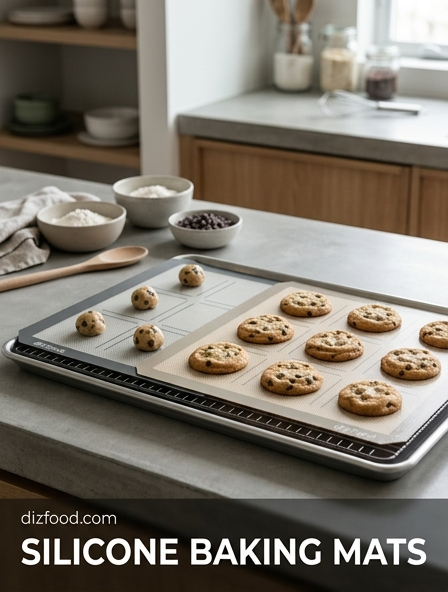
Silicone baking mats are essential modern kitchen tools designed to provide a reliable non-stick surface for various baking tasks. Typically constructed from a combination of high-quality, food-grade silicone and a flexible fiberglass mesh core, these mats are engineered to withstand extreme temperatures ranging from freezing to high oven heat. The fiberglass core ensures even heat distribution, while the silicone exterior prevents food from adhering to the surface without the need for additional grease, oils, or flour. These mats are designed to fit standard baking sheets, offering a stable and flat surface that simplifies the process of making delicate items like macarons or sticky cookies.
Unlike disposable alternatives, silicone mats are heavy-duty and reusable, making them a staple in professional and home kitchens alike. They are generally BPA-free and chemically inert, meaning they do not react with food or impart unwanted flavors during the baking process. Understanding their construction helps bakers appreciate their durability and specific performance characteristics. When used correctly, they provide a consistent barrier that protects both the food and the baking pan, extending the life of your bakeware while ensuring a clean release for every batch.
Key Benefits of Using Parchment Paper
Parchment paper remains a favorite in the culinary world due to its unparalleled versatility and convenience. This cellulose-based paper is treated with silicone to create a moisture-resistant and heat-resistant surface that excels in various kitchen applications. One of the primary benefits is its adaptability; it can be easily cut, folded, or shaped to fit any pan, including round cake tins and deep roasting trays. Because it is disposable, parchment paper eliminates the need for post-baking scrubbing, allowing for rapid turnover between batches. This makes it particularly useful for busy holiday baking sessions or high-volume commercial environments.
- Ease of cleanup through quick disposal.
- Customizable sizing for odd-shaped containers.
- Ability to act as a funnel for transferring dry ingredients.
- Excellent release properties for delicate meringues.
- Breathable surface that allows excess moisture to escape.
Furthermore, parchment paper provides a thin profile that does not interfere with the heat transfer from the pan to the dough. Its lightweight nature allows it to be used for steaming "en papillote" or as a protective layer when stacking finished baked goods. For many, the lack of maintenance makes it the ultimate convenience tool.
Heat Distribution and Baking Consistency
The physics of baking changes significantly depending on whether a silicone mat or parchment paper is used. Silicone mats are relatively thick and provide an insulating layer between the metal baking sheet and the food. This insulation slows down the heat transfer, which can be advantageous for preventing the bottoms of cookies from burning before the tops are fully cooked. This results in a more uniform bake and a softer bottom texture across the entire batch.
| Feature | Silicone Mat | Parchment Paper |
|---|---|---|
| Heat Transfer | Slow and Insulated | Fast and Direct |
| Browning | Lighter and Even | Darker and Crisper |
| Thickness | Approx. 1.0mm | Ultra-thin |
On the other hand, parchment paper is extremely thin and offers minimal insulation, allowing the metal's heat to transfer almost directly to the food. This often leads to faster cooking times and more pronounced browning. Professional bakers often choose their liner based on the desired outcome; a silicone mat is ideal for temperature-sensitive macarons, while parchment is preferred for crispy-edged cookies or roasted vegetables that require high-heat contact.
Cost Effectiveness and Longevity Comparison
When evaluating the financial aspect of kitchen liners, the choice between silicone mats and parchment paper depends on usage frequency. Silicone mats require a higher initial investment, often costing significantly more than a single roll of paper. However, these mats are designed to last for thousands of uses, often spanning several years of regular baking. Over time, the cost per use drops to fractions of a cent, making them the more economical choice for frequent bakers. Conversely, parchment paper is inexpensive upfront but represents a recurring cost that adds up over time.
- Initial Investment: Silicone is higher; Parchment is lower.
- Cost Per Use: Silicone decreases over time; Parchment remains constant.
- Replacement Cycle: Silicone lasts years; Parchment is single-use.
- Storage Needs: Silicone requires flat or rolled space; Parchment is a compact roll.
For someone who bakes weekly, the annual expenditure on parchment paper can easily exceed the cost of multiple silicone mats. While parchment paper is convenient for occasional bakers who do not want to store bulky items, the long-term savings associated with silicone are undeniable. Choosing silicone is an investment in durability that pays for itself quickly through consistent use.
Environmental Impact and Sustainability Factors
Sustainability is a major consideration in the modern kitchen, and the choice of baking liner has a direct environmental impact. Silicone mats are the clear winner regarding waste reduction. Because they are reusable for years, they prevent hundreds of single-use sheets from ending up in landfills. Although silicone is a synthetic material, its longevity makes it a more sustainable option than the continuous consumption and disposal cycle associated with paper products. In contrast, standard parchment paper is often coated with silicone, which can complicate the composting or recycling process in many municipalities.
While some unbleached, chlorine-free parchment papers are specifically labeled as compostable, many standard versions are not, contributing to the growing volume of kitchen waste. By opting for silicone, bakers significantly reduce their carbon footprint and move toward a zero-waste lifestyle. The energy required to manufacture one silicone mat is offset by the thousands of paper sheets it replaces. For the eco-conscious cook, transitioning to reusable mats is one of the simplest ways to make the kitchen more environmentally friendly while maintaining high performance standards for all baked goods.
When to Reach for Silicone Mats
Silicone mats excel in scenarios involving high sugar content or extremely sticky textures. Their superior non-stick surface is unmatched when working with sugar work, caramel, or nut brittle, as these substances pull away cleanly without any tearing. They are the gold standard for baking macarons, providing the flat, stable surface necessary for the shells to develop their characteristic "feet" and smooth tops. Additionally, because silicone mats stay perfectly flat and do not curl like parchment paper, they are ideal for recipes where precision is paramount.
If you are baking delicate items that might break upon removal, the flexible nature of the mat allows you to gently peel the mat away from the food rather than lifting the food off the paper. They are also excellent for kneading dough or working with chocolate, as the mat provides a non-slip surface that protects your countertops. Whenever you face a recipe notorious for sticking to the pan, or when you need a perfectly level surface for liquid batters, the silicone mat is your most reliable tool for a successful release and consistent, professional results.
Ideal Uses for Traditional Parchment Paper
Parchment paper is the superior choice for high-heat roasting and specific pastry techniques. Unlike silicone mats, which usually have a safe heat limit around 480 degrees Fahrenheit, parchment paper can often handle slightly higher temperatures without the risk of smoke or damage to the material. It is also the preferred medium for "en papillote" cooking, where fish or vegetables are steamed inside a folded paper pouch. The ability to cut parchment to size makes it indispensable for lining cake pans, springform molds, and bread tins-tasks where a thick, rectangular silicone mat simply cannot fit.
- Roasting vegetables at high temperatures for maximum browning.
- Lining deep or unusually shaped cake pans for clean release.
- Creating makeshift piping bags for delicate icing work.
- Wrapping dough or leftovers for refrigeration or freezing.
- Interleaving between sticky items to prevent them from bonding.
Furthermore, because parchment paper absorbs a small amount of grease, it can help produce crispier edges on cookies. When the goal is a dark, crunchy crust or a custom-shaped lining for a specific vessel, parchment paper remains the industry standard for achieving professional results with minimal fuss.
Cleanup and Maintenance Requirements
Maintenance is where the two options diverge most significantly. Parchment paper requires zero maintenance; once the baking is done, the paper is simply discarded, leaving the baking sheet clean and ready for storage. Silicone mats, however, require a dedicated cleaning routine. They must be washed with warm, soapy water after every use to remove the oily residue that can build up on the surface. Because of their non-stick nature, they can sometimes feel greasy even after washing, occasionally requiring a soak in a vinegar or baking soda solution to remove stubborn odors from savory dishes.
- Wash with mild dish soap and a soft sponge after each use.
- Avoid abrasive scrubbers or knives that can cut the silicone.
- Dry thoroughly to prevent any moisture buildup or mold.
- Store flat or rolled to avoid permanent creasing or mesh damage.
Drying can also be a challenge, as they need to be air-dried or patted down before they can be stored. While the cleaning process takes more time than simply throwing paper away, many find the trade-off worth the environmental benefits and the long-term cost savings provided by the reusable material.
Texture and Browning Differences
The choice of liner significantly impacts the final texture and aesthetic of baked goods. Silicone mats provide a smoother, more insulated base, which tends to produce cookies with a softer, paler bottom. This is ideal for sugar cookies, shortbread, or white chocolate chips where a dark brown bottom is considered a defect. However, because silicone is naturally slick, dough might spread slightly more on a mat than on paper, leading to a thinner cookie. Parchment paper has a slightly more textured surface that "grabs" the dough, resulting in less spreading and a more concentrated shape.
| Attribute | Silicone Result | Parchment Result |
|---|---|---|
| Bottom Texture | Smooth and soft | Crisp and browned |
| Dough Spread | Higher spread | Controlled spread |
| Surface Finish | Matte and flat | Varied and textured |
If your recipe relies on the Maillard reaction for flavor, such as in roasted potatoes or certain rustic cookies, parchment paper will deliver a more intense browning result. Conversely, for delicate confections that require gentle, even heat, the silicone mat is the better tool for achieving a professional, uniform appearance without unwanted crispiness.
Final Decision for Your Kitchen Needs
Ultimately, the decision between silicone baking mats and parchment paper depends on your specific baking habits and priorities. If you are a frequent baker who values sustainability and long-term cost savings, investing in a set of high-quality silicone mats is a wise choice. They are unbeatable for sticky recipes and delicate pastries that require a gentle touch. However, for those who value convenience, minimal cleanup, and the ability to customize liners for various pan shapes, parchment paper remains an essential kitchen staple that cannot be fully replaced.
Many experienced cooks find that the best approach is to keep both on hand. Use silicone mats for your daily cookie batches, macaron projects, and sugar work to save money and reduce waste. Reserve parchment paper for high-heat roasting, lining round cake tins, or those busy days when you simply do not have the time for extra dishwashing. By understanding the unique strengths of each material, you can tailor your choice to each specific recipe. This balanced approach ensures that every dish comes out of the oven perfectly cooked, beautifully textured, and easy to serve to your family or guests.

Comments