
The Role of Parchment Paper in Precision Baking
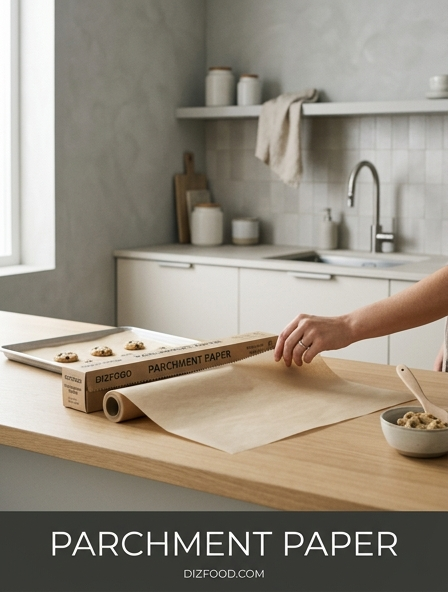
Parchment paper serves as a critical barrier between delicate doughs and harsh metal surfaces, ensuring that baked goods retain their intended shape and structure. Unlike grease or flour, parchment provides a reliable non-stick surface that does not alter the chemical composition of the batter. In precision baking, where every millimeter of rise counts, the use of silicone-coated paper prevents the edges of cakes and cookies from gripping the pan, allowing for a uniform expansion. This is particularly vital for sponges and soufflés that require an unobstructed climb up the sides of a tin.
Furthermore, parchment paper aids in moisture management. It absorbs excess fats while preventing the bottom of the pastry from becoming overly saturated or greasy. This balance is essential for achieving a fine crumb and a light, airy texture. Professional bakers often rely on pre-cut sheets to maintain consistency across hundreds of batches, ensuring that the final product is easily removable without the risk of tearing or crumbling, which is common when using traditional greasing methods.
Benefits of Reusable Silicone Mats for High Volume
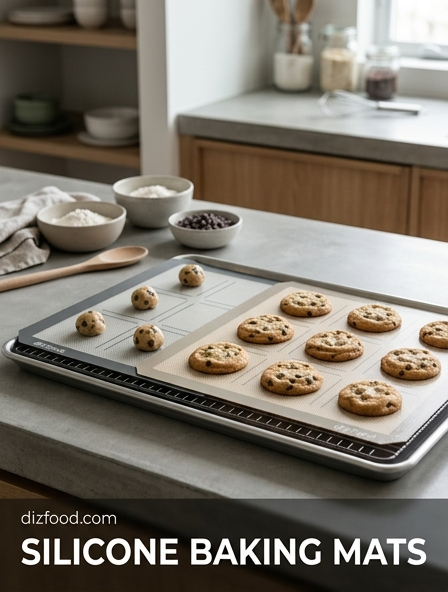
In high-volume commercial environments, silicone baking mats offer a sustainable and cost-effective alternative to disposable liners. These mats are engineered from food-grade silicone reinforced with fiberglass mesh, providing a durable surface that can withstand thousands of bake cycles. For bakeries producing large quantities of cookies, biscuits, or roasted items daily, the reduction in recurring costs for paper supplies is significant. The weight and thickness of silicone mats also provide a stabilizing effect on baking sheets, preventing them from warping under intense heat.
Beyond cost savings, silicone mats excel in providing a perfectly flat surface that prevents spreading in high-sugar doughs. Because they are slightly textured, they offer a grip that helps maintain the shape of piped items like éclairs or cream puffs. The following list highlights the primary advantages found in professional settings:
- Extreme temperature resistance ranging from -40°F to 500°F.
- Elimination of the need for additional cooking sprays or oils.
- Enhanced grip on the countertop for rolling out chilled pastry dough.
- Uniform thickness ensuring consistent heat distribution across the pan.
Comparing Heat Conductivity and Browning Results
The choice between parchment paper and silicone mats fundamentally alters the heat transfer from the baking sheet to the food. Parchment paper is thin and offers minimal insulation, allowing the radiant heat of the metal pan to interact directly with the dough. This typically results in faster browning and a crispier bottom crust, which is ideal for roasted vegetables or thin, crunchy cookies. In contrast, silicone mats are thicker and act as an insulator, slowing the heat transfer and producing a softer, more even finish.
| Attribute | Parchment Paper | Silicone Mat |
|---|---|---|
| Heat Transfer | High / Direct | Moderate / Insulated |
| Browning Effect | Pronounced / Dark | Subtle / Golden |
| Texture Result | Crispy / Snappy | Soft / Chewy |
| Cleanup | Disposable | Hand Washable |
Bakers must choose based on the desired outcome of the specific recipe. For example, a chewy chocolate chip cookie often benefits from the insulation of a mat, whereas a puff pastry requires the direct heat of parchment to achieve its signature flaky layers.
Maximizing Kitchen Efficiency with Hybrid Solutions
Modern professional kitchens rarely rely on a single lining method; instead, they implement hybrid strategies to maximize operational efficiency. By keeping both parchment rolls and silicone mats in stock, chefs can tailor their workflow to the specific requirements of each dish. For instance, high-fat items that may degrade silicone over time are better suited for parchment, while sugar-heavy tuiles that require an ultra-smooth release are perfectly matched with mats. This versatility reduces waste and ensures that expensive equipment is used for its most effective purpose.
Efficiency is also gained through preparation. Pre-cutting parchment sheets to fit specific specialty pans, such as springform or loaf tins, allows for rapid assembly during peak hours. Meanwhile, silicone mats are often reserved for standard sheet pan tasks, where their rapid-reuse capability shines. This dual approach minimizes downtime during transitions between prep work and active baking. Additionally, using parchment for "messy" tasks like chocolate dipping or roasting sticky glazes saves the labor costs associated with scrubbing silicone mats, which can trap odors and oils if not cleaned meticulously.
Sustainability vs Convenience in Professional Pastry
The debate between sustainability and convenience is a central pillar of kitchen management. Parchment paper, while often biodegradable or compostable in industrial facilities, represents a continuous stream of waste and ongoing procurement logistics. In a world increasingly focused on reducing environmental footprints, the switch to reusable silicone liners is a logical step for many businesses. However, the convenience of parchment cannot be overlooked, especially in fast-paced environments where time spent washing and drying mats could be diverted to higher-value production tasks.
From a sustainability perspective, the lifecycle of a silicone mat must be considered. While it replaces thousands of sheets of paper, its manufacturing process and eventual disposal have different environmental impacts. Conversely, high-quality unbleached parchment paper offers a lower chemical footprint during production. Professional pastry chefs often weigh these factors against their specific volume. A small artisanal bakery may find parchment's ease of use and low initial cost more practical, whereas a large-scale hotel kitchen might prioritize the waste reduction and long-term savings offered by high-durability silicone alternatives.
When to Choose Parchment for Delicate Confections
For confections that are exceptionally fragile or sensitive to weight, parchment paper is the undisputed choice. Its thin profile ensures that delicate batters, such as those used for macarons or meringues, do not experience any drag or resistance as they expand. When baking macarons, the slight porosity of parchment allows for better airflow around the base of the cookie, which is essential for the development of the "feet." If these items were baked on a thicker silicone mat, the excess insulation might lead to hollow shells or uneven bottoms.
Additionally, parchment is superior when a recipe requires the liner to be removed from the pan immediately. It can be easily slid off a hot tray onto a cooling rack, preventing carryover cooking. This is nearly impossible with silicone mats, which retain significant heat and are difficult to move without disturbing the set of the confections. For items like peanut brittle or honeycomb toffee, parchment provides a reliable surface that can be peeled away from the hardened candy with zero risk of the sugar bonding to the liner, a common issue with aged or worn silicone mats.
The Durability and Longevity of Silicone Liners
Silicone liners are designed for extreme longevity, often rated for 2,000 to 3,000 uses if maintained correctly. Their durability stems from a core of woven glass fibers, which prevents the silicone from stretching or tearing over time. To ensure this longevity, it is essential to avoid using sharp implements like knives or pizza cutters directly on the surface, as any breach in the silicone coating can expose the fiberglass core, rendering the mat unsafe for food contact. Proper storage-either lying flat or rolled-is also vital to prevent permanent creasing.
Maintaining these liners requires a consistent cleaning regimen. Over time, silicone can develop a "greasy" film due to the accumulation of oils from doughs. This is best managed with a high-quality degreaser or a paste of baking soda and water. Unlike parchment, which is discarded after use, the lifecycle of a silicone mat is entirely dependent on the care it receives in the dish pit. When handled properly, these mats maintain their non-stick properties for years, making them one of the most reliable investments a professional baker can make in their inventory of smallwares.
Streamlining Cleanup in Fast Paced Commercial Kitchens
In the high-pressure environment of a commercial kitchen, cleanup speed can dictate the overall profitability of a shift. Parchment paper is often the preferred choice for tasks that involve high-sugar glazes, melted cheeses, or sticky proteins. Once the cooking process is complete, the used parchment is simply discarded, leaving the baking sheet virtually clean. This eliminates the need for intensive scrubbing, soaking, and drying, allowing the pans to be cycled back into production almost immediately. In a facility with limited sink space or labor, this "zero-cleanup" advantage is a major operational benefit.
Conversely, silicone mats require dedicated labor for washing and, more importantly, drying. If mats are stacked while damp, they can develop mold or unpleasant odors. However, they streamline cleanup in a different way: by protecting the pans from long-term carbon buildup. Because the mats cover the entire surface area of the sheet pan, the metal is less likely to develop the dark, polymerized oil stains that are difficult to remove. The choice between the two often comes down to a simple calculation of labor costs versus material costs, with parchment winning on speed and silicone winning on long-term equipment preservation.
Achieving the Perfect Bottom Crust Texture
Texture is the hallmark of professional baking, and the liner choice is a primary tool in controlling the Maillard reaction. Parchment paper facilitates a more aggressive heat exchange, which is necessary for achieving the "snap" in a shortbread cookie or the golden-brown crust on a sourdough loaf. Because the paper is extremely thin, it does not act as a barrier to the infrared heat of the oven floor or the conductive heat of the pan. This results in a texture that is crisp, dry, and well-developed, appealing to those who prefer a traditional baked finish.
Silicone mats, however, excel when a soft, uniform texture is the goal. They are the ideal choice for soft-batch cookies, rolls, and sponge cakes where a hard crust would be undesirable. The mat diffuses the heat, preventing the edges from setting too quickly and allowing the center of the item to bake through at a more synchronized rate. By understanding how these materials interact with heat, a baker can manipulate the final mouthfeel of their product, choosing parchment for a rustic, crunchy finish or silicone for a refined, tender result.
Essential Bakeware Accessories for Professional Results
To fully leverage the benefits of parchment and silicone liners, a kitchen must be equipped with the right supporting accessories. These tools ensure that the liners perform optimally and that the workflow remains fluid. For instance, magnetic parchment dispensers allow for one-handed tearing, while heavy-duty sheet pan extenders help hold liners in place during high-convection baking. Investing in a variety of these accessories can significantly improve the precision of the final product.
Consider the following essential items for any professional bakeware kit:
- Heavy-duty aluminum sheet pans for consistent heat conductivity.
- Wire cooling racks to prevent bottom-steaming after removal from the liner.
- Offset spatulas for lifting delicate items off parchment without tearing.
- Magnetic clips to secure parchment paper in high-fan convection ovens.
- Silicone-safe cleaning brushes that remove residue without scratching mats.
Each of these tools plays a supporting role in the baking process. When combined with the correct choice of liner, they allow the chef to maintain absolute control over the temperature, texture, and presentation of their work, ensuring professional-grade results every time the oven door opens.

Comments