
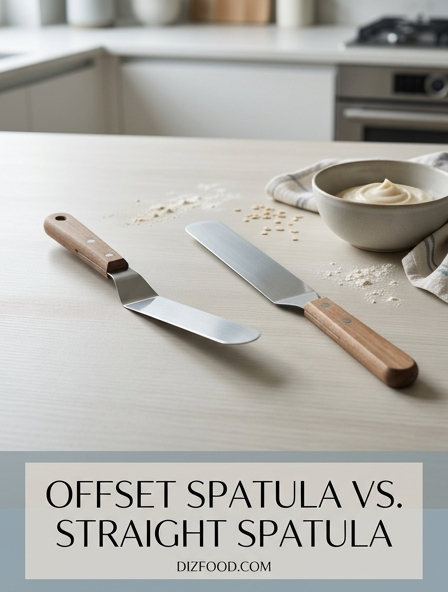
When you're aiming for a bakery-quality finish, the debate between an offset spatula and a straight spatula often comes down to precision versus reach. While both tools are essential staples in any baker's kit, understanding their unique ergonomics-specifically the offset's signature "crank" that keeps your knuckles safely away from the frosting-can elevate your workflow from messy to professional. Whether you are spreading a thin crumb coat or perfecting the top of a tiered masterpiece, choosing the right blade ensures better control, cleaner edges, and a flawlessly smooth application of buttercream, ganache, or glaze.
| Feature | Offset Spatula | Straight Spatula |
|---|---|---|
| Blade Design | Angled/bent "neck" near the handle. | Completely flat, linear blade. |
| Hand Clearance | High; keeps fingers clear of the cake surface. | Low; hand stays parallel to the work surface. |
| Primary Task | Spreading frosting and leveling batter. | Smoothing cake sides and stripping excess. |
| Precision | Superior for detailed edges and tight corners. | Best for long, continuous vertical strokes. |
| Surface Area | Optimized for horizontal tops and flat trays. | Best for curved sides and deep containers. |
| Best For... | Beginners; prevents accidental surface gouging. | Professionals; ideal for lifting or "turning" cakes. |
Understanding the Design Differences Between Offset and Straight Spatulas
At first glance, the primary distinction between a straight spatula and an offset spatula lies in the silhouette of the metal blade. A straight spatula features a blade that extends directly out of the handle in a continuous, flat line. It is perfectly linear, resembling a blunt palette knife. This design is rooted in simplicity, providing a uniform surface area from the base of the handle to the rounded tip of the tool. Because there is no deviation in the metal, the user's hand remains on the same plane as the food being manipulated.
In contrast, the offset spatula is characterized by a distinct "bend" or "crank" in the metal just past the handle. This architectural feature drops the blade lower than the handle, creating a step-down effect. This design is intentional and ergonomic, serving several key functions in a professional kitchen:
- Hand Clearance: The offset bend lifts the chef's knuckles away from the surface of the food, preventing accidental smudging of frosting or batter.
- Parallel Control: The blade can sit perfectly flat on a surface while the handle is held at a comfortable, elevated angle.
- Better Visibility: Because the hand is out of the line of sight, the user has a clearer view of the edges and corners of the cake or pastry.
Understanding these geometric differences is the first step in mastering pastry arts. While both tools are used for spreading and smoothing, the angle of the blade dictates the level of precision and the physical comfort of the baker during repetitive tasks.
The Offset Spatula: Perfecting Precision in Cake Decorating
The offset spatula is the undisputed champion of the pastry station, specifically engineered for the intricate work of icing and frosting cakes. When a baker applies a crumb coat or a final layer of buttercream, the offset design allows for a sweeping motion that remains parallel to the cake's surface. Without the offset bend, a baker would have to hold their hand at a steep angle, which often results in the tip of the blade digging into the cake or the knuckles dragging through the delicate frosting.
Precision is further enhanced by the flexibility of the blade. Most high-quality offset spatulas are made from thin, tempered stainless steel that offers a slight spring. This allows the tool to respond to the pressure of the hand, making it easier to feather out edges or create decorative swirls. It is particularly useful for:
- Creating smooth, flat tops on round cakes without leaving "tracks" from the handle.
- Spreading thick ganache or mousse into the corners of a rectangular tart shell.
- Gently lifting delicate sugar decorations or chocolate shards without breaking them.
The offset spatula essentially acts as an extension of the finger, but with a much larger and smoother surface area. For any task requiring a "surgical" touch in the kitchen, the offset variety is the preferred choice for professionals who demand a flawless finish on their baked goods.
Why the Straight Spatula is Essential for Smoothing and Leveling
While the offset spatula gets much of the glory in decorating, the straight spatula is a workhorse for foundational tasks. Its linear design makes it the perfect tool for leveling off dry ingredients in measuring cups. By scraping the flat edge of the spatula across a cup of flour or sugar, a baker ensures an exact measurement, which is critical for the chemistry of baking. Because the blade has no bend, it provides a consistent, straight-edge reference point that an offset spatula cannot match.
Beyond measuring, the straight spatula excels at smoothing the sides of tall cakes. When used in conjunction with a revolving cake stand, the straight blade can be held vertically against the side of the cake. This allows the baker to create a perfectly perpendicular, smooth finish as the cake spins. The lack of an offset bend ensures that the pressure applied is uniform from the bottom of the cake to the top.
Common uses for a straight spatula include:
- Leveling batters in deep rectangular baking pans or sheet molds.
- Loosening the edges of a cake from the sides of a springform pan.
- Spreading fillings like jam or curd between cake layers where hand clearance is not an issue.
- Scraping down the flat surfaces of a chocolate tempering marble.
By providing a long, uninterrupted straight edge, this tool serves as a mechanical guide for symmetry and evenness in the kitchen.
Comparing Blade Angles: How Flexibility Affects Your Baking Results
The functionality of a spatula is not just about the angle of the handle, but also the flexibility and "snap" of the metal blade. The thickness of the stainless steel determines how the tool reacts under the weight of different materials. A rigid blade is excellent for heavy lifting, while a flexible blade is necessary for delicate spreading. The relationship between the angle and flexibility creates a specific dynamic for the user.
| Feature | Straight Spatula | Offset Spatula |
|---|---|---|
| Flexibility | Usually more rigid to maintain a straight line. | Highly flexible to allow for contoured spreading. |
| Force Distribution | Even pressure across the entire length of the blade. | Concentrated pressure near the tip and center. |
| Surface Contact | Requires a shallow angle to keep the blade flat. | Blade remains flat while handle is elevated. |
If a blade is too stiff, it may tear the surface of a soft sponge cake. If it is too flexible, it may buckle when trying to spread cold, stiff cream cheese frosting. When choosing between these tools, bakers often look for "tapered" blades, which are thicker near the handle for stability and thinner toward the tip for sensitivity. This allows the baker to feel the texture of the frosting through the tool, making adjustments in pressure to achieve a perfectly level surface.
The Best Kitchen Tasks for an Offset Spatula
The offset spatula is incredibly versatile, extending its utility far beyond basic cake frosting. Its unique geometry makes it an ideal tool for manipulating small, delicate items that require a gentle touch and a low approach angle. Because the blade is offset, it can slide underneath items that are sitting on a flat tray without the user's hand getting in the way or hitting the rim of the baking sheet.
Some of the most effective applications for an offset spatula include:
- Flipping Small Items: It is perfect for turning over delicate cookies or small hors d'oeuvres on a crowded baking sheet.
- Removing Crepes: The thin, flexible tip can easily slide under the edge of a paper-thin crepe to lift it from the pan.
- Spreading Condiments: It is excellent for spreading mayonnaise or mustard to the very edges of a sandwich or toast.
- Managing Chocolate: When making chocolate bark or tempered decorations, the offset spatula allows for a perfectly even thin layer.
- Mashing and Smoothing: It can be used to press down and smooth out small amounts of compound butter or pâté.
The mini offset spatula, in particular, is a favorite among professional chefs for "plating" or "styling." It provides the precision needed to place a single micro-green or a dollop of sauce exactly where it needs to go on a gourmet plate.
When to Reach for a Straight Spatula Instead of an Angled One
Despite the popularity of the offset design, there are specific scenarios where the straight spatula is the superior choice. The primary advantage of a straight spatula is its ability to reach into deep, narrow spaces where an angled handle would be a hindrance. For example, if you are trying to scrape the bottom of a tall glass jar or a deep blender canister, the straight profile allows for a direct reach without the handle hitting the sides of the container.
Another critical use case is the "straight-edge test." When checking if a surface is truly flat, a straight spatula acts as a small carpenter's level. Bakers use it to ensure that their tart fillings are perfectly flush with the crust or that a tray of brownies is even from side to side. In these instances, the "crank" of an offset spatula would make it impossible to lay the tool perfectly flat across the entire span of the pan.
You should choose a straight spatula when:
- Leveling off measuring spoons or cups of dry ingredients.
- Scraping the sides of deep mixing bowls.
- Applying frosting to the sides of a very tall tiered cake.
- Lifting large, heavy items where the "elbow" of an offset spatula might flex too much and cause the item to slide off.
Material and Handle Grip: Choosing the Best Tools for Your Kitchen
The performance of a spatula is heavily influenced by the materials used in its construction. Most professional blades are made from high-carbon stainless steel. This material is preferred because it is resistant to rust, holds its shape well, and can be ground to a very fine, flexible edge. However, the handle is just as important for control and comfort during long decorating sessions.
There are three common types of handles found on both offset and straight spatulas:
- Wood: Traditional and aesthetically pleasing. Wood handles offer a classic feel and a solid grip, but they are generally not dishwasher safe and can harbor bacteria if not dried properly.
- Plastic/Polypropylene: These are the most common in commercial kitchens. They are lightweight, durable, and can be sanitized in a dishwasher. Many feature textured grips to prevent slipping when hands are covered in butter or flour.
- Silicone-Overmolded: These provide the most ergonomic grip, often featuring a "soft-touch" feel that reduces hand fatigue. They are excellent for home cooks who prioritize comfort.
When selecting a tool, consider the weight balance. A spatula should feel "balanced" in the hand, with the weight of the handle complementing the length of the blade. If the handle is too heavy, the tip will feel uncontrollable; if the blade is too heavy, the tool will feel clunky and difficult to use for fine detail work.
A Guide to Sizes: Mini Spatulas Versus Large Professional Blades
Size matters significantly when selecting the right spatula for a task. Using a large blade on a small cupcake will result in a mess, while using a mini spatula on a wedding cake will be inefficient and likely lead to an uneven finish. Most manufacturers offer spatulas in a range of lengths, typically measured by the length of the metal blade alone.
| Size Class | Blade Length | Primary Use Case |
|---|---|---|
| Mini | 4 to 5 inches | Cupcakes, small cookies, intricate detail work, and plating. |
| Standard | 6 to 9 inches | 8-inch or 9-inch round cakes, brownies, and general spreading. |
| Large | 10 to 14 inches | Sheet cakes, large tiered cakes, and leveling commercial trays. |
Mini offset spatulas are perhaps the most used "secret weapon" in the kitchen. Their small surface area allows for extreme control when smoothing out small garnishes or spreading a thin layer of chocolate. On the other end of the spectrum, a 12-inch straight spatula is essential for professional bakers who need to level a full-size sheet pan in a single pass. Having at least one mini offset and one medium straight spatula covers about 90% of all kitchen needs.
Cooking Applications for Spatulas: Beyond Frosting and Icing
While often categorized as "baking tools," both offset and straight spatulas have numerous applications in savory cooking. Their thin profiles and heat-resistant stainless steel blades make them superior to bulky nylon flippers in many scenarios. In the world of "short-order" cooking and fine dining, these tools are used daily for tasks that require agility.
For instance, an offset spatula is the best tool for flipping delicate fish fillets. The thin blade can slide between the fish and the pan without tearing the skin, and the offset handle keeps the cook's hand away from the hot oil. Similarly, it is excellent for lifting omelets or crepes where a standard spatula would be too thick to get a clean start under the edge.
Other savory uses include:
- Spreading pate or soft cheese onto delicate crackers or crostini.
- Pressing down on grilled cheese sandwiches to ensure even browning.
- Lifting roasted vegetables off a parchment-lined baking sheet.
- Checking the "doneness" of a searing protein by gently lifting an edge to inspect the crust.
Because they are made of steel, they can withstand the high heat of a sauté pan or griddle, making them a durable alternative to many other kitchen utensils. The precision they offer in the pastry world translates directly to better control over delicate savory ingredients.
Final Verdict: Which Spatula Should You Add to Your Collection First
If you are a budding home cook or baker forced to choose just one tool, the offset spatula is the clear winner for versatility. Its unique design solves more problems than a straight spatula does. It allows you to spread, lift, flip, and smooth with greater ergonomic comfort and visibility. Specifically, a 6-inch or 8-inch offset spatula is often cited by professional pastry chefs as the single most important tool in their kit. It handles everything from frosting a birthday cake to flipping a fried egg with ease.
However, the straight spatula should not be ignored for long. It remains the superior tool for foundational accuracy-namely leveling dry ingredients and creating perfectly vertical sides on a cake. For those who take baking seriously, these tools are not redundant; they are complementary. The straight spatula provides the geometric perfection of a ruler, while the offset spatula provides the artistic flexibility of a paintbrush.
To build a complete kit, follow this priority list:
- First Purchase: A medium (6-8 inch) offset spatula with a plastic or silicone handle.
- Second Purchase: A mini (4-inch) offset spatula for detail work and small tasks.
- Third Purchase: A medium (8-10 inch) straight spatula for leveling and vertical smoothing.
By owning a combination of both, you ensure that you have the right mechanical advantage for every task, whether you are measuring flour for a loaf of bread or applying the final decorative flourish to a masterpiece.

Comments