
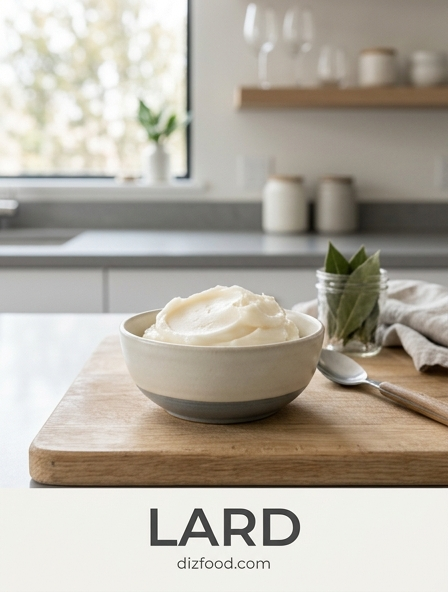
The Science of Flakiness and Fat Crystals
The culinary reputation of lard as the ultimate pastry fat stems from its unique molecular structure. Unlike vegetable fats, lard contains large, stable fat crystals that are predominantly in the beta-polymorphic form. These crystals are significantly larger than those found in butter or shortening. When incorporated into a dough, these large crystals do not coat the flour proteins as uniformly as liquid oils or highly processed fats. Instead, they remain as distinct solid particles throughout the mixing process.
As the pastry enters a high-temperature oven, these fat pockets melt at a specific rate, leaving behind structural voids. Simultaneously, the moisture content within the lard and the surrounding dough evaporates into steam. This steam expands into the gaps vacated by the melting fat, physically lifting the layers of flour. Because lard has a relatively high melting point compared to the water content in butter, the dough has more time to set its structure before the fat completely liquefies. This precise timing results in the characteristic long, delicate flakes that are prized in professional baking, providing a structural integrity that smaller crystal fats simply cannot replicate.
Leaf Lard versus Rendered Lard
Discerning chefs distinguish between different types of lard based on where the fat is harvested from the animal. The most prized variety is leaf lard, which is sourced from the visceral fat surrounding the kidneys and loin. This fat is prized for its exceptionally neutral flavor and high melting point. Conversely, regular rendered lard usually comes from back fat or other trimmings, which may carry a more pronounced "porky" aroma that can interfere with delicate desserts.
| Feature | Leaf Lard | Standard Rendered Lard |
|---|---|---|
| Source | Internal kidney/visceral fat | Subcutaneous back fat and trim |
| Flavor | Neutral, clean, and mild | Savory, slightly porcine |
| Texture | Soft, creamy, and fine-grained | Dense and slightly grainy |
| Best Use | Pies, biscuits, and cakes | Frying, roasting, and savory crusts |
Understanding these differences is essential for achieving the desired sensory outcome. While standard lard is excellent for savory applications like frying carnitas or browning potatoes, leaf lard is the gold standard for sweet pastry applications where a pork-forward flavor profile would be undesirable.
Mastering the Art of Savory Pastry
Savory pastries, such as British pork pies or Latin American empanadas, rely heavily on lard for both structural strength and mouthfeel. In these applications, the fat must provide enough "shortness" to make the crust tender while maintaining the rigidity necessary to hold heavy, moist fillings without becoming soggy. Lard's high smoke point and plasticity make it the ideal candidate for these robust preparations.
- Hot Water Crust: Lard is boiled with water and then mixed into flour, creating a moldable, sturdy dough that hardens into a crisp shell.
- Shortcrust Integration: Chilled lard is rubbed into flour to create a sandy texture, ensuring a crumbly, melt-in-the-mouth finish.
- High-Heat Searing: Using lard to sear meat fillings adds a depth of flavor that vegetable oils lack, enhancing the umami profile of the dish.
When mastering savory doughs, the ratio of lard to flour is critical. Typically, a higher fat content is used than in sweet pies to ensure the crust can withstand the steam generated by savory meat fillings during long baking cycles. The result is a golden-brown exterior that offers a satisfying crunch and a rich, traditional finish.
Superior Lamination in Professional Crusts
Lamination is the process of creating alternating layers of fat and dough, and lard is an exceptional medium for this technique due to its plasticity. Unlike butter, which has a narrow temperature window where it is pliable without being greasy, lard remains workable over a broader range. This allows bakers to roll and fold the dough multiple times without the fat "shattering" or melting prematurely into the flour layers. In professional environments, this reliability ensures consistent results across large batches.
The superior lamination provided by lard results in a "shatter" effect-where the crust breaks into large, thin shards rather than fine crumbs. This is highly sought after in professional puff pastries and regional specialties like sfogliatella. Because lard is 100% fat, whereas butter contains approximately 15-20% water, the dough behaves differently during the rolling process. The lack of water in lard means it does not contribute to gluten development as readily as butter, allowing for a more tender, layered result. Professional bakers often leverage this by using lard for the primary structural folds, ensuring the pastry achieves maximum height and separation during the initial oven spring.
Lard and Butter Blending Techniques
Many contemporary bakers advocate for a "best of both worlds" approach by blending lard with butter. This technique seeks to capture the unparalleled flakiness of lard while incorporating the rich, creamy flavor profile of high-quality dairy fat. Achieving the perfect balance requires an understanding of how these two fats interact under mechanical stress and heat. The most common ratio is a 50/50 split, though some prefer 60% lard for structural integrity.
- Differential Chilling: Keep the lard and butter at different temperatures; lard should be very cold, while butter can be slightly more pliable for better integration.
- Sequential Incorporation: Cut the lard into the flour first to create large flakes, then add the butter to create a finer, flavor-rich crumb.
- Hydration Adjustment: Since lard contains no water, you may need to slightly increase the liquid content of your dough compared to an all-butter recipe.
By blending these fats, the baker compensates for lard's lack of flavor in sweet applications. The butter provides the toasted, nutty notes that consumers expect, while the lard ensures the crust remains light and crisp even after several days of storage, preventing the "leathery" texture sometimes found in older all-butter crusts.
Essential Temperature Management for Lard
Temperature management is the most critical factor when working with animal fats in the kitchen. Lard has a melting point ranging between 92°F and 110°F (33°C to 43°C), depending on its purity and source. If the fat becomes too warm during the mixing process, it will emulsify into the flour, leading to a "mealy" crust rather than a flaky one. Conversely, if it is too cold, it may be too hard to incorporate, leading to uneven distribution and large holes in the finished product.
To manage these variables, professional kitchens often chill all components-including the flour, mixing bowl, and even the rolling pin. Working in a cool environment is essential to prevent the fat from reaching its "plastic" state prematurely. If the dough feels tacky or soft, an immediate rest in the refrigerator is necessary to re-solidify the fat crystals. Proper temperature control ensures that the fat remains in discrete pockets until it hits the heat of the oven. This rapid transition from solid to liquid is what triggers the steam expansion necessary for high-volume, airy baked goods. Mastering this thermal curve is the difference between a dense biscuit and a soaring, light pastry.
Historical Significance of Lard in Baking
Before the industrialization of vegetable oils and the invention of hydrogenated shortenings in the early 20th century, lard was the primary cooking fat in Western kitchens. Its prevalence was a matter of practical necessity and agricultural efficiency. Most households maintained a close connection to porcine livestock, and rendering fat was a vital seasonal activity that ensured no part of the animal was wasted. This "nose-to-tail" philosophy made lard an affordable and accessible staple for both the working class and the aristocracy.
The historical decline of lard was driven by aggressive marketing campaigns for vegetable-based products and a shifting public perception of animal fats. However, many traditional recipes from the Victorian era and the American South were specifically formulated to work with lard's unique properties. From the "beaten biscuits" of the Atlantic coast to the "lard cakes" of rural England, these recipes rely on the specific density and crystalline structure of pork fat. Today, the resurgence of lard in artisanal baking represents a return to these historical roots, as chefs rediscover the superior textures and sustainability of using natural, minimally processed animal fats in their traditional craft.
Flavor Profiles of High Quality Animal Fats
The flavor profile of lard is often misunderstood as being overtly "meaty," but high-quality, properly rendered lard is remarkably subtle. Pure leaf lard is almost entirely odorless and tasteless, making it an ideal carrier for other flavors like vanilla, fruit, or spices. However, lower grades of lard, or those rendered at higher temperatures, possess a mild umami depth that enhances savory dishes by providing a rich, savory backbone that vegetable oils cannot provide.
The diet of the pig also significantly influences the flavor profile of the fat. Pigs raised on pasture and finished on acorns or forest mast produce lard with a complex, slightly nutty flavor and a higher concentration of monounsaturated fats. This "terroir" of the fat adds a layer of sophistication to the kitchen, allowing chefs to choose specific fats for specific dishes. When used for frying, lard creates a unique "golden" flavor-a combination of mild caramelization and the natural richness of animal lipids. This profile is particularly effective in fried chicken or donuts, where the fat contributes a clean, crisp finish without the lingering chemical aftertaste often associated with highly refined seed oils.
Texture Comparison with Vegetable Shortening
While vegetable shortening was designed to mimic lard, there are profound structural differences that affect the final product. Shortening is a hydrogenated oil designed to be "perfectly" plastic and uniform. Lard, being a natural product, has a varied crystalline structure that creates a different mouthfeel. Shortening tends to produce a very tender, crumbly crust, but it often lacks the structural "snap" and distinct layering that lard provides.
| Characteristic | Pure Lard | Vegetable Shortening |
|---|---|---|
| Mouthfeel | Clean, dissolves quickly | Can leave a waxy film |
| Flakiness | Large, distinct flakes | Fine, sandy crumbs |
| Melting Point | Variable (Natural) | Engineered (Consistent) |
| Workability | Requires temperature control | Highly stable at room temp |
The primary advantage of lard over shortening is the "clean" finish on the palate. Because lard has a melting point close to human body temperature, it melts away instantly when eaten. Vegetable shortening often has a higher melting point, which can result in a "filmy" or "waxy" sensation on the roof of the mouth. For many professional pastry chefs, this sensory difference is the deciding factor in choosing lard for premium baked goods.
Best Practices for Sourcing Pure Leaf Lard
To achieve the best results in the kitchen, one must avoid the shelf-stable lard found in the baking aisle of many supermarkets. These products are often hydrogenated and treated with preservatives like BHA or BHT to extend shelf life, which alters the fat's crystalline structure and health profile. For high-end pastry work, sourcing pure, unadulterated leaf lard is essential. This usually requires a different approach than standard grocery shopping.
- Local Butcher Shops: Establish a relationship with a butcher who breaks down whole hogs; they often have leaf fat available upon request.
- Farmers Markets: Small-scale heritage hog farmers are the best source for pastured pork fat, which contains higher levels of Vitamin D.
- Home Rendering: The most reliable way to ensure purity is to buy raw leaf fat and render it at home using a low-temperature "wet" or "dry" method.
- Label Vigilance: When buying pre-rendered lard, check for "Non-Hydrogenated" and "No Additives" on the label.
Pure lard should be snow-white and have a firm, creamy consistency at room temperature. Once sourced, it should be stored in the refrigerator or freezer to prevent oxidation, as the natural lack of preservatives makes it more susceptible to rancidity than industrial alternatives. Proper sourcing ensures that your pastries are not only structurally superior but also free from the off-flavors of industrial processing.

Comments