
When you're standing in the baking aisle, choosing between evaporated and condensed milk can make or break your dish's final texture and flavor. While both are shelf-stable dairy products with 60% of their water content removed, the similarity ends there. Evaporated milk is a concentrated, unsweetened liquid that adds a rich, creamy depth to savory soups and mashed potatoes. In contrast, condensed milk is heavily fortified with sugar, creating a thick, syrupy consistency essential for fudgy brownies and no-churn ice cream. Understanding these chemical differences-specifically the sugar-to-protein ratio-ensures you achieve the perfect crumb or silkiness without turning your masterpiece into a sugary mess.
| Feature | Evaporated Milk | Condensed Milk |
|---|---|---|
| Sugar Content | No added sugar; natural lactose only. | 40-45% added sugar by weight. |
| Consistency | Thin, pourable, like half-and-half. | Thick, viscous, and syrupy. |
| Color | Creamy off-white to light tan. | Deep cream or pale amber hue. |
| Primary Use | Savory sauces, soups, and coffee. | Desserts, fudges, and sweet pies. |
| Flavor Profile | Mildly nutty and malty. | Intense, caramel-like sweetness. |
| Substitution | Good substitute for cream or milk. | Hard to replace; affects structure. |
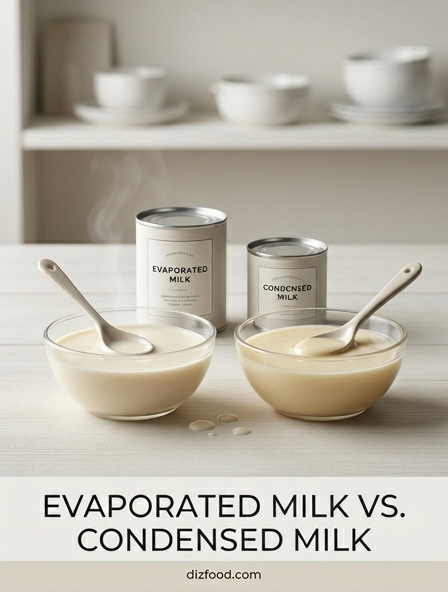
Evaporated vs Condensed Milk Key Differences
While evaporated and sweetened condensed milk share a similar origin in the dairy aisle, they serve drastically different roles in the kitchen. The primary similarity lies in the production process: both products begin as fresh, homogenized milk that has had approximately 60 percent of its water content removed through a heating process. This reduction results in a concentrated milk product that is more shelf-stable and creamier than standard fluid milk. However, the divergence occurs immediately after the evaporation stage, specifically regarding the addition of sugar and the method of sterilization.
Evaporated milk is essentially unsweetened concentrated milk. It is canned and then sterilized at high temperatures, which gives it a slightly caramelized flavor and a creamy, off-white color. Because it contains no added sugar, it is highly versatile and can be used in both savory and sweet applications. In contrast, sweetened condensed milk is treated with a significant amount of sugar-roughly 40 to 45 percent by weight. This sugar acts as a preservative, inhibiting bacterial growth and allowing for a different sterilization process. The key differences include:
- Sugar Content: Evaporated milk has no added sugar; condensed milk is nearly half sugar.
- Consistency: Evaporated milk is thin and pourable, while condensed milk is thick and syrupy.
- Flavor: Evaporated milk tastes like rich, concentrated dairy, whereas condensed milk is intensely sweet.
- Shelf Life: Both are shelf-stable, but condensed milk stays fresh longer after opening due to the sugar concentration.
Understanding these fundamental distinctions is vital for any cook. Substituting one for the other without adjustments usually leads to a culinary disaster, either resulting in a dish that is far too sweet or one that lacks the necessary structural viscosity provided by the sugar in condensed milk.
The Science of Making Evaporated Milk
The manufacturing of evaporated milk is a precise scientific process designed to create a shelf-stable dairy product without the need for preservatives. The process begins with raw milk being clarified and standardized to ensure a consistent fat and solids-not-fat ratio. Once standardized, the milk undergoes a brief heat treatment known as pasteurization. This is followed by the core stage: vacuum evaporation. By lowering the atmospheric pressure inside the evaporator, the milk can be boiled at a much lower temperature. This prevents the milk from scorching while efficiently removing about 60 percent of the water content.
Following evaporation, the milk is homogenized to prevent the fat globules from separating and rising to the top during storage. This is a critical step because the concentrated nature of the milk makes it more prone to fat separation than regular milk. After homogenization, the milk is cooled and fortified with vitamins, particularly Vitamin D. It is then sealed into cans. The final and most crucial step is the in-can sterilization. The sealed cans are heated to approximately 240°F (115°C) for several minutes.
This high-heat sterilization serves two purposes. First, it ensures the product is commercially sterile, allowing it to sit on a pantry shelf for a year or more. Second, it triggers the Maillard reaction-a chemical reaction between amino acids and reducing sugars. This reaction is responsible for the characteristic light tan color and the slightly nutty, cooked-milk flavor that distinguishes evaporated milk from regular whole milk. This scientific transformation results in a product that provides richness and body to recipes without adding the moisture of standard milk.
Understanding Sweetened Condensed Milk Ingredients
Sweetened condensed milk is a marvel of food engineering, relying on the preservative power of sugar to maintain its stability. Unlike evaporated milk, which relies on high-heat sterilization after canning, condensed milk uses "osmotic pressure" created by high sugar concentrations to prevent spoilage. The ingredients list is remarkably short, typically consisting only of milk and sugar. Occasionally, manufacturers add stabilizers like dipotassium phosphate to maintain a smooth texture, but the core of the product is simply concentrated dairy and sucrose.
The sugar is added early in the evaporation process. As the water is removed under vacuum, the sugar becomes highly concentrated. This serves three distinct functions in the kitchen:
- Preservation: The high sugar concentration draws water out of microbial cells, effectively killing them or preventing their growth.
- Texture: The sugar creates a thick, viscous, and syrupy consistency that is essential for the structure of many desserts.
- Flavor: It provides a deep, intense sweetness that forms the base of fudges and pies.
The final product contains approximately 8 percent milk fat and 28 percent total milk solids. Because the sugar acts as the primary preservative, the sterilization process for condensed milk is less intense than for evaporated milk. This allows the product to retain a lighter, creamier color despite its high density. When reading a label, consumers may also see "skimmed sweetened condensed milk," which replaces whole milk with non-fat milk, though the sugar content remains equally high to ensure the product remains shelf-stable and maintains its iconic thickness.
Texture and Consistency Comparison
The most immediate difference a cook notices when opening a can of either milk is the way it pours. Evaporated milk has a consistency similar to half-and-half or light cream. It is thin, fluid, and flows easily from the can. This makes it an excellent choice for liquids that need to be incorporated into sauces or batters without significantly altering the viscosity. It provides a "mouthfeel" that is richer than milk but lacks the heavy, coating quality of high-fat creams.
On the opposite end of the spectrum, sweetened condensed milk is incredibly dense and sluggish. It behaves more like cold honey or molasses. If you dip a spoon into a can of condensed milk, it will cling to the utensil in a thick, opaque layer. This viscosity is not just a byproduct of the sugar; it is a functional attribute used in baking. In recipes like Key Lime Pie, the thick consistency of the condensed milk, when combined with acid (like lime juice), causes a chemical thickening that allows the pie to set even without a lengthy baking time.
| Characteristic | Evaporated Milk | Condensed Milk |
|---|---|---|
| Viscosity | Low (Fluid) | High (Syrupy) |
| Pourability | Easy/Fast | Slow/Thick |
| Surface Tension | Low | Very High |
| Mouthfeel | Smooth, light cream | Velvety, heavy, coating |
Because of these differences, they cannot be used interchangeably in recipes where texture is key. Using evaporated milk where condensed is called for will result in a runny mess, while using condensed milk instead of evaporated will likely result in a sticky, overly sweet, and burnt disaster due to the high sugar content reacting to heat.
Nutritional Breakdown and Calorie Counts
From a nutritional standpoint, evaporated and condensed milk are worlds apart, primarily due to the caloric density of the added sugar in the latter. Evaporated milk is essentially a more nutrient-dense version of regular milk. Since it is concentrated, it contains more protein, calcium, and vitamins per ounce than fresh milk. For instance, a half-cup serving of evaporated whole milk contains approximately 170 calories, 10 grams of fat, and 12 grams of natural milk sugars (lactose). It is often used by those looking to add protein and richness to a diet without the extreme sugar load of other canned options.
Sweetened condensed milk, however, is a caloric powerhouse. Because nearly half the can is added sucrose, the calorie count skyrockets. A half-cup serving can contain upwards of 490 calories and a staggering 80 or more grams of sugar. While it does provide calcium and protein, these benefits are often overshadowed by the high glycemic load. It is rarely consumed as a primary dairy source, but rather as a functional ingredient or sweetener. For those watching their sugar intake or managing diabetes, condensed milk is a high-risk ingredient that requires careful portion control.
In terms of fat content, both products usually come in whole, low-fat, and fat-free versions. "Fat-free" evaporated milk still retains its creamy texture due to the concentration of milk solids, making it a popular "diet" substitute for heavy cream in savory cooking. "Fat-free" condensed milk is still extremely high in calories because the fat is replaced by even more sugar or carbohydrates to maintain the necessary syrupy texture. When choosing between them for nutritional reasons, evaporated milk is the clear choice for everyday cooking, while condensed milk remains a strictly "treat-based" ingredient.
Best Culinary Uses for Evaporated Milk
Evaporated milk is a versatile workhorse in the kitchen, particularly valued for its ability to provide creaminess without the high fat content of heavy cream. One of its most popular uses is in stovetop macaroni and cheese. Because it is an emulsified product, it creates a much smoother, more stable cheese sauce that is less likely to "break" or become oily compared to sauces made with fresh milk or cream. Its resistance to curdling at high temperatures also makes it ideal for slow-cooker recipes, creamy soups, and chowders.
In the world of beverages, evaporated milk is a staple in many cultures. It is the traditional whitener for Hong Kong-style milk tea and various types of coffee in Southeast Asia and the Caribbean. Its slightly caramelized flavor adds a depth that regular milk lacks. It can also be reconstituted into regular milk by adding an equal part of water, making it a reliable pantry backup for baking needs like pancakes or muffins when fresh milk is unavailable.
- Savory Sauces: Use in Alfredo or bechamel for a lighter but rich result.
- Mashed Potatoes: Adds a velvety texture without making the potatoes watery.
- Custards and Quiches: Provides structural integrity and a creamy finish.
- Baking: Ideal for pumpkin pie or bread puddings where a dense, custardy texture is desired.
Overall, evaporated milk serves as a "heavy duty" milk. It bridges the gap between the thinness of 2% milk and the indulgence of heavy cream, offering a unique functional profile that improves the stability of heated dairy applications.
Sweet Treats and Desserts Using Condensed Milk
Sweetened condensed milk is the "secret ingredient" in some of the world's most beloved desserts. Its unique ability to provide both sweetness and structural thickness makes it irreplaceable in many recipes. Perhaps its most famous application is in the preparation of Tres Leches cake, where it is mixed with evaporated milk and heavy cream to create a soaking liquid that gives the cake its signature moist, decadent texture. Without the sugar and viscosity of the condensed milk, the cake would simply become soggy rather than richly saturated.
Another classic use is in making no-churn ice cream. When whipped with heavy cream, the condensed milk provides the necessary sugar and lowers the freezing point, resulting in a smooth, scoopable ice cream without the need for an expensive machine. It also serves as the base for fudge; when heated with chocolate chips, it creates a perfectly set, chewy confection. In Latin American cuisine, an unopened can of condensed milk can be boiled in water for several hours to transform the contents into Dulce de Leche-a thick, dark caramel sauce created by the intense Maillard reaction and sugar caramelization occurring inside the can.
In addition to these, condensed milk is essential for:
- Key Lime and Lemon Meringue Pies: For the thick, creamy filling.
- Vietnamese Iced Coffee: Acting as both the sweetener and the cream.
- Coconut Macaroons: Acting as the binder that holds the shredded coconut together.
- Magic Cookie Bars: Creating a sweet, chewy layer that binds nuts and chocolate.
Substituting Evaporated for Condensed Milk
A common kitchen dilemma occurs when a recipe calls for sweetened condensed milk, but only evaporated milk is available. Because they are fundamentally different in sugar content and thickness, a 1:1 swap is impossible. However, you can "manufacture" a condensed milk substitute using evaporated milk. To do this, you must add a significant amount of sugar and reduce the liquid further to achieve the correct viscosity. A standard conversion involves simmering one cup of evaporated milk with 1-1/4 cups of granulated sugar until the sugar is completely dissolved and the mixture has thickened slightly.
Conversely, trying to substitute condensed milk for evaporated milk in a savory recipe is virtually impossible. The extreme sweetness of condensed milk will ruin a soup, pasta sauce, or quiche. Even in sweet recipes, using condensed milk where evaporated is called for will drastically alter the chemistry. For example, in a pumpkin pie, substituting condensed milk would make the filling far too sweet and likely prevent it from setting properly, as the sugar-to-protein ratio would be completely skewed.
If you have neither on hand, you can occasionally use heavy cream as a substitute for evaporated milk, though the fat content will be higher. For condensed milk, there is no simple non-dairy or non-canned substitute that provides the same binding and sweetening properties without significant modification. If you are in the middle of baking and realize you have the wrong can, taking the ten minutes to simmer evaporated milk with sugar is the only reliable way to save the recipe and ensure the texture and flavor remain consistent with the original intent.
Flavor Profiles and Color Distinctions
The flavor and color of these two milks are determined by how they are processed and their sugar content. Evaporated milk has a flavor profile often described as "cooked," "nutty," or "malty." This is because the high-heat sterilization process causes the lactose and proteins to react, creating a complex depth that is far more savory than fresh milk. Its color is a distinct off-white or light tan, which can slightly darken the appearance of light-colored sauces or batters.
Sweetened condensed milk, on the other hand, tastes primarily of intense sugar and cream. While it does have some "cooked" notes, they are largely masked by the overwhelming sweetness. The flavor is reminiscent of the center of a high-quality truffle or a liquid caramel. Because it does not undergo the same high-intensity in-can sterilization as evaporated milk, its color is usually lighter-a creamy, pale yellow or ivory. This color is prized in desserts because it contributes to a rich, golden hue in baked goods without making them look "dirty" or overly brown.
When tasted side-by-side, the difference is jarring. Evaporated milk tastes like a very thick, slightly salty, concentrated milk. Condensed milk tastes like a dairy-based syrup. This flavor distinction is why evaporated milk is the preferred choice for coffee drinkers who want richness without sweetness, whereas condensed milk is reserved for those who enjoy "treat" beverages like Thai Tea or Spanish Cortado Bombon, where the milk serves as the primary sweetener of the drink.
Choosing the Right Milk for Your Recipe
Choosing between evaporated and condensed milk usually comes down to the desired sweetness and the functional role of the dairy in your dish. If your goal is to add creaminess, body, and a rich mouthfeel to a recipe without adding sweetness, evaporated milk is the correct choice. It is the go-to for savory cooking and for bakers who want to control the sugar levels in their recipes independently. It is also the superior choice for lactose-rich flavor in bread doughs and savory custards.
If the recipe requires a thick, sticky binder or a massive hit of sweetness, sweetened condensed milk is the intended ingredient. It is a structural component in many pies and candies, where the sugar content helps the dish set or provides a specific chewy texture. When in doubt, look at the other ingredients in your recipe. If the recipe does not list a significant amount of additional sugar, it is likely that the sweetened condensed milk is providing all the sweetness for the dish. If the recipe is savory, never reach for the condensed milk.
To help guide your decision, consider the following checklist:
- Is it a savory dish? Use Evaporated Milk.
- Does the recipe need to "set" (like a pie filling)? Use Condensed Milk.
- Are you making a caramel or fudge? Use Condensed Milk.
- Are you making a creamy soup or sauce? Use Evaporated Milk.
- Are you whitening your coffee? Use Evaporated Milk for creaminess, Condensed Milk for a sweet treat.
By respecting the science and the intended purpose of each product, you ensure the success of your culinary endeavors. These two cans may look the same on the shelf, but inside, they offer two completely different worlds of flavor and chemistry.






Comments