
Achieving the perfect bake starts with mastering gluten development, the hidden force behind every successful pastry and loaf. Whether you are aiming for a melt-in-your-mouth tart shell or a robust, chewy sourdough, understanding how to manipulate this protein network is key to professional results. By carefully balancing hydration, mixing techniques, and resting periods, you can control the elasticity and strength of your dough to match your specific culinary goals. Choosing the right ingredients is equally important, so be sure to explore the distinct structural impacts of Pastry Flour vs. Whole Wheat Flour for your next project.
Understanding Gluten Protein Basics
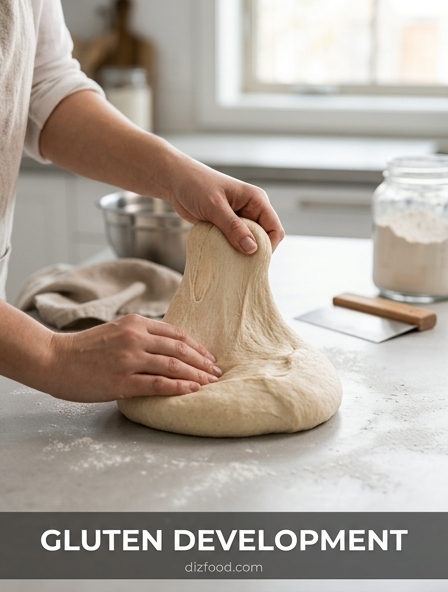
Gluten is not a pre-existing substance in dry flour but a complex protein network formed when flour meets water. It primarily consists of two proteins: gliadin and glutenin. Gliadin provides the dough with extensibility, allowing it to stretch without snapping, while glutenin contributes elasticity and strength, helping the dough hold its shape. When water is added, these proteins begin to uncoil and link together through disulfide bonds. This chemical reaction creates a web-like matrix that traps carbon dioxide produced by yeast, causing the dough to rise. Without this structural framework, baked goods would lack volume and have a crumbly texture.
Understanding the science of these proteins is essential for any baker aiming to control the final outcome of their product. Mechanical energy, such as kneading, further organizes these proteins into a structured alignment. The balance between extensibility and elasticity determines whether the resulting bread is chewy, soft, or firm. Proper gluten formation is the cornerstone of structural integrity in traditional baking, serving as the skeletal system for the loaf.
The Role of Flour Selection
Flour choice is the most significant factor in determining the potential for gluten development. Flours are categorized by their protein content, which directly correlates to how much gluten can be formed. Higher protein levels provide more building blocks for a strong network, whereas lower protein levels ensure a tender result. Bread flour, with its high protein content, is ideal for chewy loaves and bagels where a strong structure is required. Conversely, cake flour is milled from soft wheat to lower its protein potential, resulting in a fine, delicate crumb.
| Flour Type | Protein Content | Typical Use |
|---|---|---|
| Cake Flour | 6% - 8% | Tender cakes and biscuits |
| All-Purpose | 10% - 12% | Cookies and general baking |
| Bread Flour | 12% - 14% | Yeasted breads and pizza |
| Whole Wheat | 13% - 15% | Hearty, dense loaves |
Whole wheat flour, despite high protein, contains bran particles that physically cut through gluten strands, often leading to a denser loaf unless handled with specific techniques like increased hydration.
Hydration and Gluten Network Strength
Water acts as the primary catalyst for gluten development. Without moisture, gliadin and glutenin remain dormant and unable to bond. The amount of water, often expressed as a hydration percentage, dictates the mobility of the protein molecules. In high-hydration doughs, such as ciabatta, the molecules move more freely, allowing for the formation of large, irregular air pockets and a more open crumb. However, high water content can also dilute the proteins, making the dough slack and requiring specific folding techniques to build strength over time.
Low-hydration doughs, like those used for bagels or pasta, are much stiffer and require significant mechanical force to develop the necessary elasticity. The quality of the water, including its mineral content, also influences the strength of the network. Hard water can strengthen gluten bonds, while soft water might lead to a sticky, weak dough. Achieving the perfect hydration level is a delicate balancing act that affects both the ease of handling and the final texture of the crumb.
Mixing Techniques for Bread Dough
Mixing is the process of distributing ingredients and initiating the mechanical alignment of gluten strands. As the dough is agitated, randomly oriented protein strands begin to align in parallel rows, creating a smoother and more elastic mass. Several distinct techniques exist to achieve the desired development depending on the dough's hydration and the baker's goal:
- Kneading: The traditional method of pushing and folding dough to create a strong, tight network.
- Stretch and Fold: A gentler approach used for wet doughs to build strength through periodic manipulation.
- Slap and Fold: An intensive method to develop gluten quickly in very high-hydration doughs.
- Mechanical Mixing: Using a stand mixer for efficient, consistent development in a commercial or home setting.
Over-mixing is a significant risk in mechanical processes, where gluten bonds can eventually break, leading to a sticky, unmanageable mess. Conversely, under-mixing results in a weak structure that collapses under the weight of its own expansion. The goal is to reach a stage where the dough feels supple and holds its shape.
Minimizing Gluten for Flaky Tarts
While bread relies on strong gluten, pastry and tart doughs require the opposite approach. The goal for a flaky tart crust is a short, tender crumb that melts in the mouth. To achieve this, bakers must intentionally inhibit gluten development by using low-protein flour and minimizing the amount of water added to the mix. Additionally, the technique of "cutting in" fat ensures that flour particles are coated in lipids, which physically blocks water from reaching the proteins.
- Use chilled butter to create physical barriers between proteins and water.
- Mix only until the dough just barely holds together.
- Add acidic ingredients like vinegar to help weaken potential gluten bonds.
- Rest the dough in the refrigerator to relax any tension created during mixing.
Every movement of the dough-rolling, folding, and shaping-encourages gluten formation. Therefore, speed and a light touch are the baker's best tools when working with delicate pastry. Keeping ingredients cold is crucial; if the fat melts, it integrates too thoroughly, allowing for unwanted gluten formation.
Benefits of the Autolyse Method
The autolyse method is a technique introduced by Raymond Calvel to improve the extensibility of bread dough. It involves mixing only the flour and water and letting the mixture rest before adding salt and yeast. During this period, the flour becomes fully hydrated, which naturally begins the gluten development process without any mechanical intervention. Simultaneously, enzymes called proteases begin to break down some of the gluten bonds, which makes the dough more extensible and significantly easier to shape.
- Reduced kneading time, which prevents over-oxidation of the flour.
- Improved volume and a better crumb structure in the finished loaf.
- Easier handling of high-protein or whole-grain flours that resist stretching.
- Better flavor retention as less air is forced into the dough during the mix.
A typical autolyse lasts between twenty minutes and two hours. This simple pause in the process allows the baker to achieve a more professional result with less physical effort, as the dough essentially kneads itself through the power of hydration and enzymatic action.
How Temperature Affects Elasticity
Temperature is a silent regulator of gluten development and dough behavior. Heat increases the kinetic energy of molecules, causing gluten to develop and soften more rapidly. In a warm environment, dough becomes more extensible and rises quickly, but it may also lose structural integrity if the fermentation happens too fast. Conversely, cold temperatures slow down molecular movement, making the gluten tighter and more elastic. Professional bakers often use refrigeration to manage dough over long periods, a process known as cold retardation.
| Condition | Effect on Protein Network |
|---|---|
| Cold (below 50°F) | Tight, elastic strands; slow development. |
| Room Temp (70°F) | Balanced elasticity and extensibility. |
| Warm (above 85°F) | Highly extensible; risk of dough collapse. |
Controlling the final dough temperature is a critical skill. Even a few degrees of difference can change the rate of protein bonding and the resulting texture of the crumb. Managing thermal impact ensures the dough remains workable and strong throughout the entire baking process.
Fats and Sugars as Inhibitors
Fats and sugars are referred to as tenderizers in baking because of their ability to interfere with gluten formation. Fats, such as butter, oil, or lard, coat the flour proteins and create a waterproof barrier. This prevents the proteins from bonding with water and forming the long, elastic chains necessary for bread. This is why brioche, which contains high amounts of butter, has a soft, cake-like crumb despite being a yeast-leavened bread.
Sugar is also a major inhibitor; because it is hygroscopic, it attracts and holds onto water. By competing with the flour proteins for the available moisture, sugar limits the amount of water available for gluten development. In high-sugar recipes, the result is a tender, soft texture. While these ingredients are essential for certain products, they must be added carefully. Adding fat too early in a bread recipe can significantly delay gluten development, which is why enriched doughs often require longer mixing times or a delayed addition of fats once a basic gluten structure has already been established.
Testing Development with Windowpane
The windowpane test is the most reliable manual method for determining if gluten has been sufficiently developed in bread dough. To perform the test, a small piece of dough is taken and gently stretched between the fingers. If the gluten is well-developed, the dough will stretch into a thin, translucent membrane without tearing. This membrane should be thin enough that light can pass through it, appearing like a windowpane. If the dough tears before it becomes thin, the gluten network is still weak and requires more mixing or resting.
This test is crucial because it provides a visual and tactile confirmation of the structural integrity of the dough. It ensures that the protein web is strong enough to hold the gases produced during fermentation. For highly enriched doughs or those with added inclusions like seeds, achieving a perfect windowpane may be more difficult, but it remains the benchmark for a well-managed loaf. Consistent testing throughout the process helps bakers avoid both under-development and the structural failure that comes with over-working the dough strands.
The Importance of Dough Resting
Resting is as important to gluten development as active mixing. When dough is kneaded, the gluten strands are pulled and put under tension, making the dough tight and prone to shrinking back. Resting allows these protein chains to relax and realign. This period of inactivity, often called bench resting, makes the dough much easier to shape without tearing the surface. During longer fermentation, the gluten also undergoes passive development; the proteins will slowly link together over time even without kneading.
- Reduces the snap-back effect when rolling out pizza or flatbreads.
- Prevents the dough from tearing during the final shaping process.
- Allows enzymes to continue their work on the starch and protein components.
- Ensures a more uniform rise during the final proof and the bake.
Skipping a rest period often leads to a misshapen product with a tight, uneven crumb. Patience allows the gluten to become supple and cooperative, proving that time is a vital tool for achieving the desired structure and volume in any baked good.

Comments