
When you're aiming for that flawless meringue or a tender crumb in your favorite cakes, choosing the right acidulant is the secret to professional-grade success. Both cream of tartar and lemon juice serve as essential stabilizers in the kitchen, yet they bring distinct chemical properties to your mixing bowl. While cream of tartar offers a concentrated, shelf-stable powder perfect for providing structural integrity to delicate egg whites, fresh lemon juice provides a bright, liquid acidity that can subtly enhance a recipe's flavor profile. Understanding the nuances between these two pantry staples-specifically how they interact with leavening agents like baking soda-is the best way to ensure a consistent rise, smooth texture, and perfect baking results every time you preheat the oven.
| Feature | Cream of Tartar | Lemon Juice |
|---|---|---|
| Physical State | Dry, fine crystalline powder | Fresh or bottled liquid |
| Substitution Ratio | 1 tsp Cream of Tartar | 2 tsp Lemon Juice |
| Primary Benefit | Superior protein stabilization | Adds moisture and bright acidity |
| Flavor Impact | Neutral / Slightly metallic | Tangy, distinct citrus notes |
| Shelf Life | Indefinite (if kept dry) | Short (refrigeration required) |
| Best For | Meringues, soufflés, snickerdoodles | Cakes, jams, curd, buttermilk DIY |
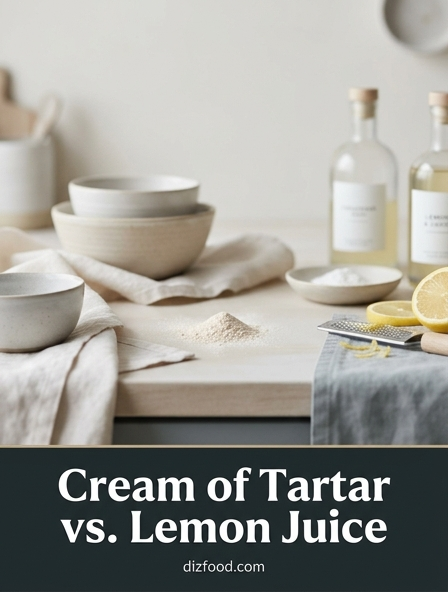
Cream of Tartar vs Lemon Juice Main Differences
While both cream of tartar and lemon juice serve as acidic agents in the kitchen, they differ significantly in their physical form, chemical composition, and origin. Cream of tartar, scientifically known as potassium bitartrate, is a dry, powdery byproduct of the winemaking process. It forms as a sediment in wine barrels during fermentation. Because it is a concentrated dry acid, it has a very long shelf life and does not add moisture to a recipe. In contrast, lemon juice is a liquid extracted from citrus fruit, primarily composed of water, citric acid, and vitamin C. This fundamental difference in state-powder versus liquid-is the most critical factor when choosing between them in professional and home baking.
| Feature | Cream of Tartar | Lemon Juice |
|---|---|---|
| State | Dry Powder | Liquid |
| Acid Type | Tartaric Acid | Citric Acid |
| Flavor | Neutral/Mildly Metallic | Tart and Citrusy |
| Primary Source | Grapes (Wine Industry) | Citrus Fruit |
Beyond their physical states, their chemical impact varies. Cream of tartar is a standardized product, meaning its acidity level is consistent every time you use it. Lemon juice, however, can vary in acidity depending on the ripeness of the fruit, the variety of lemon, and how long it has been stored. This makes cream of tartar the preferred choice for precision-based chemistry in baking, while lemon juice is often favored for its bright, organic flavor profile and versatility in savory cooking.
Substituting Lemon Juice for Cream of Tartar
Substituting lemon juice for cream of tartar is a common kitchen necessity, but it requires careful consideration of the recipe's liquid balance. The standard rule of thumb is to use twice the amount of lemon juice as the cream of tartar called for in the recipe. Because cream of tartar is a dry ingredient, replacing it with a liquid can occasionally thin out delicate batters or frostings. If a recipe calls for half a teaspoon of cream of tartar, you would generally use one full teaspoon of lemon juice. This substitution works best in recipes where the acid is used to activate baking soda or stabilize egg whites, as the citric acid in the juice performs a similar chemical function to the tartaric acid in the powder.
- Quick Breads: Works well as the extra liquid is negligible compared to the total volume.
- Cookies: Use caution, as extra liquid can cause cookies to spread more than intended.
- Meringues: Lemon juice is a viable substitute, though it may result in a slightly less stiff peak.
- Dry Mixes: Lemon juice cannot be used in pre-made dry mixes; cream of tartar is mandatory here.
When making this switch, it is important to remember that lemon juice adds a distinct flavor. In recipes like Snickerdoodles, where the sharp tang of cream of tartar is a signature element, lemon juice might slightly alter the traditional taste. Furthermore, if you are substituting in a recipe that is very sensitive to moisture, such as a macaron batter, you may need to reduce other liquid ingredients slightly to compensate for the addition of the lemon juice. Always aim for fresh lemon juice rather than bottled concentrates to ensure the cleanest flavor and the most reliable acidic reaction.
Stabilizing Egg Whites with Acid
The use of an acid is essential when whipping egg whites to create foams for soufflés, angel food cakes, and meringues. Egg whites are composed of proteins that, when beaten, begin to uncurl and bond together to trap air bubbles. Without an acidic stabilizer, these protein bonds can become too tight, squeezing out the air and water, which causes the foam to collapse or "weep." Adding cream of tartar or lemon juice lowers the pH of the egg whites, which makes the proteins more flexible and resistant to over-beating. This results in a foam that is more elastic, stable, and capable of expanding significantly in the heat of the oven.
- Reduction of pH: The acid introduces hydrogen ions that interfere with the sulfur bonds in egg proteins.
- Increased Volume: By slowing down the coagulation of proteins, more air can be incorporated before the structure sets.
- Structural Integrity: The foam becomes less likely to collapse when folding in heavy ingredients like flour or sugar.
- Whiteness: Acid prevents the browning of proteins, resulting in a snow-white finished product.
While both acids work, cream of tartar is often preferred by pastry chefs because it does not introduce extra moisture. In a delicate meringue, even a few drops of excess liquid from lemon juice can affect the final crispness. However, if you find yourself without the powder, lemon juice is a perfectly acceptable alternative that provides the necessary ions to keep your peaks high and your cakes light. The key is to add the acid once the egg whites have become foamy but before they reach soft peaks.
Baking Science Cream of Tartar and Lemon Juice
In the world of baking science, these two ingredients act as catalysts for leavening. Most recipes that call for cream of tartar also include baking soda. Baking soda is a base (sodium bicarbonate) and requires an acid to react and produce carbon dioxide gas. This gas creates the bubbles that make cakes, muffins, and pancakes rise. Cream of tartar is actually the acidic component found in most commercial baking powders. When you mix baking soda and cream of tartar, you are essentially making a homemade, fast-acting baking powder. This reaction begins the moment the dry and wet ingredients are combined, necessitating a quick transition to the oven to capture the maximum lift.
Lemon juice functions in the exact same way when paired with baking soda. The citric acid reacts with the bicarbonate to produce immediate effervescence. However, the timing and intensity of the reaction can differ. Because lemon juice is already a liquid, it triggers the chemical reaction instantly upon contact with the soda. Cream of tartar, being a dry powder, requires the presence of water or milk to dissolve before it can react with the soda. This can sometimes provide a slightly more controlled rise during the initial stages of mixing. Furthermore, the presence of lemon juice can affect the "crumb" or texture of the bread, sometimes resulting in a tighter, more moist internal structure compared to the airy, crisp texture often provided by the dry tartaric acid.
Ultimately, the choice between them comes down to the desired texture and the specific chemical balance of the recipe. Professional bakers often rely on the consistency of cream of tartar to ensure that their products have the same height and density every time. For home cooks, the choice often depends on what is available in the pantry, but understanding the underlying science allows for successful experimentation and troubleshooting in the kitchen environment.
Preventing Sugar Crystallization Tips
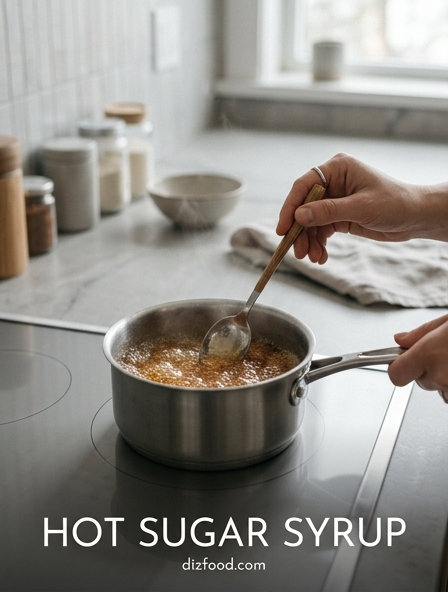
When making caramel, candy, or simple syrups, sugar crystallization is a primary concern. Sucrose (table sugar) has a natural tendency to want to return to its crystal state when heated in a water solution. If a single un-dissolved sugar crystal remains on the side of the pot, it can trigger a chain reaction that turns a smooth syrup into a grainy, gritty mess. Acids like cream of tartar and lemon juice act as "interfering agents." They work by breaking down the sucrose into its component parts: glucose and fructose. This mixture is known as "invert sugar," and because these smaller molecules do not crystallize as easily as sucrose, the resulting syrup remains smooth and glossy.
- Caramel Sauce: A pinch of cream of tartar ensures a silky texture that doesn't seize up in the fridge.
- Hard Candy: Acid helps maintain transparency and prevents the candy from becoming cloudy or opaque.
- Lollipops: Using lemon juice can add a subtle tartness that balances the extreme sweetness of the sugar.
- Frostings: In boiled frostings or Italian meringue, acid prevents the sugar from granulating as it cools.
The choice between the two often depends on the desired final flavor. In a delicate caramel where you want the deep notes of burnt sugar to shine, a tiny amount of cream of tartar is ideal because it is flavor-neutral in small quantities. If you are making a fruit-based syrup or a citrus-flavored hard candy, lemon juice is the superior choice because its natural flavor complements the profile of the confection. Regardless of which you choose, the acid should be added early in the boiling process to ensure it has enough time to facilitate the inversion of the sugar molecules before the temperature reaches the "crack" stage.
Lemon Juice vs Cream of Tartar Ratios
Understanding the correct ratios for substitution is vital for maintaining the chemical equilibrium of a recipe. Because cream of tartar is a highly concentrated dry acid, you cannot replace it with an equal amount of lemon juice. The liquid juice is much less concentrated and consists mostly of water. Therefore, the general conversion requires a 2:1 ratio of liquid acid to dry acid. This ensures that there are enough hydrogen ions present to complete the necessary chemical reactions, whether that be leavening or protein stabilization. Below is a reference table for common measurements used in standard baking recipes.
| Cream of Tartar Amount | Lemon Juice Substitute |
|---|---|
| 1/4 teaspoon | 1/2 teaspoon |
| 1/2 teaspoon | 1 teaspoon |
| 1 teaspoon | 2 teaspoons |
| 1 tablespoon | 2 tablespoons |
It is important to note that while this ratio works for the acidic reaction, it does not account for the total liquid volume of your batter. If your recipe calls for a large amount of cream of tartar-such as in some specialty cookies or cakes-using the lemon juice substitute might add enough liquid to throw off the ratio of dry to wet ingredients. In these cases, it is recommended to remove an equal amount of other liquids, such as water or milk, from the recipe to compensate. For example, if you add two teaspoons of lemon juice, you might consider removing two teaspoons of the primary liquid. This precision helps maintain the intended viscosity of the dough or batter, preventing it from becoming too runny.
Flavor Profiles in Baking and Cooking
Flavor is perhaps the most obvious area where cream of tartar and lemon juice diverge. Cream of tartar has a very specific, sharp, and slightly metallic tang. It is the defining flavor in Snickerdoodles, giving them that classic "old-fashioned" taste that differentiates them from a standard sugar cookie. In most other applications, however, cream of tartar is used in such small quantities that it remains virtually undetectable. It provides a clean acidity that doesn't interfere with the primary flavors of chocolate, vanilla, or spices. This makes it a "invisible" workhorse in the bakery, providing structural benefits without altering the sensory experience of the final product.
Lemon juice, on the other hand, brings a vibrant, fruity, and aromatic profile to the kitchen. Even in small amounts, the bright notes of citrus can be perceived by the palate. This is often a benefit in fruit pies, berry tarts, and certain types of frostings where a hint of tanginess enhances the overall flavor. However, in a rich chocolate cake or a savory bread, the presence of lemon might be distracting or unwanted. Lemon juice also contains natural sugars and volatile oils that cream of tartar lacks, adding a layer of complexity to the dish. When choosing between the two, consider whether your recipe would benefit from a "brightening" effect or if it requires a neutral acid that performs its duty without being noticed.
Cleaning with Cream of Tartar vs Lemon
Both cream of tartar and lemon juice are effective, non-toxic cleaning agents that can be used throughout the kitchen to tackle stubborn stains and grime. Their acidic nature makes them excellent for dissolving mineral deposits and cutting through grease. Cream of tartar is particularly useful because of its mild abrasiveness. When mixed with a small amount of water or hydrogen peroxide, it forms a paste that can scrub away burnt-on food from stainless steel pans or brighten discolored porcelain sinks. It is also a secret weapon for removing "aluminum gray" marks from white ceramic plates caused by silverware scraping the surface.
- Copper and Brass: A paste of lemon juice and salt or cream of tartar and water can polish these metals to a high shine.
- Rust Removal: The acid in lemon juice helps break down iron oxide; adding cream of tartar creates a thick paste that stays on vertical surfaces.
- Laundry Stains: Cream of tartar can help lift ring-around-the-collar or grass stains when applied as a pre-treatment paste.
- Microwave Cleaning: Heating a bowl of water and lemon juice creates acidic steam that loosens caked-on food.
Lemon juice has the added benefit of being a natural disinfectant and deodorizer. Its high citric acid content kills many common household bacteria, and its fresh scent can mask kitchen odors like fish or onions. While cream of tartar is better for heavy-duty scrubbing due to its powder form, lemon juice is superior for general surface cleaning and freshening up cutting boards. Many people combine the two for a powerful cleaning duo, using the lemon juice as the liquid component to turn the cream of tartar into a potent, all-natural scrubbing paste that is safe for food-preparation surfaces.
Shelf Life and Storage Comparison
The storage requirements and longevity of these two acids are vastly different, which often dictates which one a cook keeps on hand. Cream of tartar is a dry, shelf-stable powder. As long as it is kept in a cool, dry place in an airtight container, it can last indefinitely. While manufacturers usually provide a "best by" date of two to three years, the chemical potency of potassium bitartrate does not degrade significantly over time. If the powder remains dry and doesn't clump, it is likely still effective for stabilizing egg whites or activating baking soda. This makes it an excellent "emergency" pantry staple that you don't have to worry about replacing frequently.
| Factor | Cream of Tartar | Lemon Juice (Fresh) | Lemon Juice (Bottled) |
|---|---|---|---|
| Storage Location | Pantry | Counter/Fridge | Refrigerator (once opened) |
| Typical Longevity | Indefinite (years) | 1-2 weeks | 6-12 months |
| Vulnerability | Moisture/Humidity | Mold/Fermentation | Oxidation/Loss of flavor |
Lemon juice is much more perishable. Fresh lemons will last about a week on the counter and up to a month in the refrigerator. Once the juice is extracted, it begins to oxidize and lose its flavor and vitamin content within hours. Bottled lemon juice is a more convenient middle ground, as it contains preservatives that allow it to stay fresh in the refrigerator for several months after opening. However, even bottled juice will eventually lose its acidic "zip" and can develop off-flavors. For those who bake infrequently, cream of tartar is the more economical choice, whereas daily cooks may prefer the versatility of fresh or bottled lemon juice despite its shorter lifespan.
The Best Acid for Meringues and Frostings
When it comes to high-stakes pastry work, specifically meringues and boiled frostings, the debate between cream of tartar and lemon juice becomes a matter of professional preference and structural integrity. For a classic French or Swiss meringue, cream of tartar is widely considered the gold standard. Its dry nature allows for the creation of incredibly stiff, glossy peaks that hold their shape through the piping and baking process. Because it doesn't add volume via liquid, it keeps the protein-to-water ratio of the egg whites perfectly balanced, which is crucial for achieving that light-as-air, crisp texture that shatters when bitten.
- Stability: Cream of tartar provides the most reliable "insurance" against collapsing foams.
- Texture: Lemon juice can result in a slightly chewier meringue due to the added moisture.
- Flavor: For lemon-flavored desserts, using lemon juice as the stabilizer provides a thematic taste connection.
- Availability: Lemon juice is more likely to be in a home kitchen when a sudden craving for meringue strikes.
In the context of frostings, such as Seven-Minute Frosting or Royal Icing, the choice may shift. In Royal Icing, which is used for decorating cookies, many decorators prefer a few drops of lemon juice or even white vinegar. This helps the icing set firmly with a high-gloss finish, and the slight citrus flavor cuts through the overwhelming sweetness of the powdered sugar. However, if you are making a delicate cooked frosting that requires boiling a sugar syrup, cream of tartar is the safer bet to prevent the sugar from graining. Ultimately, while both acids will get the job done, cream of tartar is the specialized tool for structural perfection, while lemon juice is the versatile alternative for flavor-forward applications.

Comments