
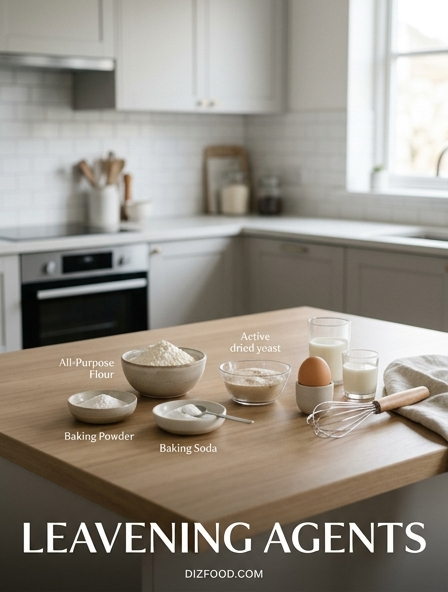
The Science of Chemical Leavening
Chemical leavening is a fundamental process in the kitchen that allows baked goods to rise without the lengthy fermentation required by yeast. This process relies on a rapid chemical reaction between an alkaline component and an acidic component. When these two elements meet in the presence of moisture, they undergo a neutralization reaction that releases carbon dioxide gas. This gas becomes trapped within the structure of the batter or dough, creating internal pressure that causes the mixture to expand during the baking process.
The efficiency of this reaction depends on the balance of the ingredients and the temperature of the environment. Most chemical leaveners are classified as either single-acting or double-acting. Single-acting agents react immediately upon contact with liquid, while double-acting agents provide a second burst of aeration when exposed to the heat of the oven. Understanding this timing is crucial for bakers to ensure their cakes and breads achieve the desired volume and lightness.
- Carbon dioxide production: The primary gas responsible for expansion.
- Heat activation: Accelerates the expansion of trapped air bubbles.
- Structural setting: The point where heat solidifies the proteins around the gas pockets.
How Acid Activates Baking Soda
Baking soda, scientifically known as sodium bicarbonate, is a powerful base that remains dormant until it encounters an acidic trigger. When a liquid acid is introduced to the soda, a chemical exchange occurs where the acid donates a proton to the bicarbonate. This interaction immediately produces carbonic acid, which is highly unstable and quickly decomposes into water and carbon dioxide gas. This instantaneous release of bubbles is what provides the initial lift in pancakes, muffins, and cookies.
- The dry baking soda is dispersed throughout the flour to ensure even distribution.
- Acidic ingredients like buttermilk, yogurt, or vinegar are added to the wet mixture.
- Upon mixing, the chemical reaction begins, requiring the batter to be baked quickly before the gas escapes.
- The heat of the oven further expands these bubbles, while the starch sets the final shape.
Because baking soda is highly alkaline, it is essential to provide enough acid to neutralize it completely. If the ratio is off and there is leftover soda, the finished product may have a soapy, metallic taste and an unappealing yellowish tint.
Cream of Tartar versus Lemon Juice
In the culinary world, cream of tartar and lemon juice are two of the most common acids used to activate leavening agents, yet they behave very differently due to their physical states and concentrations. Cream of tartar is a dry, powdery byproduct of the winemaking process, specifically potassium bitartrate. It is prized for its long shelf life and its ability to be mixed with dry ingredients without triggering an immediate reaction. In contrast, lemon juice is a liquid citric acid that adds flavor and moisture to a recipe.
| Attribute | Cream of Tartar | Lemon Juice |
|---|---|---|
| Physical State | Dry Powder | Liquid |
| Primary Acid | Tartaric Acid | Citric Acid |
| Flavor Impact | Neutral/Mild | Strong Citrus |
| Shelf Stability | Very High | Low (Perishable) |
Choosing between them often depends on the desired texture. Cream of tartar provides a more consistent, controlled rise, whereas lemon juice can vary in acidity depending on the ripeness of the fruit, potentially leading to inconsistent results in delicate pastries.
Stabilizing Egg Whites for Maximum Volume
When beating egg whites to create meringues or soufflés, the goal is to create a stable foam that can withstand the weight of other ingredients. Egg whites are primarily composed of water and proteins. As you whisk them, the proteins denature and bond together to trap air bubbles. However, these bonds can become too tight, causing the foam to collapse or "weep" liquid. Adding an acidic leavening agent, such as cream of tartar, significantly improves this process.
The acid lowers the pH of the egg whites, which prevents the proteins from over-coagulating. This results in a foam that is more elastic, stable, and less likely to deflate during folding or baking. A more stable foam translates to a higher volume and a finer, more uniform air cell structure in the final product.
- Early stage: Add acid once the whites reach a foamy consistency.
- Protein bonding: The acid helps the proteins form a flexible network.
- Moisture retention: Prevents the separation of water from the protein matrix.
- Bake stability: Ensures the foam holds its shape until the oven heat sets the structure.
The Role of pH in Crumb Texture
The pH level of a batter plays a silent but transformative role in the final crumb texture and color of baked goods. Chemical leavening agents do more than just provide lift; they manipulate the acidity of the dough to affect gluten development and the Maillard reaction. An acidic environment (low pH) tends to produce a whiter, finer, and tighter crumb. This is because acid hinders the browning process and encourages the proteins to set more quickly, which is ideal for angel food cakes or white sponges.
Conversely, a more alkaline environment (high pH) promotes browning and results in a more open, coarse crumb. This is frequently seen in chocolate cakes where baking soda is used to darken the cocoa powder and create a rich, mahogany hue. If the pH is too high, however, the structure can become weakened, leading to a crumb that is excessively crumbly or prone to collapsing. Balancing the acidic and basic components is therefore essential for achieving the specific mouthfeel and appearance required for different types of confectionery.
When to Choose Cream of Tartar
Cream of tartar is often the preferred leavening acid when precision and stability are paramount. Because it is a dry powder, it does not alter the hydration levels of a recipe, making it an excellent choice for items where moisture control is critical. It is most famously used in snickerdoodles, where it provides a signature tangy flavor and a specific chewy texture that cannot be replicated with liquid acids. Furthermore, its ability to act as a stabilizing agent makes it indispensable for sugar work and egg-based foams.
- Use it in meringues to ensure the foam remains stiff and glossy.
- Choose it for angel food cakes to maintain a bright white color and fine crumb.
- Employ it in homemade baking powder by mixing it with baking soda and cornstarch.
- Select it for candy making to prevent the formation of large sugar crystals.
Because it is a standardized chemical product, it offers a level of predictability that fresh ingredients like lemon juice or vinegar cannot match, ensuring that every batch of baked goods rises consistently.
Baking with Fresh Lemon Juice
Fresh lemon juice is a versatile acidic component that serves a dual purpose: it activates baking soda and provides a bright, citrusy flavor profile. Unlike concentrated dry acids, lemon juice introduces additional water and natural sugars into the batter. This requires the baker to slightly adjust the liquid ratios in the recipe to prevent the dough from becoming too thin. The acidity of fresh lemons can range from 5% to 7%, meaning the leavening power may vary slightly from one fruit to another.
- Flavor enhancement: Adds a natural zest that complements berries and vanilla.
- Tenderizing effect: The citric acid breaks down gluten strands for a softer bite.
- Immediate reaction: Triggers baking soda instantly upon contact.
- Usage tip: Always strain the juice to remove pulp and seeds that could ruin the texture.
When using lemon juice as the primary acid, it is often best to mix it with the liquid ingredients first and fold it into the dry ingredients at the last possible moment. This ensures the maximum amount of carbon dioxide is trapped before the heat of the oven sets the structure of the cake or muffin.
Substituting Acids in Leavening Recipes
In the kitchen, it is common to find oneself missing a specific acidic ingredient. Understanding how to substitute acids is vital for maintaining the leavening balance. The key is to match the acidic strength and consider the moisture content of the replacement. If a recipe calls for cream of tartar but you only have lemon juice, you must account for the liquid volume. Generally, one teaspoon of cream of tartar can be replaced by two teaspoons of lemon juice or white vinegar, though this may slightly alter the flavor.
| Original Acid | Substitution | Ratio/Adjustment |
|---|---|---|
| 1 tsp Cream of Tartar | Lemon Juice | 2 tsp (Reduce other liquids) |
| 1 cup Buttermilk | Milk + Acid | 1 cup milk + 1 tbsp vinegar |
| Baking Powder | Soda + Tartar | 1/4 tsp soda + 1/2 tsp tartar |
When substituting, always consider how the flavor of the acid-such as the sharpness of vinegar versus the fruitiness of lemon-will interact with the other ingredients in your dish.
Preventing Sugar Crystallization
Leavening acids like cream of tartar and lemon juice play a critical role in confectionery beyond simply making things rise; they are essential for controlling sugar crystallization. When boiling a sugar syrup for frostings, caramels, or hard candies, there is a risk that the sucrose molecules will recrystallize, resulting in a gritty texture. This occurs when a "seed" crystal triggers a chain reaction throughout the syrup.
- Acids act as "interfering agents" by breaking down sucrose into glucose and fructose.
- This process is known as inversion, creating what is called "invert sugar."
- Invert sugar molecules are different shapes, making it harder for them to bond into crystals.
- The result is a smooth, glossy finish in fondants and syrups.
A small pinch of cream of tartar or a few drops of lemon juice is usually sufficient to ensure a silky consistency. This technique is especially important for recipes like Italian meringue buttercream or homemade lollipops, where structural clarity and smoothness are the primary indicators of quality.
Troubleshooting Common Leavening Failures
Even with a precise recipe, leavening failures can occur, resulting in heavy, flat, or off-tasting baked goods. One of the most common issues is the use of expired leavening agents. Baking soda and cream of tartar lose their potency over time, especially if exposed to humidity. To test baking soda, drop a small amount into vinegar; if it doesn't bubble vigorously, it is past its prime. Similarly, baking powder can be tested by adding it to hot water.
- Sunken centers: Often caused by over-leavening or opening the oven door too early.
- Soapy taste: Indicates an excess of baking soda that wasn't neutralized by acid.
- Tunneling: Large holes in the crumb caused by over-mixing or uneven leavener distribution.
- Dense texture: Usually the result of a delayed start, where the gas escaped before baking.
To avoid these pitfalls, always whisk your dry leaveners thoroughly into the flour to ensure even distribution. Furthermore, ensure your oven is fully preheated so the double-acting agents can perform their second rise immediately upon entry, locking in the airy structure before the batter sets.

Comments